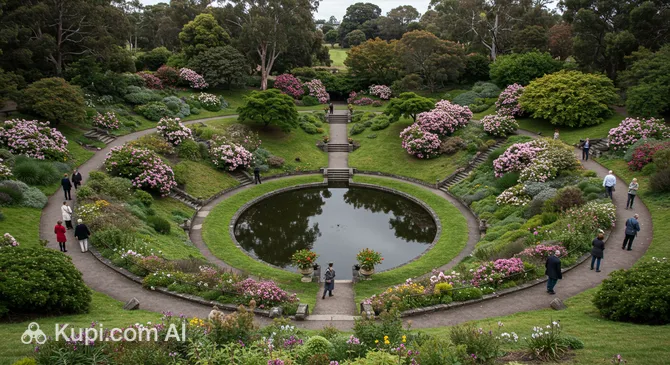
In the heart of the Royal Botanic Gardens, of which Melbourne is rightfully proud, lies an unusual structure that combines 19th-century engineering with modern landscape art. Guilfoyle's Volcano is not a real geological formation, but an artfully styled water reservoir, considered one of the most original attractions Australia can offer the discerning traveler.
Traveler photos:
Built in the 1870s, this "volcano" originally served a practical purpose: it held over 1.3 million liters of water for irrigation. However, its creator, William Guilfoyle, decided to disguise the utilitarian object as a decorative masterpiece (folly). Located at the highest point of the gardens, it offers visitors not only aesthetic pleasure but also magnificent panoramic views of the drought-tolerant plant collection and the city's central business district.
Today, following a major reconstruction in 2010, the site represents a unique ecological project. Its slopes mimic lava flows "streaming" from red stone and a carpet of succulents, while floating gardens in the crater help filter the water. This is a place where history meets innovation, creating a harmonious space for a stroll.