Support

Telfer Airport

About the Airport

Telfer Airport (TEF) is not merely an air hub, but a vital artery sustaining life at one of the most remote gold mines in Australia. Located within the harsh landscapes of the Great Sandy Desert, it serves as the primary access point for thousands of workers arriving for their shifts. For a traveller finding themselves here, it is a gateway to the unique world of industrial development in the Australian Outback, where every takeoff and landing is part of a well-coordinated production rhythm.
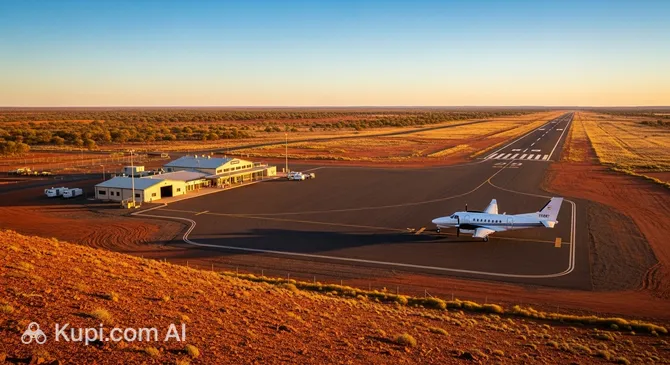
Telfer Airport. Source: Kupi.com Binoculars
IATA Code TEF
ICAO Code YTEF
City Telfer
Distance to centre ~2 km
Status Domestic (Private)
Annual Passengers Data not published (serves mining facility)
Popular Airlines Alliance Airlines, Virgin Australia, QantasLink (mostly charter flights)

The main feature and asset of Telfer Airport is its key role in the logistics chain of the giant gold mining enterprise, Newcrest Mining. Being a private airfield, it does not resemble typical tourist airports. The infrastructure here is optimised for the rapid and efficient transfer of personnel (fly-in/fly-out system) and urgent cargo. Despite its remoteness, the airport is equipped with a modern runway capable of handling medium-haul aircraft. For passengers, mostly mine workers, this ensures comfortable and safe flights to their workplace from major cities.

Contact Information

Telfer Airport (TEF) is a private airfield that primarily serves the employees of the mine bearing the same name. Therefore, most standard public contacts are not available. Information for passengers is generally provided through the airlines operating charter flights or through the employing company.

  • Official Website: As this is a private airfield, Telfer Airport does not have a separate public website. It is managed by the mining company Newcrest Mining.
  • Helpline: There is no direct telephone line for passenger enquiries. For all questions related to your flight, you should contact the airline directly operating the flight.
  • Airport Address: Telfer Airport (TEF), Telfer, Western Australia, 6762, Australia.
  • Email: A public email address for contacting the airport is not provided.
  • Social Media: The airport does not maintain official pages on social networks.
  • Lost Luggage Information: If you experience issues with your luggage, please contact the baggage tracing service of your airline. The airport does not have its own service to handle such requests.
  • Passenger Support Contacts: Passenger support is provided by the airlines operating flights to Telfer. We recommend contacting your carrier directly.

How to Get to the Airport

Getting to Telfer Airport (TEF) is a task requiring advance planning, as Telfer is a remote mining settlement in Australia, rather than a typical tourist city. The transport infrastructure here is fully adapted to the needs of the mining industry, and familiar urban options are absent.

Public Transport and Charters

There is no regular public transport in Telfer, such as city buses, trains, or metro. The main passenger flow consists of mine workers arriving and departing via the fly-in/fly-out (FIFO) system. Their transport from the airport to the accommodation complex is usually organised by the employer on special shuttles. For visitors not connected to the mine, the only reliable method is a pre-booked private transfer or charter transport.

Taxis and Car Rental

Standard taxi services and ride-hailing apps (like Uber) do not operate in Telfer. If you require individual transport, it must be booked well in advance through specialised companies serving the Pilbara region. Car rental is a theoretically possible option, but the nearest rental locations are in major towns like Newman or Port Hedland, hundreds of kilometres away. Any vehicle for a trip to Telfer must be a four-wheel drive (4WD) and prepared for the harsh conditions of the Australian Outback.

Travel Time and Cost

The Telfer settlement itself is located in immediate proximity to the runway. The trip from the residential blocks to the terminal takes just 5-10 minutes. The main time and financial costs are associated not with the road to the airport within Telfer, but with organising the flight and transfer to this isolated region. The cost of a private transfer will be high due to the remoteness and lack of competition.

Parking and Recommendations

The airport has parking, primarily intended for the long-term storage of workers' vehicles. Given the specific nature of the airport, it is rarely overcrowded. The main recommendation for travellers: plan and book absolutely all transport services long before your trip. Spontaneous movement here is practically impossible. Keep in mind that the nearest major airports, such as Newman Airport and Port Hedland International Airport, are located at a distance of over 300-400 km.

Terminals and Map

Telfer Airport (TEF) is a small regional airport located in Western Australia, serving primarily charter flights for workers of the local mining enterprise. Its structure is maximally simple and functional, making navigation intuitively clear even for those visiting for the first time.

The airport operates with just one passenger terminal. It is a compact building that combines all zones and services. There is no division into domestic and international sectors or multiple terminals, so there is no need for transfers between them. All processes — from check-in to baggage claim — take place in one common space.

The terminal layout is extremely simple. Upon entry, you immediately find yourself in the main hall where the check-in counters are located. The departure and arrival zones are located here as well, representing a common waiting area with access to the apron and an area for meet-and-greets. Due to the small size and limited number of flights, all procedures are very quick. Check-in and security screening usually take no more than 15-20 minutes.

The features of the terminal lie in its minimalism and efficiency. Do not expect a large selection of shops, restaurants, or business lounges here. The infrastructure includes basic amenities: a small waiting room, restrooms, and counters for airlines operating charter flights. The main advice for navigation is simply to follow the signs, of which there are few, and you will easily find everything you need. It is practically impossible to get lost in Telfer Airport.

Airport History

The history of Telfer Airport (TEF) is inextricably linked with the development of the gold-copper mine of the same name, one of the most remote in Australia. The airport was built in the mid-1970s, practically simultaneously with the launch of mining at the deposit discovered in 1972. Its primary and unchanging task became ensuring transport accessibility to the mine, located in the harsh and isolated Great Sandy Desert. From the very beginning, it functioned as a vital artery for the delivery of personnel, equipment, and cargo.

The main stages of the airport's development have always coincided with the phases of the Telfer mine's life. During periods of active growth and expansion of mining, especially after the resumption of mine operations by Newcrest Mining in the early 2000s, the airport infrastructure was modernised to accommodate a larger number of flights. The airport became a key element in organising work on a rotational basis (fly-in fly-out), which allows workers to be transported from major cities such as Perth. Its entire history is not a story of passenger traffic records, but a tale of reliable and uninterrupted operation in extreme conditions.

Today, Telfer Airport remains a private facility, serving predominantly charter flights for the needs of the mining company. It does not accept scheduled commercial flights for the general public. An interesting fact is that, despite its modest size and narrow specialisation, this airfield is a critically important facility supporting the livelihood of an entire industrial complex in one of the most sparsely populated regions on the planet. Its main achievement is decades of successfully fulfilling its unique logistical mission.

Services and Amenities

Telfer Airport (TEF) is a small regional air terminal, primarily serving the needs of the local mining enterprise. Consequently, the range of services for passengers here is quite basic and focused on meeting key needs before departure.

Dining, Shops, and Waiting Lounges. There are no large restaurants or duty-free shops at the airport. Opportunities for a snack are usually limited to a small café or vending machines where you can purchase drinks and light snacks. A general waiting hall is available for passengers; separate VIP zones or lounges with enhanced comfort are absent.

Terminal Facilities. Passengers may use points for charging electronic devices, though their number may be limited. Access to Wi-Fi is generally not provided, so it is worth arranging mobile internet in advance. There are no bank branches, ATMs, or currency exchange points in the terminal building, so it is recommended to settle all financial matters before arriving at the airport.

Additional Services. The airport is equipped with basic amenities for passengers with reduced mobility, but to receive special assistance, it is necessary to contact the airline in advance. Services for families with children may be limited to standard hygiene rooms. There are no hotels, conference rooms, or business centres on the premises. All main infrastructure, including accommodation, is located in the Telfer settlement itself and is primarily intended for employees of the local enterprise.

Where to Eat

When planning a flight through Telfer Airport (TEF), it is important to consider that this is a small regional airport serving mainly the needs of the mining industry. Accordingly, the choice of dining establishments here is very limited and oriented towards the basic needs of passengers waiting for their flight.

A small café or kiosk usually operates within the single terminal of the airport. Here you can grab a quick snack before departure. The menu typically presents standard options: sandwiches, pastries (such as classic Australian meat pies), crisps, chocolate, and other packaged snacks. Beverages available include coffee, tea, bottled water, and soft drinks. A full-service restaurant or dining venue with hot meals is absent at the airport.

Specialised dietary options, such as vegetarian, vegan, gluten-free, or halal dishes, are practically impossible to find here. If you have specific dietary requirements, it is strongly recommended to bring food with you. This is the most reliable way to avoid inconvenience.

The café is located in the main hall of the terminal and is available to all passengers before passing security control. Its operating hours are strictly tied to the flight schedule — it usually opens shortly before departure and closes after the aircraft leaves. It is worth noting that prices for food and drinks may be higher than average, which is typical for remote locations.

Travel Tips

Planning a trip through Telfer Airport requires a special approach, as it is a small regional airport serving mainly the mining industry in Australia. To ensure your journey goes smoothly, make use of these tips.

Arrival at the Airport and Check-in. Unlike large international hubs, there are no long queues at Telfer Airport. It is recommended to arrive 60-90 minutes before departure. This time will be sufficient to check in luggage and pass security control without rushing. To save time, complete online check-in if your carrier provides this option.

Security Control and Hand Luggage. The screening procedure here is standard for domestic flights within Australia but proceeds significantly faster due to the low passenger flow. Nevertheless, remember the general rules: sharp objects, flammable substances, and other dangerous goods are prohibited in hand luggage. Although liquid restrictions on domestic flights in Australia are not as strict as on international ones, it is better to clarify the allowances with your airline in advance.

Seat Selection and Transfers. Given the airport's location, when flying from or to Telfer, it is worth choosing a window seat. Stunning views of the boundless expanses of the Australian desert will open up to you. Telfer Airport is typically a final destination, not a transit hub. If you have a transfer planned at another, larger airport (for example, in Perth), ensure when booking that you have enough time between flights, and check whether you will need to collect and re-check your luggage.

Customs Control. Telfer Airport serves exclusively domestic flights, so customs and passport control are absent here. You will only undergo these procedures at your airport of arrival or departure if engaging in international travel.

Economy and Contingencies. To save money, book tickets in advance and, if possible, pack light snacks with you, as the selection at the airport may be limited. In case of a flight delay, contact an airline representative. Given the modest size of the terminal, be prepared for the fact that there may not be a café or many shops. We recommend having a book, a charged power bank, and headphones with you to spend your waiting time comfortably.

Reached the end of the page?

That means the route is fully explored