Support

Telfer

About

Telfer is a distinct industrial settlement located deep within the vast and arid landscapes of Western Australia. Unlike typical tourist destinations, this town serves primarily as a residential hub for the workforce of one of the country's largest gold and copper mines. Its atmosphere is defined by a unique blend of modern industrial activity and the profound silence of the remote outback, offering a rare glimpse into the scale of mining operations in the Pilbara region. For those who find themselves in this isolated corner of the continent, Australia reveals its rugged and resourceful character.

Geographically, the town is situated in the Great Sandy Desert, a location that dictates its extreme climate and environment. The area is characterized by endless stretches of red sand dunes and spinifex vegetation. Summers here are intensely hot, with temperatures frequently soaring above 40°C (104°F), while winters offer warm days and cooler nights. With a fluctuating population of approximately 1,500 people, comprised mostly of "fly-in fly-out" workers, the community is a temporary home for many, created solely to support the extraction of precious metals from the earth.
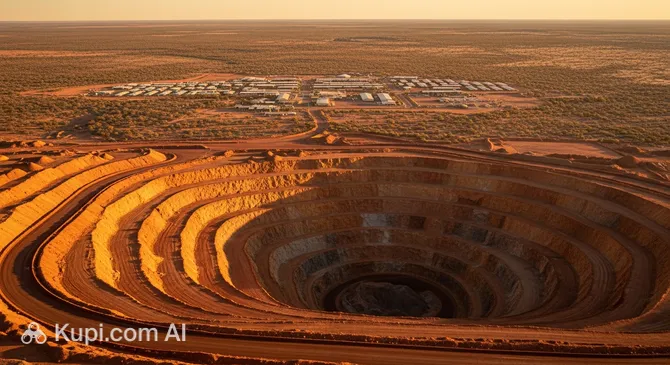
Telfer. Source: Kupi.Binoculars

The town was established in the 1970s following the discovery of significant gold deposits, transforming a desolate patch of desert into a bustling center of production. While it is a "closed town" requiring permission to visit, its existence is a testament to the determination to find resources in the most challenging environments. You can learn more about the development and industrial heritage of this site by exploring the history of Telfer. The settlement is named after A.H. Telfer, a former Under Secretary for Mines, honoring his contribution to the state's mining sector.

For the authorized visitor or the traveler passing through the broader region, the defining features of Telfer are the stark beauty of the surrounding desert and the sheer magnitude of the open-cut mine. The contrast between the deep red earth and the massive machinery is visually striking. Additionally, the isolation of the location makes it an incredible spot for stargazing; with virtually no light pollution from neighboring cities, the night sky here is exceptionally clear and bright.

While Telfer is not a holiday resort, it stands as a fascinating example of life in the remote Australian outback. It offers a unique perspective on the nation's economic engine and the resilience required to live and work in the desert. For those with a keen interest in industrial tourism or the extremes of geography, the region around Telfer provides an unforgettable encounter with the wild heart of the continent.

Weather Overview

Located in the heart of the Great Sandy Desert, Telfer experiences an arid climate defined by sweltering summers and mild, dry winters. The summer season, particularly from December to February, brings intense heat with average temperatures ranging between 32.7°C and 34.1°C, while maximum highs frequently soar past 40°C. Although this period technically records the most moisture, with up to 7 wet days in January, actual rainfall is negligible, barely exceeding 3mm.

As the year progresses into winter, the conditions become much more comfortable. June and July are the coolest months, featuring average temperatures around 19°C and minimums dropping to approximately 12°C. This time of year is exceptionally dry; while July and October typically record 0 wet days and 0mm of precipitation, surrounding months like August and September remain incredibly arid, averaging only about 1 wet day. For more specific forecasts and monthly averages, you can consult the detailed guide to the weather in Telfer.

Overall, visitors should expect blistering summers with only a hint of rain and pleasant, sun-drenched winters that showcase the clear desert skies.

Interesting Facts

Beyond the main attractions of heavy machinery and desert landscapes, Telfer holds many fascinating secrets buried in its history and geology. This industrial outpost is defined not just by what is mined, but by the controversies and transformations that have shaped its existence.
  • The Mystery of the French Prospector: While official records credit the discovery of the gold deposit to a major mining company in 1972, a French prospector named Jean-Paul Turcaud claimed he found it two years earlier. He spent decades alleging that he located the massive deposit first but was denied recognition, adding a layer of historical intrigue to the site's origins.

  • A Geological "Bubble": The precious metals here are trapped within a massive geological structure known as the "Telfer Dome." This unique formation consists of sedimentary rocks folded into a dome shape, acting as a natural trap for mineralization. The structure is so distinct and large that its outline can be identified by geologists studying satellite imagery of Australia.

  • From Families to Commuters: Telfer was not always a transient camp; until 1996, it was a fully functioning town with families, a school, a supermarket, and a police station. In a radical shift, the entire settlement was converted to a "fly-in fly-out" model, transforming it from a permanent community into a specialized facility where no one officially resides anymore.

  • A Hidden Tungsten Giant: The riches of the region extend beyond gold and copper. Deep beneath the surface lies the O'Callaghans deposit, a world-class discovery of tungsten and base metals. This massive underground find remains one of the area's lesser-known treasures, proving that the Great Sandy Desert still conceals significant wealth.

How to Get There

Reaching Telfer requires careful planning due to its remote location deep in the Great Sandy Desert of Western Australia. The settlement functions primarily as a mining hub, and while it possesses its own airstrip, this facility is largely reserved for private charter flights transporting mine personnel. For independent travelers and adventurers, the journey typically begins at a regional commercial gateway followed by an extensive overland drive. To help you navigate this logistics-heavy trip, you can read more about how to get to Telfer.

The most practical entry point for general visitors is Port Hedland International Airport (PHE), situated approximately 480 kilometers west of Telfer. This major transport hub connects the Pilbara region with Perth and other key Australian cities. From Port Hedland, the route involves a substantial drive, often utilizing the Rippon Hills Road. Due to the harsh desert environment and the condition of the tracks, a reliable four-wheel-drive vehicle is essential. Travelers should ensure they are fully equipped with extra fuel, water, and supplies before attempting the journey across the outback.

Main Attractions

As a dedicated mining community, Telfer does not offer traditional tourist sights like museums or galleries. Instead, its primary landmark is the massive Telfer Gold Mine itself. This colossal operation is a testament to human engineering in one of the world's harshest environments. The open-cut pits create a striking visual contrast against the deep red earth of the surrounding landscape. For those granted access or viewing from the air, the sheer scale of the excavation and the giant machinery at work provide a fascinating glimpse into the industrial heart of Australia.

Surrounding the settlement lies the vast expanse of the Great Sandy Desert, an attraction in its own right for adventurers and nature enthusiasts. This arid wilderness is characterized by endless parallel ridges of red sand dunes and hardy spinifex grass. While the environment is unforgiving, it possesses a stark, mesmerizing beauty that changes with the light of the day. Sunrise and sunset turn the dunes into a canvas of fiery oranges and deep purples, offering incredible opportunities for landscape photography and a profound sense of solitude.

To the south of the mining center sits Karlamilyi National Park, formerly known as Rudall River National Park. As the largest and most remote national park in Western Australia, it represents the ultimate off-the-beaten-track destination. The park features rugged desert scenery, including the Rudall River watercourses which serve as a vital oasis for wildlife. It is a place for self-sufficient travelers seeking to experience the outback in its most pristine state, with opportunities for bushwalking and exploring ancient geological formations.

The region is also a haven for unique desert wildlife. Despite the arid conditions, the scrubland around Telfer supports a surprising variety of animals. Visitors traveling through the area may spot wild camels wandering the dunes, dingoes, and large monitor lizards known locally as bungarras. Birdwatchers can also find resilient species such as wedge-tailed eagles and spinifex pigeons. Observing these creatures in their natural habitat adds a layer of life and movement to the stillness of the desert.

Local Cuisine

The culinary landscape of Telfer is unique, defined not by commercial restaurants or street food markets, but by the rugged lifestyle of a remote mining settlement. As a "fly-in fly-out" community, the local food culture revolves almost entirely around the camp's mess halls, known locally as the "Dry Mess." Here, the focus is on hearty, high-energy meals designed to fuel the workforce. Visitors with access to the facilities will find an abundance of classic Australian comfort food, with roast lamb, thick steaks, and meat pies being staples that appear regularly on the rotating buffet menus.

For independent travelers exploring the surrounding Great Sandy Desert, the gastronomic experience is one of self-sufficiency and outdoor adventure. The signature "dish" of the region is the traditional Outback BBQ. There is a distinct pleasure in cooking sausages and damper—a simple bush bread made from flour and water—over a campfire or portable stove. Under the expansive, star-filled desert sky, these simple meals take on a special character that defines the spirit of Western Australia.

When it comes to beverages, the harsh desert climate dictates a culture of hydration. Water is the most critical drink in Telfer, essential for survival in temperatures that frequently exceed 40°C. However, the social heart of the town is the "Wet Mess," the designated tavern where workers gather after a shift. The drink of choice here is almost invariably an ice-cold Australian lager or pale ale. This communal drinking culture is a key part of the social fabric, offering a way to unwind and cool down in one of the most isolated places on the continent.

Tourists should be aware that Telfer does not possess a public dining scene with cafes or bistros. The food culture is functional and communal, strictly organized around the mining shifts. If you are passing through the region, it is crucial to carry your own provisions. While the culinary offerings are utilitarian, they reflect the honest, unpretentious, and resilient nature of life in the Australian outback.

Travel Tips

Visiting Telfer is an adventure into the remote industrial heart of Western Australia, requiring significantly more preparation than a typical holiday destination. Because this is a working mining settlement located deep in the Great Sandy Desert, these practical tips will help you navigate the extreme environment and unique logistics of the region safely.

  1. Access and Self-Sufficiency

    The most important factor to consider is that Telfer is a closed town. Its facilities, including the mess halls, shops, and fuel depots, are privately operated for the mining workforce and are typically not accessible to general tourists. Travelers passing through the region must be completely self-sufficient. You should not rely on the town for supplies, food, or fuel; instead, ensure you are fully stocked for your entire journey before leaving major coastal centers like Port Hedland or Broome.

  2. Transportation

    There is no public transport, metro, or taxi service in this remote area. A reliable four-wheel drive (4WD) is absolutely mandatory for navigating the unsealed roads and sandy tracks of the region. Ensure your vehicle is equipped with high clearance and carry at least two spare tires, as the rough corrugated roads can shred standard rubber quickly. Mechanical assistance is far away, so carrying necessary spares and tools is essential.

  3. Clothing and Gear

    The desert climate demands protection and versatility. In summer, lightweight, breathable fabrics like cotton are essential to cope with temperatures exceeding 40°C. However, desert nights can drop drastically in temperature, especially in winter, so packing a warm fleece or jacket is crucial. A wide-brimmed hat, high-quality sunglasses, and strong sunscreen are non-negotiable accessories. If you plan to explore the surrounding terrain, bring sturdy, closed-toe hiking boots to protect against hot sand and spinifex.

  4. Health and Safety

    The biggest risks here are dehydration and heatstroke. Always carry significantly more water than you think you need—at least 5 to 10 liters per person per day when traveling. Medical facilities in Telfer are generally for mine employees; independent travelers should carry a comprehensive first-aid kit, including snake bite bandages. For serious emergencies, the Royal Flying Doctor Service is the primary lifeline, so ensure you have travel insurance that covers medical evacuation.

  5. Communication

    Mobile coverage in the outback is notoriously patchy. While the Telstra network may offer a signal near the settlement, do not rely on it exclusively. For any travel into the deep desert surrounding Telfer, carrying a satellite phone or a Personal Locator Beacon (PLB) is strongly advised. There are no public Wi-Fi hotspots, so download all necessary maps and guides for offline use before you leave the coast.

  6. What to Avoid

    Strictly avoid entering restricted mining areas. These zones are hazardous and legally protected; trespassing can result in heavy fines and safety risks involving heavy machinery. Additionally, never underestimate the distance between landmarks. Attempting to drive to the next destination without checking your fuel levels is a dangerous mistake—always fill up whenever the opportunity arises outside of the closed town limits.

With the right preparation and a respect for the harsh conditions, a visit to the region around Telfer offers a rare glimpse into the resilience required to live in the outback. Safe travels as you explore this vast and fascinating corner of the continent!

Entertainment & Nightlife

Nightlife in Telfer is a world away from the neon lights and bustling club districts of Australia's coastal cities. As a dedicated mining settlement, the concept of evening entertainment here is strictly functional, designed to offer relaxation and camaraderie for the workforce after long shifts in the heat. There are no nightclubs, cocktail lounges, or theatre precincts. Instead, the "nightlife" is concentrated entirely within the camp's communal facilities, offering a raw and authentic glimpse into the social fabric of the outback industrial lifestyle.

The undisputed social hub of the town is The Wet Mess. This tavern-style venue serves as the only bar in the settlement and is the heart of community interaction. The atmosphere is casual and unpretentious, characterized by fluorescent lighting, simple furniture, and a crowd dressed primarily in high-visibility workwear or comfortable camp clothes. It is a place where workers gather to watch sports on large screens, play a game of pool, and enjoy a cold beer. Note that this venue generally operates under strict alcohol consumption rules to ensure safety on the mine site the following day.

For the independent traveler or those camping on the outskirts of the closed town, the nightlife takes on a different, more natural form. The Great Sandy Desert offers a nocturnal spectacle that rivals any city skyline: the stars. With zero light pollution, the night sky around Telfer is exceptionally clear, making it a world-class location for astronomy enthusiasts. The "entertainment" for many visitors involves setting up a campfire, cooking a meal under the Milky Way, and enjoying the profound silence of the desert night.

Practical advice for evenings in Telfer revolves around the town's status as a closed community and the harsh environment.
Best Time to Go: The social venues are busiest around shift change times, typically in the early evening.
Dress Code: Strictly casual. Steel-capped boots are often left at the door, and clean, casual attire is the norm.
Prices: Prices at the camp facilities are generally subsidized for workers, but independent travelers should not expect to purchase supplies here.
Getting Around: There are no taxis or rideshare services. The settlement is small enough to walk, but due to the extreme heat even at night, vehicles are preferred.

Safety is paramount when moving around at night. The town is an operational industrial zone, so wandering into restricted areas is dangerous and prohibited. Furthermore, the desert comes alive at night with wildlife; always carry a torch (flashlight) to watch your step for snakes and scorpions, which are active after dark. If you are staying outside the main camp, ensure your campsite is secure and you have sufficient lighting.

During the day, entertainment options are equally focused on the community's well-being and the surrounding environment. The settlement includes recreational facilities such as the Telfer Swimming Pool and a gymnasium, which provide essential leisure activities for residents. For visitors, the daylight hours are best spent exploring the geological formations of the region or observing the mining operations from designated safe vantage points, offering a stark contrast to the quiet solitude of the desert evenings.

Parks & Museums

Unlike traditional tourist destinations, Telfer does not feature manicured botanical gardens or city museums. Instead, its "green spaces" are the vast, untamed wildernesses of the Pilbara, and its cultural exhibits are the living history of industry and ancient geology. For the intrepid traveler, the region offers a raw and unfiltered experience of Western Australia's most remote landscapes.

The most significant natural area in the vicinity is Karlamilyi National Park. Formerly known as Rudall River National Park, it is the largest and most remote national park in Western Australia, situated to the south of the mining settlement. This rugged expanse is a place of stark beauty, featuring the Rudall River—a lifeline of waterholes in an arid environment—and dramatic desert scenery. It is a destination for self-sufficient adventurers, offering a profound sense of isolation and the chance to witness untouched ecosystems where desert wildlife thrives amidst the spinifex and red rocky outcrops.

Surrounding the town itself is the Great Sandy Desert, which functions as a limitless natural park for those who respect its harsh conditions. While not a park in the conventional sense, this landscape of parallel red sand dunes offers a unique aesthetic that changes with the shifting sun. The flora here is surprisingly diverse, adapted to the extreme heat, with hardy shrubs and wildflowers blooming after rare rains. It serves as a massive open-air sanctuary for observing the resilience of nature, from the tenacious vegetation to the tracks of camels and dingoes in the sand.

Regarding cultural institutions, Telfer does not possess public museums or art galleries due to its status as a closed mining community. However, the Telfer Gold Mine itself can be viewed as a monumental display of industrial history. The sheer scale of the open-cut pits and the massive machinery operating 24 hours a day provide a visceral look at the engineering feats required to extract resources from the earth. For visitors interested in the "culture" of the outback, this operation represents the modern economic heartbeat of the region, showcasing the technological evolution of mining over the last half-century.

The land surrounding Telfer is also part of the traditional lands of the Martu people. While there is no building housing their history in the town, the landscape itself holds deep cultural significance. The rock formations, waterholes, and dunes are imbued with stories and heritage that date back thousands of years. Travelers interested in Indigenous art and culture typically explore these connections through regional art centers in the broader Pilbara and Kimberley regions, as Telfer serves strictly as an industrial hub rather than a cultural repository.

For a truly unique experience, consider the night sky as the region's premier "gallery." With absolutely no light pollution from neighboring cities, the celestial display over Telfer is world-class. Simply driving a short distance from the settlement's lights allows you to witness the Milky Way with a clarity that is impossible to find in urban areas, offering a connection to the cosmos that feels both ancient and immediate.

Getting Around

Travelers planning a visit to Telfer must understand that this is not a standard tourist destination, but a specialized industrial settlement. Consequently, there is absolutely no public transport system in the conventional sense. You will not find metros, trams, city buses, or trolleybuses here. The infrastructure is designed exclusively to support the mining operations, and the town does not possess the municipal transit networks found in typical cities in Australia.

The only form of collective transport operating within the settlement consists of company-run shuttle buses. These vehicles are strictly for the workforce, transporting employees between the "fly-in fly-out" accommodation camp, the mess halls, the airport, and the mine site. There is no payment system, ticket validation, or travel card required for these buses, as they are an internal service provided by the mining company for its staff. Tourists and independent travelers are generally not permitted to use these shuttles.

For any visitor passing through the region, reliance on private transportation is mandatory. There are no taxi ranks, car-sharing apps like Uber, or bike rental stations available in Telfer. The sheer isolation of the location in the Great Sandy Desert means that commercial passenger services simply do not exist. If you do not have your own vehicle, you will have no way to move around the area or depart.

The primary mode of "commuting" for the town's fluctuating population is via the local airstrip. While this serves as the main gateway, it functions almost exclusively for private charter flights ferrying workers to and from major hubs like Perth or Port Hedland. It is not a standard commercial airport with public taxi connections at the terminal. Independent travelers are expected to arrive and depart via the rugged overland routes using their own four-wheel-drive vehicles.

Within the accommodation area itself, the layout is compact enough that walking is possible between facilities. However, due to the extreme desert heat, which frequently exceeds 40°C, walking is often discouraged during the day for safety reasons. In summary, navigating Telfer requires complete self-sufficiency, as the town offers no public transit infrastructure for the general visitor.

Accommodation

Travelers planning a visit to Telfer must be aware of a critical logistical reality: there is no commercial accommodation available for tourists within the settlement itself. As a "closed" mining town, the housing infrastructure is exclusively dedicated to the "fly-in fly-out" workforce. You will not find booking listings for hotels, motels, hostels, or bed-and-breakfasts, as the dongas (transportable accommodation units) and mess facilities are private property restricted to mine employees and authorized contractors.

For independent adventurers passing through this remote part of Western Australia, the only viable option is bush camping. The surrounding Great Sandy Desert offers a raw and immersive experience for those who are fully self-sufficient. Visitors typically set up camp in the vast, open landscapes outside the mining lease area. This requires a high degree of preparation, as there are no designated caravan parks with powered sites, amenities, or running water in the immediate vicinity of the town.

The nearest formal camping opportunities can be found to the south in Karlamilyi National Park. While this park also lacks standard facilities, it provides designated areas where travelers can camp near waterholes and experience the profound solitude of the outback. If you are looking for standard hotel or motel accommodation, the closest options are located hundreds of kilometers away in regional centers like Port Hedland or Marble Bar, making Telfer a destination that is strictly for those with their own sleeping gear.

Booking Tip: Since you cannot book accommodation in Telfer, your planning should focus on logistics rather than reservations. Ensure your camper trailer or tent is suitable for extreme desert conditions. If you require a comfortable bed and air conditioning, it is best to organize your itinerary to stay in the coastal towns before or after your desert crossing, as the region around Telfer is strictly a "bring your own home" destination.

Nearby Cities

For those looking to explore the surroundings, Telfer serves as a starting point for trips to several interesting regional locations, though the vast distances of the Australian outback mean these are often best enjoyed as short visits or extended excursions rather than quick jaunts:

Newman is the closest major settlement to Telfer, located approximately 300 kilometers to the southwest. Known as the gateway to the Eastern Pilbara, it is a town built on iron ore, famously home to Mount Whaleback, the largest open-cut iron ore mine in the world. Visitors here can take guided tours of the mine to see the colossal machinery in action or visit the Martumili Artists centre to appreciate the vibrant indigenous art of the region. It serves as a vital service hub and offers a glimpse into a different facet of the mining industry that powers the state.

Travelers heading towards the coast will find Port Hedland, a significant industrial harbor and town. While it is heavily focused on the export of minerals, it also offers unique attractions such as the "Staircase to the Moon" phenomenon at certain times of the year and the chance to witness nesting flatback turtles on the beaches during the season. The town provides a stark contrast between the heavy industry of the port and the natural beauty of the Indian Ocean coastline.

For those willing to venture further for a complete change of scenery, Broome offers a world-famous tropical escape. Although the distance is significant, this pearling town is a legendary destination known for the white sands of Cable Beach, camel rides at sunset, and its rich multicultural history. It represents the meeting point of the red desert and the turquoise sea, making it a highly desirable stop for anyone exploring the broader northern region of Western Australia.

City Population Distance (km)
Karratha 17013 564
Broome 11547 417
Newman 7306 309
Port Hedland 4180 403
Derby 3260 513

These nearby destinations offer a glimpse into the diverse culture and landscapes of the region, ranging from industrial powerhouses to serene coastal retreats.

Shopping & Souvenirs

Shopping in Telfer is a unique proposition because, for the average tourist, it essentially does not exist. As a closed mining settlement designed specifically for a fly-in fly-out workforce, the town lacks the commercial infrastructure found in standard travel destinations. There are no boutiques, department stores, or souvenir shops here. For the independent traveler passing through the region, the primary "shopping" rule is one of preparation: you must arrive fully stocked with all necessary food, water, and equipment, as there are no opportunities to purchase supplies within the settlement itself.

There are no shopping districts or pedestrian streets in Telfer. The settlement is organized strictly around the functional needs of the mine, with facilities such as the general store (often referred to as the "crib room" or camp shop) located within the restricted accommodation zones. These outlets are intended exclusively for mine employees to purchase basic necessities like toiletries, snacks, and phone credit. They are not open to the general public, meaning you cannot rely on them for restocking your provisions during a trip across the desert.

Travelers looking for shopping malls will find themselves hundreds of kilometers away from the nearest retail complex. The closest significant shopping facilities are located in the coastal hubs of Australia, such as Port Hedland or the town of Broome. These centers feature supermarkets, camping stores, and pharmacies where you can purchase everything needed for a safe journey into the outback. It is critical to complete all your shopping in these larger cities before venturing inland towards the Great Sandy Desert.

Markets, whether for food, fleas, or crafts, are not a feature of life in Telfer. The community's food is supplied through industrial catering contracts rather than local growers or vendors. Consequently, you will not find roadside stalls selling local produce or handmade crafts. The isolation of the area means that commerce is purely logistical, focused on sustaining the workforce rather than offering a leisure experience for visitors.

When it comes to souvenirs, you won't find a gift shop selling Telfer-branded fridge magnets or postcards. The true mementos of a visit to this remote part of Western Australia are the photographs you take of the stunning red dunes and the memories of the profound silence of the desert. If you are looking for tangible keepsakes, such as gold nuggets or indigenous art, these are best purchased in the galleries and specialist shops of the wider Pilbara region or in major cities like Perth, where items representing the state's mining heritage are readily available.

Since there are no public stores accessible to tourists, standard opening hours and payment methods do not apply to visitors in Telfer. For those with authorized access to the camp facilities, transactions are typically cashless, relying on electronic cards or employee accounts. Independent travelers should ensure they have sufficient cash and credit cards for use in the roadhouses and towns located at the start and end of their desert crossing, as remote payment terminals can sometimes be unreliable due to connectivity issues.

Tax-free shopping is not available in Telfer. The Tourist Refund Scheme (TRS) applies to goods purchased in standard retail outlets across Australia, provided they are taken out of the country within 60 days. Since you cannot purchase consumer goods in Telfer, any tax refund claims would need to be based on items bought in major cities prior to your arrival in the desert.

Reached the end of the page?

That means the route is fully explored