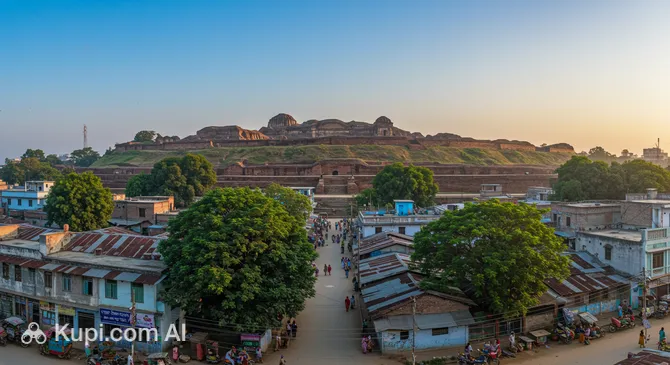
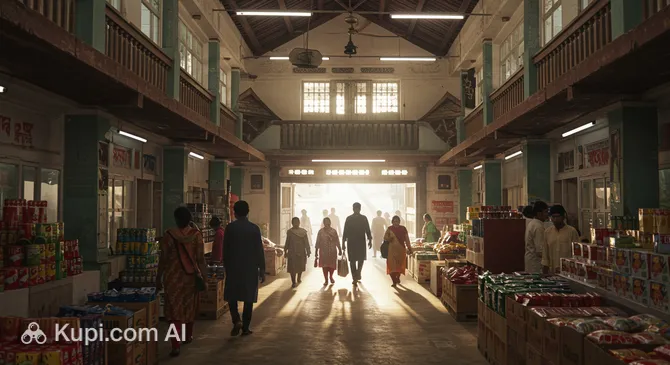
Bogra is a dynamic commercial and industrial center located in the northern part of Bangladesh. The city stretches along the western bank of the Karatoya River and is rightfully considered the "gateway" to the country's northern region. Here, the modern pace of a major trade hub uniquely intertwines with a deep historical heritage dating back to antiquity.
Geographically, the city occupies an important position in the southern Barind region, serving as a key transport hub. The population of Bogra is approximately 400,000 (with some estimates reaching 480,000), making it the second-largest city in the Rajshahi Division. While the city is primarily known for its textile, sugar, and chemical industries, it attracts explorers with its rich past.
Bogra. Illustration.
Source: Kupi.com AI
If you choose to explore the centuries-old history of this place, you will learn that the city is named after Nasiruddin Bughra Khan, the 13th-century Governor of Bengal. The main highlight of the surrounding area is Mahasthangarh—the ruins of the ancient capital Pundravardhana, dating back to the 3rd century BC. Visiting Bogra is an excellent opportunity to see the "real" industrial Bangladesh, which still retains its ancient charm and the hospitality of the local people.
Weather Overview
The climate in Bogra is distinctly subtropical, typical for this region of Bangladesh. Summers are hot and humid: from April to June, temperatures can rise to +35°C and above. Monsoon rains begin in June, bringing relief from the heat but significantly increasing humidity and potentially causing seasonal flooding of the Karatoya and Jamuna rivers.
The most pleasant time to visit the city is during the winter months (November to February). During this period, the weather is mild and dry, with comfortable temperatures ranging from 15°C to 25°C. January is considered the coldest month, with an average temperature of about 17.7°C, which is ideal for exploring open-air archaeological sites.
When planning your trip, keep in mind that the city's industrial status affects air quality, especially during the dry season when roads become dusty. Current data on the weather in Bogra will help you choose the right wardrobe: don't forget sunscreen for the summer and a light jacket for cool winter evenings.
Average monthly temperature
Average monthly precipitation
Interesting Facts
Bogra is considered one of the oldest cities in Bengal: civilization has existed in these parts since 300 BC.
The city holds the second place in the country for the number of rickshaws and also leads North Bengal in the number of private cars.
Until the end of the 20th century, Bogra was the absolute transport monopolist of the region—every single truck and bus heading to the north of the country passed through it.
The city is home to a unique sericulture nursery where you can observe the production process of the famous Bengal silk.
The Bogra municipality has a rich history of self-governance, having been officially founded between 1876 and 1884.
How to Get There
Bogra is a crucial transport hub in the northern part of the country, making it easily accessible for travelers. The city is located about 200 kilometers from Dhaka. You can reach it from the capital via comfortable buses, with the journey taking 4 to 6 hours depending on traffic conditions. There are also stable connections with Rajshahi and other major cities in the region.
The city does not have its own airport for civilian flights. The nearest airport is in Saidpur; however, it is primarily used for domestic and military purposes. Most tourists arrive in Bangladesh via Dhaka International Airport and then continue their journey to Bogra by land transport.
The railway service is an excellent alternative to buses. Trains connect Bogra with Dhaka and key points in North Bengal. The city's railway station is always full of life, and a train ride allows you to enjoy scenic views of the countryside. For up-to-date information on routes and tickets, it is worth checking the section on how to get to the city.
Station
Passenger traffic
Distance
Rajshahi Railway Station
3
94 km
Parbatipur railway station
5
100 km
Airport railway station
6
153 km
Kamalapur railway station
11
164 km
New Cooch Behar Junction railway station
7
166 km
Main Attractions
The main treasure for which it is worth visiting Bogra is Mahasthangarh. It is the oldest archaeological site in Bangladesh, featuring the ruins of the Pundranagara citadel. This site holds sacred significance for followers of Buddhism, Hinduism, and Islam, offering tourists a chance to walk among the remnants of walls and ancient structures that are over two thousand years old.
In the city itself, the Kherua Mosque—a monument of medieval architecture—is worth seeing, as is the Mohammad Ali Palace, which has been converted into a museum today. Here, you can learn about the life of the local nobility and see unique exhibits related to the region's history. For fans of religious architecture, the ancient Buddhist stupas and Hindu temples scattered around the area are also of interest.
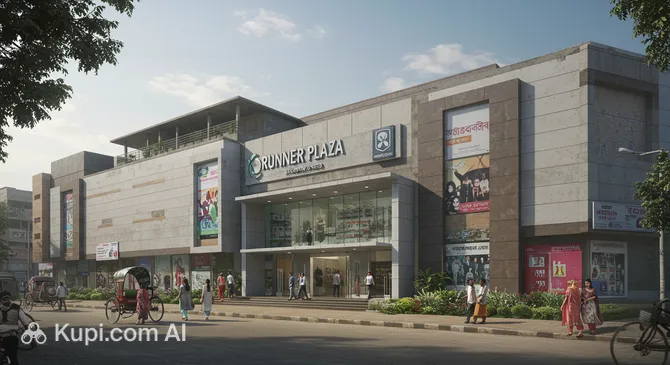
The modern part of the city offers its own locations for relaxation and walks. For example, those who want to combine sightseeing with shopping can visit the Runner Plaza shopping center. This is a popular spot among locals where you can feel the rhythm of life in modern Bogra.
Runner Plaza. Illustration.
Source: Kupi.com AI
Traveler photos:
For a more traditional experience, check out the Sheikh Sharif Uddin Super Market or take a stroll through the central markets. Even though the city is not a mass tourist center, its historical heritage and authentic atmosphere make Bogra a worthy point on the map for any traveler in South Asia.
Local Cuisine
A gastronomic journey to Bogra is unimaginable without traditional Bengali dishes. The local diet is based on rice, freshwater fish caught in the Karatoya and Jamuna rivers, and various spicy curries. Be sure to try "dal"—a thick lentil soup—and beef or chicken dishes prepared with an abundance of aromatic spices.
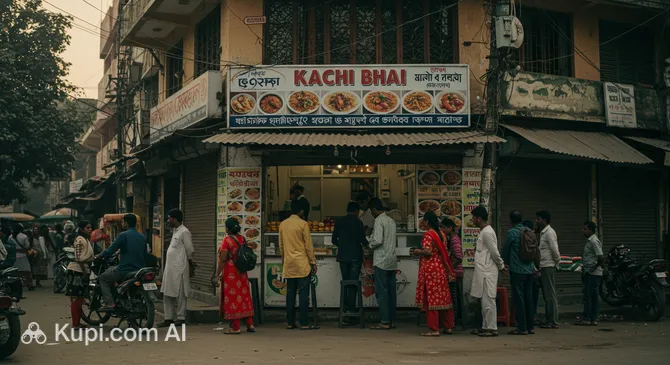
One of the best places to taste classic kacchi biryani is the Kacchi Bhai Bogura restaurant. This establishment is famous for its skill in cooking meat and rice in a single pot, preserving the juiciness and rich flavor of every ingredient.
Kacchi Bhai Bogura. Illustration.
Source: Kupi.com AI
Traveler photos:
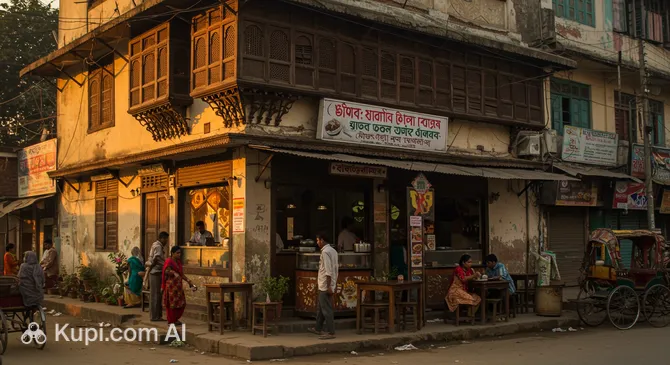
If you prefer street food or grilled meat snacks, check out Chunnu Chap and Kebab House. They prepare excellent kebabs and spicy "chap" dishes that are very popular among the townspeople. Complete your meal with a cup of strong tea ("cha") with milk and sugar, along with local sweets like rosogolla.
Chunnu Chap and Kebab House. Illustration.
Source: Kupi.com AI
Traveler photos:
The food culture in Bogra is closely tied to markets and small local eateries. Despite the absence of large international fast-food chains, the variety of local cuisine will satisfy any gourmet looking for the authentic flavors of Bangladesh.
Travel Tips
A trip to Bogra promises to be rewarding and interesting if you prepare in advance for the unique features of this industrial and historical hub. These tips will help you feel confident and comfortable during your visit.
Clothing and Essentials: Choose light clothing made from natural fabrics, as the region can be very hot. Women are advised to wear modest clothing that covers the shoulders and knees to show respect for local traditions. Be sure to bring comfortable closed-toe shoes—sidewalks can be uneven and dusty.
Transport: The most convenient way to travel short distances is by rickshaw. Agree on the price before starting the trip. Keep in mind that during peak hours (morning and early evening), traffic jams in the city can be very serious.
Finance: The official currency is the Bangladeshi Taka. In Bogra, it is best to always have cash on hand, especially for paying rickshaws and making purchases at markets. ATMs are available in the center, but international cards are not accepted everywhere.
Health and Safety: Drink exclusively bottled water and avoid ice in street drinks. During the monsoon season, be sure to use mosquito repellents. The city is quite safe during the day, but try to avoid the industrial outskirts in the evening.
Communication: The main language is Bengali. English is understood by hotel staff and major traders. Learning a few phrases in Bengali will go a long way with the locals. A SIM card can be easily purchased at numerous mobile shops.
Local Etiquette: Greet people with a nod of the head or the traditional "Salam." Try not to use your left hand for passing money or food, as this is considered impolite.
What to Avoid: Do not photograph military or strategic objects without permission. Also, avoid public displays of affection, as this is not customary in Bangladeshi society.
Additional Tip: Be sure to set aside a whole day for a trip to the ruins of Mahasthangarh—it is one of the most impressive historical sites in all of South Asia.
Following these simple rules will help you enjoy the hospitality of Bogra and discover the real life of northern Bangladesh. Have a pleasant journey!
Entertainment & Nightlife
Nightlife in Bogra differs significantly from Western standards: you won't find noisy nightclubs or bars here, as the city lives according to conservative traditions and is commercially oriented. Most activity after sunset moves to the evening markets and restaurants. An evening stroll through the lively central streets allows you to see the city lights reflected in the windows of numerous shops.
Daytime entertainment includes visiting local theaters and cinemas, which are centers of cultural life for the citizens. For family vacations, the city provides parks, as well as the Runner Plaza shopping center, where you can spend time in air-conditioned halls shopping or visiting food courts. The Karatoya riverbank is also a popular spot for an evening promenade.
Safety in the city is at an acceptable level for daytime walks; however, tourists are recommended to return to their hotels by 10:00 PM, as street activity decreases noticeably. For traveling in the evening, it is better to use taxis or rickshaws, which are abundant in Bogra. Remember that for more vibrant impressions and active night leisure, locals usually head to Dhaka or Rajshahi.
Parks & Museums
While Bogra is primarily an industrial center, there are several places for quiet relaxation and cultural enrichment. In the heart of the city lies the central park, which serves as the main walking spot for locals. Another interesting green area is the city sericulture nursery, where you can not only rest in the shade of trees but also learn a lot about silk production.
History buffs should definitely visit the museum at the Mohammad Ali Palace (Nawab Palace). The museum's exhibition tells the story of the local aristocracy and the history of the district. It features personal belongings of the rulers, old photographs, and interior items that allow you to feel the atmosphere of the past century.
The region's most valuable historical artifacts are concentrated in the Mahasthangarh Archaeological Museum, located just north of the city. It houses finds discovered during excavations of the ancient capital Pundravardhana, including terracotta plaques, coins, and figurines. These cultural objects allow visitors to Bangladesh to touch the heritage of Buddhist kings and Muslim sultans.
Getting Around
The public transport system in Bogra is typical of large cities in Bangladesh. The primary and most popular means of transport for short distances are rickshaws—the city even ranks second in the country for their number. This is not only a convenient but also a very colorful way to travel through the narrow streets of the center.
For longer distances, residents use auto-rickshaws (tuk-tuks) and city buses. It is worth noting that during peak hours—7 to 10 AM and 4 to 7 PM—the city's roads are heavily congested due to high transit traffic, and a trip can take significantly longer than expected. Many schools and businesses have their own buses to help ease the load on the city's main thoroughfares.
Payment on rickshaws and buses is made in cash, so tourists should always carry small change. There are no fixed rates for rickshaws, so it is better to agree on the price of the trip in advance. There are also many private cars in the city, emphasizing its status as an important economic center, but for a tourist, the nimble cycle rickshaw remains the most practical and fastest way to get around.
Accommodation
Bogra's hotel infrastructure is primarily geared toward business travelers and those passing through the city. Budget and mid-range hotels predominate here. Most accommodation options are concentrated in the city center, near the railway station and the Karatoya riverbank, which is convenient for quick access to transport hubs and markets.
For tourists who have come to see the ancient ruins, three-star hotels offering a basic set of amenities—such as air conditioning, Wi-Fi, and breakfast—are the optimal choice. There are practically no luxury five-star resorts in the city itself, but the level of service in the leading local hotels is quite consistent with international standards for the middle segment.
If you plan to visit during holidays or major fairs, it is recommended to book accommodation in advance, as the city is an important commercial hub and vacancies in decent hotels can fill up quickly. The price range is very affordable, and payment is most often made in cash, although large hotels do accept bank cards.
Nearby Cities
Thanks to its location, Bogra serves as an excellent starting point for exploring the country's northern regions. Nearby are unique archaeological sites, and the transport network allows for easy day trips to neighboring cities, each with its own unique character.
One of the most interesting destinations is Naogaon, located just 45 kilometers away. This city attracts tourists due to its proximity to UNESCO World Heritage sites, such as the Buddhist Vihara at Paharpur. You should also consider a trip to Sirajganj, which lies on the way to Dhaka and is famous for its river landscapes and the bridge over the Jamuna River.
City
Population
Distance
Naogaon
150 025
45 km
Gaibandha
59 289
55 km
Sirajganj
167 200
55 km
Jamalpur
167 900
59 km
Kishmat Dhanbari
36 125
62 km
For a deeper immersion into provincial Bangladesh life, you can head to Gaibandha or Jamalpur. Exploring the surroundings of Bogra will give you unforgettable impressions of picturesque rice fields, ancient mosques, and the hospitality of rural residents.
Shopping & Souvenirs
Shopping in Bogra is primarily about visiting lively traditional bazaars where you can find everything from fresh produce to textiles. The city is famous for its high-quality cotton, silk products, and sugar. A walk through the central shopping rows will allow you not only to purchase necessary items but also to immerse yourself in the atmosphere of a real Oriental market.
For those who prefer a more modern shopping format with comfortable conditions and fixed prices, the Runner Plaza shopping center is open in the city. It features clothing, electronics, and cosmetics stores, as well as rest areas. Another popular point on the city's shopping map is the Sheikh Sharif Uddin Super Market, where you can find a large selection of everyday goods.
Sheikh Sharif Uddin Supermarket. Illustration.
Source: Kupi.com AI
Traveler photos:
Crafts made by local artisans, as well as the famous Bengali sweets, are often brought back as souvenirs from Bogra. Don't forget to look for silk items produced at the local nursery. Shops usually operate from morning until late evening, and when visiting markets, remember that the ability to bargain is part of the communication culture here.