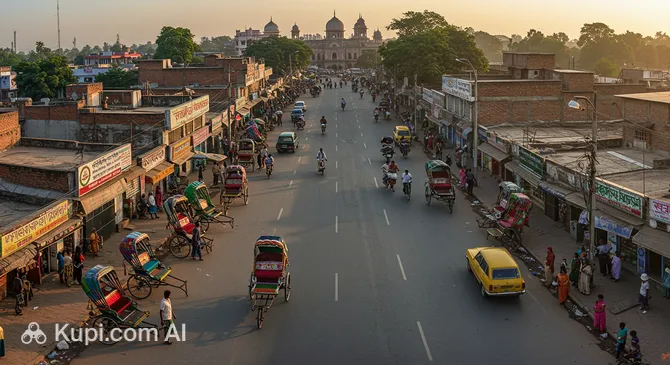
Tangail is a vibrant and distinctive city in central Bangladesh, serving as the administrative center of the district of the same name. Situated on the banks of the Louhajang River, it embodies the spirit of a true Bengali province, where centuries-old craft traditions harmoniously coexist with a modern industrial pace. Located in the Dhaka Division, about 100 kilometers from the capital, it is an important transport and trade hub for the region.
The city's geographical position on fertile plains defines its climate and way of life. With a population of about 390,000, Tangail does not strive to be a glossy tourist center, but it is precisely this authenticity that attracts travelers wishing to see the country's historical heritage and everyday lifestyle. The surrounding area is lush with greenery, and the river adds a special charm to the urban landscapes, especially during the monsoon season.
Tangail. Illustration.
Source: Kupi.com AI
The city's main pride and "calling card" are its famous weaving workshops. Tangail is world-renowned for the production of unique saris, characterized by the finest weave and intricate patterns. Visiting local markets and watching the masters at work allows for a deeper understanding of the region's culture. Additionally, the city is famous for its traditional sweets, which are considered among the best in the country.
We invite you to discover Tangail — a city of masters and rivers, where the hospitality of local residents and the color of Eastern bazaars will leave an indelible impression. It is an ideal place for those who want to get off the beaten path and feel the real pulse of Bangladesh.
Weather Overview
The climate in Tangail is distinctly tropical with high humidity throughout most of the year. The city is under the influence of the monsoons, which defines two main seasons: wet and dry. Travelers should keep in mind that the city weather can change significantly depending on the month.
The most comfortable time to visit is from November to February, when the average temperature is around 18-23°C. These days are usually sunny and dry. Warming begins in March, and by June, temperatures can reach 35°C and above. The rainy season lasts from June to October, bringing heavy precipitation (up to 327 mm in June) and frequent flooding due to the river's proximity.
Expect a hot and humid summer with frequent thunderstorms, while winter will delight you with mild warmth and a near-total absence of rain. If your trip is planned for the monsoon period, be sure to bring reliable waterproof gear and footwear suitable for walking in high humidity.
Average monthly temperature
Average monthly precipitation
Interesting Facts
Tangail is the birthplace of world-famous saris. The city's weavers use unique hand-weaving techniques to create products that are highly valued not only in Bangladesh but also in neighboring India.
Tangail District was officially formed in 1969, and the city has maintained its reputation as a vital craft center in the central part of the country for decades.
The Louhajang River flows through the city, playing a key role in the region's ecosystem and serving as a favorite spot for local residents to walk.
Tangail is only 80–100 kilometers from Dhaka; however, due to local traffic conditions, the journey from the capital can take up to 4 hours.
The city is famous for its unique yogurt and traditional sweets, recipes for which are passed down through generations in local shops.
How to Get There
The accessibility of Tangail is largely determined by its proximity to the country's capital. Ground transport serves as the main link for travelers. To plan your route most effectively, it is recommended to research in advance how to get to this craft center, considering the traffic density on Bangladesh's highways.
The nearest major air hub is Hazrat Shahjalal International Airport (DAC), located in Dhaka. After arriving in the capital, tourists usually transfer to buses departing from the Mohakhali or Gabtoli central bus terminals. The bus ride takes between 2 to 4 hours depending on traffic. Comfortable trains running from Dhaka Railway Station to the Tangail station are also popular, providing a more scenic and time-predictable journey.
Rail service is an excellent alternative to buses. The local railway station accepts trains passing through the city to the northern and western regions of the country. This is a convenient way to travel, though it's worth noting that tickets should be booked in advance during peak hours and holidays due to high demand.
Station
Passenger traffic
Distance
Airport railway station
6
67 km
Kamalapur railway station
11
77 km
Rajshahi Railway Station
3
134 km
Jashore Junction railway station
5
142 km
Agartala railway station
10
147 km
Regional bus services and minibuses are often used to travel from neighboring cities. Within Tangail itself and for short-distance trips, tourists can use CNG rickshaws, which are the most maneuverable means of transport in heavy urban traffic.
Main Attractions
Although Tangail is primarily known as a center of crafts, there are several interesting locations within the city and its immediate surroundings. For those looking for an outdoor retreat, SP Park is an excellent choice. This is a popular spot among locals where you can stroll and enjoy an atmosphere of tranquility away from the noisy shopping streets.
Fans of gastronomic discoveries and authentic flavors should stop by the legendary "Gouro Ghosh Sweets and Curd". It is famous for its traditional desserts, which have become a kind of culinary landmark of the city. For a quick snack, Shawarma House is also popular, offering familiar dishes with a local twist.
If your goal is shopping and getting to know the locals' way of life, head to Capsule Market or the modern Sattar Shopping Complex. Here you can not only buy clothes and essentials but also observe the bustling life of a Bangladeshi trade hub. Although the city is not overflowing with ancient monuments, its streets and markets are themselves a living exhibition of local culture.
Local Cuisine
A gastronomic journey through Tangail begins with classic Bengali dishes based on rice and fresh river fish. Popular species like hilsa (ilish) and magur are caught from the Louhajang River to prepare fragrant curries with local spices. The cuisine here is spicy and rich, typical of the central regions of Bangladesh.
The city takes special pride in its confectionery. A visit to Gouro Ghosh Sweets and Curd is a must to try the famous mishti doi (sweet yogurt). This dessert has become a symbol of the region. On the city streets, you can also find stalls with popular snacks: crispy puchka, samosas, and freshly prepared chapati with lentil sauce (dal).
For a more substantial lunch or dinner, Shawarma House is a good choice, where you can find dishes that combine international standards with local taste preferences. The food culture in the city is centered around markets and bus stations, where inexpensive and authentic cafes can always be found. It is best to wash down your meal with traditional milk tea (cha) or freshly squeezed juices from seasonal fruits like mango and guava.
Travel Tips
A trip to Tangail promises to be rich and colorful. To make your journey as comfortable as possible, we have prepared a few practical recommendations.
Clothing and Essentials: Choose light, breathable clothing made of natural fabrics, as the region has high humidity. Remember local etiquette: clothing should be modest, covering shoulders and knees, especially when visiting markets and religious sites.
Transport: To get around the city, it is best to use CNG rickshaws. They are maneuverable and allow you to bypass traffic jams faster. Always agree on the fare with the driver in advance.
Finance: The main currency is the Bangladeshi Taka. In Tangail, it is essential to have cash with you, as cards are only accepted in very large shopping centers. ATMs are available in the center, but they may not work with international cards.
Health: Drink exclusively bottled water. During the monsoon season (June–October), be sure to use repellents, as the number of mosquitoes increases significantly.
Communication: The main language is Bengali. English is understood in hotels and large stores, but it is useful to learn a few basic phrases for communicating in the markets. You can buy a SIM card at any mobile shop with your passport.
Safety: Generally, the city is peaceful, but follow standard precautions: watch your belongings in crowded places and avoid walking in unlit areas after dark.
What to Avoid: You should not photograph people without their consent, especially women and people at prayer. Also, avoid eating street food if you are not sure of its freshness.
Special Tip: If you plan to buy the famous saris, it's better to do so in the specialized weaving quarters — the selection is larger and the prices are lower than in reseller shops.
May your acquaintance with Tangail be filled with bright colors and only pleasant discoveries!
Entertainment & Nightlife
The entertainment scene in Tangail reflects its status as a quiet provincial center. There are no noisy nightclubs or bars here, as the city's social life traditionally winds down after dark. The main evening leisure for locals revolves around cozy tea stalls in the markets and gatherings in restaurants, where the latest news is discussed over a cup of aromatic tea.
For family vacations and walks, SP Park is ideal, offering amusement rides or simply green alleys to enjoy. During the day, the city offers a cultural program in the form of cinemas showing popular Bengali films. This is a great way to immerse yourself in local mass culture and feel the festive atmosphere alongside the townspeople.
River trips on the Louhajang River hold a special place in Tangail's life. Although organized excursions are rare, you can always arrange a small trip along the shore with local boatmen, especially at sunset. This is one of the most romantic and peaceful activities available in the region, allowing you to see the city from a completely different perspective.
Parks & Museums
Tangail is a densely built city, so there are few large park complexes. Nevertheless, for outdoor relaxation, locals and visitors most often choose SP Park. This is a well-maintained green area where you can spend time with the whole family, enjoying the quiet and small amusement rides. Additionally, the banks of the Louhajang River serve as a natural recreational zone, perfect for a sunset stroll.
While there are no large historical museums in the very center of Tangail, the local markets and weaving quarters play the role of cultural guardians. Every workshop is a kind of "living museum" where you can see the process of creating the famous saris, from thread preparation to the finished product. For those interested in architectural heritage, Zamindar Bari (landlord palaces) are preserved in the district (outside the city limits), such as the palace in Hemnagar, which impresses with its former grandeur.
If you crave a larger-scale encounter with nature, it is worth heading to Madhupur National Park, located about an hour's drive from the city. This is a unique reserve with thick forests where you can see rare animals and birds. The combination of small city squares and rich natural areas in the vicinity makes Tangail an interesting place for those who appreciate quiet and educational leisure.
Getting Around
The transport system of Tangail is typical for large Bengali cities: there is no metro or tram, but the city is permeated by a network of maneuverable transport options. The main means of travel for locals and tourists are CNG rickshaws (three-wheeled gas-powered scooters) and traditional cycle rickshaws. They are ideal for covering short distances through the city's narrow streets.
For trips between districts or to the suburbs, you can use local buses. However, be prepared for the fact that they do not have a fixed schedule, and the cabins are often overcrowded. During peak hours in the morning and evening, significant congestion forms on the city's main roads, so it's better to plan your travel time with a margin.
The payment system for city transport is exclusively cash-based. The cost of a rickshaw ride is usually negotiated in advance, and the ability to bargain is welcomed here. For more comfortable trips, you can try calling a taxi through apps if they are available in the region, but private drivers and CNGs remain the most reliable and fastest way to get to any point in Tangail.
Accommodation
The hotel infrastructure in Tangail is primarily geared toward business travelers and transit visitors, so do not expect luxury five-star hotels here. Nevertheless, the city offers a decent selection of budget guesthouses and mid-range hotels providing basic comfort and a hospitable atmosphere.
The most convenient area to stay is the city center and the blocks adjacent to shopping zones, such as the Sattar Shopping Complex. By staying here, you will be in the heart of the action, close to the main markets and transport hubs. Accommodation prices are quite affordable, typically ranging from 1,000 to 3,000 Bangladeshi Taka per night.
When planning your trip, keep in mind that during local festivals or major weaving fairs, the best accommodation options may be fully booked. It is recommended to book rooms in advance through available online services or by phone. For those planning a long stay, apartment rental options in residential neighborhoods can also be found in the city.
Nearby Cities
Tangail serves as an excellent starting point for exploring the surroundings, where both natural treasures and cozy provincial towns are hidden. Just 10 kilometers away is Elenga — a small town often visited for its calm atmosphere and a glimpse into the rural life of the region. It is easily reached by rickshaw or local bus in a matter of minutes.
Slightly further away are interesting destinations such as Mirzapur and Kalihati. These places attract travelers with their picturesque views and the chance to see traditional Bengali settlements. It is also worth noting Sakhipur and Dhubaria, which allow for a deeper immersion into the culture of the Dhaka region without the hustle and bustle of big metropolises.
City
Population
Distance
Elenga
55 000
10 km
Kalihati
37 038
17 km
Mirzapur
28 602
25 km
Sakhipur
30 028
27 km
Dhubaria
12 760
28 km
For those ready for longer trips, Madhupur National Park — one of the country's oldest forests — is just 50 kilometers away. The surroundings of Tangail offer a unique opportunity to see not only the skill of the weavers but also the rich natural and cultural heritage of central Bangladesh. Be sure to set aside a day to explore these colorful locations!
Shopping & Souvenirs
Shopping in Tangail is primarily a hunt for textile treasures. The city is rightfully considered the capital of handmade Bangladeshi saris. The best purchases are made in traditional bazaars, where the stalls are filled with fabrics of incredible beauty. A Tangail sari will be the ideal and most valuable souvenir you can bring home from this trip.
For those who prefer a more modern shopping format, there are shopping centers in the city like the Sattar Shopping Complex and Capsule Market. They offer a wide range of clothing, shoes, and accessories. These are convenient places to buy everything you need in one spot — from household goods to cosmetics and souvenirs.
Don't forget to stop by the food markets, where you can buy fresh spices, tea, and local sweets. Shops usually operate from morning until late evening; however, keep in mind that Friday is a holiday in Bangladesh, and many stalls may close earlier or be closed entirely. Payment is most often made in cash in the local currency (Taka), so it is recommended to always carry the necessary amount of money with you.