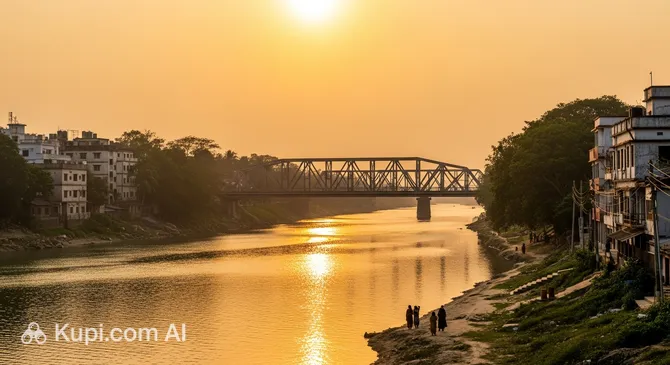
Chuadanga is a cozy administrative center in southwestern Bangladesh, serving as an important commercial hub for the Khulna Division. Situated on the picturesque banks of the Mathabhanga River, the city charms visitors with its calm atmosphere and traditional agrarian lifestyle. Here, you won't find the hustle and bustle of the capital; instead, you can fully experience the authentic spirit of provincial Bengal.
Geographically, the city is surrounded by fertile plains where rice, jute, and sugarcane are grown. With a population of about 97,000, Chuadanga is a compact and easy-to-explore hub. Interestingly, the literacy rate here is noticeably higher than the national average, which is reflected in the cultural environment and the openness of the locals.
Chuadanga. Illustration.
Source: Kupi.com AI
In the city's history, transport development holds a special place: it was here that the country's first railway station opened in 1862. Today, this place attracts those seeking authenticity — from walks along the river to visiting colorful local markets. Chuadanga is an excellent choice for travelers wishing to see the country's life without tourist filters.
Weather Overview
Chuadanga is dominated by a typical tropical savanna climate, characterized by a clear change of seasons. The most comfortable period to visit is winter (from November to February), when the average temperature stays around +18...+21°C, and the air remains dry and fresh. During this time, rain is very rare, creating ideal conditions for walking.
With the arrival of spring in March and April, temperatures begin to rise rapidly, reaching +35...+38°C during the day. This is the hottest period of the year. Following the heat comes the monsoon season, which lasts from May to September. Expect heavy downpours, high humidity, and frequent thunderstorms, which revive the local flora but can complicate travel around the region.
Before your trip, it is recommended to check the current weather in Chuadanga to choose the right wardrobe. Keep in mind that due to the proximity of rivers, humidity feels especially strong in the summer months, and on winter nights, the temperature can drop to +12°C, so a light jacket or sweater will certainly not be out of place.
Average monthly temperature
Average monthly precipitation
Interesting Facts
Railway Pioneer: In 1862, the very first railway station in the territory of modern Bangladesh was opened right here in Chuadanga.
District Status: The city received its modern status as the administrative center of the district of the same name relatively recently — in 1984, having previously been part of Kushthia.
River Ring: The city is literally surrounded by water arteries — in addition to the main Mathabhanga River, the Bhairab, Chitra, Nabaganga, and Kumar flow nearby.
Above-Average Literacy: The education level in Chuadanga is over 61%, which significantly exceeds the country's national average.
Border Position: The district, of which the city is the center, directly borders the Indian state of West Bengal to the west.
How to Get There
Chuadanga enjoys good transport connectivity with the country's key cities, making it accessible for tourists exploring the southwestern regions. The main way to get to Chuadanga is by rail or intercity bus services. Trains and buses depart regularly from the capital, Dhaka, with travel time usually ranging from 5 to 8 hours depending on traffic conditions.
The city itself does not have its own airport, so travelers preferring air travel should aim for the nearest air hubs. Major airports are located in neighboring regions, ensuring a steady flow of passengers.
The Chuadanga Railway Station is not just a transport facility but an important historical landmark. Regular trains connect the city with Kushthia to the north and Jashore to the south. Traveling by rail is considered one of the most comfortable and scenic ways to see the country's rural landscapes.
Station
Passenger traffic
Distance
Jashore Junction railway station
5
64 km
Rajshahi Railway Station
3
86 km
Howrah railway station
21
127 km
Durgapur railway station
7
157 km
Airport railway station
6
161 km
Main Attractions
In Chuadanga, there are no large-scale attractions typical of major metropolises; however, the city offers tourists something more valuable — the opportunity to immerse themselves in the authentic atmosphere of everyday Bangladesh. The main natural attraction is the Mathabhanga River. Its banks are a favorite spot for walks, observing traditional fishing, and leisurely relaxation away from city noise.
The architectural heritage of the region is represented by ancient mosques and Hindu temples scattered throughout the district. These shrines are not only spiritual centers but also reflect the rich cultural palette of the country's southwest. Exploring them, one can notice unique carving and decorative details characteristic of local master craftsmen of the past.
Particular attention should be paid to the Chuadanga Railway Station. Being the first in the country, it retains historical significance and serves as a living monument to the colonial era. It is also worth visiting the central squares and lively markets, which turn into real theaters of life where farmers and traders create a unique local color unavailable in glossy guidebooks.
Local Cuisine
A gastronomic journey to Chuadanga is, first and foremost, an introduction to classic Bengali cuisine in its most honest form. The diet here is based on dishes made from fresh rice, river fish, and seasonal vegetables. One of the main delicacies is Ilish (Hilsa) fish, which is prepared in local rivers in many ways — from stewing with mustard to frying with spices.
Be sure to try traditional bhat (steamed rice) with various curries. A regional specialty is the use of patali — a thick syrup or sugar made from date palm sap, which gives a unique flavor to local sweets. During the monsoon and winter seasons, the city's markets are filled with the aromas of freshly prepared pitha (rice cakes) and milk-based desserts.
The food culture here is closely tied to street stalls and small family-run establishments. The best places for lunch are concentrated around the markets and the station, where food is always fresh and prepared right before your eyes. For a drink, locals will offer you strong and sweet tea (cha) with milk or refreshing green coconut water, which perfectly quenches thirst on hot days.
Travel Tips
Visiting Chuadanga will provide you with many pleasant impressions if you consider a few practical nuances of life in the Bangladeshi province in advance. These tips will help you feel confident and safe during your trip.
Clothing and Essentials: Choose lightweight clothing made of natural fabrics, such as cotton, to better handle the heat and humidity. Remember modesty: when visiting temples and mosques, shoulders and knees should be covered. Be sure to bring comfortable shoes for walking through the markets.
Transport: Within the city, it is best to get around by rickshaw — it is cheap and allows you to see everything around you. For intercity travel, check the train schedule at the station in advance, as this is the most comfortable option.
Finance: International bank cards are practically not accepted in the city, so always carry a sufficient supply of cash Taka. ATMs can be found in the center, but they do not always work with foreign cards.
Health and Safety: Drink only bottled water and avoid ice in street drinks. During the monsoon season (June-September), be prepared for possible flooding in rural areas.
Communication: The main language is Bengali. English is understood by only a few, so it is helpful to learn basic phrases or use an offline translator. For connectivity, buy a local SIM card (e.g., Grameenphone or Robi).
Local Etiquette: Always remove your shoes when entering homes or temples. The traditional greeting "As-salamu alaykum" is always met with a smile.
What to Avoid: It is not recommended to walk alone on the outskirts of the city or along the river after dark. Also, try not to take photos of people without their explicit consent.
Seasonality: The best time to visit is from November to February, when the weather is driest and coolest, making it ideal for long walks.
A trip to Chuadanga is an opportunity to see the real Bangladesh, and your respect for local traditions will make this visit unforgettable.
Entertainment & Nightlife
The entertainment scene in Chuadanga is predominantly calm and traditional. You won't find noisy nightclubs or bars here — the city's evening life is centered around cozy tea stalls (cha-dokan) and bustling market squares. Locals prefer to spend time in long conversations with friends, creating a very friendly and safe atmosphere for walking.
The banks of the Mathabhanga River remains the primary spot for daytime and evening strolls. Families and young people often gather along the water to enjoy the breeze and sunset views. If you are looking for more active cultural leisure, such as cinemas or large-scale festivals, residents often make short trips to nearby regional centers like Jashore or Kushthia.
For tourists, the main entertainment in Chuadanga is exploring the local bazaars. These are not just places for shopping, but a whole world of colors and sounds where you can watch artisans at work or try street food prepared right in front of you. This format of relaxation allows you to get as close as possible to the local culture and feel the true rhythm of life in provincial Bangladesh.
Parks & Museums
In Chuadanga, there are practically no traditional museums in the classic sense; however, the role of a "living museum" is played by historical streets and old administrative buildings. The main cultural points of attraction are local mosques and Hindu temples, which preserve the region's history and reflect the religious heritage of many generations of locals.
Regarding green zones, specialized city parks are few and small in area. However, this is more than compensated for by the natural landscape: fertile plains and river floodplains create natural spaces for relaxation. The main recreational zone for townspeople remains the Mathabhanga River embankment, where the absence of formal construction allows one to enjoy natural silence.
A walk into the rural areas on the outskirts of the city can be an excellent alternative to visiting a botanical garden. Here you can see endless fields of jute and sugarcane, as well as traditional Bengali villages. This format of relaxation is ideal for those seeking solitude and wanting to see the untouched agrarian beauty of the region.
Getting Around
The transport system in Chuadanga is characterized by simplicity and efficiency, perfectly suited to the scale of a compact city. The main means of transport for locals and tourists are rickshaws. These brightly decorated three-wheeled carriages are the most convenient way to move through narrow streets, with a trip to any point in the center taking about 10 to 20 minutes.
For trips over longer distances within the district, auto-rickshaws (CNG) and small buses are used. Chuadanga is a city with low traffic density compared to megacities, so serious traffic jams are rare here, except for peak hours around the markets. Many travelers prefer to explore the central part of the city on foot, as distances are quite comfortable for walking.
Fares are always paid in cash in Bangladeshi Taka. There are no fixed rates for rickshaws, so the price should be negotiated in advance. The city's railway station remains a key link for connecting with other regions, offering regular services that allow for quick and inexpensive travel to neighboring districts.
Accommodation
Accommodation options in Chuadanga focus primarily on practicality and affordability. Budget hotels and guest houses predominate here, located mainly near the railway station and central markets. This is an ideal place for transit travelers and those looking for an authentic experience for reasonable money.
A typical room in a local guesthouse offers basic amenities: a bed, a fan, and a bathroom. Prices start from 500–1500 Taka per night, making a stay here very economical. While there are no luxury international hotel chains in the city, the cleanliness and sincere Bengali hospitality often compensate for the lack of frills.
When planning a trip, it is recommended to book accommodation in advance, especially if your visit coincides with local holidays or fairs. Expats and those planning a long stay should look into private apartments in the city's administrative areas, where conditions may be more modern and quiet.
Nearby Cities
Chuadanga serves as an excellent base for exploring the southwestern part of the country, as several interesting cultural and administrative centers are easily accessible from here. Many neighboring cities are ideal for day trips, offering a deeper dive into the history and traditions of the region.
One of the most popular destinations is Kushthia — the recognized cultural capital, famous for the Lalon Shah shrine. It is also worth visiting Jhenaidah and Harinakunda, which attract visitors with their picturesque rural landscapes and traditional crafts. If you are planning a trip towards the Indian border, the town of Tehatta is also within reach.
Exploring the surroundings of Chuadanga will allow you to see the diversity of the Bangladeshi province — from holy sites to fertile farmlands. Most of these destinations are accessible by train or bus, making travel easy and budget-friendly.
Shopping & Souvenirs
Shopping in Chuadanga is a fascinating adventure through local bazaars, where life hums from early morning until late evening. You won't find huge shopping malls with global brands here, but you will be able to find unique products by local artisans and the freshest farm produce. The main trade is concentrated in the markets near the railway station and along the riverbanks.
Special attention should be paid to jute products and traditional Bangladeshi fabrics. The region is famous for the production of sugarcane and rice, so local stalls with spices and sweets based on palm sugar (gur) are very popular. These make excellent and inexpensive souvenirs to bring back from your trip.
The city's markets operate mainly on a cash-only basis, so tourists should take care of currency exchange in advance. Shops open early in the morning and close at dusk, with a possible break during the hottest hours of the day. Bargaining in the markets is not only appropriate but also an important part of local etiquette, allowing you to make a purchase at a good price.