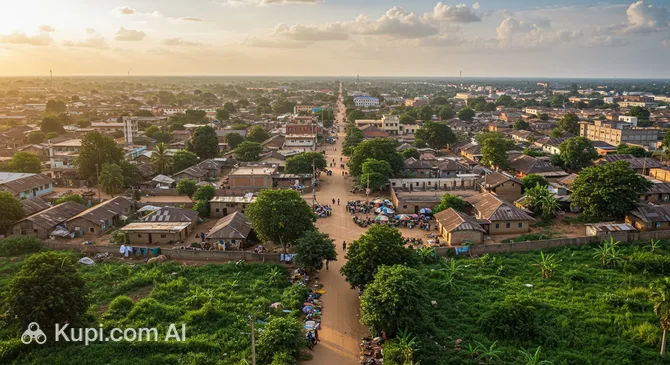
Abomey-Calavi is a dynamically developing city in the southern part of Benin, which has transformed from a modest trading settlement into the country's second most populous center. Located in the Atlantique Department, it serves as a key satellite to the economic capital, Cotonou, while maintaining its own unique atmosphere steeped in the spirit of antiquity. The city's name is inextricably linked to the historical heritage of Abomey, the capital of the once-powerful Kingdom of Dahomey.
Geographically, the city occupies a strategic position between the coast and the hinterlands, stretching out near the picturesque Lake Nokoué. With a population of approximately 656,000, Abomey-Calavi is a colorful blend of bustling residential neighborhoods and commercial zones. Although the city is often perceived as a commuter town for the neighboring metropolis, its own energy and cultural background make it a vital point on the regional map.
Abomey-Calavi. Illustration.
Source: Kupi.com AI
Tourists are primarily drawn here by its authenticity: its proximity to unique lake settlements and the opportunity to experience Dahomey traditions through local monuments. The city serves as an excellent base for those who want to explore modern life in Benin without unnecessary gloss, but with deep respect for its roots. We invite you to discover Abomey-Calavi—a place where the rhythm of modern life meets the echo of great history.
Weather Overview
The climate in Abomey-Calavi is typical for the tropical belt of West Africa: warm and humid weather prevails here year-round. The average air temperature fluctuates around +26°C — +29°C. The hottest months are February and March, when the thermometer can rise to +33°C, while the coolest period is August with a comfortable +25°C during the day.
Precipitation is unevenly distributed, forming two rainy seasons. The main peak of humidity occurs in May and June (up to 230 mm of precipitation per month), and a second, less intense rainy period is in October. At this time, air humidity increases significantly due to the proximity to Lake Nokoué and the ocean coast. Detailed information about the weather in Abomey-Calavi should be checked before your trip to plan your excursions correctly.
The most favorable time for tourists is the dry season, lasting from December to February. During this time, rain is rare and the sky remains clear more often. However, it should be noted that even in the dry period, humidity remains noticeable, which is characteristic of the entire Atlantique Department. When planning your visit, opt for light clothing and don't forget sun protection.
Average monthly temperature
Average monthly precipitation
Interesting Facts
Abomey-Calavi is a city capable of surprising even an experienced traveler with its hidden features and important role in the life of the region.
Academic Hub: The city is home to the University of Abomey-Calavi, the largest and most significant public higher education institution in southern Benin.
Second in the Country: Despite its proximity to Cotonou, Abomey-Calavi is an independent city and the second most populous in Benin, covering an impressive area of 650 square kilometers.
Lake Economy: A significant part of the local population still makes a living from fishing on Lake Nokoué, maintaining traditional fishing methods that have existed here for centuries.
Royal Connection: The city's name directly refers to the great city of Abomey, which was the political and cultural heart of the powerful Kingdom of Dahomey.
How to Get There
The transport accessibility of Abomey-Calavi is due to its advantageous location near the country's main economic arteries. Travelers planning to get to Abomey-Calavi usually use neighboring Cotonou as the primary transport hub. A trip by car or taxi between the cities takes about 30 to 45 minutes, although potential rush-hour traffic should be taken into account.
The city does not have its own airport. The nearest international flights arrive at Cotonou Cadjehoun Airport (Cardinal Bernardin Gantin International Airport - COO), located a few kilometers away. From there, it is most convenient to reach the center of Abomey-Calavi by official taxi or a pre-booked transfer.
Railway communication in the region is poorly developed, so buses and shared taxis remain the main ground transport. They connect Abomey-Calavi with other major centers such as Porto-Novo and Ouidah. For those seeking something more exotic, it is possible to reach some areas via Lake Nokoué by motorboats, a practice common among the local population.
Station
Passenger traffic
Distance
Lagos Terminus Railway Station
5
115 km
Lagos Terminus Railway Station
5
115 km
Train Station Ibadan
1
199 km
Main Attractions
The main attractions of Abomey-Calavi are closely intertwined with the region's heroic past and its natural wealth. One of the most impressive sites is Amazon Square, home to a majestic monument honoring the legendary female warriors of Dahomey. This monument serves as a reminder of the courage of the ancient kingdom's defenders and is a must-visit for all history buffs.
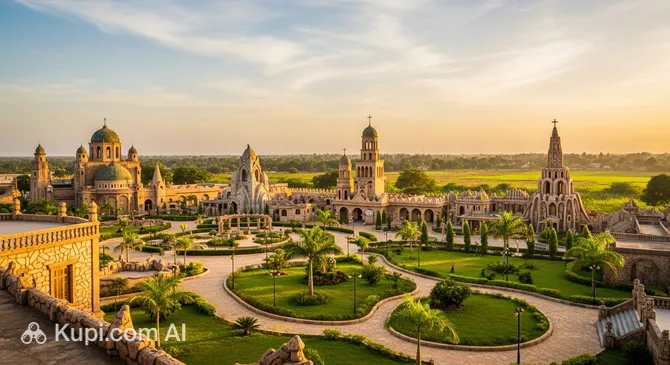
Another significant site is the Martyrs' Monument, dedicated to those who fought for the country's independence. For those seeking spiritual solitude or a walk in the fresh air, the Calavi Holy Land Park offers a peaceful atmosphere within the city limits.
Holy Land Park Calavi. Illustration.
Source: Kupi.com AI
Traveler photos:
The natural jewel of the city is Lake Nokoué. From here, boat excursions depart for the famous floating village of Ganvie, often called the "Venice of Africa." The stilt houses and the water-based lifestyle of the local residents leave an indelible impression. Also, in the vicinity of the city, the symbolic "Slave Route" (Route des Esclaves) passes—a route that preserves the memory of historical chapters of colonialism and the people's struggle for freedom.
For lovers of gastronomic and ethnographic tourism, it is worth stopping by Le Grand Café or visiting Le Tabor to experience local hospitality. Not far from the city is also the giant Dantokpa Market, where you can find everything from rare spices to exotic voodoo artifacts.
Local Cuisine
A gastronomic journey through Abomey-Calavi is, first and foremost, an introduction to the vibrant flavors of West Africa. Thanks to the proximity to Lake Nokoué, fish and seafood take center stage in the local diet. Be sure to try grilled fish or fish in rich soups seasoned with aromatic spices and chili peppers.
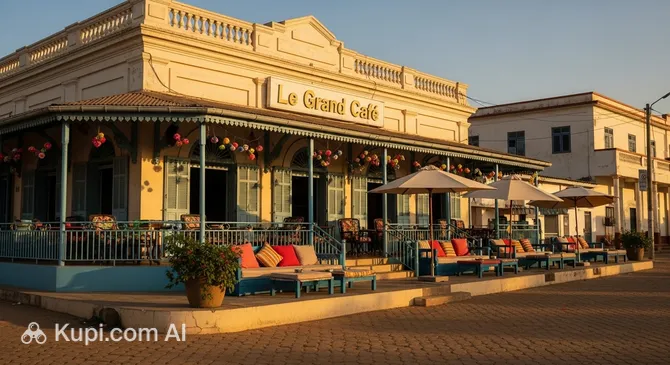
The basis of many dishes consists of cassava, yams, and rice. Traditional accompaniments to meals include various types of thick sauces and pastes, such as "fufu" or "aloko" (fried plantains). To experience the city's atmosphere, you can visit Le Grand Café, which serves both classic local dishes and options adapted for European tastes.
Le Grand Café. Illustration.
Source: Kupi.com AI
Traveler photos:
If you are looking for an establishment with a cozy atmosphere and a proven reputation, consider Le Tabor. Here you can not only have lunch but also observe the local dining culture. Street food is also popular: at markets and busy intersections, vendors offer freshly baked flatbreads and spicy snacks. However, tourists are advised to choose places with a high turnover of customers and to be mindful of hygiene. For drinks, you should try the local beer or refreshing juices made from tropical fruits.
Le Thabor. Illustration.
Source: Kupi.com AI
Traveler photos:
Travel Tips
A trip to Abomey-Calavi promises to be rich and authentic, and to ensure your vacation is as comfortable as possible, we have prepared a list of useful recommendations.
Clothing and Essentials: Choose light clothing made from natural fabrics (cotton, linen), as the climate here is humid and hot. Don't forget comfortable closed shoes for walking and a type C and E power adapter. When visiting sacred sites, try to dress modestly.
Transport: For getting around the city, it is best to use taxis or organized transfers. If you decide to use a motorcycle taxi, be sure to wear a helmet and agree on the price in advance.
Finances: The official currency is the West African CFA franc (CFA). Cards are accepted only in large hotels and restaurants, so always have a supply of cash. Tipping is welcome but remains at your discretion.
Health and Safety: Use only bottled water and avoid ice in drinks. Use mosquito repellent in the evenings. Keep your valuables in the hotel safe and do not display them in crowded places.
Communication: The official language is French. English is not widely spoken, so learn a few basic phrases in French or use an offline translator. A SIM card from a local operator can be purchased at the airport or at communication stores in the city.
Local Etiquette: Greeting is an important part of the culture. Always greet people before asking about something. Before taking photos of local residents, be sure to ask for their permission.
What to Avoid: Do not discuss sensitive political topics and do not take photos of government or official facilities to avoid any issues.
Extra Tip: The best time to visit is the dry season (from December to March), when the weather is most favorable for long excursions to the lake and historical monuments.
May your journey to this colorful corner of Benin be filled with bright discoveries and pleasant encounters!
Entertainment & Nightlife
Abomey-Calavi is primarily a city for living and studying, so the entertainment scene here is quiet and local in character. Most daytime leisure activities are concentrated around Lake Nokoué, where boat trips and learning about the life of lake villages are popular. Families with children often choose Calavi Holy Land Park for relaxation, where they can spend time outdoors in a pleasant environment.
For those looking for a vibrant nightlife with clubs and discos, the best solution is to head to neighboring Cotonou, which is only a 30–45 minute drive away. In Abomey-Calavi itself, evenings are typically spent in cozy establishments such as Le Grand Café, where you can enjoy dinner in a calm atmosphere. Le Tabor is also popular, attracting visitors with its high-quality cuisine and local flavor.
Holy Land Park Calavi. Illustration.
Source: Kupi.com AI
Traveler photos:
Cultural entertainment in the city is mainly represented by holidays and festivals associated with the heritage of the Kingdom of Dahomey. Safety in the central areas of the city during the evening is generally good, though using a taxi for travel between venues is recommended. Abomey-Calavi is ideal for those who prefer an authentic immersion into the environment and a slow-paced rest after a busy day of sightseeing.
Parks & Museums
The natural areas and cultural sites of Abomey-Calavi reflect its status as a city where traditions are carefully preserved amidst urbanization. One of the few but extremely significant green spaces is the Kpassè Sacred Forest. This site not only provides an opportunity to rest from city noise but also immerses visitors in the atmosphere of ancient beliefs and rituals that still play an important role in the lives of the local population.
For family vacations and walks, the Calavi Holy Land Park is ideal. It offers a comfortable environment for outdoor recreation, making it a popular spot for both residents and visitors to the city.
Holy Land Park Calavi. Illustration.
Source: Kupi.com AI
Traveler photos:
While major national museums are located in neighboring Porto-Novo and Ouidah, interesting private galleries and cultural centers can be found in Abomey-Calavi itself. For example, the Fondation Zinsou in Cotonou (which is easily accessible) oversees contemporary art projects that often resonate with the cultural life of Calavi. Visiting such places helps to better understand modern Benin through the lens of the work of the region's young artists.
Getting Around
The transport system of Abomey-Calavi is oriented towards high population mobility and a close connection with neighboring Cotonou. The main types of travel within and outside the city are microbuses (known as "toki-toki") and taxis. These types of transport operate on established routes, but there is no fixed schedule—vehicles depart as they fill up. Travelers should be prepared for the fact that during peak hours, public transport can be very crowded.
The most popular and fastest way to get around is considered to be motorcycle taxis (locally known as zemidjans), which are easily recognizable by the drivers' bright vests. They are ideal for covering short distances and bypassing traffic jams in narrow city streets. The price of a trip should always be negotiated in advance, as meters are not provided in such vehicles.
A unique feature of the region is water transport on Lake Nokoué. Motorboats and canoes serve as an important means of connection between Abomey-Calavi and the lake villages. For tourists, this is not just a mode of transport but a full-fledged adventure, allowing them to see the life of the city from the water. Fare payment is everywhere in cash, so it is always useful to have small bills of the local currency with you.
Accommodation
The choice of accommodation in Abomey-Calavi offers options for both budget travelers and those who value comfort. In the central districts, small mid-range hotels and guesthouses predominate, often chosen by students and business people visiting the local university. If you are looking for a quieter atmosphere, it is worth looking at accommodation options along the coast or near Lake Nokoué.
For tourists wishing to combine their stay with gastronomic experiences, guesthouses in the areas where establishments like Le Tabor are located would be a good choice. In these places, you can find cozy rooms with local character and home-cooked food.
Le Thabor. Illustration.
Source: Kupi.com AI
Traveler photos:
Since Abomey-Calavi is considered more of a residential center, the infrastructure is not as dense as in neighboring Cotonou. However, this offers the advantage of more affordable prices. During peak season and large university events, it is better to book accommodation in advance through international services or directly. For long-term stays, apartment rentals are also widely available.
Nearby Cities
Abomey-Calavi serves as an excellent starting point for exploring the southern region of the country. Due to the compact nature of the territory, many of Benin's iconic sites are accessible within a short day trip. Exploring the surroundings will allow you to see the contrast between modern cities and traditional African villages.
First and foremost, it is worth visiting Ganvie—a unique water settlement located right on Lake Nokoué. This place is called the "Venice of Africa," and it can only be reached by boat. Also nearby are cities like Godomey and Akassato, which practically merge with Abomey-Calavi, forming a single bustling space with local markets and craft shops.
For those ready to drive a bit further, the roads are open to the administrative capital of Porto-Novo and historical Ouidah. The region around the city offers endless opportunities for discovery: from colonial architecture to sacred forests and the white-sand beaches of Grand-Popo. Do not miss the chance to expand your horizons and see all the diversity this part of Africa has to offer.
Shopping & Souvenirs
Shopping in Abomey-Calavi is primarily an immersion into the atmosphere of traditional African bazaars. The city thrives on trade, and in its streets, you can find everything you need: from everyday goods to unique handmade items. While there are no giant European-style malls, the local flavor more than compensates for this.
The region's main shopping magnet is the legendary Dantokpa Market, located on the border with Cotonou. It is one of the largest markets in West Africa, where brightly printed fabrics, aromatic spices, and even voodoo ritual items are sold in a labyrinth of narrow streets. In Abomey-Calavi itself, it is worth paying attention to the craft shops offering souvenirs related to the heritage of the Kingdom of Dahomey: carved wooden figurines and bronze items.
After a busy day of shopping, you can relax at Le Grand Café, located near the shopping areas. Shops in the city usually operate from early morning until sunset, and it is customary to bargain at the markets—this is an important part of the local culture of communication. Payment at most retail outlets is made in cash in West African CFA francs (CFA), although larger establishments are starting to accept bank cards.