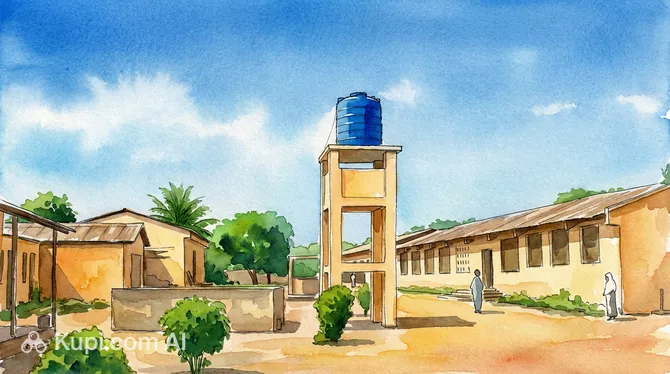
Located in the heart of the Borgou Department, Tchaourou (also known as Chaourou) is an important administrative and transportation hub in Benin. As the seventh most populous city in the country, it is steeped in an authentic West African atmosphere. Here, you won't find the hustle and bustle of major tourist centers; instead, you can fully experience the rhythm of daily life centered around trade and agriculture.
Tchaourou. Illustration.
Source: Kupi.com AI
Geographically, Tchaourou is situated on a plain at an altitude of about 368 meters above sea level. The city is the second largest in its region and is home to more than 221,108 people. The history of this region is inextricably linked to the development of trade routes in central Benin, which made the city a significant regional hub connecting the northern and southern provinces.
For travelers, Tchaourou is primarily interesting for its colorful markets and the opportunity to see life in the Beninese province as it is. Although the city is more oriented toward transit, its central squares and lively market stalls allow visitors to touch the unique cultural code of the Borgou region. We invite you to make a stop in this hospitable place to feel the true spirit of central Benin.
Weather Overview
The city of Tchaourou is located in a tropical savanna climate zone, which results in a clear division of the year into two seasons. The city's climate is characterized by high temperatures throughout the year: during the day, the thermometer usually ranges from +25°C to +35°C. The hottest months are March and April, when the daytime maximum can reach +37°C.
The dry season lasts from November to April, during which time there is practically no precipitation and air humidity is minimal. This is the most favorable period for visiting the city and traveling around the region. The wet season arrives in May and continues until October, with peak rainfall occurring in August and September. During this time, expect frequent downpours that bring welcome coolness but can make traveling on unpaved roads more difficult.
When preparing for Tchaourou, be ready for the fact that even during the rainy season, the sun often comes out, providing about 12 hours of daylight. In the dry season, winds can bring dust from the savanna, so it is recommended to have light protective clothing. Overall, the weather here is typical for central Africa—sunny, hot, and predictable depending on the season.
Average monthly temperature
Average monthly precipitation
Interesting Facts
Tchaourou holds the honorable seventh place among the most populous cities in Benin and is the second most important city in the Borgou Department.
The city is located in the Africa/Porto-Novo (UTC+1) time zone, and daylight saving time is never observed here, providing a stable daylight period of about 12 hours throughout the year.
The average elevation of Tchaourou is approximately 368 meters above sea level, and the landscape surrounding the city is a classic African savanna.
Despite its administrative significance, Tchaourou maintains its status as an important transit point, through which key routes connecting the northern regions of the country to the coast pass.
How to Get There
The city of Tchaourou is a strategically important transit point in central Benin, making it easily accessible for travelers moving within the country. Most traffic comes from the largest coastal cities, and detailed routes will help you plan your trip as efficiently as possible.
There is no direct air service to the city. The nearest international airports are located in Cotonou and Porto-Novo. After arrival, tourists need to use land transport—buses or taxis—to cover the distance of about 400–500 km. The bus journey can take from 8 to 12 hours, depending on road conditions and weather.
Railway service in the region is poorly developed, so roads remain the primary mode of travel. The most convenient way to reach Tchaourou is by traveling from the regional center of Parakou, which is only 100–150 km away. A trip by public transport on this route takes about 2–4 hours. For greater comfort and independence, many tourists prefer to rent a car with a driver.
Station
Passenger traffic
Distance
Train Station Ibadan
1
218 km
Lagos Terminus Railway Station
5
281 km
Lagos Terminus Railway Station
5
281 km
Main Attractions
Since Tchaourou is predominantly an administrative and residential center, there are few classic tourist attractions in the conventional sense. However, the city is fascinating for its authentic atmosphere, which is best experienced by visiting the Central Market. This is the heart of urban life, where everyday trade—characteristic of central Benin—unfolds amidst bright fabrics and exotic products.
The administrative buildings and the city's central squares, which reflect the functional style of a regional center, are also worth noting. Walking through the streets, you can see how the traditional way of life is harmoniously woven into the modern structure of a large settlement. There are no world-class museums here, but the city space itself serves as a living backdrop for those who want to see the real life of the Bariba people and other ethnic groups of the region.
For those traveling in transit, Tchaourou offers a unique chance to take a break from long journeys and observe the slow pace of life in the Borgou Department. The lack of tourist crowds makes visiting this city a special experience, allowing you to focus on the details of local architecture and the sincere hospitality of the residents.
Local Cuisine
The gastronomic traditions of Tchaourou are closely linked to the culture of the Borgou Department, where the diet is based on hearty dishes made from local root vegetables and grains. The main favorite of the local cuisine is pâte—a thick corn porridge usually served with various aromatic sauces. Especially popular are sauces based on peanuts, palm oil, or fresh vegetables with the addition of fish or meat.
While walking through the city, be sure to try dishes made from yams and cassava, which are prepared here in dozens of ways—from boiling to deep-frying. Street food in Tchaourou is an adventure in itself. In the markets and along the roads, you can find stalls where meat (brochettes) is grilled over charcoal or cakes made from bean flour are prepared. This is a great opportunity to try real home-cooked food that the Beninese people eat themselves.
For drinks, locals prefer freshly squeezed juices and traditional tea. You can also find palm wine in the region—a local drink with a unique taste. The food culture here is simple and democratic: most residents prefer to eat in small open-air cafes (maquis) or buy food directly at the market, where the freshest products can always be found.
Travel Tips
Preparing for a trip to Tchaourou requires attention to detail to ensure your introduction to central Benin goes smoothly and leaves only pleasant memories. Here are some practical tips from experienced travelers:
Clothing and Essentials: Choose light clothing made of natural fabrics, as it is hot in the region year-round. In the dry season, don't forget sunglasses and a hat. For visiting local communities, it's best to choose modest clothing that covers shoulders and knees.
Transport: The most convenient way to get around the city is by moto-taxi (zomoh). For trips to other cities, it's better to rent a car with a local driver who knows the road features and the current situation on the routes.
Finances: The official currency is the CFA franc (XOF). There are few ATMs in the city, and cards are rarely accepted, so always have a sufficient supply of cash in small denominations.
Health: Be sure to use mosquito repellent and drink only bottled water. It is advisable to have a basic first aid kit and insurance that covers medical assistance in Africa.
Communication: The official language is French, but locals more often speak Bariba and Fon. Learn a few simple phrases in French for politeness—it always helps to build rapport.
Local Etiquette: Greeting is very important in Beninese culture. Always greet people before asking for anything. You should only photograph people and their property after obtaining explicit permission.
What to Avoid: Do not walk alone on the unlit outskirts of the city at night. Avoid using ice in drinks at small street cafes.
Best Time to Visit: Plan your trip for the period from November to April. During this time, the roads are in better condition and humidity is minimal.
Following these simple rules will help you feel confident and enjoy every minute of your adventure in welcoming Tchaourou!
Entertainment & Nightlife
The entertainment infrastructure in Tchaourou is modestly developed, as the city operates at the working pace of a regional center. The nightlife does not feature a wide variety of clubs or discos, but the evening atmosphere has its own charm. Most activity after sunset is concentrated around small street cafes and makeshift markets, where locals gather to socialize and share dinner.
During the day, leisure activities can include strolling through the central districts, watching artisans at work, or attending local festivals that are sometimes held in the main squares. If you are looking for more traditional tourist entertainment, such as theaters or amusement parks, it is worth planning a trip to the neighboring city of Parakou, which is the cultural center of the region.
Safety after dark in the central areas of Tchaourou is at an acceptable level, although it is recommended to avoid unlit outskirts and to use taxi or moto-taxi (zomoh) services. Despite the absence of loud parties, quiet evenings in this city allow for a deeper immersion into the calm and measured atmosphere of the Beninese province.
Parks & Museums
The city of Tchaourou does not have a network of large urban parks or museums, as its development followed the path of an administrative and economic center. However, nature lovers will find a unique charm in the landscapes surrounding the city. The outskirts are a typical African savanna with sparse acacias and majestic baobabs, which look especially picturesque in the light of the sunset.
The lack of formal museums is more than compensated for by the urban environment itself. The role of a "living museum" is played here by the traditional quarters and craft workshops, where you can see processes that have not changed for decades. Local open spaces and squares serve as venues for community meetings and festivities, temporarily becoming real open-air cultural stages.
For those looking for classic museum recreation or well-maintained park areas with paths and benches, a short trip to nearby regional centers is recommended. Nevertheless, Tchaourou offers a unique opportunity to enjoy the pristine nature of Benin and see the life of the region as it is, without tourist filters.
Getting Around
The public transport system in Tchaourou is typical for most provincial cities in Benin. The most popular and fastest way to get around the city is by moto-taxi, known here as "zomoh" or "zemidjan." These maneuverable bikes can easily take you anywhere in Tchaourou, including markets and administrative quarters, for a very reasonable fee.
For longer distances or travel between neighboring settlements, locals use minibuses (bush taxis) and small buses. This is a budget-friendly option, though not always comfortable, as vehicles are often overcrowded. These buses usually don't have a fixed schedule—they depart as they fill up, so it's worth allowing extra time for waiting.
It is important for travelers to consider road conditions: in the dry season (from November to April), moving around the city and its surroundings is most comfortable, but during the rainy season, some sections may become difficult to pass. Fares in Tchaourou are paid exclusively in cash, and it is better to agree on the price of a taxi ride in advance. The city is quite compact, so walking through the central districts can also be a pleasant alternative to transport.
Accommodation
The choice of accommodation in Tchaourou is quite limited and primarily oriented toward transit travelers, government officials, and traders. You won't find luxury five-star hotels here, but the city offers decent budget options, such as small guesthouses and apartments for short-term stays.
Most hotel properties are concentrated in the central part of the city, near major transport interchanges and markets. This is convenient for those planning to continue their journey the next morning. Living conditions are usually basic: clean rooms with a fan or air conditioning and a standard set of services. Accommodation prices remain very affordable compared to coastal cities.
When planning a visit, keep in mind that there is no need to book months in advance in Tchaourou, but it is better to check availability beforehand via local services or by phone. For those who value higher comfort, it is recommended to consider accommodation options in nearby Parakou, where the hospitality infrastructure is significantly more developed.
Nearby Cities
Thanks to its location in the central part of the country, Tchaourou serves as an excellent starting point for exploring the surroundings and getting to know the culture of the Borgou Department. Its proximity to major cities allows for interesting day trips, discovering new facets of Beninese flavor.
Just 51 kilometers to the north is the city of Parakou—the largest cultural and administrative center of the region. A trip there takes no more than an hour, and the city itself boasts a developed infrastructure, interesting markets, and museums. For those who prefer the quiet of small settlements, it is worth checking out Toui or Kilibo, which are very close and allow you to see the traditional way of life of local communities.
The towns of Sanson and Bétérou may also be of interest, each possessing its own unique savanna atmosphere. Exploring these nearby places will help you gain a full understanding of the diversity of central Benin and make your trip truly unforgettable.
Shopping & Souvenirs
Shopping in Tchaourou is primarily about visiting its lively markets, which are the main commercial arteries of the city. There are no huge shopping malls with global brands here, but there is something more valuable—the opportunity to purchase authentic goods. The main point of attraction is the Central Market, which offers a wide range of essentials, from fresh tropical fruits to household items.
Special attention should be paid to local fabrics. The region is famous for its bright cotton cloths with unique patterns, which make excellent souvenirs or materials for traditional African clothing. You can also find products from local artisans at the markets: woven baskets, wooden utensils, and ceramics that reflect the craftsmanship of the Borgou residents.
Shops in the city usually operate from early morning until sunset, and trading at the markets is in full swing from dawn. Payment is made predominantly in cash in the local currency (CFA francs), so tourists are recommended to always have small bills with them. Bargaining in the markets is not just appropriate; it is part of the local communication culture, allowing you to make a purchase at a more pleasant price.