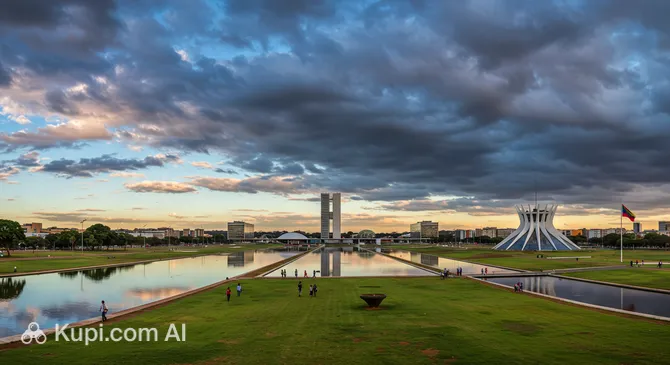
Brasilia is a testament to visionary urban planning and architectural ambition, standing as a unique capital city in the heart of Brazil. Unlike many other metropolises that grew organically over centuries, this city was purpose-built with a futuristic design often described as resembling an airplane or a bird. Its organized layout and distinct atmosphere make it a fascinating destination for travelers interested in modernism and culture.
Brasilia. Illustration.
Source: Kupi.com AI
Located in the Federal District on the central highlands, the city enjoys a tropical savanna climate with a defined dry season. With a population of over 3 million people, it serves as the bustling administrative center of the nation. The short but impactful history of Brasilia is a story of determination; it was constructed in just a few years in the late 1950s to move the capital inland, officially opening in 1960.
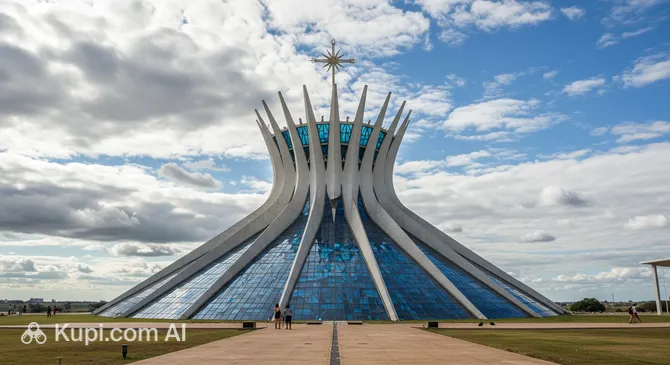
The city is a UNESCO World Heritage Site, celebrated for the modernist architecture of Oscar Niemeyer. Visitors should not miss the breathtaking Cathedral of Brasília, with its stunning stained glass and hyperboloid columns, or the impressive Three Powers Plaza. Whether you are exploring its monumental axes or enjoying the sunset by Paranoá Lake, Brasilia offers an inspiring journey into a city built for the future.
Weather Overview
Brasilia experiences a tropical savanna climate defined by two very distinct seasons: a humid, rainy period and a dry, cooler season. Because of its elevation on the Brazilian highlands, the city generally enjoys mild weather year-round, avoiding the sweltering heat common in other tropical regions. For a detailed breakdown of what to expect during your trip, you can consult the guide to weather in Brasilia.
The wet season typically runs from late spring through summer, particularly from November to March. During months like January and February, you can expect frequent precipitation, with data showing up to 21 wet days per month. Average temperatures during this time stay pleasant, hovering around 22.7°C, with highs reaching approximately 26.8°C. The city is lush and green during these months, though humidity is higher.
Conversely, the winter months from May to September are characterized by clear skies and extremely low rainfall. June and July are the driest and coolest months, with virtually 0 wet days and average minimum temperatures dropping to around 13.8°C. This is often considered an excellent time for sightseeing, as the air is dry and the days are sunny, although nights can feel quite crisp.
Expect warm summers with frequent rainfall and mild, dry winters with cooler evenings.
Average monthly temperature
Average monthly precipitation
Interesting Facts
Beyond its famous modernist silhouette, Brasilia holds many fascinating secrets and quirks that often surprise first-time visitors. This planned capital is not just an architectural marvel but a city full of unique characteristics that distinguish it from any other metropolis in the world.
The "Plane" Layout: Although the city's layout is widely compared to an airplane, urban planner Lúcio Costa originally sketched the "Pilot Plan" as a simple cross. He later adapted it to fit the topography, resulting in a shape that he described as resembling a bird or a butterfly.
A Man-Made Oasis: The vast Paranoá Lake is entirely artificial, designed to mitigate the region's dry season and increase humidity. Today, it is a central hub for leisure, with scenic areas like Pontão do Lago Sul serving as popular spots for dining and water sports.
Code-Based Addresses: You will not find traditional street names in the residential zones. Instead, the city uses a logical system of coordinates and acronyms—such as SQN (North Superblock) or SQS (South Superblock)—which acts like a navigational puzzle for tourists but is highly efficient for locals.
Acoustic Wonders: The iconic Cathedral of Brasília features a remarkable acoustic phenomenon known as a whispering gallery. Due to its curved concrete structure, a person whispering against one wall can be heard perfectly by someone standing on the opposite side, despite the distance.
Rapid Construction: The construction of Brasilia is considered a feat of modern engineering; the entire city was built in a remarkably short period of just 41 months, officially inaugurated in 1960 to move the capital to the heart of the country.
Cathedral of Brasília. Illustration.
Source: Kupi.com AI
Traveler photos:
How to Get There
Reaching the Brazilian capital is a straightforward experience due to its central location and status as a major transportation hub. Whether you are flying in from abroad or connecting from another state, you can easily find all ways to reach the city to suit your travel itinerary.
The most convenient entry point is Brasilia International Airport (IATA: BSB), situated just 8.6 km from the city center. As a large and modern facility, it handles a significant volume of domestic and international flights annually. The short distance means that a taxi or ride-share to the main hotel sectors and administrative areas typically takes about 35 minutes. It is the primary choice for the vast majority of tourists visiting the Federal District.
Alternatively, some travelers might consider Santa Genoveva Airport (IATA: GYN), located in the city of Goiania. It is important to note that this airport is approximately 170 km away from Brasilia. Traveling from Goiania by road requires a journey of around 4.5 to 5 hours, so this option is generally best suited for those planning to explore the state of Goiás before heading to the capital.
For clarity, here is a summary of the main airports:
Brasilia does not have a passenger railway station for long-distance travel, as intercity train services are not a primary mode of transport in this region of Brazil. Visitors who prefer ground transportation typically arrive by long-distance buses, which connect the capital to major cities across the country, or by car via the well-maintained highways leading into the Federal District.
Main Attractions
Brasilia is a city where architecture takes center stage, offering visitors a chance to walk through a realized modernist dream. The city's design, spearheaded by Oscar Niemeyer and Lúcio Costa, has created a landscape filled with monumental structures that are unlike anything else in the world. Exploring these landmarks provides a deep appreciation for the ambitious vision that created this capital from scratch.
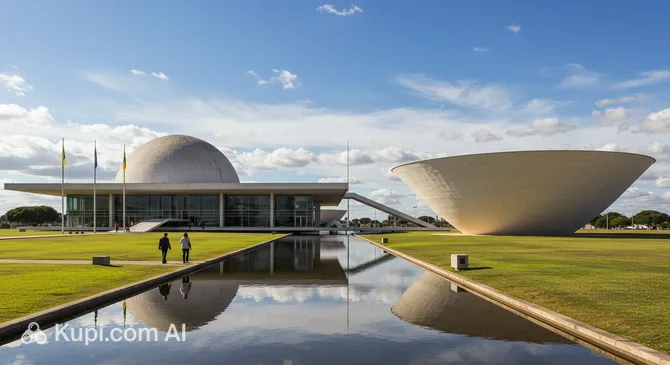
One of the most striking silhouettes on the horizon is the National Museum of the Republic. Part of the Cultural Complex of the Republic, this stark white dome resembles a planetarium or a futuristic craft. Tourists are drawn here not only for the rotating art exhibitions inside but for the building's pure geometric form and its long, curving ramp, which make it a favorite subject for photographers.
National Museum of the Republic. Illustration.
Source: Kupi.com AI
Traveler photos:
For a breathtaking visual experience, the Sanctuary of Don Bosco is an absolute must-see. While the exterior is relatively understated, the interior is a mesmerizing box of blue light, created by floor-to-ceiling stained glass windows in various shades of violet and blue. It is dedicated to the Italian saint who reportedly dreamed of a futuristic city in this location long before it was built, making it a place of both spiritual and historical resonance.
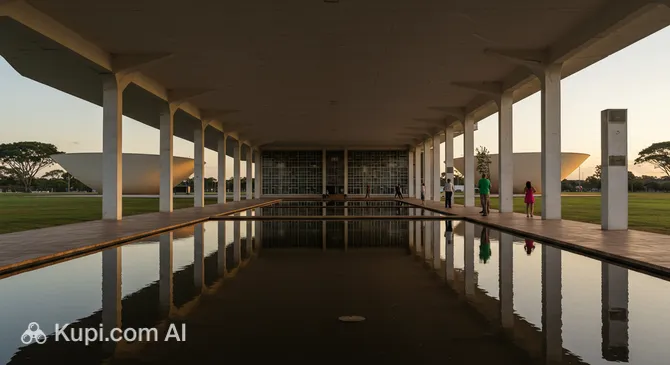
Another masterpiece of government architecture is the Itamaraty Palace, which houses the Ministry of Foreign Affairs. Often considered Niemeyer's most beautiful creation, the building appears to float on the surrounding water gardens. Visitors can admire the famous "Meteoro" sculpture on the reflecting pool and the elegant concrete arches that define its facade, offering a perfect example of the city's harmony between concrete and nature.
Itamaraty Palace. Illustration.
Source: Kupi.com AI
Traveler photos:
To truly understand the scale and layout of the city, a visit to the Brasília TV Tower is essential. Standing at 224 meters tall, it offers an observation deck that provides the best panoramic views of the "Pilot Plan" and the Monumental Axis. It is a fantastic spot to see how the city's design mimics the shape of an airplane and to watch the sunset over the capital. At the base, you can also find a lively handicraft fair.
Finally, history enthusiasts should explore the JK Memorial. This museum and mausoleum is dedicated to President Juscelino Kubitschek, the founder of Brasilia. The site preserves his personal objects and tells the story of the city's rapid construction, culminating in the burial chamber of the president himself, located beneath a beautiful stained-glass roof.
Local Cuisine
Brasilia’s culinary scene is a fascinating reflection of its history as a planned city populated by people from every corner of the country. Because the capital drew workers and residents from all over Brazil, the local cuisine is a melting pot of flavors, blending the hearty traditions of the surrounding Goiás state with the spicy, vibrant influences of the Northeast. This diversity means that visitors can find everything from high-end international gastronomy to authentic regional comfort food within the city's organized sectors.
One of the most distinct local flavors comes from the pequi, a yellow fruit native to the Cerrado savanna. It has a strong, unique aroma and is most commonly served cooked with rice or chicken. Another regional staple worth trying is the empadão goiano, a rich savory pie filled with ingredients like chicken, sausage, corn, and cheese. For those with a sweet tooth, local tropical fruits such as cagaita and mangaba are often used in delicious ice creams and desserts that you won't easily find elsewhere.
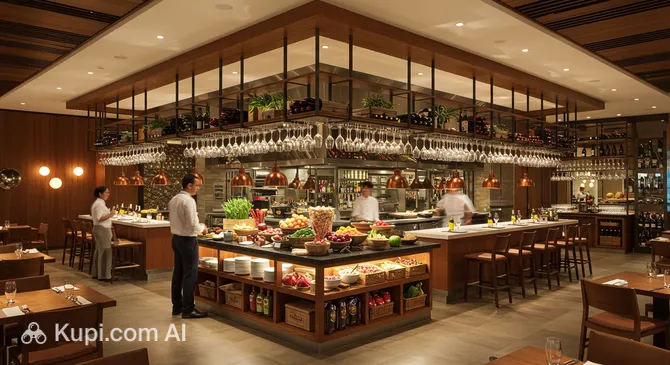
Brazil is world-famous for its barbecue, and the capital is no exception. Meat lovers should head to a traditional churrascaria to experience the "rodízio" style of service, where waiters bring endless skewers of grilled meats to your table. A prime example of this experience is Fogo de Chão Brasília, known for its high-quality cuts and exceptional service. It is the perfect place to understand the Brazilian passion for beef.
Fogo de Chão Brasília. Illustration.
Source: Kupi.com AI
Traveler photos:
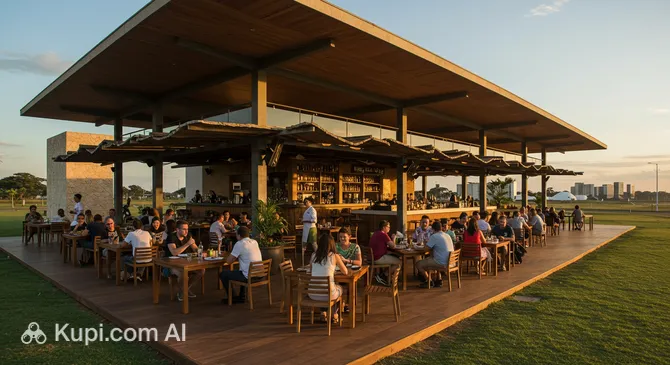
Dining in Brasilia often comes with a view, thanks to the city's vast artificial lake. The Pontão do Lago Sul is widely considered the city's premier gastronomic hub. This lakeside complex features a promenade lined with restaurants and bars, offering a relaxed atmosphere that feels like a beach resort in the middle of the highlands. It is an ideal spot to enjoy a sunset dinner or a refreshing drink by the water.
Despite being far from the ocean, the city has a surprising love for seafood. Coco Bambu is a favorite among locals for its massive portions of shrimp and seafood dishes, perfect for sharing with family or a group of friends. The restaurant's lively environment captures the convivial spirit of Brazilian dining culture.
Coco Bambu. Illustration.
Source: Kupi.com AI
Traveler photos:
When it comes to drinks, the national cocktail, the caipirinha, is ubiquitous, made with lime, sugar, and cachaça. However, Brasilia also has a booming craft beer scene, with many local microbreweries gaining recognition. For a casual night out, you might visit Bar Responsa, a popular spot to mingle with locals, enjoy cold beer, and sample traditional bar snacks known as petiscos. Alternatively, for a unique mix of food, drinks, and a motorcycle-themed atmosphere, Galpão 17 offers a vibrant setting with live music and a variety of food stalls.
Travel Tips
Visiting Brasilia is a unique experience, as the city's scale and design differ significantly from traditional urban centers. To help you navigate this modernist capital with ease and enjoy your trip to the fullest, here are some essential practical tips for your journey.
Prepare for the Dry Season and Sun: Brasilia is famous for its "desert-like" humidity, especially between May and September. It is essential to bring lip balm, heavy moisturizer, and saline nose drops to combat the dry air. Pack lightweight, breathable clothing for the heat, but always carry a light jacket or sweater, as evenings can get surprisingly chilly. If you plan to visit religious sites like the Cathedral, ensure your attire is modest (shoulders and knees covered).
Rethink Your Transportation Strategy: Unlike many European cities, Brasilia was designed for cars, not pedestrians. The distances between monuments on the Monumental Axis are deceptive and often too vast to walk comfortably under the sun. Rely on ride-hailing apps (like Uber or 99) or taxis, which are plentiful and affordable. Renting a car is also a great option to explore freely, but be prepared for the unique "loop" system of returns instead of traditional intersections.
Managing Your Finances: The local currency is the Brazilian Real (BRL). Credit and debit cards are widely accepted almost everywhere, from high-end restaurants to street vendors. However, it is wise to carry some cash for small purchases. Tipping is generally straightforward; a 10% service charge (taxa de serviço) is usually included in the bill at restaurants, and paying it is customary.
Health and Safety Precautions: While Brasilia is generally considered safer than other major Brazilian capitals, you should still exercise caution. Avoid walking in deserted areas or parks at night, particularly around the commercial sectors which empty out after business hours. Pharmacies (Drogarias) are easy to find and well-stocked. Remember to drink bottled or filtered water exclusively; avoid tap water.
Overcoming Language Barriers: Portuguese is the official language, and English proficiency varies. While hotel staff and business professionals often speak English, it is less common among taxi drivers and shopkeepers. Downloading an offline translation app and learning a few basic phrases like "Bom dia" (Good morning) and "Obrigado/a" (Thank you) will go a long way. SIM cards from carriers like Vivo, TIM, or Claro can be bought at the airport or shopping malls with your passport.
Social Etiquette: Brazilians are warm and informal. Greetings often involve a handshake with eye contact or, among women or mixed groups, a kiss on the cheek (in Brasilia, it is typically two kisses). Do not be surprised by the physical proximity during conversations; it is a sign of friendliness. When entering a shop or elevator, a general greeting to everyone present is polite.
Cultural Faux Pas to Avoid: Be careful with hand gestures. The "OK" sign (forming a circle with your thumb and index finger) is considered an offensive gesture in Brazil, similar to the middle finger in other cultures. Instead, use the thumbs-up sign to indicate approval or agreement, which is universally positive here.
Master the "Sector" System: Brasilia’s addresses can look like secret codes (e.g., SQS 308, CLN 205). The city is divided into specific sectors for hotels, banks, and residences. Understanding that N stands for North and S for South will help you orient yourself along the main axis. If you are looking for nightlife or dining, head to the designated commercial blocks rather than wandering residential streets.
By keeping these tips in mind, you will be well-equipped to appreciate the architectural grandeur and the distinct rhythm of life in Brasilia. Embrace the open skies, the friendly locals, and the fascinating design of this planned city for a truly memorable adventure.
Entertainment & Nightlife
Brasilia’s nightlife is as unique as its architecture, shaped by the city’s organized "sector" layout. Unlike traditional cities with a single downtown district, the capital’s entertainment is spread across specific commercial blocks (known as Quadras) in the North and South Wings (Asa Norte and Asa Sul). The nightlife scene here is heavily driven by a vibrant happy hour culture, where locals gather after work to enjoy cold drinks and conversation at sidewalk tables that spill out from the bars.
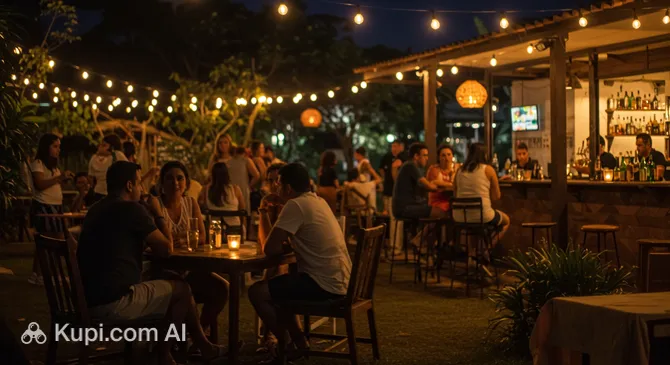
For a lively evening atmosphere, the Sudoeste district and the commercial streets of Asa Sul are excellent starting points. These areas are bustling with activity from Thursday through Saturday. If you are looking for a place to enjoy music, drinks, and a spirited crowd, Abençoado Bar - Sudoeste is a popular choice. It captures the essence of a Brazilian night out with a relaxed yet energetic vibe, perfect for mingling with residents.
Abençoado Bar - Sudoeste. Illustration.
Source: Kupi.com AI
Traveler photos:
Those seeking a more specialized form of entertainment might enjoy the Poker Club Brasília, which offers a sophisticated environment for gaming enthusiasts. For a more scenic night, the lakeside area remains a favorite; while the restaurants at Pontão do Lago Sul are famous for dining, they also transform into romantic spots for evening cocktails with a view of the illuminated bridge.
Practicality is key when enjoying a night out in the capital. Due to the significant distances between sectors and the design of the roads, walking from one venue to another is rarely feasible or safe at night. It is highly recommended to use ride-hailing apps or call a taxi to move between locations. The dress code is generally smart-casual; Brazilians tend to dress up a bit for clubs, but bars are usually more laid-back. In terms of safety, stick to the busy commercial blocks and avoid wandering into the dark, empty spaces that separate the residential superblocks.
During the day, the city offers plenty of leisure options beyond its government buildings. Families and outdoor enthusiasts flock to the massive Sarah Kubitschek City Park, one of the largest urban parks in the world, which features sports courts, barbecue areas, and walking trails. Inside the park, you can also find Nicolândia Urban Park, a historic amusement park that provides fun rides for all ages. For those who prefer air-conditioned comfort, Brasília Shopping is not just a retail hub but also a striking architectural landmark worth visiting.
Parks & Museums
Beyond its famous modernist skyline, Brasilia surprises visitors with its abundant greenery and a vibrant cultural scene that rivals any major capital. The city was meticulously designed with specific zones for leisure and culture, resulting in expansive parks that preserve the native savanna ecosystem and world-class institutions that host diverse artistic expressions. Exploring these green lungs and creative hubs offers a refreshing counterpoint to the city's monumental concrete architecture.
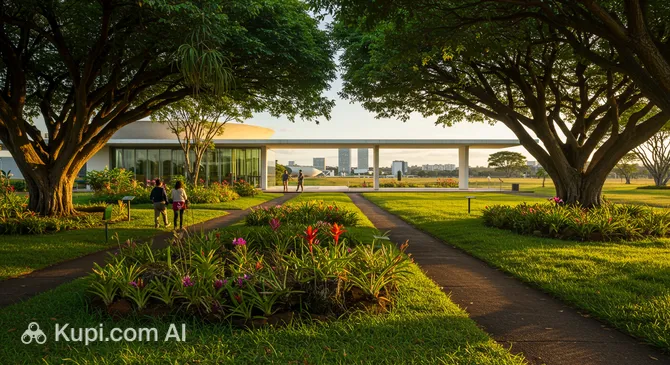
For nature lovers, the Brasilia Botanical Garden is a true sanctuary. Unlike traditional manicured gardens, this space is dedicated to preserving the rugged beauty of the Cerrado biome. Visitors can wander through trails surrounded by native vegetation, enjoy themed gardens like the Japanese Garden, or have a peaceful picnic under the trees. It is an excellent spot to observe local flora and fauna in a protected environment.
Another highlight for outdoor enthusiasts is the area known as the Piscina Natural do Leste, located within the Brasília National Park. Locals flock here to cool off in the mineral water pools, which are constantly replenished by natural springs. The park offers a unique opportunity to swim in fresh, running water while spotting monkeys and exotic birds in the surrounding trees, making it a perfect day trip for families.
Brasilia Botanical Garden. Illustration.
Source: Kupi.com AI
Traveler photos:
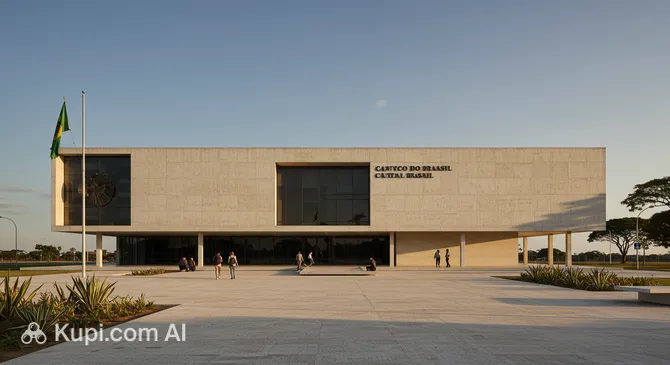
In terms of culture, the Cultural Center of Banco do Brasil Brasília (CCBB) stands out as one of the most important art venues in the country. Housed in a striking building designed by Oscar Niemeyer, the center hosts high-caliber international art exhibitions, music festivals, theater performances, and cinema screenings. Its expansive gardens and open spaces also serve as a gathering point for the community, blending art with leisure.
For a dive into the economic history of the nation, the Museum of Values of the Central Bank of Brazil offers a fascinating experience. The museum displays a comprehensive collection of Brazilian currency throughout history, but the real showstopper is the "Gold Room," where visitors can see the largest gold nugget ever found in Brazil. It provides an intriguing perspective on the country's development through the lens of its economy.
Cultural Center of Banco do Brasil Brasília. Illustration.
Source: Kupi.com AI
Traveler photos:
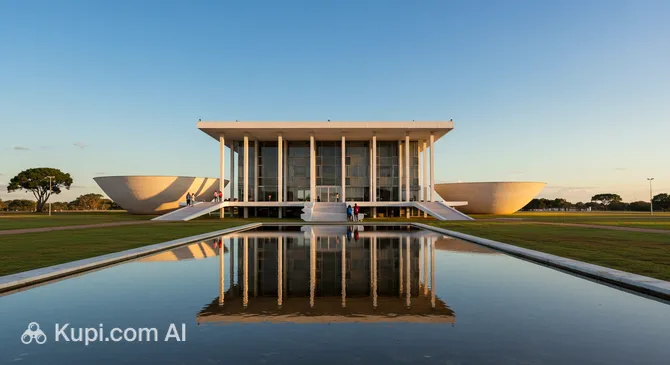
Brasilia's status as the capital means it is home to some of the most significant political and architectural landmarks in South America. The Palace of the Planalto serves as the official workplace of the President of Brazil. While access to the interior is restricted to guided tours on Sundays, the exterior alone is a masterpiece of modernism, famous for its ramp and the spirited changing of the guard ceremony.
Equally impressive is the Palace of the Dawn (Palácio da Alvorada), the official residence of the President. Located on a peninsula extending into Paranoá Lake, it was the first government structure built in the new capital. Its iconic white columns, which mimic the shape of hammocks or sails, have become a symbol of the city's elegance and are best admired from the viewing gates or during a boat tour on the lake.
Palace of the Dawn. Illustration.
Source: Kupi.com AI
Traveler photos:
For a truly unique and spiritual experience, seek out the Temple of Good Will. This seven-sided pyramid is open 24 hours a day and welcomes people of all faiths. Inside, visitors walk a spiral path on the floor towards the center to find peace and reflection, a ritual that many find deeply calming. It is acclaimed as one of the most visited monuments in the city and offers a serene escape from the urban rush.
Getting Around
Navigating Brasilia requires a shift in perspective, as the city was originally designed with the automobile in mind. While wide avenues and vast distances between sectors can make walking challenging, the capital offers a structured public transport system primarily composed of a subway network and an extensive fleet of buses. For tourists, understanding how these options work is key to moving efficiently between the monumental sights and the leisure districts.
The Metrô-DF (Federal District Metro) is a clean, safe, and reliable way to travel, though its coverage is somewhat limited for a typical sightseeing itinerary. The Y-shaped network consists of two lines, the Green and Orange lines, which share a main track through the central area and the South Wing (Asa Sul) before splitting to reach different satellite cities. It is particularly useful for traveling from the hotel sectors in the south to the central bus station or for reaching shopping malls and residential areas further out. The metro typically operates from 5:30 AM to 11:30 PM on weekdays and Saturdays, with reduced hours on Sundays and holidays.
Buses are the most comprehensive mode of transport, reaching every corner of the Federal District. The heart of this system is the Rodoviária do Plano Piloto, the central bus terminal located at the intersection of the Monumental Axis and the Residential Axis. Almost all bus lines converge here. You will encounter standard buses as well as "Zebrinhas," which are smaller, red-and-white minibuses that circulate through the residential wings (Asas) and key commercial sectors. While the bus network is extensive, routes can be complex for first-time visitors, so using a navigation app like Moovit or Google Maps is highly recommended to plan your journey.
Regarding payment, the city uses an integrated ticketing system. While you can still pay with cash on board most buses (where a conductor is usually present to collect the fare), using the Cartão BRB Mobilidade is more convenient for frequent travel. This rechargeable card can be purchased and topped up at the BRB convenience stores and Metro stations. For the metro, single-journey tickets can be bought at station counters or self-service machines. Fares vary depending on the route type, but prices are generally affordable.
Given the city's unique urban planning, ride-hailing apps like Uber and 99 are often the most practical choice for tourists. They are widely available, safe, and relatively inexpensive compared to many other capital cities. Because attractions like the immense City Park or the scattered museums are separated by long stretches of highway-like roads, a car ride is often the only way to avoid walking kilometers under the hot sun. Taxis are also plentiful, especially at designated stands near hotels and the airport.
For shorter trips within the flat central areas, bike-sharing schemes are becoming increasingly popular. You can find shared bicycle stations, often operated by Tembici, around the Monumental Axis and major parks. This is a pleasant way to explore the architectural landmarks at your own pace, provided you avoid the midday heat. Whether you choose the metro for speed, a bus for reach, or a car for comfort, getting around this modernist capital is a manageable adventure with a little planning.
Accommodation
Where to Stay:
Brasilia’s unique urban planning extends to its accommodation, which is primarily clustered in specific zones designed for hospitality. The city offers a wide spectrum of lodging options, ranging from efficient business hotels and budget-friendly hostels to luxurious lakeside resorts and modern apartment rentals. Because the capital serves as the administrative heart of Brazil, the standard of service is generally high, catering to diplomats, politicians, and international tourists alike.
For the most convenient stay, look for hotels in the North Hotel Sector (SHN) or the South Hotel Sector (SHS). These areas are located right in the center of the "Pilot Plan," within walking distance of major shopping malls like Brasília Shopping and landmarks such as the TV Tower. Staying here places you in the middle of the action with easy access to public transport, making it simple to explore the Monumental Axis.
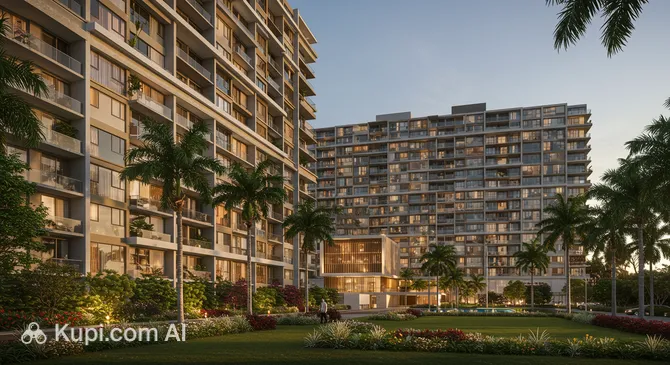
If you prefer a more scenic and relaxed atmosphere, consider the accommodations situated along the shores of Paranoá Lake. This area feels less like a busy capital and more like a vacation spot. For instance, the Life Resort Condominium offers visitors a chance to stay close to the water, often featuring pools and gardens that provide a respite from the dry savanna heat. Similarly, the Lake View Resort is another excellent option for those seeking comfort and picturesque views of the lake, blending leisure with proximity to the city's political center.
Life Resort Condominium. Illustration.
Source: Kupi.com AI
Traveler photos:
Booking Tip: Since Brasilia is a hub for business and government activity, hotels can be fully booked and more expensive during the workweek (Monday to Thursday). If your travel dates are flexible, visiting on a weekend often yields better rates and higher availability, as the business crowd disperses.
In terms of cost, the city accommodates all budgets. You can find economical options in the wings (Asas) or slightly further from the Monumental Axis, while premium establishments charge international rates. Booking is easily done through major online platforms, which is recommended to secure the best deals, especially if you plan to visit during major political events or national holidays.
Nearby Cities
For those looking to explore the surroundings, Brasilia serves as an excellent base for day trips to several interesting nearby locations:
One of the most rewarding short trips is to Formosa, a city located in the state of Goiás. It is widely known among locals and tourists alike for the spectacular Salto do Itiquira (Itiquira Falls). Standing at 168 meters, it is one of the highest accessible waterfalls in Brazil. The municipal park surrounding the falls features paved pathways, making it easy to admire the sheer power of the water and enjoy the refreshing mist, a perfect antidote to the region's dry season.
For a dive into history, Planaltina offers a glimpse into the region's past before the construction of the modern capital. As the oldest urban center in the Federal District, it houses the Vale do Amanhecer (Valley of the Dawn), a unique spiritual community known for its eclectic architecture and colorful daily rituals. The city also features a historic center with colonial-era buildings that contrast sharply with Brasilia's modernist design.
Although it often requires a full day or a weekend, the charming town of Pirenópolis is another favorite destination in the region. Famous for its well-preserved colonial architecture, cobblestone streets, and vibrant festivals, it is surrounded by dozens of stunning waterfalls and hiking trails, offering a perfect mix of cultural heritage and ecotourism.
City
Population
Distance
Planaltina
81 649
32 km
Santo Antônio do Descoberto
63 248
45 km
Luziania
174 531
50 km
Formosa
100 085
66 km
Alexania
23 814
73 km
These nearby destinations offer a glimpse into the diverse culture and landscapes of the region.
Shopping & Souvenirs
Shopping in Brasilia is a unique experience shaped by the city's organized urban planning. Unlike cities with sprawling high streets, retail activity here is concentrated in designated commercial sectors and large, modern shopping malls. This layout makes it convenient for visitors to find everything from international luxury brands to local handicrafts in specific, easily accessible hubs.
One of the most architecturally significant spots to shop is Brasília Shopping. Located in the North Hotel Sector, its striking half-moon façade and massive LED screen make it a city landmark. It is particularly convenient for tourists staying in the nearby hotels, offering a curated selection of fashion boutiques, a food court, and services in a compact, stylish environment.
For a more extensive retail experience, locals often head to ParkShopping. Considered one of the most traditional and upscale malls in the Federal District, it features a wide range of stores, including major Brazilian labels and international designers. The mall is also known for its pleasant indoor gardens and a large cinema complex, making it a popular destination for a full day of entertainment and dining.
If you are looking for authentic souvenirs and regional culture, the best destination is the handicraft fair located at the base of the Brasília TV Tower. Known as the Feira da Torre, this bustling market is the perfect place to find unique items from the Brazilian Cerrado. Visitors should look for arrangements of "everlasting flowers" (sempre-vivas)—dried native plants that retain their shape and color for years—as well as leather goods, wood carvings, and jewelry made from local gemstones.
Beyond the malls and the tower fair, the commercial blocks (Comércio Local) found in the residential wings offer a variety of smaller shops. These areas are excellent for finding everyday items, Brazilian beachwear, and shoes. Since the region is rich in minerals, Brasilia is also a great place to purchase semi-precious stones like amethyst, topaz, and crystals, often sold at competitive prices in specialized jewelry stores.