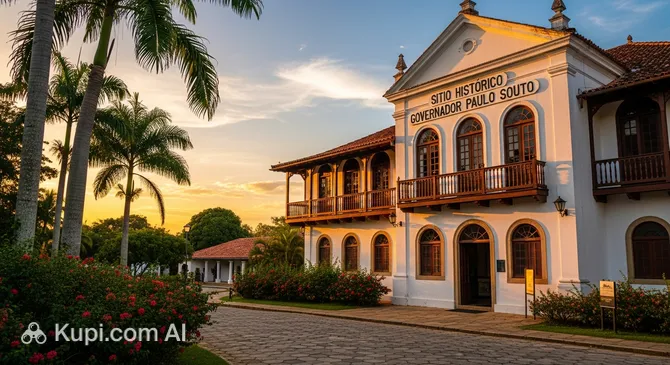
Imagine a place where time seems to slow down, and every stone breathes history. The Governor Paulo Souto Historical Complex (Sítio Histórico Governador Paulo Souto) is an architectural gem carefully preserved by Canavieiras. The complex is a harmonious blend of a memorial space and an open-air museum dedicated to the region's heritage and the prominent figures who left their mark on its development.
Governor Paulo Souto Historic Site. Illustration.
Source: Kupi.com AI
Traveler photos:
This site is considered one of the most significant cultural centers that Brazil offers tourists on its eastern coast. Thanks to the superbly preserved colonial-style buildings, visitors can see firsthand what the city looked like during its peak economic prosperity. The site's high rating (4.7 stars) confirms that it consistently impresses guests with its upkeep and authenticity.
The complex is ideally located in the Pardo River delta, which adds a special charm to the location. Here, history meets nature: while walking among the mansions, you can enjoy the light ocean breeze and picturesque water views. This is a must-visit destination for anyone who appreciates the aesthetic of the past and wants to understand the true soul of the state of Bahia.
Contacts
To inquire about visit details or find information about special events, you can use the following contact information:
A visit to the complex offers guests a diverse and enriching leisure experience. First and foremost, it is worth spending time exploring the internal exhibitions, which detail the daily lives of the city's residents in past centuries and the political activities of Governor Paulo Souto. The architecture of the buildings is an exhibit in itself: pay attention to the window trimmings and massive doors, characteristic of the wealthy homes of the "cacao boom" era.
Photography enthusiasts will find a wealth of creative opportunities here. The complex grounds are filled with photogenic spots, where the shadows of ancient trees fall across the vibrant walls of historic buildings. The calm and steady atmosphere invites slow walks and reflection on the rich past of this coastal region.
In addition to the complex itself, be sure to walk to the old port located nearby. This will help you imagine how ships once arrived here to collect precious cargo. You can round off your visit by sampling local gastronomy at nearby cafes to fully experience the welcoming flavor of Bahia. The proximity to beaches provides an excellent opportunity to combine a cultural program with a relaxing break on the Atlantic coast.
Getting There
Reaching this cultural landmark is easy, as the Governor Paulo Souto Historical Complex is located in the heart of the city. If you are already staying in the central area, a walk to the site will be a pleasant addition to your excursion. Alternatively, you can always use a local taxi to quickly reach the complex's main gates.
For those traveling from other regions, the nearest major transport hub is the city of Ilhéus, located approximately 40 kilometers away. From there, the scenic BA-001 coastal road leads to the destination; the trip by car or regular bus takes about 45–60 minutes. If you prefer traveling by air, it is most convenient to fly into Ilhéus Airport and rent a car from there.
Independent travelers are recommended to use GPS coordinates or simply follow signs for the city's historic port. Parking spaces are available near the complex, making the visit convenient for those exploring the Bahia coast by car.
Nearest city: Canavieiras
History & Facts
The history of the site where the complex is located is inextricably linked to the development of the entire region. The first settlement at the mouth of the Pardo River emerged back in the 18th century and was named São Boaventura do Puxim. The city owes its current name to a farm that actively cultivated sugarcane (cana), which became the first foundation of local prosperity.
The golden age for these lands arrived at the turn of the 20th century during the famous "cacao boom." Cacao transformed the small settlement into a thriving commercial center. It was during this time that the luxurious mansions were built, belonging to the "colonels" — wealthy plantation owners whose influence shaped life in the state of Bahia for decades.
The historical complex itself is an important architectural testament to that era. The buildings are designed in colonial and eclectic styles, reflecting the local elite's desire for European elegance. The settlement received the status of a city in 1891, finally securing its role as a key logistics hub for agricultural exports through the local port.
Time Needed
For a standard tour of the complex and its main exhibits, most tourists find 1–2 hours to be sufficient. This is enough time to take a leisurely stroll through the grounds, snap memorable photos against the colonial facades, and read the information boards.
However, if you want to truly soak in the spirit of the old town, we recommend dedicating half a day to your visit. This will allow you to combine the complex tour with a walk along the waterfront, a visit to the old port, and lunch at one of the restaurants serving the famous crab dishes for which this region is known.
Working Hours
The historical complex is open to the public daily, making it very convenient for planning your travel itinerary. According to available data, the site's doors are open to guests from 09:00 to 22:00, Monday through Sunday. This schedule allows you to enjoy the beauty of colonial architecture both in bright daylight and under the evening lights.
Despite the stable schedule, it is recommended to verify the information on the official website or with local guides before your visit, as opening hours may change slightly during public holidays.
09:00–22:00
Nearby
Exploring the surroundings of the historic center allows you to dive even deeper into the atmosphere of coastal life and enjoy the region's hospitality. After touring the architectural monuments, it is worth stopping by the cozy establishments nearby to taste traditional cuisine or relax by the ocean.