Support

Canavieiras

About

Canavieiras is a charming and tranquil town located in the picturesque state of Bahia. This destination attracts travelers with its relaxed atmosphere, where time seems to slow down, allowing you to enjoy every moment of your vacation away from the noise of major metropolises.
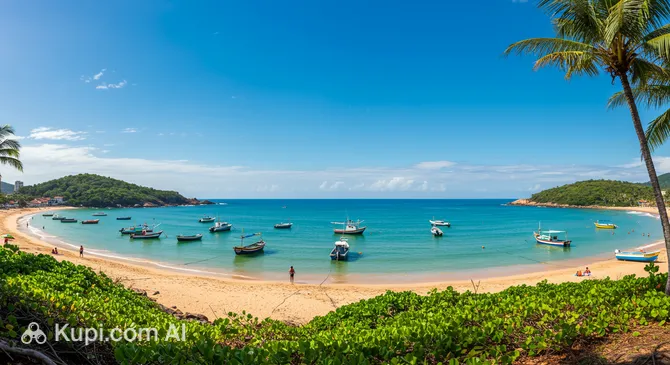
Canavieiras. Illustration.
Source: Kupi.com AI

Geographically, the town is situated on the Atlantic coast, at the spot where the Pardo River meets the sea, forming a beautiful delta. The climate here is tropical, warm, and humid, creating ideal conditions for lush vegetation. The population is about 33,000, which helps maintain a cozy and intimate feel. This authentic Brazil, with its vibrant colors and nature, often becomes a major discovery for tourists.

Strolling through the colorful streets, one can notice traces of a rich past. The fascinating history of Canavieiras is closely intertwined with the heyday of cacao cultivation. The town's historical center, known as "Sítio Histórico," is adorned with beautifully preserved 19th-century mansions with bright facades that recall the era of the "cacao barons."

Among the town's highlights is its gastronomic fame: Canavieiras is often called the "crab capital" of the region. Foodies come here to taste the freshest seafood dishes. Nature lovers will appreciate Atalaia Island with its long beaches, where you can swim in both the fresh river waters and the salty ocean waves, as well as enjoy sport fishing.

A visit to this town will be an unforgettable experience for those seeking a harmony of nature, history, and culinary delights. Come to Canavieiras to feel true Bahian hospitality and recharge with the energy of the ocean.

Weather Overview

The climate in Canavieiras is typically tropical, ensuring warmth almost year-round. The hottest period is at the beginning of the year: in January and February, the average temperature is around 26°C, with daytime highs reaching 29°C. This time is great for those who love sun and beach activities, though the region's high humidity should be taken into account.

From June to August, it becomes slightly cooler, but the atmosphere remains very comfortable. Average temperatures drop to 22–23°C, and nights bring a pleasant freshness with temperatures around 20°C. Rainfall occurs regularly throughout the year: the number of rainy days varies from 18 to 24 per month, so an umbrella or a light raincoat may come in handy in any season. To plan your trip as accurately as possible, we recommend checking the monthly weather in Canavieiras in advance.

Expect consistently warm days without extreme heat and frequent, but often short-lived rains that keep Bahia's nature in its evergreen state.

Average monthly temperature

Average monthly precipitation

Interesting Facts

Beyond its main attractions, Canavieiras holds many fascinating secrets and features that reveal themselves only to inquisitive travelers.
  • World Fame for Sport Fishing. Canavieiras is considered one of the best places on the planet for catching blue marlin. This is due to its proximity to the Royal Charlotte Bank—an underwater plateau that attracts giant fish. Trophy fishing enthusiasts from all over the world, including guests from Brazil and other countries, come here in hopes of catching a record-breaking specimen.

  • Title of "Crab Capital". Thanks to the extensive mangroves surrounding the town, Canavieiras is officially recognized as the "Crab Capital" of the state of Bahia. This status is so important to locals that a sculpture of a giant crab greets guests at the entrance to the town, and crab dishes are a staple of the local culinary culture.

  • Architectural Sanctuary. The town's historical center is a unique ensemble of 19th-century buildings preserved from the "cacao boom" era. Interestingly, unlike many museum-towns, ordinary families continue to live in these ancient multi-colored mansions, giving walks through the streets a special atmosphere of living history.

  • Unique Geography. The town is actually situated on an island. The main tourist area and beaches are located on Atalaia Island, which is separated from the mainland by the mouth of the Pardo River. This creates a special microclimate where you can swim in both the salty Atlantic waves and the calm fresh waters of the river.

How to Get There

When planning a trip to the southern coast of Bahia, it is important to think through the logistics in advance, as direct access to the resort has its specific features. Most often, tourists combine a flight with a car or bus trip. You can find out more about how to get to Canavieiras to choose the most suitable route.

There is no airport in the town of Canavieiras itself that accepts regular passenger flights. One of the most convenient options is a flight to Ilhéus Jorge Amado Airport (IATA: IOS), located in the city of Ilhéus. The distance to Canavieiras is about 96 km. This is a regional hub with moderate passenger traffic, from where it is convenient to reach the resorts of the "Cacao Coast." The trip by taxi or transfer will take approximately 2 hours and 45 minutes.

An alternative is Porto Seguro Airport (IATA: BPS) in the city of Porto Seguro. This is a large international airport with high passenger traffic, receiving flights from many cities. Although it is only 85 km from Canavieiras as the crow flies, travel time by car is about 2.5 hours due to the road network and the geography of the region.

For clarity, here is a summary of the main airports:

AirportPassenger trafficDistance
Una46 83836 km
Porto Seguro Airport2.4 mln85 km
Ilheus/Bahia-Jorge Amado Airport674 00096 km
Vitoria da Conquista Airport447 550225 km

Passenger rail service is practically non-existent in this region of Brazil, so you won't be able to reach Canavieiras by train. Intercity buses and cars remain the primary land transport. From the arrival airports, you can rent a car or use a taxi service to comfortably reach your destination while enjoying the scenic views of Bahia.

Main Attractions

Canavieiras offers guests a harmonious blend of colonial architecture and magnificent natural landscapes. Here are the places you should definitely visit to feel the atmosphere of this corner of Bahia.

The best place to start getting to know the town is the Historical Center (Sítio Histórico). This district, located along the waterfront, is a true postcard of Canavieiras. Here, 19th-century mansions with bright, multi-colored facades have been preserved, reminding visitors of the prosperity of the cacao trade. During the day, it is a great place for peaceful walks and photo sessions against the backdrop of colonial architecture, and in the evening, the area comes alive with numerous restaurants and bars serving live music and the best local cuisine.

The main point of attraction for sun and sea lovers is Atalaia Island (Ilha de Atalaia). Located across from the mainland part of the town, this island offers kilometers of wide sandy beaches fringed with coconut groves. This place is unique because you can enjoy both swimming in the salty Atlantic waves and relaxing in the calmer waters of the river mouth. The beaches have excellent infrastructure: traditional kiosks allow you to try the famous local crabs without leaving the water.

For eco-tourism fans, an excursion along the Pardo River (Rio Pardo) and its mangroves will be an unforgettable experience. A boat trip through the winding channels allows you to see the region's rich ecosystem, observe exotic birds, and learn how local fishermen catch crabs. These tours often include stops for bathing in medicinal mud, which is believed to have a rejuvenating effect.

Although the Royal Charlotte Bank is located in the open sea, it is considered one of the key attractions for active tourists. This underwater plateau attracts sport fishing enthusiasts from all over the planet due to its huge population of blue marlin. Even if you don't plan on fishing, a boat trip towards the bank will give you a sense of freedom and the chance to encounter marine life in their natural habitat.

Local Cuisine

The gastronomic scene in Canavieiras is a true mirror of the soul of Bahia, where African culinary traditions blend with the riches of the Atlantic. The main hallmark of the local cuisine is seafood, and above all, crabs. It's no wonder the town holds the unofficial title of the region's "crab capital": here, these crustaceans are considered not just food, but an important part of the cultural code of all of Brazil.

Travelers should definitely try patinhas de caranguejo—breaded crab claws served as an appetizer in almost any establishment. For a heartier meal, a traditional moqueca is perfect—a thick stew of fresh fish or shrimp cooked in a clay pot with coconut milk, tomatoes, coriander, and aromatic dendê palm oil. The flavor of this dish is rich and vibrant, much like the nature of the region itself.

Since Canavieiras is located on the "Cacao Coast," this product plays an important role not only in the economy but also on the menu. As a refreshing drink, tourists are often offered mel de cacau—a sweet, slightly viscous nectar extracted from the pulp of the cacao fruit. It is a non-alcoholic drink with a unique taste that is hard to find outside the state. Among alcoholic beverages, the caipirinha remains the queen of the table, often prepared here not only with lime but also with exotic local fruits like cupuaçu or passion fruit.

The dining culture in the town is relaxed and informal. During the day, the beach kiosks (barracas) on Atalaia Island become the epicenter of gastronomic life, where you can enjoy fried fish with your feet in the sand. As evening falls, life moves to the Historical Center (Sítio Histórico). Restaurants located in old colonial mansions on the waterfront set up tables on the street, creating a cozy atmosphere for dinner to the sounds of live music.

Travel Tips

A trip to Canavieiras promises to be relaxed and full of vivid impressions, but a little preparation will make it even more comfortable. We have gathered practical recommendations to help you enjoy your vacation in this cozy corner of Bahia without any unnecessary worries or organizational hiccups.

  1. Clothing and Sun Protection. Given the hot and humid tropical climate, prioritize loose clothing made from natural fabrics like cotton or linen. The sun here is very intense, so a high SPF cream, quality sunglasses, and a hat are essentials in your suitcase. For evening walks in the historical center, where streets are paved with stone, it's better to bring comfortable flat shoes, leaving high heels behind.

  2. Transport Nuances. Canavieiras is a compact town. It's most pleasant to explore the historical center and waterfront on foot. Public transport is limited, so for trips to the beaches of Atalaia Island or remote areas, it's more convenient to use taxis or the popular local mototaxis. Renting a car makes sense if you plan to explore neighboring towns in the region on your own.

  3. Finances and Cash. The official currency is the Brazilian Real. While most restaurants and shops accept cards, small beach kiosks (barracas) and souvenir stalls may require cash. There are ATMs in town, but they might not work 24/7 or may have withdrawal limits, so it's better to have a supply of small bills for tips and minor expenses.

  4. Health and Safety. The town is considered calm and safe compared to major cities; however, you should not leave valuables unattended on the beach. An important point: always use insect repellent, especially at sunset and when visiting mangroves, to protect yourself from mosquitoes. It is recommended to drink only bottled water, avoiding tap water.

  5. Language Barrier and Connectivity. The primary language is Portuguese. Few people speak English, so download an offline translator and learn a few basic phrases. It's better to buy a local SIM card (Vivo, Claro, TIM) in a major city upon arrival, as the choice of mobile stores in Canavieiras itself is limited. Wi-Fi is available in most hotels and cafes.

  6. Local Etiquette and Pace of Life. Residents of Bahia are known for their hospitality and unhurried nature. Don't be surprised if service in a restaurant takes longer than you're used to—it's part of the local "leve" (easygoing) culture. It's customary to smile when meeting people, and handshakes are often accompanied by a pat on the shoulder. Be patient and friendly, and locals will respond in kind.

  7. What to Avoid. Do not sunbathe topless on public beaches—unlike some European resorts, this is not customary in Brazil and may be seen as a sign of disrespect to others. Also, try not to display large sums of money or expensive jewelry in crowded places to avoid attracting unwanted attention.

  8. Tide Table Tip. Since the town's life is closely tied to the ocean and river, it's useful to install an app with a tide chart (Tábua de Marés). During low tide, picturesque natural pools perfect for swimming with children form on the beaches, and walks along the shore become much more comfortable due to the wide strip of firm sand.

Canavieiras is a place where time flows to the rhythm of the surf. By following these simple tips and tuning into the wave of Bahian tranquility, you'll be able to get the most out of your trip, feeling like a welcome guest rather than just a tourist.

Entertainment & Nightlife

The nightlife in Canavieiras is nothing like the noisy parties of megacities with neon signs and thumping bass. Here, an atmosphere of bohemian relaxation and cozy fun prevails, permeated by the sea breeze and the rhythms of Brazilian music. Evening entertainment in this corner of Bahia is primarily about socializing, gastronomic pleasures, and dancing under the open sky.

The heart of the nightlife is invariably the Historical Center (Sítio Histórico). As soon as the sun dips below the horizon, the old mansions on the waterfront, which serve as architectural monuments by day, turn into colorful bars and restaurants. Most of the action is concentrated in the Cais do Porto area. Tables are set out along this waterfront, warm lights are lit, and the street turns into one large, friendly living room under the stars.

The crowd here is very diverse: from local fishermen and families with children to tourists from all over the world. There is no dress code as such — shorts and sandals are perfectly appropriate even in the most popular spots. The musical accompaniment varies from romantic MPB (Brazilian Popular Music) to energetic forró and samba. You can often find live performances by local bands playing right on the sidewalks, inviting passersby to dance.

If you are looking for specific places for a great evening, head for the crowds in the port area. While the names of the establishments may change, the concept remains the same: these are small bar-restaurants (botecos) serving ice-cold beer and top-notch snacks. Special attention should be paid to places offering crab claws and signature caipirinhas made with local fruits. There is no night market in the classic Asian sense here, but on weekends, stalls with street food and handicrafts often appear in the square.

Practical tips for tourists:

  • Timing: Life in the center starts buzzing after 8:00 PM and continues until about midnight or 1:00 AM. On weekends, the fun can last longer.
  • Safety: The Historical Center area is considered safe for night walks as it is always crowded and well-lit. However, it is not recommended to go deep into dark alleys on the outskirts or walk on deserted beaches at night.
  • Transport: The most popular way to get around is by mototaxi, which are stationed at street corners. If you stay out late, ask a waiter to call you an official taxi, as catching a car on the street at night can be problematic.
  • Prices: The average bill in bars is quite affordable compared to major resorts, allowing you to try different dishes and drinks without breaking the bank.

In addition to the evening program, Canavieiras offers plenty of daytime leisure activities. Before the night lights come on, you can take a boat trip to Atalaia Island, visit local art galleries located in historical buildings, or go eco-touring in the mangroves. During the day, the town lives to the rhythm of the tides, offering the perfect balance between active recreation on the water and cultural immersion into the history of the "Cacao Coast."

Parks & Museums

Canavieiras is a unique place where the boundaries between natural splendor and cultural heritage are almost non-existent. Here, historical quarters harmoniously coexist with protected forests, and the town itself is often called an open-air museum surrounded by lush tropical greenery.

The main natural treasure of the region is the Canavieiras Marine Extractive Reserve (Reserva Extrativista de Canavieiras). This protected area covers vast expanses of mangroves, rivers, and oceanic coast. For tourists, it's not just a park, but an opportunity to see one of the planet's richest ecosystems. Boat excursions are organized through winding channels where you can observe exotic birds, learn about traditional crab-catching methods, and feel complete unity with the wild nature of Brazil.

For those who prefer a more relaxed time in nature, Atalaia Island (Ilha de Atalaia) is the place to go. This is not just a beach area but also an extensive natural park with coconut groves and medicinal mud. The island is perfect for long walks along the ocean or picnics in the shade of palms. Of special interest are the areas where the healing "black mud" surfaces, turning the coast into a natural spa.

In terms of museums, Canavieiras offers an unconventional approach: the Historical Center (Sítio Histórico) itself plays the role of the main exhibit. Walking along the waterfront feels like stepping into a 19th-century set. The colorful mansions, once owned by wealthy cacao traders, are perfectly preserved and tell the story of the region's "golden age" better than any display case. Every building here is an individual exhibit with unique architecture and decor.

The cultural heart of the town is the Afrânio Peixoto Municipal Public Library (Biblioteca Pública Municipal Afrânio Peixoto). It is housed in a majestic historical building that was once the town hall on the main square. It is worth visiting not just for the books, but to appreciate the colonial-era interiors and soak in the atmosphere of the town's intellectual past. Small exhibitions dedicated to local history are often held here.

Also worth noting is the Matriz de São Boaventura Church (Igreja Matriz de São Boaventura). This church from the early 18th century is one of the oldest buildings in town and an important monument of colonial architecture. Its simple yet elegant facade and peaceful interior attract those interested in the spiritual culture and religious history of Bahia.

Insider Tip: If you want to see something truly authentic, ask local guides to take you to one of the old cacao farms (fazendas de cacau) in the surrounding area. While many are private properties, some open their doors for tours, allowing you to see the chocolate production process and immerse yourself in the atmosphere of Jorge Amado's novels.

Getting Around

The public transport system in Canavieiras is simple and intuitive, which is typical for small resort towns. You won't find subways, trams, or complex transfer schemes here. The town is quite compact, and many key locations, especially within the Historical Center, are within walking distance of each other.

The main form of public transport is municipal buses. For tourists, the most relevant route connects the mainland part of the town (center) with Atalaia Island, where the resort area and beaches are located. Buses run regularly, but intervals can range from 30 to 60 minutes. There is often no precise minute-by-minute schedule at stops, so it is best to check departure times with locals or at your hotel reception.

The payment system here is conservative: fares are paid exclusively in cash upon entry. There are no validators, transport cards, or apps for buying tickets for city transport. Money is handed to the conductor or driver. Fares are affordable, but tourists are strongly advised to carry small bills or coins, as change for large banknotes is not always available.

The most popular and convenient alternative to buses is mototaxis (mototáxi). These are fast, cheap, and ubiquitous in the region. Drivers in special vests wait at designated stands (pontos) on almost every corner. It's a great way to quickly get to the beach or a restaurant, but always demand a protective helmet from the driver—this is a mandatory safety rule.

Standard taxis are also available, but keep an important point in mind: popular international ride-hailing apps (aggregators) may work inconsistently here or find no available drivers due to the town's small size. The most reliable way to use the service is to take a car from an official stand in the center or ask your hotel or restaurant to call one by phone. Trips are often conducted at fixed rates for certain zones, so it's best to agree on the price before starting the ride.

Since the town is located in a river delta, a specific type of transport is boats and launches. They are used not only for tourist trips but also as a means of transport to remote parts of the coast or neighboring islands that cannot be reached by land.

For active leisure fans, bicycle rental is an excellent option. The terrain in Canavieiras and on Atalaia Island is predominantly flat, without sharp elevation changes, making cycling along the ocean or river comfortable even in hot weather. Rental points can be found near the waterfront or at some hotels.

Accommodation

The hospitality infrastructure in Canavieiras differs from major tourist centers: you won't find giant hotel complexes or skyscrapers of international chains here. The core of the accommodation options consists of cozy pousadas—traditional Brazilian guest houses. Choices range from modest budget rooms for backpackers to charming mid-range boutique hotels with pools and well-kept tropical gardens.

When planning your trip, you should consider two main areas, each offering its own atmosphere:

  • Historical Center (Sítio Histórico). This area is ideal for those who want to immerse themselves in culture and history. Many hotels here are located in restored colonial mansions with high ceilings and authentic decor. Staying here guarantees walking distance to the best restaurants, bars, and evening entertainment on the waterfront.
  • Atalaia Island (Ilha de Atalaia). The best choice for lovers of beach holidays and nature. Accommodation in this part of town often consists of individual chalets or bungalows located in the quiet of coconut groves, just a few minutes' walk from the ocean. This is an excellent option for families with children and those seeking privacy.

Booking Tip: Given the town's popularity among Brazilian tourists, especially during the high summer season (December to February) and the Carnival period, it is worth looking for accommodation in advance. It is recommended to book rooms 2–3 months before your trip, as the best options with river or ocean views are snapped up very quickly.

The price range in Canavieiras can be described as moderate. Here, you can find comfortable accommodation at prices significantly lower than in the hyped resorts of neighboring regions. Booking is available through major international online aggregators, but many small family pousadas also work actively through direct contacts in messaging apps, which sometimes allows you to negotiate better terms for long stays.

Nearby Cities

For those looking to explore the surroundings, Canavieiras serves as an excellent starting point for day trips to several interesting nearby locations:

Ilhéus is one of the region's most colorful cities, known as the "cacao capital." This place is steeped in the atmosphere of Jorge Amado's novels: here you can visit the famous Vesuvius bar, stroll through the historical center with its magnificent colonial architecture, and learn more about the golden age of the cacao barons. Additionally, Ilhéus is famous for its long beaches and cultural festivals.

Porto Seguro is a landmark destination for the entire country, as it was here that Portuguese navigators first landed in 1500. The city attracts tourists with its "Historical City" (Cidade Histórica), located on a hill with panoramic ocean views, as well as its vibrant nightlife on the famous Passarela do Álcool. It is an ideal combination of educational tourism and beach relaxation.

Itabuna is a major commercial and economic center of southern Bahia. Unlike the resort towns, Itabuna offers an immersion into the region's modern urban rhythm. It is worth a visit for shopping, a variety of restaurants, and getting a glimpse of the daily life of locals outside the tourist zones.

CityPopulationDistance
Belmonte23 75922 km
Mascote14 87740 km
Una22 10545 km
Camacan33 19766 km
Santa Cruz Cabralia28 22667 km

These nearby destinations provide a broader understanding of the region's diverse culture and landscapes, complementing a beach holiday with new experiences.

Shopping & Souvenirs

Shopping in Canavieiras is not a chase for global brands or large-scale sales in massive malls, but rather a pleasant addition to your vacation that allows you to dive deeper into local culture. The town's retail sphere is modest and authentic: it is dominated by small family shops, craft workshops, and colorful markets where the focus is on personal interaction and unique goods.

Main shopping life hums in the Town Center (Centro). On main streets like Avenida Osmário Batista and its connecting alleys, you'll find clothing stores, beach accessories, pharmacies, and supermarkets. If you're looking for something more refined and artistic, head to the Historical Center (Sítio Histórico). The old mansions on the waterfront often house small studios and souvenir boutiques where local artisans display their work.

Tourists accustomed to megacities should know that there are no large shopping centers in the traditional sense in Canavieiras. For major shopping, brand-name clothing, and movie theater entertainment, locals usually travel to the nearby larger cities of Ilhéus or Itabuna. In Canavieiras itself, trade is conducted in a "street retail" format and small galleries.

The true heart of local commerce is the Municipal Market (Mercado Municipal). This place is a must-visit, even if you don't plan on buying anything. Here you can see all the gastronomic wealth of the region: from piles of fresh fruits and vegetables to the famous crabs and ocean fish. On weekends, the town often hosts street fairs (feiras livres) where farmers sell homemade products and artisans sell handcrafted items.

When choosing souvenirs, look for items related to the region's main symbols—cacao and the sea. Consider bringing home:

  • Cacao products: artisanal chocolate, cacao nibs, jellies, and liqueurs. "Mel-de-cacau" (cacao nectar) is especially prized.
  • Handicrafts: crab figurines made of wood or clay, jewelry made from coconut shells and seeds, as well as traditional lace and embroidery.
  • Beachwear: bright Brazilian-made pareos and swimwear, which are of excellent quality.

Opening hours for shops in Canavieiras are quite traditional. Most outlets are open from 8:00 or 9:00 AM to 6:00 PM on weekdays, with a lunch break that can last a couple of hours during the hottest part of the day. On Saturday, shops usually stay open only until lunch (12:00 or 1:00 PM), and Sunday is a day off. Supermarkets may stay open later and operate every day.

As for payment, credit and debit cards are widely accepted in supermarkets, hotels, and most shops in the center. However, at the market, in small souvenir stalls, or when buying from street vendors, you will need cash (Brazilian Reals). The Tax Free system (VAT refund) is generally not applied in small towns in Brazil, or finding shops that issue such receipts is extremely difficult, so don't count on a tax refund here.

Reached the end of the page?

That means the route is fully explored