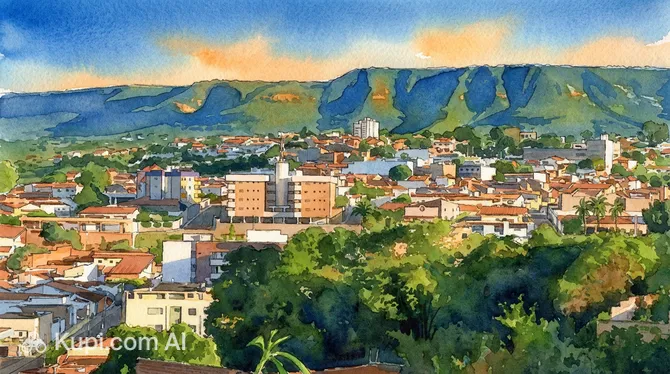
Crato is a cozy and welcoming city located in the southern part of the state of Ceará, in the northeast of sunny Brazil. The city stretches along the banks of the Grangeiro River and serves as an important regional center, where provincial tranquility harmoniously combines with the dynamics of everyday life. With a population of over 270,000 people, Crato is one of the key hubs of the Cariri region.
Crato. Illustration.
Source: Kupi.com AI
The city's rich past dates back to 1764, when it was founded by the Capuchin friar Carlos Maria de Ferrara. Although Crato is not considered a typical tourist metropolis, it attracts travelers with its authentic atmosphere, traditional markets, and proximity to the natural beauty of Ceará state. It is an ideal place for those who want to see the real life of the Brazilian hinterland.
In Crato, you will find the typical flavor of a northeastern municipality: a mix of administrative buildings, residential quarters, and agricultural lands. The city doesn't strive to impress with its scale but wins you over with its rhythm, where life flows at a measured pace and locals are always happy to give directions to guests. Visiting Crato is an excellent opportunity to explore a region that often remains in the shadow of larger coastal cities.
Weather Overview
For those planning a trip, it's worth noting that the weather in Crato is distinctly tropical. Summer reigns here almost all year round with temperatures ranging on average from 24°C to 28°C, although during the day the air often warms up to 31–33°C. The hottest months are from September to December, when the sky remains clear and the sun is at its most active.
The rainy season in this region of Brazil usually lasts from February to May. During this time, the landscapes around the city become especially lush and green, and the rains bring a pleasant freshness, although they can be quite intense. March is traditionally considered the wettest month. If you prefer dry and sunny weather for walking, the best time to visit is from July to October.
Average monthly temperature
Average monthly precipitation
Interesting Facts
Foundation: The city was officially founded on June 21, 1764, by the Capuchin missionary Carlos Maria de Ferrara, making it one of the oldest settlements in this part of the state of Ceará.
River Banks: Crato is snugly settled on the banks of the Grangeiro River, which plays a key role in the city's ecosystem and layout.
Regional Center: Thanks to its location and developed infrastructure, Crato is the sixth-largest city in the state of Ceará and an important administrative hub of the Cariri region.
Agricultural Traditions: The city is famous for its contribution to the state's agriculture, which is reflected in colorful local fairs and traditional harvest festivals.
How to Get There
Traveling to Crato requires some planning, as the city is located in the interior of the country. The main way to get here is by land transport from major cities in the state of Ceará, such as Fortaleza. The bus journey takes about 8–10 hours, offering views of typical Brazilian sertão landscapes from the window. Detailed information about routes and tickets can be found on the page dedicated to how to get to the city.
For air travel, travelers most often use the airport in the neighboring city of Juazeiro do Norte, which is located just 11 kilometers from the center of Crato. This is the nearest major air gateway, receiving regular flights from São Paulo, Brasília, and Fortaleza. Upon arrival in Juazeiro do Norte, you can reach Crato quickly by taxi or suburban bus.
Rail service in the region is poorly developed and mainly focused on freight transport. However, regional light rail trains (VLT) are sometimes used for travel between Crato and neighboring cities, linking the settlements of the Cariri region and making life easier for locals and tourists.
Station
Passenger traffic
Distance
Crato
1
1 km
1
102 km
Estação Ferroviária de Patos
2
237 km
1
266 km
1
268 km
Main Attractions
In Crato, you won't find world-famous architectural monuments, but the city charms with its provincial sincerity. The main centers of attraction for tourists are the central squares, such as Bicu Square, where locals gather in the evenings. A stroll along the banks of the Grangeiro River will allow you to feel the leisurely pace of life in this Brazilian municipality and see the city from its natural side.
It is worth visiting the local traditional markets, which are the heart of the city's economy. Here you can see how the city lives, try exotic fruits, and get acquainted with local crafts. For those interested in administrative architecture, the city hall buildings and ancient churches in the center, which have preserved the characteristic features of the colonial heritage of the Ceará region, are noteworthy.
Although Crato is often perceived as a transit point, its cultural significance for the Cariri region is undeniable. The city serves as an excellent base for exploring nearby natural areas and pilgrimage sites in neighboring Juazeiro do Norte. The absence of tourist crowds allows guests to enjoy an authentic Brazilian atmosphere without unnecessary fuss.
Local Cuisine
The culinary traditions of Crato are deeply rooted in the gastronomy of Northeast Brazil. The basis of the local cuisine consists of hearty dishes made of beans, corn, and meat. You should definitely try buchada—a traditional stew made of offal with spices, as well as tapioca—thin cassava pancakes with a wide variety of fillings, from salty cheese to sweet tropical fruits.
For breakfast, locals often prefer Brazilian-style couscous, made from cornmeal, combined with strong aromatic coffee. In the heat of midday, freshly squeezed juices from exotic fruits like mango, passion fruit, or acerola, which are in abundance here, come to the rescue. The gastronomic scene in Crato is mainly represented by cozy family restaurants and street food stalls in the city center.
A special character is given to the local cuisine by the use of products from nearby farms. Simple cafes offering regional specialties such as fried cheese (queijo coalho) and dishes based on dried meat (carne de sol) are popular in residential areas. This is honest, simple, and very tasty food that perfectly reflects the spirit of the state of Ceará.
Travel Tips
When planning a visit to Crato, it's worth preparing in advance for the specifics of life in the Brazilian province. These tips will help make your journey comfortable and safe.
Clothing and Essentials: Choose light clothing made of natural fabrics, as it is almost always hot in the city. Don't forget comfortable shoes for walking, as well as sunglasses and sunscreen.
Transport: In the city center, it's convenient to move on foot, but for trips to remote areas, it's better to use a taxi. For traveling around the Ceará region, renting a car is convenient.
Finances: The local currency is the Brazilian Real. Cards are accepted in many places, but for markets and small purchases, be sure to have cash on hand.
Safety: Observe general precautions: try not to walk alone in the outskirts after dark and keep an eye on your belongings in crowded places.
Communication: The main language is Portuguese. English is not widely spoken here, so it is useful to learn a few basic phrases or have an offline translator at hand.
Local Etiquette: Residents of Crato are very friendly. Polite greetings and openness are accepted in communication. Don't hesitate to smile and say thank you.
What to Avoid: You shouldn't display expensive jewelry or technology in uncrowded places or discuss sensitive political topics.
Seasonality: During the rainy season (February–May), check road conditions if you plan out-of-town trips, as some sections may be washed away.
May your introduction to this hospitable city be filled only with pleasant impressions and interesting discoveries!
Entertainment & Nightlife
Entertainment in Crato is of a quiet and measured nature, reflecting the city's provincial lifestyle. There are no noisy night clubs or huge entertainment centers, but in the center, you can find cozy street cafes and bars where locals gather in the evenings to drink cold beer and discuss the news. The main evening activity is concentrated around the main squares, which transform after sunset.
For more vibrant entertainment and dancing until dawn, travelers usually head to the neighboring city of Juazeiro do Norte, located just 15 minutes away. There, the choice of discos and concert venues is significantly wider. In Crato itself, it is worth paying attention to cultural events during religious holidays, when folk festivals, fairs, and small musical performances are organized in the streets.
Daytime leisure in the city primarily consists of walking and getting to know the local way of life. For family vacations, open recreation areas by the Grangeiro River are suitable, where you can hide from the midday heat. Moving around the city in the evening is safest by official taxi, which can be called via an app or by asking the staff at your accommodation for help.
Parks & Museums
The cultural and green infrastructure of Crato is focused on preserving local traditions and everyday recreation for residents. Although there are no huge national parks in the city, small squares and landscaped areas along the banks of the Grangeiro River serve as places for quiet walks. These areas are especially popular in the pre-sunset hours when the heat subsides and the streets become cooler.
Since Crato is an important regional hub, cultural life here often revolves around municipal centers and libraries. The city's museums and galleries may be modest in size, but they offer valuable information about the history of the Cariri region and the daily lives of local residents. Visiting such sites gives tourists the opportunity to gain a deeper understanding of the soul of the state of Ceará and its unique heritage.
For those looking for more large-scale natural sites, Crato serves as a gateway to the region's natural riches, including the nearby hills and valleys. Small green zones within the municipality itself are ideal for taking a break during a walk around the city and observing the life of the local community in the shade of spreading tropical trees.
Getting Around
Public transport in Crato is mainly represented by bus routes that connect central districts with the outskirts and neighboring municipalities. Buses are the most affordable way to get around, though it's worth noting that they can be crowded during morning and evening rush hours. For tourists, it's a convenient option to reach the main markets and administrative buildings.
As a fast alternative to buses, taxis and motorcycle taxis are widely used in Crato. Motorcycle taxi rides are especially popular among locals for moving quickly over short distances. Taxi stands are easy to find near key squares and shopping areas. Prices for rides within the city are quite reasonable, but it's better to agree on the cost in advance or watch the meter.
Walking is comfortable in the central part of Crato, where the blocks are quite compact. However, for trips to distant residential areas or natural sites outside the center, renting a car may be necessary. Traffic jams in the city are minimal compared to metropolises, but during peak hours, small delays are possible in the center.
Accommodation
The choice of accommodation in Crato is primarily oriented towards those who come here on business or for a long stay. Cozy guesthouses (pousadas) and apartments predominate here, offering a basic set of amenities at very affordable prices. Most accommodation options are concentrated in the central part of the city, which is convenient for quick access to shops, markets, and eateries.
There are practically no luxury five-star hotels in Crato, as the city's hotel sector is aimed at meeting the needs of a regional hub. If you require a higher level of service or a modern hotel of a chain brand, you can consider staying in neighboring Juazeiro do Norte, where the choice of hotels is somewhat wider and the distance between cities is minimal.
It is recommended to book accommodation in Crato in advance, especially if your visit coincides with major regional holidays or festivals. At other times, finding a free room in local pousadas is usually not difficult. This is a great chance to live in an authentic setting and feel the sincere hospitality of the Brazilian hinterland.
Nearby Cities
Crato serves as a magnificent starting point for exploring the unique Cariri region. Literally a ten-minute drive away is Juazeiro do Norte—one of the largest pilgrimage centers in Brazil, famous for its giant statue of Padre Cícero. This city lives in a rhythm of faith and trade, offering guests many interesting museums and bustling markets.
Another attractive destination for a day trip is Barbalha, located just 15 kilometers away. It is known for its colorful old mansions and vibrant folklore festivals. If you decide to go a bit further, it is worth visiting Nova Olinda, where you can get acquainted with unique leather workshops and see the archaeological finds for which this region is famous.
Exploring the surroundings of Crato reveals a wonderful combination of history, religion, and the natural beauty of Ceará state. Each of these destinations is easily accessible by car or regional bus, making your journey through northeast Brazil rich and diverse.
Shopping & Souvenirs
Shopping in Crato is primarily an introduction to the local way of life at bustling street markets and in shops in the city center. You won't find giant glass malls here, but the atmosphere of traditional Brazilian trade completely compensates for it. The main shopping points are concentrated in administrative zones and on central streets, where you can find clothing, shoes, and everyday goods.
As souvenirs from Crato, it's worth bringing back items made by local artisans. Goods made of leather, traditional fabrics, and woven accessories characteristic of the Cariri region are especially popular. Also, don't forget to look into the food markets for local sweets, natural honey, and exotic jams made from fruits grown in the state of Ceará.
Most shops in Crato are open from 8:00 to 18:00 on weekdays; on Saturdays, the working day is usually shortened until lunch. Cards are accepted in most outlets in the center, but at markets and in small family shops, it is preferable to have cash Reais with you. The buying process here often turns into a pleasant conversation with friendly local sellers.