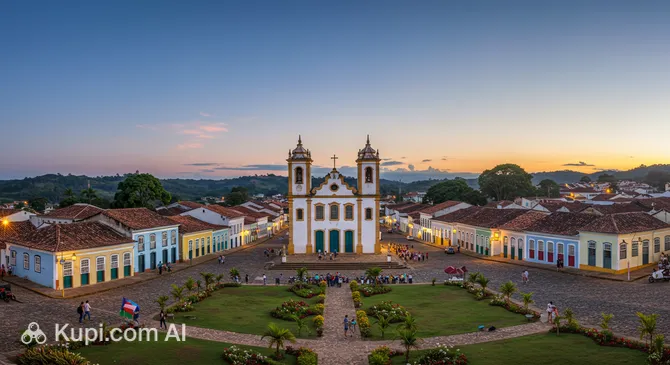
Cabo de Santo Agostinho is a picturesque corner of the state of Pernambuco, Brazil, that harmoniously combines the dynamics of modern urban life with the tranquility of a tropical coastline. The city is part of the Recife metropolitan area and is famous for its relaxed atmosphere, attracting both beach lovers and those interested in the region's industrial potential, represented by the Port of Suape.
The municipality's geographical location is unique: it is situated right on the Atlantic Ocean and covers an area of more than 446 square kilometers. With a population of approximately 208,944 people, the city is a vibrant and actively developing center where modern residential areas sit alongside untouched natural zones. If you decide to explore the city's rich history, you will find that it was officially founded back in 1812, although these lands were known to sailors much earlier.
Cabo de Santo Agostinho. Illustration.
Source: Kupi.com AI
The main magnets for tourists here are the magnificent white sand beaches and the famous Cape Santo Agostinho, which is considered one of the easternmost points of the South American continent. Here, you can enjoy not only the sun but also walks along the coastal cliffs, which offer breathtaking views of the ocean. A visit to Cabo de Santo Agostinho is an invitation to immerse yourself in the true rhythm of the Brazilian Northeast, where every day is infused with the salty sea breeze and the hospitality of the locals.
Weather Overview
Cabo de Santo Agostinho is dominated by a classic tropical monsoon climate, making it an attractive destination almost year-round. Expect very warm and humid summers, with daytime temperatures often rising to 33–35°C, and mild, comfortable "winters" with temperatures around 25°C. The ocean breeze helps make the heat more manageable on the coast.
Rainfall in the region is seasonal. The wettest period occurs from February to April, when intense but often short-lived tropical showers are possible. Conversely, autumn and early winter (from August to December) delight tourists with an abundance of sunny days and minimal rainfall. If you want to know more about what the city's weather will be like during your visit, we recommend following current forecasts.
The average water temperature in the Atlantic Ocean off the city's shores remains consistently high (about 26–28°C) throughout the year, creating ideal conditions for swimming and water sports regardless of the month. High humidity is a characteristic feature of the local city climate, which travelers usually get used to within the first few days of their stay.
Average monthly temperature
Average monthly precipitation
Interesting Facts
The city was officially founded on February 15, 1812, and residents solemnly celebrate its main municipal holiday on July 9.
The municipality is located near Cape Santo Agostinho—a unique geographical point that is one of the easternmost projections of South America into the Atlantic Ocean.
The region's economic well-being is largely linked to the Suape Port and Industrial Complex, which is considered one of the most technologically advanced and significant in Brazil.
Cabo de Santo Agostinho has an impressive population density—more than 384 people per square kilometer, highlighting its role as an important center in the Recife metropolitan area.
Local GDP per capita in the mid-2000s showed steady growth, making the city one of the economically strongest municipalities in the state of Pernambuco.
How to Get There
Cabo de Santo Agostinho boasts excellent transport accessibility, especially for those arriving from other regions of the country or from abroad. The city is integrated into the large transport network of the state of Pernambuco, allowing tourists to easily plan their route. Before your trip, we recommend checking the route details to choose the most convenient option.
The nearest and main air hub is Recife-Guararapes–Gilberto Freyre International Airport (REC), located just 40–50 kilometers from the center of the municipality. It is one of the best airports in Brazil, receiving direct flights from Europe, the USA, and many cities in South America. Upon arrival, you can reach your destination in about an hour by taxi, rental car, or regular intercity buses that run along federal highways.
For those who prefer land travel, important highways pass through the region, connecting Cabo de Santo Agostinho with the main cities of the northeast coast. The bus route network is well-developed, providing regular connections to the Recife bus station and neighboring resort areas.
Main Attractions
The main treasures of Cabo de Santo Agostinho are its natural landscapes and coastline. Cape Santo Agostinho is not just a geographical point, but a symbol of the region. Tourists are drawn here by the opportunity to stand on one of the "edges" of the continent and see the place where, according to some historians, Europeans first landed on the shores of Brazil. Panoramic views of the Atlantic and ancient fort ruins create an atmosphere of adventure here.
For fans of both active and relaxing recreation on the water, the local beaches are ideal. Gaibu Beach is immensely popular with surfers thanks to its waves, while Calhetas is a cozy bay surrounded by rocks and dense greenery, shaped like a heart. This spot is considered one of the most romantic in the state of Pernambuco and is perfect for diving or a lazy day in a hammock by the water.
The city's historical significance is highlighted by the architectural heritage preserved in the surrounding areas. Walking along the coastal zones, you can come across old lighthouses and defensive structures that once protected these lands. The combination of wild nature, azure water, and echoes of the colonial past makes visiting local attractions truly memorable.
Local Cuisine
The gastronomy of Cabo de Santo Agostinho is a feast of flavor for seafood lovers. The cuisine of Pernambuco is famous for its rich aromas and use of the freshest ingredients. Be sure to try moqueca—a traditional fish or shrimp stew simmered in clay pots with the addition of coconut milk, dendê palm oil, and local spices. Another local delicacy is acarajé—deep-fried bean patties with a savory filling.
The region's tropical climate provides an abundance of exotic fruits. At local markets and beach cafes, it is worth ordering fresh juices made from cashew, mango, or guava. For those who prefer stronger drinks, the caipirinha remains the undisputed leader, prepared with cachaça, lime, and cane sugar. Sipping one while sitting in a restaurant overlooking the Atlantic Ocean is a special pleasure.
The dining culture here is centered around family restaurants and beach kiosks (barracas). In the evening, locals and tourists gather at venues by the water, where a relaxed atmosphere prevails. The city's gastro scene is captivating in its authenticity: there is no striving for excessive luxury here, with an emphasis instead on product quality and traditional recipes passed down through generations.
Travel Tips
A trip to Cabo de Santo Agostinho promises to be unforgettable if you prepare in advance for the unique features of this vibrant Brazilian region. Here are some practical tips to help you feel confident and comfortable.
Clothing and Essentials: Bring light clothing made of natural fabrics, as it is always warm in the region. Don't forget high-quality sunscreen, a hat, and insect repellent for walks near natural areas. For the beaches, comfortable shoes (flip-flops) will come in handy, and for hiking to the cape, sneakers with good grip are recommended.
Transport: For getting around the city and trips to the beaches, it is most convenient to use taxi apps (Uber). If you plan to actively explore the surroundings and neighboring cities, consider renting a car.
Finances: The local currency is the Brazilian Real (BRL). Cards are accepted almost everywhere, including beach kiosks, but a small amount of cash is essential for small purchases from street vendors. It is most profitable to exchange currency at banks in Recife.
Health and Safety: Always drink only bottled water. At the beaches, follow standard precautions: do not leave valuables unattended. Pharmacies (farmácias) are easy to find in the city center.
Communication: The main language is Portuguese. English is common in large hotels, but knowing basic phrases ("Obrigado"—thank you, "Bom dia"—good morning) will help you quickly win over the locals.
Local Etiquette: Brazilians are very friendly and open. A greeting is often accompanied by a handshake or a light hug. Be polite and smiling.
What to Avoid: You should not display expensive jewelry or large amounts of cash in uncrowded places. Also, avoid walking on unlit sections of the beach after dark.
Best Time to Visit: The ideal period for a visit is from September to December, when the weather is at its driest and sunniest.
Following these simple rules will allow you to focus entirely on your vacation and enjoy the beauty of Pernambuco!
Entertainment & Nightlife
Entertainment in Cabo de Santo Agostinho is inextricably linked to its coastal location. During the day, life hums on the beaches, where travelers can go surfing, kayaking, or take a sea trip on traditional boats. The atmosphere here is as relaxed as possible: many people spend time in coastal kiosks, enjoying live music and the sound of the surf.
The city's nightlife is calmer and more measured compared to neighboring Recife. Most activity is concentrated in the bars and restaurants along popular beaches like Gaibu. Here, you can often hear the sounds of forró—a traditional rhythm of the Brazilian Northeast that both locals and visitors dance to. Evening venues stay open late, offering a cozy setting without a strict dress code.
For those looking for larger-scale entertainment, the proximity to the state capital makes it easy to reach major concert venues and festivals. Nevertheless, Cabo de Santo Agostinho itself remains an ideal destination for those who value safety, moonlit walks by the ocean, and soulful gatherings in bars overlooking the Atlantic. For safe travel at night, it is recommended to use official taxi services or popular ride-sharing apps.
Parks & Museums
The natural heritage of Cabo de Santo Agostinho is its main "open-air museum." The areas surrounding the city are rich in protected zones where remnants of the Mata Atlântica (Atlantic Forest) are preserved. Walking along ecological trails in the Cape Santo Agostinho area allows tourists to see rare plant species and enjoy the silence, broken only by birdsong and the sound of the ocean. These places are ideal for ecotourism and hiking.
Even though major art galleries are concentrated in neighboring Recife, the municipality itself is interesting for its historical landscapes. Here you can find old engineering structures and ruins that tell the story of the coastline's development. Particular attention should be paid to the natural parks near Calhetas Beach, where rocky formations and tropical vegetation create unique conditions for nature observation.
For cultural enrichment, many travelers combine a holiday in Cabo de Santo Agostinho with day trips to the state capital's museums dedicated to the history of sugar cane and Pernambuco's colonial heritage. However, the charm of the city itself lies precisely in its park zones by the ocean, where nature and history are woven into a single whole.
Getting Around
The transport system in Cabo de Santo Agostinho is geared towards connecting the city with other parts of the Recife metropolitan area. The main form of public transport here is the bus. There is a well-developed network of routes that connects residential neighborhoods with the Suape industrial zone, as well as providing regular communication with the state capital. For tourists, this is an economical way to reach the region's main transport hubs.
Special transport cards are often used to pay for bus fare, but cash payment to the conductor or driver is also possible. It is worth considering that during peak hours, public transport can be crowded, so for comfortable trips between beaches, travelers often choose alternative options.
Taxis and ride-sharing apps (such as Uber) are very popular due to their convenience and fixed rates. This is the best way to quickly reach remote beaches or return to your hotel late in the evening. Additionally, bicycle rentals are available in tourist areas, allowing you to explore the picturesque coastline at your own pace while enjoying the sea air.
Accommodation
Accommodation options in Cabo de Santo Agostinho are quite diverse and primarily geared towards those who want to wake up to the sounds of the ocean. The most popular lodging format here is pousadas—cozy guest houses. Many of them, for example in the beach areas, offer guests not only comfortable rooms but also swimming pools, tropical gardens, and their own bars with an authentic atmosphere.
For travelers who prefer complete independence, the rental market offers many apartments and holiday homes, which are often booked through online services. The best areas to stay are those within walking distance of Gaibu and Calhetas beaches. The main tourist infrastructure, cafes, and shops are concentrated here.
If you are planning a trip during the Brazilian summer (December–February) or during local holidays in July, it is extremely important to book accommodation in advance. During these times, demand for quality seaside options rises sharply. The price range varies from budget rooms to high-end resort hotels, ensuring a choice for any budget.
Nearby Cities
Cabo de Santo Agostinho is an excellent starting point for exploring the northeastern region of Brazil, offering travelers easy access to neighboring points of interest. Thanks to the developed road network, you can complement your holiday by visiting both large metropolises and small, colorful towns.
Just a 45-minute drive away is Recife, the state capital, often called the "Brazilian Venice" because of its numerous canals and bridges. The historic center and museums there are well worth a visit. Also noteworthy are neighboring municipalities such as Iguatu and Jucás, each of which has its own unique character and traditions. Cariús is also great for a short trip, where you can get a glimpse of life in the state's interior.
Don't miss the opportunity to explore the surrounding areas—this will allow you to see Brazil from different sides, from bustling port zones to quiet agricultural areas and endless sand dunes.
Shopping & Souvenirs
Shopping in Cabo de Santo Agostinho is predominantly local and artisanal. You won't find massive shopping malls on every corner here, but you can enjoy the atmosphere of authentic markets. Most commercial activity is concentrated in the coastal areas and in the center of the municipality, where small shops offer everything you need for relaxation and daily life.
The main souvenir from this trip will be handmade items. Local craftsmen are famous for their woven mats, jewelry made from shells and natural stones, and ceramics. At markets near popular beaches, you can buy high-quality textiles and beachwear with bright Brazilian prints. Don't forget to stop by the food stalls to buy local coffee or sweets made from tropical fruits.
Shops usually operate from morning until early evening, with a lunch break, while coastal stalls stay open as long as there are people on the beaches. Card payments are accepted in most establishments, but for buying souvenirs at small markets or street stalls, it is better to have some cash in Reais. If you crave large-scale brand shopping, you can always head to the shopping centers in Recife, which are easily reachable by taxi.