Support

Criciuma

About

Criciúma is a dynamic and important city in the state of Santa Catarina, often referred to as the national capital of coal and ceramic tiles. However, behind its industrial facade lies a cozy and welcoming place with a high quality of life, well-maintained green areas, and a rich cultural agenda. Located in the south of Brazil, this city attracts travelers with its unique combination of urban comfort and careful preservation of European immigrant traditions.

Geographically, the city is situated on the coastal lowlands, just a few dozen kilometers from the Atlantic Ocean, which influences its subtropical climate with warm summers and mild, sometimes cool winters. With a population of over 211,000 people, Criciúma is a significant regional center. To better understand how a small settlement transformed into a modern industrial hub, it is worth exploring the rich history of Criciúma, which is inextricably linked to mining and the development of railways.
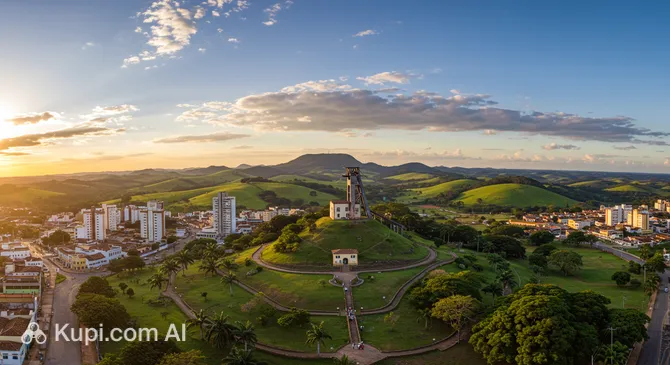
Criciuma. Illustration.
Source: Kupi.com AI

The city's tourism potential is built on its unique features that are rarely found elsewhere. The main attraction is undoubtedly the Octávio Fontana Mine—the only coal mine in the country open for guided tours, where you can go underground on a mini-train. For those who prefer leisure on the surface, the city offers the magnificent Nations Park, where nature, sports, and culture blend harmoniously.

Criciúma is a city that knows how to surprise and break stereotypes about industrial centers. Whether it's an interest in industrial tourism, a desire to experience the local flavor of Santa Catarina, or simply looking for a comfortable stop on a journey, this city is definitely worth including in your itinerary. Come to experience the hospitality and energy of one of the most developed corners of the southern region.
Weather Overview

The climate in Criciúma can be characterized as humid subtropical, providing comfortable conditions for visiting at any time of year, albeit with certain seasonal characteristics. Summer here lasts from December to March and is characterized by warm weather: the average temperature in January is 22.9°C, and daytime highs reach 26.8°C. However, travelers should be prepared for high humidity, as up to 25 rainy days are recorded in January.

Winter (June–August), on the contrary, brings coolness and a reduction in precipitation. July is the coldest month with an average of 14.9°C and nighttime temperatures dropping to 10.3°C. During this period, rains occur significantly less often—only about 8–10 days a month. To choose the best dates for your trip, you will find detailed weather in Criciúma useful to help plan activities.

In general, a mild change of seasons is characteristic of this region. Expect a warm summer with frequent rains and cool, drier winters, which allows for enjoying walks and excursions year-round with the right choice of wardrobe.

Average monthly temperature

Average monthly precipitation

Interesting Facts

In addition to its main attractions, Criciúma holds many fascinating secrets that reveal the city from an unexpected side. Here are a few facts that will help you better understand the character of this place:

  • The only tourist mine in the country: Criciúma is the only city in Brazil where travelers have the opportunity to legally descend into a real coal mine. The Octávio Fontana Mine tour allows you to ride a mini-train underground and see how the "black gold" that became the basis of the region's economy in the 20th century was mined.

  • Football kit symbolism: The colors of the local football club Criciúma (Criciúma Esporte Clube)—yellow, black, and white—were not chosen by chance. Black symbolizes coal, yellow represents the wealth and prosperity of the region, and white stands for harmony and peace. This team is a true source of pride for residents and one of the symbols of Santa Catarina's identity.

  • Ceramic capital of the world: The city is known not only for coal but also for being one of the world's largest centers for the production of ceramic tiles and floor coverings. Products from local factories are exported to all continents, securing the region's status as an industrial giant in this industry.

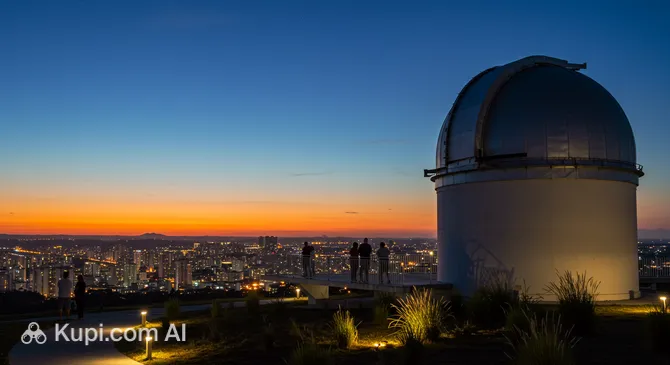
  • Stars instead of waste: An amazing example of environmental restoration is the Albert Einstein Astronomy Park. The complex was built on a site that had previously undergone serious degradation due to coal and pyrite mining. Today, it is an educational center with a planetarium and an observatory, demonstrating how an industrial zone can turn into a temple of science.

Albert Einstein Astronomical Park. Illustration.
Source: Kupi.com AI

Traveler photos:

How to Get There

Planning logistics is an important part of any trip. To ensure your visit goes smoothly, we recommend finding out all the ways to get to the city in advance and choosing the most suitable route. Criciúma has a developed road network connecting it with the main transport hubs in the south of the country.

There is no airport in Criciúma itself that accepts regular passenger flights, but you can fly to Humberto Bortoluzzi (IATA: JJG) in the city of Jaguaruna, which is just 30 km from Criciúma. This is the nearest regional aviation hub serving domestic flights. The journey from there by taxi or transfer will take about 1 hour 5 minutes.

For international flights and a wider choice of flights, it is more convenient to use Hercílio Luz International Airport (IATA: FLN) in Florianópolis, the state capital. It is located approximately 138 km from Criciúma. It is a major hub with excellent infrastructure. A journey by car or bus from the airport to the city will take approximately 3 hours 50 minutes.

Another option for long-distance travel is Salgado Filho Airport (IATA: POA) in Porto Alegre. Although it is further away, at 228 km, it is a very large airport with many connections. Travel time to Criciúma by land will be about 6 hours.

For clarity, here is a summary of the main airports:

AirportPassenger trafficDistance
Humberto Bortoluzzi135 20030 km
Hercilio Luz International Airport4.5 mln138 km
Correia Pinto Regional Airport25 000151 km
Hugo Cantergiani Regional Airport449 388186 km
Navegantes Airport2.2 mln211 km

Regarding rail transport, passenger service in this region of Brazil is virtually non-existent. There are no active railway stations for regular tourist travel in Criciúma or its surroundings. The railway here is used primarily for freight transportation of coal and goods.

Therefore, the main overland ways to get to the city remain intercity buses and cars. Criciúma is located near the main federal highway BR-101, which makes a trip by car or bus from neighboring cities and state capitals comfortable and scenic. The city's bus station (Rodoviária de Criciúma) accepts flights from Florianópolis, Porto Alegre, Curitiba, and other major centers.

Main Attractions

Criciúma offers its guests not only a rich industrial heritage but also many interesting places for relaxation and informative excursions. The city takes pride in its well-kept parks and unique landmarks that reflect its history and commitment to development.

One of the most unusual attractions is the Octávio Fontana Mine Tour. It is the only coal mine in Brazil open to tourists. Visitors can go underground and experience firsthand the hard work of miners that formed the basis of the city's prosperity. This tour is a true immersion into the history and industrial soul of Criciúma.

Park of Nations Cincinnatus Naspolini. Illustration.
Source: Kupi.com AI

Traveler photos:

For those who prefer outdoor recreation, Cincinato Naspolini Nations Park is the perfect place. It is the city's largest green zone, where you can stroll along picturesque alleys, relax by the lake, or play sports. The park also features replicas of Venetian gondolas, a nod to the contribution of Italian immigrants to the region's development, and a miniature railway that is particularly popular with children.

Science and space enthusiasts should visit the Albert Einstein Astronomy Park. This is an important educational center where lectures and observations of the starry sky through telescopes are held. The park provides a unique opportunity to peer into the mysteries of the Universe and is one of the few municipal facilities of its kind in the country.

The central place for walks and social events is Congress Square. It is a well-maintained space with fountains and green areas where locals and tourists love to spend time. It is here that the rhythm of the city's modern life is best felt, and fairs and festivals take place.

Local Cuisine

Criciúma's gastronomic scene is a delicious reflection of its history and cultural diversity. Thanks to the strong influence of European immigrants, especially from Italy, local cuisine is famous for its hearty homemade dishes. The absolute king of the table here is polenta with galeto (polenta com galeto). This is a traditional combination of corn porridge and small pieces of roasted chicken, often served with radicchio salad, bacon, and homemade noodles. This dish is considered the region's signature and a symbol of hospitality.

Of course, being in the south of Brazil, it's impossible to ignore churrasco. Locals love meat grilled over charcoal, and the city has many establishments operating on the "rodízio" system (where waiters constantly bring new types of meat) or offering dishes by weight. If you want to immerse yourself in the atmosphere of classic Italian cuisine and enjoy handmade pasta with a glass of good wine, it is worth visiting the restaurant Trattoria San Paolo, where the culinary traditions of ancestors are honored.

For a quick and inexpensive snack, "pastel" is perfect—a crispy fried pastry with hundreds of filling options, from minced meat and cheese to shrimp and palmito. It is the most popular street food, which Brazilians often wash down with freshly squeezed sugarcane juice. To try some of the best versions of this dish in the city, stop by the Pimenta Pastéis cafe.

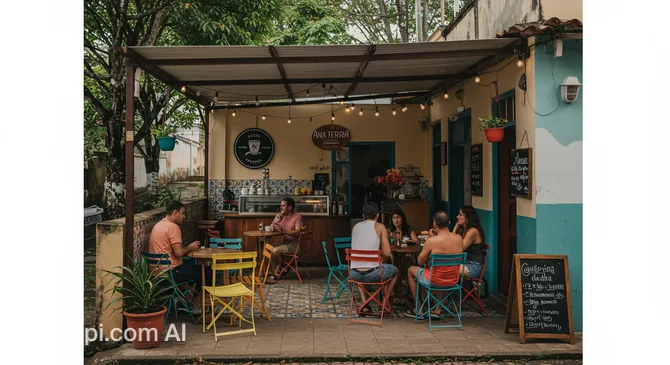
Ana Terra Coffee. Illustration.
Source: Kupi.com AI

Traveler photos:

As for drinks, Criciúma has a very developed coffee culture. During the day, locals and tourists love to take an espresso break with a dessert in cozy places like Ana Terra Coffee. Among alcoholic beverages, traditional caipirinha and cold beer are popular, but special attention should be paid to local wines. The region is located near the vineyards of the Urussanga valleys, where unique white wines from the Goethe grape variety are produced.

Travel Tips

Criciúma is a welcoming and developed city, but as with any trip to Brazil, there are nuances you should know in advance. To make your trip as comfortable as possible and leave only positive emotions, we have prepared a list of proven recommendations covering everything from choosing a wardrobe to communicating with locals.

  1. Clothing and Seasonality. Since the climate here is subtropical, the contents of your suitcase depend heavily on the time of year. In summer (December–March), take light clothing made of natural fabrics, as it can be hot and humid. In winter (June–August), the temperature can drop to +10°C, so be sure to bring a jacket, sweater, and closed shoes. For visiting the Octávio Fontana Mine and long walks in Nations Park, choose comfortable sneakers with flat soles.

  2. Transport Nuances. The bus system (SIT) here works perfectly and allows for cheap movement between districts with transfers at terminals. However, for tourists, especially in the evening, the most convenient option remains the Uber or 99 taxi apps. It is inexpensive, safe, and saves you from having to figure out routes. Renting a car makes sense only if you plan trips to neighboring cities or the coast.

  3. Money and Payment. The national currency is the Brazilian Real (BRL). In Criciúma, bank cards (Visa, MasterCard) are accepted everywhere, even in small cafes and kiosks. Cash may only be needed for small purchases at street markets or to pay for a bus fare. Tips in restaurants (usually 10%) are most often already included in the bill as "taxa de serviço," so leaving something extra is not mandatory but appreciated.

  4. Connectivity and Internet. Do not count on ubiquitous free Wi-Fi outside of hotels or large shopping centers. We recommend buying a local SIM card (operators Vivo, TIM, or Claro) immediately upon arrival. They can be found at newsstands ("bancas de jornal") or pharmacies; a passport is required for registration. This will provide you with a navigator and translator, which is critically important in the city.

  5. Language Barrier. Few people in Criciúma know English, mainly staff at large hotels. The main language of communication is Portuguese. Locals are very friendly and will try to understand you, but it's better to download an offline translator in advance and learn a few phrases: "Oi" (Hi), "Tudo bem?" (How are you?), "Obrigado/a" (Thank you). Important nuance: do not try to speak to Brazilians in Spanish, thinking it's the same thing—this can cause misunderstanding.

  6. Safety and Health. Criciúma is considered one of the safe cities in the region, especially in the center. Nevertheless, follow basic rules: do not display expensive smartphones and cameras on sparsely populated streets and avoid walking in remote areas at night. Pharmacies ("Farmácias") are common, many work until late evening. Drinking tap water is not recommended; buy bottled or use filtered water.

  7. Electricity. Pay attention to the voltage in the network. In the state of Santa Catarina, and in Criciúma in particular, the standard voltage is 220 volts (unlike many other states in Brazil where it is 110 V). Sockets are usually type N (three round pins) or C (two round pins), so take care of an adapter for your gadgets in advance to avoid damaging equipment.

  8. Local Etiquette. Brazilians are tactile and open people. When meeting, it is customary to shake hands, and women often exchange light kisses on the cheek (or an imitation of a kiss). In shops and elevators, it is customary to greet strangers. Don't be surprised if locals call you "amigo" (friend) after just a minute of conversation—it's part of the culture.

Following these simple rules will help you quickly adapt to the local rhythm of life and feel at home in Criciúma. The city is open to guests, and by showing a little respect for local peculiarities, you are guaranteed to receive hospitality and sincere smiles from the residents in return.

Entertainment & Nightlife

Nightlife in Criciúma may not have the scale of metropolises like Rio de Janeiro, but it definitely has its own charm and character. Thanks to the presence of a large university (UNESC), the city has many young people, which maintains a dynamic atmosphere in bars and pubs, especially from Thursday to Saturday. Evening leisure here is primarily about live music, excellent local beer, and soulful conversations with friends.

The main concentration of evening venues is in the City Center and the Próspera district. The area around Congress Square and adjacent blocks is where you should head for entertainment after sunset. It is common to move from one bar to another, enjoying the warm evening. The style of most establishments is casual: there is no strict dress code, and you will feel quite comfortable in jeans and a T-shirt in most places.

Fans of a classic pub atmosphere and rock music should check out Queen's House Pub. It is a popular spot among locals where you can try various types of beer and cocktails and listen to cover bands. The British-style interior and friendly crowd make it a great point to start or end the night.

If you prefer to start the evening with an exquisite dinner and a glass of wine, Trattoria San Paolo is an ideal choice. Although this establishment is more about gastronomy, it is an important part of the city's evening scene for those who appreciate a quiet environment and Italian traditions. Here you can spend a long evening tasting dishes before heading out for a walk through the night city.

For those seeking a more relaxed pace or traveling with family, malls like Criciúma Shopping become centers of attraction. In the evening, cinemas with modern equipment operate here, and live music often plays in food courts, creating a pleasant backdrop for relaxation.

Practical tips and safety:

  • Transport: Buses run infrequently at night, so the safest and most convenient way to get around is by taxi or apps like Uber and 99. Cars arrive quickly, and trips around the city are inexpensive.
  • Safety: Central districts and areas around shopping centers are considered safe for evening walks. However, as elsewhere in Brazil, it is worth avoiding deserted, unlit streets and not displaying valuable items.
  • Prices: The average bill in Criciúma's bars is lower than in the state capital, Florianópolis. Entry to clubs with live music may have a fee (couvert artístico), but the amount is usually nominal.

As for daytime cultural entertainment, the city offers a rich program for art lovers. The main stage is the Elias Angeloni Municipal Theater (Teatro Municipal Elias Angeloni), which regularly hosts concerts, plays, and dance shows. It is also worth keeping an eye on the schedule at Nations Park: on weekends, open-air festivals and performances by local artists are often organized there.

Parks & Museums

Despite its image as an industrial center, Criciúma pays great attention to the quality of life, offering residents and guests well-maintained green zones and interesting cultural spaces. Urban parks here serve not just as places for walks but as true centers of social life, where history intertwines with nature, and museums offer a unique interactive experience.

The main green artery of the city is rightfully considered Cincinato Naspolini Nations Park. This massive space was created to pay tribute to all the ethnic groups that settled the region: Italians, Poles, Germans, Portuguese, and Arabs. In the park, you will find stylized ethnic houses, sports grounds, and bike paths. A special flavor is added to the place by a mini-railway with the "Terezinha" steam locomotive, which takes visitors around the territory, recalling the city's railway past.

Park of Nations Cincinnatus Naspolini. Illustration.
Source: Kupi.com AI

Traveler photos:

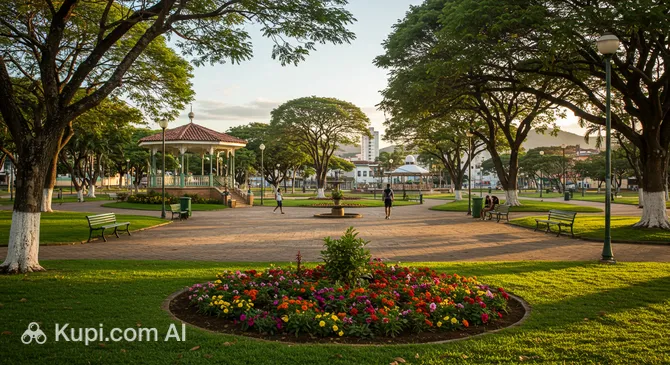
In the very heart of the urban area is another important oasis—Congress Square. This is a historical place that has preserved an atmosphere of tranquility amidst the city bustle. The square is immersed in the greenery of trees that provide pleasant shade even on hot days, making it ideal for a leisurely rest after shopping or excursions. Local residents can often be found here playing chess or simply enjoying nature by the pond.

Criciúma's cultural program is inextricably linked to its industrial heritage. The most impressive museum site is the Octávio Fontana Mine Tour. Essentially, it is an underground museum where the exhibits are the tunnels themselves, ancient equipment, and miners' tools. Inside, there is also the grotto of Saint Barbara, the patron saint of miners, which adds a special spiritual atmosphere to the place. This is a rare opportunity to see the history of coal mining from the inside, quite literally.

For those drawn to the stars, the Albert Einstein Astronomy Park is open. This modern complex, located on the Morro Cecílio hill, serves as an interactive science museum. It features a planetarium that hosts exciting digital shows about space and telescopes for observing celestial bodies. The park is interesting not only for its exhibits but also for the panoramic view of the city from its grounds.

In addition, history buffs should pay attention to the Augusto Casagrande Museum (Museu Augusto Casagrande). Located in an old mansion from 1920, it was the first house built in the city center. The museum's exhibition carefully preserves household items, furniture, photographs, and documents of the first settlers, allowing a glimpse into the daily life of Criciúma at the beginning of the 20th century.

Insider Tip: If you find yourself in Nations Park on a weekend, try to catch one of the cultural events that often take place on the open stage. And after visiting the Astronomy Park, be sure to linger at the Mirante Realdo Santos Guglielmi observation deck, located nearby, to see the sunset over the city—it is one of the most photogenic sights in the region.

Getting Around

The public transport system in Criciúma is based exclusively on bus service. There are no subway or tram lines in the city, but the bus network, known as SIT (Sistema Integrado de Transporte), is very efficiently organized and covers all major districts. This makes getting around the city affordable and understandable even for first-time visitors.

The heart of the transport system consists of three main terminals: Central (Terminal Central), Próspera (Próspera), and Pinheirinho (Pinheirinho). The main feature of SIT is integration: after paying for a ticket once, you can make transfers from one route to another within the terminals at no extra cost. Express buses, often called "Amarelinho" (Yellow) by locals, run between the terminals on dedicated lanes, which significantly saves time during rush hours.

To pay for travel, locals use the CriciúmaCard electronic card. It is not necessary for tourists on a short visit to purchase a card: you can pay for travel in cash on buses and at the entrance to terminals. However, keep in mind that the fare when paying in cash may be slightly higher than with a card. Ticket validation takes place at turnstiles at the entrance to the terminal or at the front of the bus.

Transport starts early in the morning, around 05:00, and ends closer to midnight. On weekends and holidays, the frequency of movement decreases. To easily navigate the schedule and build routes, it is highly recommended to download the Moovit app or use Google Maps, which work quite accurately in Criciúma and show transport arrival times in real time.

If you prefer more comfort or are traveling with luggage, taxi ordering services are an excellent alternative. The Uber and 99 apps are very popular here, safe, and often cheaper than a traditional taxi, which can be found at specialized ranks. Bicycle rental in the city is poorly developed and is used more for recreation in parks than as a full-fledged mode of transport.

Accommodation

The choice of accommodation in Criciúma is mainly oriented towards business travelers and guests arriving for events, so the hotel infrastructure here is characterized by functionality and a good level of service. The city is dominated by mid-range hotels (3–4 stars) and comfortable business hotels offering breakfast and stable Wi-Fi. There are practically no luxury five-star resorts here, but you can find cozy family guest houses (pousadas) and budget hostels for economy-minded tourists.

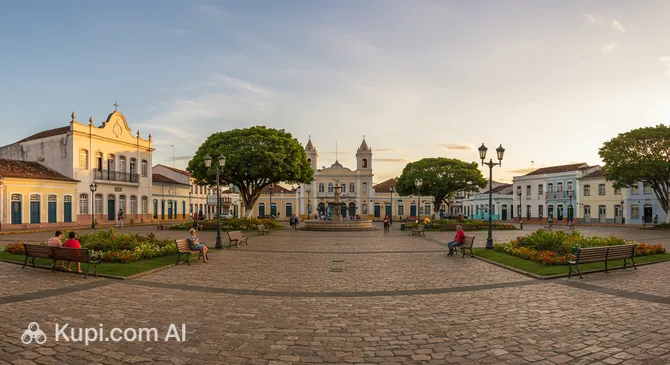
The most popular and convenient area to stay is the Center (Centro). By staying here, you will be within walking distance of major shops, restaurants, and transport hubs. A landmark for finding the best accommodation is Congress Square—the most prestigious and greenest district of the center. Hotels around this square allow you to enjoy the tranquility of a park zone while staying in the thick of urban life, near the Shopping Della mall.

Congress Square. Illustration.
Source: Kupi.com AI

Traveler photos:

Another attractive area is Próspera. This is a dynamically developing part of the city that will suit those who prefer modern quarters. Large malls, such as Criciúma Shopping, and the spacious Cincinato Naspolini Nations Park are located here. Staying in this area is convenient for those traveling by car, as it is easier to find parking and access the main highways.

Booking tips:

  • Seasonality: Since Criciúma is an industrial center, hotels are often full on weekdays (Monday to Thursday) with business travelers. If your trip falls on these days, book your room in advance. On weekends, prices may be slightly lower and more places may be available.
  • Prices: The price range varies from budget (economy options) to mid-range. A night in a good hotel with breakfast will cost less than in the tourist coastal cities of the state.
  • Booking methods: Major hotels are represented on all popular international booking platforms. Small guest houses can sometimes be booked more profitably directly or through local Brazilian services.

Overall, finding a decent place to stay in Criciúma is not difficult. The main thing is to decide on the purpose of your visit: if walks and history are important to you, choose the Center; if shopping and a quick exit from the city are priorities, choose the Próspera district.

Nearby Cities

For those who want to explore the surroundings, Criciúma serves as an excellent starting point for day trips to several interesting nearby locations:

Just an hour's drive away is the historical city of Laguna. It is the birthplace of the famous revolutionary Anita Garibaldi, attracting tourists with its beautifully preserved historical center featuring colonial architecture. In addition, Laguna is famous for its beaches and a unique phenomenon—fishing with the help of dolphins, which can be observed directly from the shore.

Lovers of health-oriented recreation should consider Tubarão. The city is known for its thermal springs, where you can relax in therapeutic waters. There is also an interesting railway museum here, telling the transport history of the region, which will be informative for travelers of all ages.

For connoisseurs of natural beauty, a great choice is Araranguá, which is often called the "City of Avenues." Its main attraction is the Morro dos Conventos district with impressive cliffs, sand dunes, and a picturesque river mouth where it flows into the Atlantic Ocean.

CityPopulationDistance
Içara57 2478 km
Sideropolis12 99810 km
Forquilhinha22 54813 km
Nova Veneza13 30914 km
Morro da Fumaça16 12616 km

These nearby destinations allow you to get a sense of the diverse culture and landscapes of the region.

Shopping & Souvenirs

General Overview: Criciúma is an important commercial center in the south of the state of Santa Catarina, attracting shoppers from neighboring cities with its variety of goods and services. Shopping here combines the atmosphere of a modern city with cozy traditions. The city does not claim the title of a high-fashion capital, but you can find high-quality clothing, shoes, and home goods at very attractive prices. Special attention should be paid to local products, as the region is famous for its developed textile and ceramic industries.

Main Shopping Areas: The heart of street commerce is the City Center (Centro), especially the pedestrian zone around Nereu Ramos Square (Praça Nereu Ramos). This is a lively place where many clothing, footwear, accessory, and cosmetic stores are concentrated. A stroll along the "calçadão" (pedestrian street) allows you to combine shopping with watching urban life. Both well-known Brazilian chain brands and small family shops with affordable prices are represented here.

Shopping Centers: For those who prefer comfortable shopping under one roof, several large complexes operate in the city. One of the most popular places is Criciúma Shopping. This was the first mall in the region, offering a wide selection of stores, a cinema, and a diverse food court. It is great for family leisure and shopping.

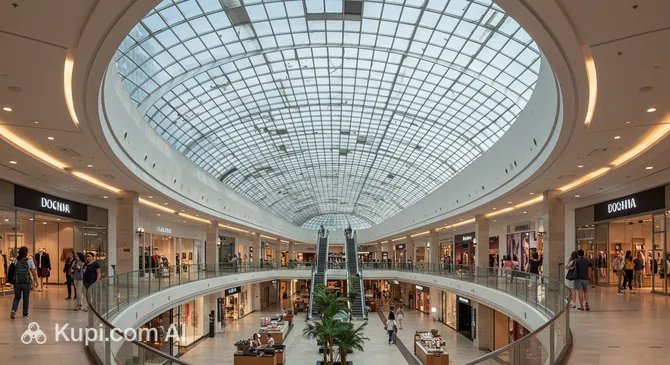
Shopping Della. Illustration.
Source: Kupi.com AI

Traveler photos:

Another important spot on a shopaholic's map is Shopping Della. This shopping center is located right in the city center, making it very convenient to visit while walking through the historical part. It is characterized by a more intimate atmosphere and the presence of quality boutiques, as well as a convenient food court area where you can take a break over a cup of coffee.

Markets: Although Criciúma does not have huge famous bazaars, it is worth visiting the local weekend fairs. Farmers' markets ("Feiras Livres") often take place in the mornings in various districts, offering fresh tropical fruits, cheeses, and homemade products. Periodically, artisan fairs are held in central squares, such as Congress Square, where you can find unique handmade items.

Souvenirs: What to bring from Criciúma? First and foremost, pay attention to ceramics. The city and its surroundings are considered one of the world centers for the production of tiles and ceramic items, so you can find beautiful tableware and decorative elements here. Also, clothing of local production will be a popular gift—the state of Santa Catarina is known for its high-quality knitwear. Don't forget gastronomic souvenirs: a bottle of wine from the neighboring Urussanga valley or local cachaça will be an excellent reminder of the trip.

Opening Hours and Payment: Street shops are usually open from Monday to Friday from 09:00 to 18:00 or 19:00, and on Saturdays until 13:00 (on the first Saturday of the month they often work longer, which is called "Sábado Mais"). Shopping centers work daily from 10:00 to 22:00, and on Sundays, shops in them often open after lunch (from 14:00 to 20:00). Credit and debit cards (Visa, MasterCard) are accepted everywhere, as well as cash Reais.

Tax Free: The tax refund system (Tax Free) for foreign tourists in Brazil is practically non-existent and is not applied in regular shops in Criciúma. Prices on price tags are final, so you should not count on a VAT refund when leaving the country.

Reached the end of the page?

That means the route is fully explored