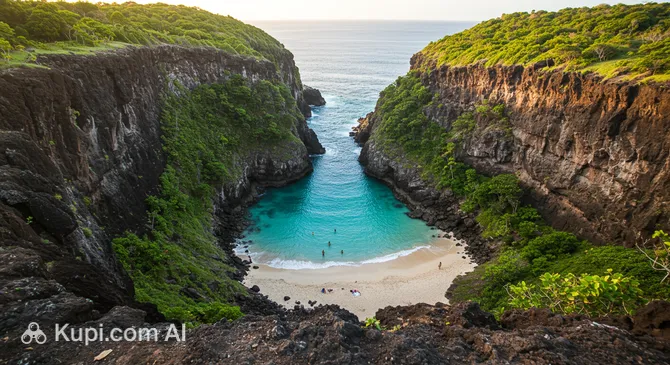
Imagine a coastline of incredible beauty that regularly tops the lists of the best beaches on the planet. This is Baía do Sancho, located on the picturesque Fernando de Noronha archipelago. This secluded bay in Brazil is famous for its pale golden sand and water that shifts in shade from sky blue to deep emerald.
Baía do Sancho. Illustration.
Source: Kupi.com AI
Traveller photos:
Surrounded by steep cliffs, the beach feels completely isolated from the rest of the world. Water visibility here reaches a record 50 meters, making it a true magnet for nature lovers. The coastline stretches for about 500 meters, offering guests an atmosphere of absolute tranquility and seclusion.
The main feature of Baía do Sancho is its restricted access: to reach the shore, you must navigate a system of ladders through a narrow rock crevice. This path turns an ordinary walk into a true adventure, rewarded by one of the most impressive views you can find in the South Atlantic.
Contacts
To visit this unique location, it is worth checking its location on the map and official details in advance. Below is the basic contact information to help you find your way around the island.
Please note that Baía do Sancho is located within a protected reserve, so there is no direct telephone connection on the beach itself.
The main draw for tourists here is snorkeling and diving. Thanks to the phenomenal water clarity, you can observe sea turtles, schools of colorful tropical fish, and even encounter gentle nurse sharks. The underwater world here is so rich that it feels as if you've stepped into a giant aquarium.
On land, be sure to take time for landscape gazing from the tops of the rocky cliffs. During the rainy season, beautiful waterfalls come to life here, their streams falling directly onto the golden sand. You can also spot local inhabitants—vibrant crabs and exotic birds soaring over the bay.
For those who prefer relaxed recreation, swimming in the calm lagoons is ideal. However, remember to exercise caution due to potential currents and to treat the environment with care, as the beach is part of a strictly protected reserve.
Getting There
The journey to this slice of paradise begins with a flight to Fernando de Noronha island from Brazilian cities such as Recife or Natal. Once on the main island, you can take a taxi, rent a buggy, or catch a local bus to the national park entrance.
The main part of the route passes through a special checkpoint where you must present your ecological pass. From the visitor center, a comfortable 300-meter wooden boardwalk leads to the edge of a cliff, offering breathtaking views.
The most challenging part is the descent. Visitors must navigate a vertical metal ladder set into a narrow rock crevice (about 38 steps) and then walk down another 145 stone steps. This path requires a certain level of physical fitness and is not recommended for people with limited mobility, but the reward is definitely worth the effort.
Nearest city: Fernando de Noronha
History & Facts
The Fernando de Noronha archipelago is of volcanic origin and is located approximately 350 kilometers off the coast. The beach itself was formed millions of years ago as a result of powerful volcanic activity, which explains the presence of the majestic basalt cliffs surrounding the bay.
Historically, the island served as a strategic point for the Portuguese, who built forts here to protect their territories. However, Baía do Sancho always remained away from active development, maintaining its status as an untouched natural sanctuary. This allowed the beach to become an important nesting site for sea turtles.
Today, this site is the jewel of the Marine National Park. The creation of the protected area helped limit human impact and preserve the unique marine fauna in its pristine state. Its title as the "world's best beach," which it has received multiple times, only confirms the exceptional value of this place for world heritage.
Time Needed
To fully enjoy the beauty of this place, we recommend planning a visit of 2 to 4 hours. This is enough time for the tricky descent, relaxing on the shore, and returning to the information center.
If you plan on snorkeling or want to wait for the perfect lighting for photos, it is better to set aside half a day. Keep in mind that climbing the stairs in hot weather can take more time and effort than it might seem at first glance, so there is no need to rush.
Working Hours
Although the beach itself is a natural site, access to it is regulated by the rules of the National Marine Park. Entry is typically open from 08:00 to 18:00, though these times may vary slightly depending on the season and ecological requirements.
Since access requires a special pass and payment of an ecological fee, we strongly recommend checking the latest information and schedule on the official park website before your trip. Remember that the number of visitors may be limited to preserve the ecosystem of this unique location.
Nearby
Exploring the surroundings of the beach and nearby areas will help you get a full sense of the natural and cultural wealth of the archipelago. There are many viewpoints and historical ruins nearby that deserve special attention on your itinerary.
Many interesting locations are within walking distance or a few minutes' drive by buggy. The table below lists sites worth visiting to make your island trip truly rich and diverse.
We use cookies and services to collect user information. This is essential for the functioning of the site and for marketing purposes. You can find out more in .
Other popular routes
Where travelers fly most — pick a route and check prices