Support

Fernando de Noronha Marine National Park

About

Imagine a paradise lost in the Atlantic, where emerald waters meet black volcanic rocks. Fernando de Noronha Marine National Park is a unique nature reserve in Brazil, covering a large part of the eponymous archipelago. This site, recognized as a UNESCO World Heritage site, is considered one of the best in the world for observing marine life in its natural habitat.
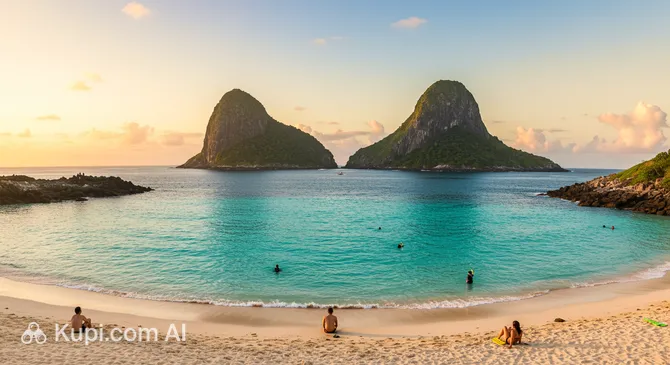
Fernando de Noronha Marine National Park. Illustration.
Source: Kupi.com AI

Traveler photos:

The park in Fernando de Noronha is famous for its crystal-clear water, where visibility can reach up to 50 meters. It is home to the legendary Baía do Sancho, which has been repeatedly voted the world's most beautiful beach. The archipelago is home to a massive colony of dolphins, rare sea turtles, and numerous species of tropical fish living among coral reefs and ancient volcanic rocks.

This is not just a tourist location, but a strictly protected nature sanctuary. Thanks to strict environmental regulations and limits on visitor numbers, the pristine ecosystem has been preserved. Visiting the park offers a rare opportunity to see the world as it was long before the advent of megacities, surrounded by silence, the ocean, and wild nature.

Contacts

To plan your visit to the Fernando de Noronha Marine National Park and obtain up-to-date information on visiting rules, you can use the following contact details:

How to contactContact
AddressEstadual, Fernando de Noronha - PE, 53990-000, Brazil
Phone+55 81 99453-2674
Websitewww.parnanoronha.com.br

What to Do

The main magnet of this place is the underwater world. Diving and snorkeling here are considered the best in the country. Even beginners can try a discovery dive and see sea turtles, sharks, and rays in their natural environment. For those who prefer surface observation, boat tours are ideal, where you can encounter pods of playful dolphins, particularly active in the morning hours.

The land side of the park is equally impressive. You can head out on scenic trails leading to breathtaking viewpoints, such as Mirante dos Golfinhos. Be sure to visit the natural aquariums in Porcos Bay or swim in the natural pools of Buraco da Raquel, where exotic fish and octopuses remain during low tide. For active travelers, Meio and Bode beaches offer excellent surfing conditions.

It is important to remember ecological etiquette: in some zones, snorkeling time is limited to 25 minutes, and the use of conventional sunscreens is prohibited to protect fragile corals. Evenings in the park are for sunsets, best enjoyed from one of the island's panoramic points surrounded by soaring albatrosses.

Getting There

The journey to this remote archipelago begins with a flight. You can only reach Fernando de Noronha by plane, and the number of flights is limited. Main departures are from the cities of Recife or Natal. Due to strict environmental quotas and the high popularity of the destination, it is recommended to book your tickets in advance.

Upon arriving on the main island, be prepared to pay a mandatory environmental preservation tax and the entry fee for the national park itself. It is crucial to keep all payment receipts throughout your trip—they may be checked at the entrance to key beaches or hiking trails. There is no public transport in the traditional sense, so tourists get around on foot, in rented jeeps, buggies, or by boat as part of organized tours.

The ideal time to visit is during the dry season, which lasts from September to February. During this period, the sea is at its calmest and underwater visibility reaches its peak, making the journey to the most remote corners of the park pleasant and safe.

Nearest city: Fernando de Noronha

History & Facts

The archipelago's history is as impressive as its nature. Of volcanic origin, these islands in the equatorial Atlantic remained a rugged territory for a long time. In the past, Fernando de Noronha was used as a place of exile and a military base. To this day, you can see the ruins of old forts and buildings on the islands, serving as reminders of those times.

The modern chapter of its history began with the creation of the Marine National Park, which placed about 70% of the archipelago's area under protection. The primary goal was to preserve the region's unique biodiversity. Thanks to these efforts, the park was included in the UNESCO World Heritage List as one of the planet's most valuable sites for studying marine life.

Today, the park serves not only as a tourist destination but also as an important scientific base. Large-scale research is conducted here on the behavior of spinner dolphins, migratory birds, and turtle nesting. Strict environmental control and management by the Brazilian Institute for the Environment allow this fragile world to be preserved in its pristine state for future generations.

Time Needed

To truly feel the magic of this place rather than just "checking it off," experienced travelers recommend dedicating at least 1–2 full days to the park. The vast territory and variety of activities require a thoughtful approach.

The first day is best spent on a boat trip for dolphin watching and relaxing on the famous Baía do Sancho beach. The second day is perfect for diving or snorkeling in natural pools and walking along panoramic trails leading to viewpoints. If your time is very limited, set aside at least half a day for the main beaches and the Mirante dos Golfinhos viewpoint.

Working Hours

The National Park welcomes visitors daily, seven days a week. The main checkpoints and access to protected beaches are open according to the following schedule:

  • Monday – Sunday: 08:00 – 18:00

It is recommended to arrive at opening time to enjoy nature before the peak of the midday heat and to secure the best spots for dolphin watching.

8:00 – 18:00

Nearby

The limited territory of the archipelago makes it easy to combine a visit to the national park with other interesting sites. Exploring the surroundings beyond the main beaches will help you dive deeper into the island's atmosphere and its historical past.

NameDistance
Xica da Silva Restaurant1.5 km
Tamar Project Visitor Center (Fernando de Noronha)1.7 km
Edilma's Restaurant2.1 km
Fernando de Noronha Environmental Protection Area2.1 km
Varanda Noronha Restaurant2.1 km
Forte do Boldró2.3 km
Lion's Lookout Beach2.3 km

Reached the end of the page?

That means the route is fully explored