Support

Itajai

About

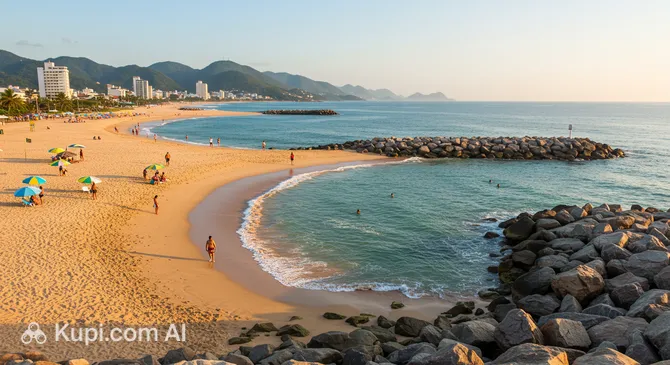
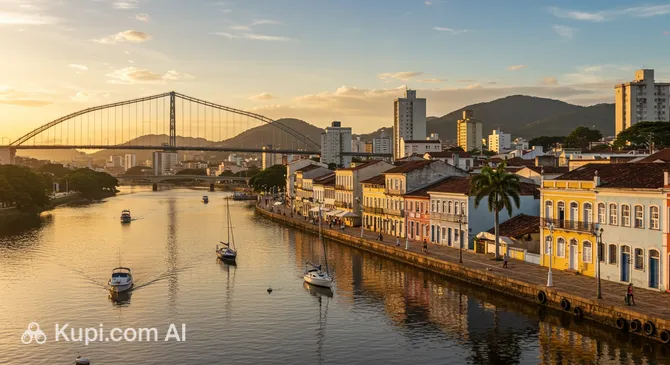
Itajaí is a true gem of the Atlantic coast of Brazil, nestled comfortably in the state of Santa Catarina. The city is located on the picturesque banks of the mouth of the Itajaí-Açu River, where marine expanses meet green hills. This fortunate location not only offers stunning views but also makes Itajaí one of the country's most important ports, where cruise liners depart and ships arrive from all over the world.
Itajai. Illustration.
Source: Kupi.com AI

With a population of over 180,000, Itajaí combines the dynamics of a port city with the charm of a resort town. It is surprisingly easy to breathe here thanks to the clean sea air and abundant greenery. The city's atmosphere is a unique blend of European refinement, brought by German, Italian, and Portuguese immigrants, and vibrant Brazilian cheerfulness. This is reflected in the architecture, local traditions, and, of course, the gastronomy. Itajaí is also known as an educational center, home to one of the country's largest private universities—the University of Vale do Itajaí (UNIVALI).

For tourists, Itajaí offers many interesting activities. First and foremost, there are the magnificent beaches, such as Praia Brava and Praia do Atalaia, which attract both those seeking a peaceful vacation and surfers. It is also worth visiting the historical center with its colorful buildings, such as the Igreja Matriz do Santíssimo Sacramento. The city is famous for its festivals, particularly Marejada—the region's largest celebration of Portuguese culture and seafood.

Itajaí is a city that enchants with its versatility, offering guests not only beach relaxation but also a rich cultural program, gastronomic delights, and the opportunity to experience authentic Brazilian life. A trip here promises to be bright and memorable!

You can find more interesting facts on the history of Itajaí page.

Weather Overview

The weather in Itajaí is characterized by a warm and humid climate for most of the year. In summer, especially from December to March, average temperatures hover around 23-25°C. January is the warmest month with an average temperature of 25.0°C and the highest amount of rainfall (7 mm, 23 rainy days), followed by February. Winter, spanning June, July, and August, is mild here. July is the coolest month with an average temperature of 16.8°C and the least amount of rainfall (2 mm, 8 rainy days).

Overall, in Itajaí, you can expect a warm and humid summer with frequent rains, as well as a mild and drier winter. For more detailed information and the current forecast, you can check the Itajaí Climate page.

Average monthly temperature

Average monthly precipitation

Interesting Facts

In addition to its famous beaches and busy port, Itajaí hides many amazing stories and little-known details that make it truly special. Here are just a few of them:

Morro da Cruz Viewpoint. Illustration.
Source: Kupi.com AI

Traveler photos:

  • A Cultural Melting Pot: The history of Itajaí is closely intertwined with 19th-century European immigration. Germans, Italians, and Portuguese actively moved to the city and its surroundings, creating a unique cultural mix. To this day, you can hear echoes of European languages, encounter characteristic surnames, and taste dishes whose recipes are carefully passed down from generation to generation.

  • A Brazilian "Oktoberfest" by the Ocean: Itajaí is the birthplace of Marejada—one of the largest festivals of popular music and maritime culture in Brazil, dedicated to fishermen and the city's heritage. In its scale, fun, abundance of music, dancing, and treats, this festival is often compared to the famous German Oktoberfest, but with an unmistakable Brazilian flair!

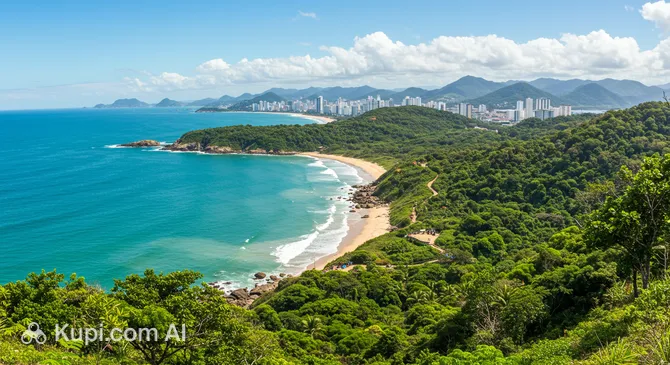
  • A Breathtaking Panorama from Above: From the hill where the Morro da Cruz Lookout is located, a truly magnificent view of the entire city, the Itajaí-Açu River, and the boundless expanses of the Atlantic Ocean unfolds. This is a popular spot for both tourists and locals for walks and creating unforgettable photographs.

  • An Architectural Treasure with an Italian Soul: One of the main symbols of Itajaí is considered the impressive cathedral Paróquia Santíssimo Sacramento. This building, designed in a Neo-Gothic style with Romanesque elements, is striking not only for its appearance but also for its interior—its halls are decorated with unique murals created by Italian masters.

How to Get There

When planning a trip, it is important to think about the route in advance. You can find out more about how to get to Itajaí to choose the most convenient option for you. The main way to arrive in this region for most tourists is by air.

The most convenient and nearest hub is Navegantes Airport (NVT). It is actually located not in Itajaí itself, but in the neighboring city of Navegantes, on the opposite bank of the river. The distance to the center of Itajaí is only about 4 km. You can get there very quickly: a taxi or transfer trip will take about 20–30 minutes, including possible time for the ferry crossing, which is a popular local transport in itself.

If there are no direct flights to Navegantes, an excellent alternative is Hercílio Luz International Airport (FLN), located in the state capital, Florianópolis. It is about 85 km from Itajaí. The journey by bus or car along a scenic highway will take about 1.5–2 hours. This is a large airport with many flights.

Another option for international travelers is Afonso Pena International Airport (CWB), which is located in the city of São José dos Pinhais (near Curitiba), 160 km from Itajaí. The road from here will take more time—approximately 2.5–3 hours by car or intercity bus.

For clarity, here is a summary of the main airports:

AirportPassenger trafficDistance
Navegantes Airport2.2 mln4 km
Joinville-Lauro Carneiro de Loyola Airport487 00077 km
Hercilio Luz International Airport4.5 mln85 km
Afonso Pena International Airport5.6 mln161 km
Correia Pinto Regional Airport25 000184 km

As for rail transport, passenger service in this region of Brazil is practically non-existent. It is not possible to get to Itajaí by train, as the railways are primarily used for freight transport. Tourists are advised to rely on the developed network of intercity buses or car rentals. The main highway passing near the city is the BR-101, connecting it with other major coastal centers.

Main Attractions

Itajaí, a vibrant port city in the state of Santa Catarina, offers its guests not only a developed infrastructure but also a number of interesting attractions. Here, everyone will find something to their liking—from picturesque nature spots to cultural landmarks.

One of the city's most iconic spots is the Morro da Cruz Lookout. Climbing up here, you will be rewarded with breathtaking panoramic views of Itajaí itself, the winding river, the busy port, and the endless expanses of the Atlantic Ocean. This place is especially popular at sunset, when the sky is painted in incredible colors, creating perfect conditions for photos and peaceful relaxation.

Morro da Cruz Viewpoint. Illustration.
Source: Kupi.com AI

Traveler photos:

For beach lovers and water sports enthusiasts, Molhes da Barra is a must-visit. Its hallmark is the characteristic breakwaters (moles), which not only shape the unique coastal landscape but also create specific wave conditions, attracting surfers. The beach is also perfect for leisurely strolls along the shore and watching the local fishermen at work.

Barra Jetties. Illustration.
Source: Kupi.com AI

Traveler photos:

If you are looking for communion with nature, head to Atalaia Municipal Nature Park. This green oasis in the middle of the city offers visitors well-maintained hiking trails leading through lush vegetation to observation decks. From here, magnificent views of the coast and the ocean open up. The park is home to various representatives of local flora and fauna, making it attractive for eco-tourists and nature lovers.

Atalaia Municipal Natural Park. Illustration.
Source: Kupi.com AI

Traveler photos:

One cannot overlook the natural landmark Bico do Papagaio, which translates to "Parrot's Beak." This picturesque rock located on the coast truly resembles the head of this bright bird in shape. "Parrot's Beak" has become one of the symbols of Itajaí and a popular spot for photo shoots. The surrounding area is ideal for walking and enjoying the seascapes.

Parrot's Beak. Illustration.
Source: Kupi.com AI

Traveler photos:

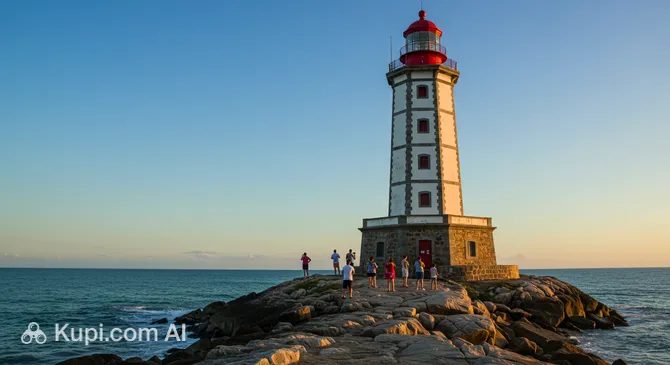
It is also worth mentioning the Navegantes Lighthouse, which, although located in the neighboring city, is visible from Itajaí and serves as an important navigational landmark and a popular subject for photography, especially against the backdrop of sunset or sunrise. Its classic architecture draws the attention of tourists.

Local Cuisine

The cuisine of Itajaí is a true feast for seafood lovers. Thanks to its coastal location, the city is famous for its freshest seafood, which goes straight from fishing boats to the tables. One of the main gastronomic hits that you must try is moqueca de peixe—a fragrant fish stew with coconut milk, palm oil, and spices. This dish, rich in flavors and aromas, is served in almost every restaurant on the coast.

In addition to seafood, Itajaí's gastronomy has been significantly influenced by European immigrants. Here you can taste homemade sausages, fresh pastries, and even traditional strudels. Be sure to try pastel de camarão—crispy pastries with a juicy shrimp filling, which are often sold at street stalls. Of course, one cannot overlook Brazilian classics such as hearty churrasco (grilled meat) and the famous feijoada (a thick black bean soup with meat).

Among drinks in Itajaí, beer holds a special place, including that brewed according to old German recipes, which is another legacy of European settlers. Of course, refreshing freshly squeezed juices from exotic fruits, so popular throughout Brazil, and traditional caipirinhas are always available for those who want to experience local alcoholic cocktails.

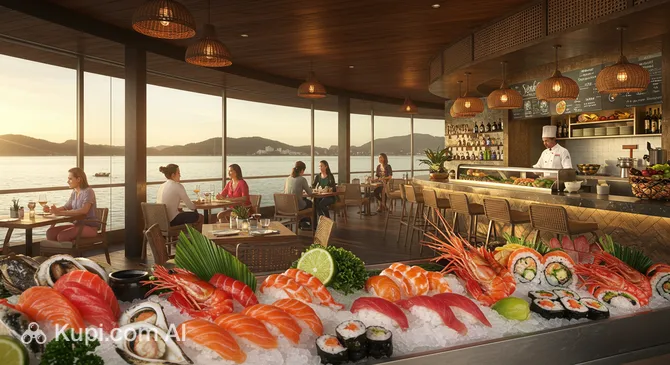
The food culture in Itajaí is diverse. Locals and tourists enjoy meals in cozy seafood restaurants as well as street food. A special place is held by Mercado Público de Itajaí—the city market, a true gastronomic paradise. Here you can find the freshest fruits, vegetables, spices, local sweets, and, of course, a huge selection of fish and seafood. It is not just a place for shopping but an opportunity to immerse yourself in the authentic atmosphere of the city. For a fine seafood dinner, you can visit, for example, the Zephyr Seafood & Sushi restaurant.

Zephyr Seafood & Sushi. Illustration.
Source: Kupi.com AI

Traveler photos:

Gastronomic festivals are an integral part of Itajaí's cultural life. The main event for foodies is the Marejada festival, during which the city turns into a huge open-air kitchen. Grilling is everywhere, beer flows freely, and music plays, creating a unique atmosphere of fun and gastronomic abundance. This event attracts many tourists wanting to get acquainted with the culinary traditions of the region.

Travel Tips

Welcome to Itajaí! To make your journey to this vibrant port city in Brazil as comfortable and memorable as possible, we have prepared some practical tips to help you better navigate the local scene.

  1. Clothing and Essentials: The climate in Itajaí is subtropical, with hot and humid summers (December-March) and mild winters (June-September). Pack light, breathable clothing (cotton, linen), swimsuits, and a light jacket or sweater for evenings or cooler days. Don't forget comfortable shoes for walking around the city and beaches, sunscreen, a hat, and sunglasses. A raincoat or umbrella will come in handy as rain is possible at any time of year. For electrical appliances, you may need an adapter (Type N is used in Brazil, voltage 127/220V—it's best to bring a universal one). When visiting churches, although there is no strict dress code, choose modest clothing that covers shoulders and knees.
  2. Transport: It is convenient to get around Itajaí by city bus—this is the main form of public transport, taking you to most areas and nearby beaches. Taxis and ride-hailing services like Uber or 99 are also popular. If you plan to explore the surroundings, such as the famous Praia Brava or a trip to neighboring Balneário Camboriú, renting a car can be a good option, but consider the potential traffic and parking difficulties in central Itajaí.
  3. Finance: The local currency is the Brazilian Real (BRL). You can exchange money at banks or official exchange offices (casas de câmbio); airport rates are usually less favorable. Credit cards (Visa, Mastercard) are widely accepted in most shops, restaurants, and hotels, but it is always useful to have some cash for small purchases or at markets. Before your trip, don't forget to notify your bank to avoid card blocks. ATMs (Caixa Eletrônico) are available, but it's better to use those inside bank branches. An approximate daily budget (excluding accommodation) can vary greatly, but for food, local transport, and small entertainment, aim for 150-250 BRL. Tips in restaurants are often included in the bill (10% "serviço"); if not, they are welcome.
  4. Health and Safety: Pharmacies (farmácias) are easy to find throughout the city, some operating 24/7 (marked as "plantão"). It is recommended to have travel insurance covering medical expenses. As in any large city, take basic precautions: do not carry large sums of money or expensive jewelry openly, and avoid deserted or unlit streets at night. Central and tourist areas are generally safer, especially during the day. Drink bottled water.
  5. Communication: The official language is Portuguese. English is common in the tourism sector (hotels, large restaurants), but overall, English proficiency among the local population may be low. Knowing a few basic phrases in Portuguese (e.g., "Olá"—hello, "Bom dia"—good morning, "Obrigado/Obrigada" (m/f)—thank you, "Por favor"—please, "Quanto custa?"—how much does it cost?) will be very useful and warmly received by locals. A SIM card with internet access can be purchased from local operators (Vivo, Claro, TIM). Wi-Fi is usually available in most hotels, cafes, and shopping centers.
  6. Local Etiquette: Brazilians are very friendly, open, and sociable. A handshake is common when meeting. Among acquaintances and friends, hugs and a light kiss on the cheek (usually one in the state of Santa Catarina) are common. Be polite, don't hesitate to smile and ask for help. Punctuality in informal settings is not always a strict rule, but for official meetings and excursions, it is better to arrive on time.
  7. What to Avoid: Try not to show off expensive items or large sums of money in public places to avoid attracting unnecessary attention. Avoid walking alone on deserted beaches or unknown areas late at night. Respect the local culture and traditions.
  8. Features of Itajaí: The city is one of Brazil's most important ports and is famous for its annual October festival Marejada, dedicated to seafood and Portuguese heritage—if your trip coincides with this event, be sure to visit! Don't miss the chance to try the freshest seafood in numerous local restaurants and relax on picturesque beaches like Praia de Cabeçudas or the surfer-favorite Praia Brava.

We hope these tips help you better prepare for your trip and enjoy every moment in sunny Itajaí. This city in the state of Santa Catarina will surely enchant you with its atmosphere and hospitality. Have a great trip!

Entertainment & Nightlife

When the sun sets over Itajaí, the city transforms, offering its guests a variety of options for evening and night-time leisure. While Itajaí might not compare to major metropolises in terms of the number of nightlife venues, there is definitely a place to have fun after dark. The main nightlife is concentrated around Beira-Rio Avenue (Avenida Ministro Victor Konder) and in the Praia Brava area, where numerous bars, restaurants, and a few clubs are located.

The atmosphere in Itajaí's nightlife spots is usually relaxed and friendly, characteristic of coastal cities in Brazil. You can meet both locals and tourists here. Most bars offer live music, especially on weekends, covering various genres from Brazilian popular music (MPB) and sertanejo to rock and electronic music. The dress code is mostly casual, but it is worth dressing up a bit more for some of the trendier clubs or restaurants. Establishments usually start to liven up around 10:00 PM to 11:00 PM and stay open late into the night, especially on Fridays and Saturdays.

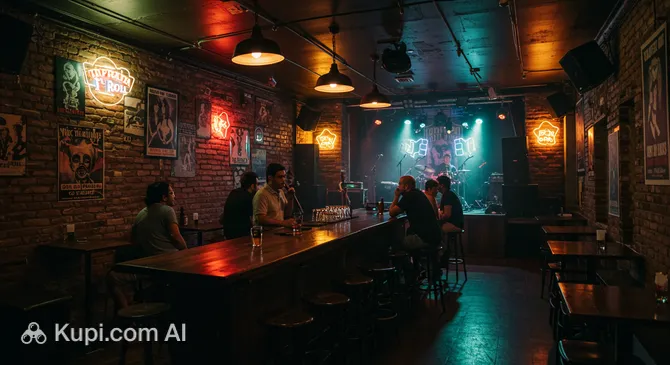
Confraria Rock N Roll. Illustration.
Source: Kupi.com AI

Traveler photos:

Among the specific places to spend an evening, the Confraria Rock 'n' Roll bar is worth noting; as the name suggests, it will delight rock music lovers with live performances and a matching atmosphere. For a quieter dinner or a cocktail in a pleasant setting, Café Cultura is suitable, known for its cozy atmosphere and good cuisine. The average check in bars and restaurants is moderate but can vary depending on the level of the establishment.

Regarding practical tips, the best time to visit nightclubs is after midnight, when the main crowd gathers. To get around the city at night, it is recommended to use taxis or ride-hailing apps. Try to choose official taxis or use verified services. Overall, the central districts and popular tourist zones are considered safe enough for nighttime walks, but one should always take standard precautions: do not leave belongings unattended and avoid poorly lit and deserted areas.

During the day, Itajaí also offers interesting leisure options. You can visit theaters, explore local museums to learn more about the region's history and culture, or spend time outdoors in one of the parks, such as Atalaia Municipal Nature Park, which offers beautiful views. The Morro da Cruz Lookout is also popular for panoramic photos of the city and the ocean.

Parks & Museums

Itajaí is a city where the charm of coastal nature blends harmoniously with interesting cultural sites. Here you will find both picturesque spots for outdoor relaxation and places that preserve the history and traditions of the region.

Nature and active recreation enthusiasts should check out Atalaia Municipal Nature Park. It is a great place for hiking along trails through the Atlantic forest, offering breathtaking views of the ocean and the city. Here you can enjoy the silence and observe local flora and fauna.

Atalaia Municipal Natural Park. Illustration.
Source: Kupi.com AI

Traveler photos:

Another iconic spot is Molhes da Barra beach. It is known for its breakwaters, which create a unique landscape and attract both locals and tourists for walks and watching surfers. It is a wonderful place to watch the sunset.

Barra Jetties. Illustration.
Source: Kupi.com AI

Traveler photos:

One cannot ignore the natural attraction Bico do Papagaio (Parrot's Beak)—a whimsically shaped rock resembling a bird's head. It is a popular spot for photography and admiring the coastal beauties, as well as a great point for contemplating the ocean.

While Itajaí may not have a large number of traditional museums in the classic sense, the city offers opportunities to get acquainted with its history and culture through other landmark sites. One of these is the Navegantes Lighthouse, located on the opposite bank of the Itajaí-Açu River, but serving as an important landmark and symbol of the region's maritime history. Its surroundings offer a good view of the port of Itajaí.

Navegantes Lighthouse. Illustration.
Source: Kupi.com AI

Traveler photos:

To get to know the city better and enjoy panoramic views, head up to the Morro da Cruz Lookout. This is not only a point with a magnificent overview of Itajaí, the port, and the ocean, but also a place where you can feel the spirit of the city and take impressive photos.

For more authentic experiences, walk through the historical center of Itajaí, paying attention to the architecture of old buildings, or visit the lively Mercado Público fish market, where you can feel the local flavor and taste fresh seafood. The port area is also interesting; it plays a key role in the city's economy and allows you to observe its dynamic life.

Getting Around

The foundation of public transport in Itajaí consists of city buses. They connect most areas of the city, including the central part, residential neighborhoods, and coastal zones. The bus network is well-developed, allowing relatively easy access to the main points of interest and popular beaches.

To pay for bus fares in Itajaí, a special transport card (often called "cartão de passagem" or similar) is typically used. This card can be purchased and topped up at bus terminals, special kiosks, or authorized sales points. In some cases, cash payment directly to the driver may be available; however, using a transport card is usually more convenient and may offer a better fare. The approximate cost of a single bus trip is usually around R$4-R$6 (Brazilian Reals), but it is always recommended to check the current fare upon arrival as it may change.

You can usually purchase a transport card or single tickets (if provided by the system) at the main bus station (Rodoviária) or at specialized passenger service points. Card validation occurs when entering the bus through a special reader, usually located at the front door. Bus schedules can be found at some stops, on official transport company websites, or using popular mobile apps for tracking public transport such as Moovit or Cittamobi, which can also provide real-time information on routes and arrival times. Keep in mind that during peak hours, buses can be more crowded, and during evening hours and on weekends, service intervals may increase.

In addition to buses, there are other ways to get around Itajaí. While the main emphasis is on the bus network, shared taxis (known in Brazil as "vans" or "lotação") offering alternative travel options can occasionally be found in some areas or for certain routes, though they are not as widespread as regular buses. Taxis are available and can be called by phone, through mobile apps, or found at designated stands near key points in the city. App-based ride-hailing services (such as Uber or local equivalents) are also widely used and often offer competitive prices. For short-distance travel, especially along the waterfront or in tourist zones, renting bicycles can be considered if such a service is available and developed in the city.

Accommodation

In Itajaí, travelers will find various accommodation options to suit different preferences and budgets. The city offers a wide range of housing: from affordable hostels and guesthouses (pousadas) to comfortable mid-range hotels and apartments for short-term rental. While world-class luxury resorts are less common here, quality hotels with a good range of services can be found.

When choosing a place to stay, it is worth paying attention to areas located closer to the central part of the city or beach zones, such as Praia Brava or Praia de Cabeçudas, if the main goal is a beach holiday. Central areas are usually convenient for access to shops, restaurants, and some city attractions. Although specific names of famous hotels were not provided in the available data, the city features many options from independent hotels to chain brands.

The price range varies from budget to mid-range and above average. It is recommended to book accommodation in advance, especially if your trip falls during the peak tourist season (usually the summer months and the Carnival period). For searching and booking, it is convenient to use popular online platforms or contact hotels directly. Some pousadas and apartments can also be found on local rental sites.

Nearby Cities

For those who want to explore the surrounding area, Itajaí serves as an excellent starting point for day trips to several interesting nearby locations:

CityPopulationDistance
Navegantes60 5562 km
Balneário Camboriú124 55711 km
Camboriu62 36113 km
Penha25 14115 km
Balneário Piçarras17 07815 km

These nearby destinations provide insight into the diverse culture and landscapes of the region. A trip to any of these cities will provide new impressions and complement your journey through Brazil.

Shopping & Souvenirs

Shopping in Itajaí offers a pleasant addition to a holiday on the coast of Brazil. As an important port, the city can surprise with its variety of goods, although it does not position itself as a major shopping hub. Here you can find both modern stores and shops with local character, offering unique souvenirs and handmade items.

The main shopping spots in Itajaí are generally concentrated in the central part of the city and along the main streets. Walking through the center, you will find many shops selling clothes, shoes, accessories, and home goods. Hercílio Luz Street (Rua Hercílio Luz) is one of the key commercial arteries where you can find diverse offers.

Although Itajaí may not be famous for huge world-class shopping centers, modern commercial galleries and small malls offering comfortable shopping with air-conditioned space, food courts, and cinemas can be found in the city. They are a good option for those who prefer to shop in one place.

Special attention should be paid to local markets. While there may not be large tourist markets, traditional municipal markets (Mercado Público) can be found in Itajaí, selling fresh products, seafood, local delicacies, and handicrafts. It is a great place to feel the authentic atmosphere of the city and buy something truly local.

As souvenirs from Itajaí and the Santa Catarina region, tourists often bring back handmade items, especially ceramics and wickerwork. Items related to marine themes, beachwear and accessories, and hammocks are also popular. Of course, don't forget traditional Brazilian souvenirs such as coffee, cachaça, or items made from semi-precious stones.

Shops in Itajaí usually operate Monday through Friday from 9:00-10:00 AM until 6:00-7:00 PM, and on Saturdays until early afternoon (around 1:00-2:00 PM). Large shopping centers may have longer hours, including evenings and weekends. Credit cards from major international systems (Visa, MasterCard) are accepted almost everywhere, but for purchases at markets or in small shops, it is better to have cash—Brazilian Reals (BRL)—with you.

The tax-free system for tourists in Brazil is not as common as in some other countries and generally does not apply to most everyday purchases. It is recommended to check the possibility of a tax refund directly in large stores when making expensive purchases, but do not count on it too heavily.

Reached the end of the page?

That means the route is fully explored