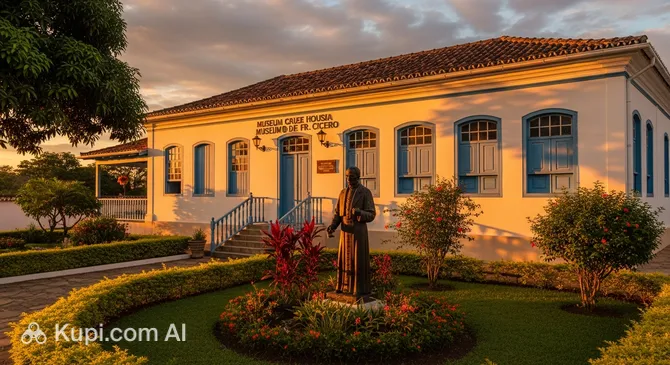
In the heart of Juazeiro do Norte lies a unique site — the House-Museum of Father Cícero (Casa de Padre Cícero). Located in sunny Brazil, this historical landmark was the final home of the region's most revered spiritual leader. The museum occupies the building where the legendary priest spent the last months of his life in 1934, and today it carefully preserves the atmosphere of that era.
Father Cícero House Museum. Illustration.
Source: Kupi.com AI
Traveler photos:
Inside the museum, visitors can see the authentic setting: from furniture and kitchenware to ceremonial robes and Father Cícero's personal effects. Each object here tells a story of humility and dedication. One of the most intriguing exhibits is the mummified anaconda, which is linked to a local legend that never fails to spark interest among guests.
For the people of the country's Northeast, this house is more than just a museum; it is a shrine and a major pilgrimage center. Here, you can not only learn about the history of the Cariri region but also feel a deep spiritual connection to the legacy of the man millions affectionately call "Padim."
Contacts
To plan your visit to this memorial site, it’s helpful to have current contact details on hand. The museum is located in the central part of the city, making it easily accessible for pilgrims and tourists.
Below is the essential contact information and the exact address of the attraction:
During your visit to the house-museum, you can take a real trip back in time, walking through the rooms where Father Cícero lived and worked. Highlights include the bedroom with original furniture, the dining room, and the kitchen, where silver utensils and everyday items remain, creating a sense of the host's presence.
Be sure to set aside time for the following:
Observe the collection of personal items belonging to the priest, including his everyday and ceremonial clothing.
Find the famous mummified anaconda in the display — one of the museum's most unusual artifacts.
Study the archival photographs that document the city's development and Father Cícero's role in the community's life.
For many visitors, this visit is a moment of silence and spiritual reflection. Photography is permitted in the rooms (usually without flash), allowing you to capture the details of this authentic interior. After touring the house, you can purchase souvenirs or religious items at nearby church shops.
Getting There
Getting to this iconic spot in the city of Juazeiro do Norte is easy, as it is located right in the center at R. São José, 242. If you are already in the central district or visiting nearby churches, the walk will only take a few minutes.
For those arriving from the airport or the main bus station, the most convenient options are Uber or a local taxi. The trip usually takes between 10 and 20 minutes depending on traffic. You can also use local buses that run to the central stops.
Pilgrims often include a visit to the house as part of their walking route through the city's holy sites. If you are traveling by rental car, parking is usually available near the museum, although traffic in the area may be restricted during major religious holidays.
Nearest city: Juazeiro do Norte
History & Facts
The history of this modest building is inextricably linked to the life of Father Cícero Romão Batista—a legendary priest and political leader revered in Brazil as a saint and miracle worker. It was in Juazeiro do Norte in 1871 that he celebrated his first significant mass, forever changing the face of the region.
This house on São José Street became his final earthly home. Father Cícero, affectionately known as "Padim," lived here for only four months in 1934 before passing away. After his death, the residence was converted into a museum to preserve the spirit and setting of the era when important decisions for the city were made within its walls.
A special place in the museum's history is held by the collection of gifts and objects shrouded in legend. The most unusual exhibit is the mummified anaconda; the story of how it arrived at the priest's house has inspired numerous mystical tales. The museum serves as a living monument to a man whose contribution to the spiritual and social development of the country's Northeast remains invaluable to this day.
Time Needed
To leisurely explore all the rooms, examine the priest's personal belongings, and soak in the historical atmosphere, most visitors need about 1 to 2 hours. This is usually enough time to read the exhibit descriptions and take some commemorative photos.
If you are visiting the museum as part of a pilgrimage group or wish to spend time in prayer and reflection in Father Cícero's rooms, it is worth allowing a bit more time for your visit. Keep in mind that there may be queues during peak religious holiday periods.
Working Hours
The House-Museum of Father Cícero is generally open to visitors on the following schedule: Monday to Friday from 07:00 to 12:00 and, after a lunch break, from 14:00 to 17:00. On Saturday, the hours are shorter — from 07:00 to 12:00. The museum is closed on Sunday.
Please note that hours may change on public holidays or during major religious festivals. It is recommended to check for up-to-date information on the city's official website or verify details directly before your visit.
Day
Working hours
Monday
07:00–12:00, 14:00–17:00
Tuesday
07:00–12:00, 14:00–17:00
Wednesday
07:00–12:00, 14:00–17:00
Thursday
07:00–12:00, 14:00–17:00
Friday
07:00–12:00, 14:00–17:00
Saturday
07:00–12:00
Sunday
Закрыто
Nearby
Exploring the neighborhood around the house-museum will allow you to dive deeper into the atmosphere of this unique region and get to know its daily life. Nearby, you will find both historical sites and modern places for leisure and shopping.
Below are some attractions located within walking distance or a short drive away: