Support

Estrada de Ferro Santos - Jundiaí (EFSJ)

About

Imagine a path that changed the face of an entire region: the Santos–Jundiaí Railway (Estrada de Ferro Santos-Jundiaí) is not just a transport line, but a true monument to 19th-century engineering. Located in the city of Jundiaí, this highway was the first railway in the state of São Paulo, connecting Brazil's largest port with high-altitude coffee plantations.
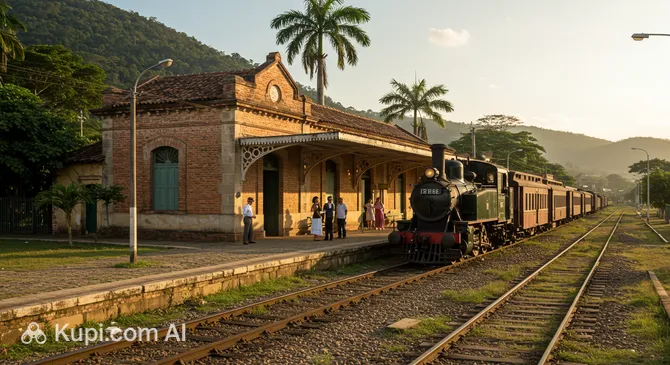
Santos–Jundiaí Railway
Santos–Jundiaí Railway. Иллюстрация. Источник: Kupi.com AI

The railway's main feature is its unique route through the Serra do Mar mountain range. Over a stretch of just 8 kilometers, the trains overcome an elevation change of about 800 meters. Such a bold technical solution made the road a true "engineering marvel" of its time and a key driver of the country's economic development during the "coffee boom" era.

Today, this place attracts travelers with its historical atmosphere and preserved station architecture. Visitors can see elements of vintage infrastructure that recall the golden age of rail transport and British influence on Brazilian industry.

Contacts

When planning your visit to this legendary historic railway, it's helpful to check the available contact information in advance. As this site is an important part of the region's cultural heritage, we recommend confirming visiting details through the provided communication channels before your trip.

How to contactContact
AddressVila Mun., Jundiaí - SP, 13201-729, Бразилия
Phone+55 11 3339-8047
Websitecondephaat.sp.gov.br

What to Do

A visit to this historic site offers guests a unique opportunity to experience 19th-century engineering heritage. You can explore the preserved infrastructure in detail, including the old tracks and station architecture that retain the spirit of the Victorian era in the heart of South America.

One of the highlights is a ride on a small tourist steam train. This route passes through the upper part of the legendary Paranapiacaba mountain pass, allowing tourists to enjoy the views and feel how travel was experienced over a hundred years ago. The rhythmic clatter of wheels and smoke from the locomotive's chimney create a uniquely nostalgic atmosphere.

Photography enthusiasts and industrial history buffs should pay attention to the details: massive machinery, cogged rails, and elements of the counterweight system. The Santos–Jundiaí Railway is not only an open-air museum but also a wonderful place for a peaceful walk, where you can appreciate the contrast between the power of nature and human craftsmanship.

Getting There

Reaching this monument of engineering is quite simple, as it is located within the city of Jundiaí, in the state of São Paulo. If you are traveling from São Paulo itself, the drive takes about an hour (approximately 60 km) via the BR-116 or SP-300 federal highways. This is a convenient option for those who prefer freedom of movement.

For those choosing public transport, intercity buses run regularly from central São Paulo to the Jundiaí bus station. Upon arrival at the station, it is best to use a taxi or a ride-sharing app to reach the historic station in the Vila Municipal district. The exact address for navigation is: Vila Arens/Vila Progresso, Jundiaí.

Ближайший город: Jundiai

History & Facts

The history of this railway began on February 16, 1867, when it was grandly opened as the São Paulo Railway (SPR). The project was initiated by the prominent Brazilian entrepreneur Irineu Evangelista de Sousa, better known as the Viscount of Mauá. It was he who convinced the Imperial government that such a main line was vital for transporting coffee and developing the country's economy.

Building through the challenging Serra do Mar mountain range was a true feat of its time. Top British engineers, led by James Brunlees, were brought in for the project. The work was so efficient that, despite needing massive amounts of explosives and overcoming steep slopes, the railway was completed 10 months ahead of the planned eight-year schedule.

In the following decades, the road underwent many changes: an additional "Serra Nova" branch was laid in 1895, and the line was nationalized in 1946. It received its current name — the Santos–Jundiaí Railway — in 1948. In the 1970s, a unique rack-and-pinion system was implemented, which still operates successfully today, allowing trains to climb onto the plateau.

Time Needed

To fully soak in the atmosphere of the past and inspect the preserved infrastructure, most travelers need 2 to 3 hours. This is plenty of time to take a leisurely stroll through the grounds and capture memorable photos against the backdrop of historic structures.

If you plan to include a trip on the tourist steam train in your program, it’s worth setting aside a bit more time, keeping the departure schedule in mind. Such a journey will allow you to fully appreciate the scale of engineering skill demonstrated in building this mountain pass.

Working Hours

According to available information, access to this historical landmark is open 24/7, throughout the entire week. This allows tourists to plan their visit at any convenient time, whether it's early morning for the best photos or an evening stroll.

However, if you plan to take the tourist train or visit internal exhibitions, we strongly recommend checking the current schedule and any potential changes on the management organization's official website before your trip.

Круглосуточно

Nearby

Exploring the surroundings of the railway will allow you to dive deeper into the city's atmosphere and see many other interesting spots. The combination of historical locations, cozy squares, and modern entertainment centers makes this area a great place for a walk after visiting the railway sites.

NameDistance
Boteco do Benê1 km
Options American Bar Karaoke1.3 km
Historical and Cultural Museum of Jundiaí – Solar do Barão1.4 km
Cathedral of Our Lady of Exile1.4 km
Bixo D'Água Aquarium1.7 km
Paulista Company Museum1.8 km
Coco Bambu1.8 km

Reached the end of the page?

That means the route is fully explored