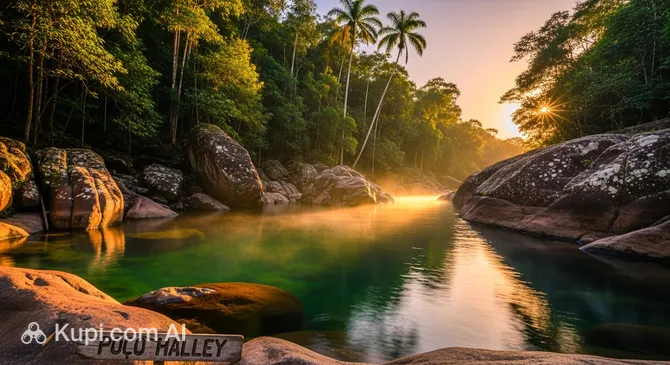
Imagine a deep natural well with stunning turquoise water, nestled between pristine white sand dunes and rugged cliffs. This is Poço Halley — one of the most photogenic natural wonders hidden on the outskirts of Lençóis. Located within the famous Chapada Diamantina region in Brazil, this spot has a well-deserved reputation among travelers.
Halley Pool. Illustration.
Source: Kupi.com AI
Traveler photos:
The main feature of the lagoon is its contrast: the vibrant water gains its rich hues from a unique combination of minerals and sunlight. It is a true oasis where you can find coolness amidst the sun-scorched mountain landscape. The high rating of this attraction confirms it is a must-visit point on any itinerary for those seeking solitude and natural aesthetics.
Visitors appreciate the site not only for the swimming opportunities but also for the panoramic views from the tops of the surrounding dunes. The combination of crystal-clear pools, waterfalls, and rocky cliffs makes Poço Halley an ideal destination for ecotourism and outdoor activities.
Contacts
To plan your visit to the natural pool, it's helpful to know its exact location. Below are the primary contact details for the site.
The main reason to come here is, of course, swimming in the turquoise lagoon. The transparent water of the natural pool is refreshing even on the hottest days, while the surrounding rocks create a sense of security and privacy. Adventure seekers often use the natural stone platforms for cliff jumping, though this requires caution and checking the water depth for the current season.
For those who prefer a more relaxed pace, the surrounding area offers excellent hiking opportunities. You can stroll along the paths around the water, spotting exotic birds and small reptiles often found in this zone. The sandy shore is an ideal spot for a picnic or sunbathing surrounded by wild nature.
If you are into photography, be sure to bring equipment for underwater shots or snorkeling — the visibility underwater here is amazing. Additionally, depending on the time of year, you can see how the water level and its shade change, making every visit unique. Tourists often combine a break at the lagoon with exploring nearby caves and waterfalls as part of larger tours through Chapada Diamantina.
Getting There
The journey to this natural gem begins from the city center. The most popular and comfortable way to reach the site is by 4x4 off-road vehicle or by joining an organized tour. The road, stretching about 10 km, passes through sandy sections and mountain trails, making it nearly impossible to navigate in a standard passenger car.
For active travelers, a hiking route is also available. The trek from the city center takes about 2 to 3 hours one way along marked trails. Due to the challenging terrain and local conditions, it is highly recommended to undertake this hike with an experienced guide. There is no public transportation to this wilderness area, and the cost of a jeep transfer through local agencies ranges between 50–100 BRL per person.
Travelers from other regions should first fly into the local airport, which receives flights from Salvador. The best time to visit is during the dry season from June to September, when water levels are optimal and roads are more accessible. For self-navigation, you can use the coordinates: -12.5614774, -41.4027453.
Nearest city: Lençóis
History & Facts
The formation of this remarkable natural site began millions of years ago. From a geological perspective, the deep natural well was created by tectonic processes in the Chapada Diamantina region, where voids formed in the rock and were eventually filled with crystal-clear underground waters.
For a long time, this location remained hidden from the general public, known only to locals. Its active development and inclusion in tourist itineraries began in the mid-20th century. With the growth of interest in ecotourism in the 1970s, the site became an important part of the network of protected natural areas in the state of Bahia, attracting researchers and nature lovers from around the world.
While no specific archaeological finds have been recorded within the lagoon itself, the entire surrounding region is rich in rock paintings left by indigenous tribes. This adds a special cultural context to the visit, allowing travelers to connect with the ancient history of pre-Columbian America amidst pristine landscapes.
Time Needed
To ensure your visit is relaxed and enjoyable, it is recommended to set aside 3 to 5 hours. This provides enough time for the round-trip journey, a short hike through the surrounding dunes, and plenty of relaxation by the water.
If you plan to have a picnic on the shore, engage in underwater photography, or simply want to wait for the perfect lighting for your shots, it’s best to budget half a day for the trip. Given its distance from the city, there is no need to rush—the atmosphere itself invites slow contemplation.
Working Hours
The site is open for visitors daily. The schedule remains consistent throughout the week:
Monday – Sunday: 08:00 – 17:00
Since this is an open natural area, it is recommended to plan your visit for the first half of the day. This will allow you to enjoy the best lighting for photos and return to the city before dusk, as navigating the rugged terrain in the dark can be unsafe.
08:00–17:00
Nearby
Visiting nearby locations will allow you to fully experience the atmosphere of Bahia and get to know the local character. After relaxing by the water, you can head to the city center or visit cozy nearby establishments.