Support

Mata de Sao Joao

About

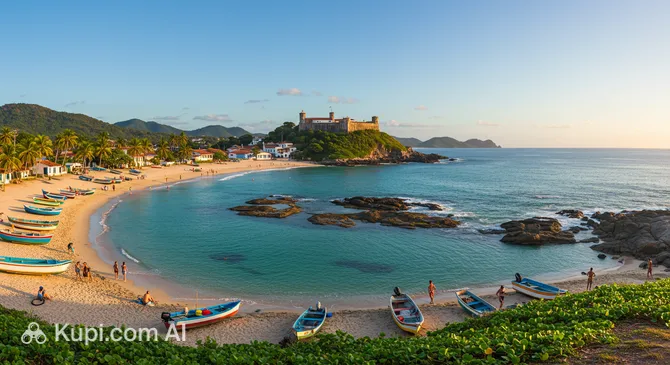
Mata de São João is a picturesque corner in the northeast of the continent, where Brazil reveals its true tropical charm. Located in the sunny state of Bahia, this city is nestled comfortably between dense forests and the turquoise waters of the Atlantic Ocean, offering travelers a unique atmosphere of seclusion and harmony with nature.

Mata de Sao Joao. Illustration.
Source: Kupi.com AI

Despite its modest size and population of about 45,000, the city plays a vital role in the region's tourism. It serves as the main gateway to the famous Coconut Coast and the prestigious resort village of Praia do Forte. While the history of Mata de São João is rich with events, today the place is better known for its present — magnificent opportunities for relaxation far from the noise of major metropolises.

Travelers are drawn here not only by sandy beaches and the warm climate but also by its well-developed ecotourism. Here, you can go diving, explore scenic lagoons and dunes, or observe sea turtles and dolphins in their natural habitat. Mata de São João is an ideal choice for those seeking a blend of modern comfort, authentic Bahian culture, and pristine natural beauty.

Weather Overview

The climate in Mata de São João is typically tropical, ensuring warmth and high humidity throughout the year. The hottest months are January and February, when the average temperature stays around 28°C, and daytime highs often exceed 31°C. This time is considered the height of summer in the Southern Hemisphere and is perfect for those seeking bright sun and warm ocean waters.

With the arrival of the nominal winter (from June to August), it becomes slightly cooler, but not cold: average figures drop to a comfortable 23–24°C, and nights bring freshness with temperatures around 20°C. However, this period is characterized by high rainfall: for instance, in June and July, the number of rainy days can reach 25–26 per month. Expect a hot summer and a very mild, but quite humid winter with frequent rain.

The driest period is in the spring, particularly in October, when the number of rainy days drops to a minimum. Before your trip, we recommend checking the current weather in Mata de São João to choose the optimal time for excursions and beach relaxation, taking into account the region's seasonal characteristics.

Average monthly temperature

Average monthly precipitation

Interesting Facts

Beyond its famous resort zones and magnificent landscapes, Mata de São João hides many surprising details that can impress even experienced travelers.

  • The city is an important point on the map for conservationists thanks to Project Tamar. It hosts a large sea turtle rescue center where guests can not only learn about the life of these reptiles but also participate in a touching ceremony of releasing newborn hatchlings into the open ocean.

  • The hallmark of the coast is the ancient Garcia d'Ávila Fort, located near Praia do Forte beach. This majestic structure is a reminder of the region's colonial past, and its walls offer perhaps the most breathtaking panoramic view of the ocean and surroundings.

  • Eco-activity enthusiasts will find entertainment for every taste here. Local routes offer the chance to explore mysterious mangroves by kayak or take a Segway tour along the coastline, enjoying the fresh breeze.

  • Mata de São João is one of the best locations for marine wildlife watching. During certain seasons, the coastal waters become the stage for a grand natural spectacle — the migration of humpback whales, which attracts naturalists from all over the world.

How to Get There

When planning a trip to this picturesque region, it's worth thinking about the route in advance. Since the city is a popular tourist destination, logistics are well-organized but require a transfer to road transport. You can explore all available options on the page how to get to Mata de São João, and below we will take a closer look at the main air gateways through which tourists reach the resort.

The most convenient and popular option is Deputado Luís Eduardo Magalhães International Airport (IATA: SSA). It is important to note that it is located not in Mata de São João itself, but in the state capital — the city of Salvador, about 42 km from the resort center. This is a major aviation hub receiving many flights. A trip from here by taxi or transfer usually takes about 1 hour and 20 minutes, depending on the traffic exiting the capital.

Alternatively, you could consider flying into Aracaju Airport (IATA: AJU), located in the city of the same name. However, keep in mind that it is significantly further away — about 217 km from Mata de São João. The travel time by car will be more than 5 hours. Another option is Jorge Amado Airport in Ilhéus (IATA: IOS), nearly 265 km away. These airports have moderate passenger traffic and are usually used if you are planning a road trip along the coast.

For convenience, here is a summary of the main airports:

AirportPassenger trafficDistance
Deputado Luis Eduardo Magalhaes International Airport7.3 mln42 km
Aracaju Airport1.3 mln217 km
Ilheus/Bahia-Jorge Amado Airport674 000265 km

Since there are no major passenger railway stations in the immediate vicinity of Mata de São João, buses and cars remain the primary ground transport. From Salvador Airport, you can reach the resort areas (such as Praia do Forte) via a scenic road known as the Green Line (Linha Verde). Regular bus services and a well-developed taxi network make this final leg of the journey comfortable and accessible.

Main Attractions

Praia do Forte is perhaps the most famous and vibrant spot in the region, often called the "Brazilian Polynesia." It is one of the main tourist attractions in Brazil, where a former fishing village has transformed into a cozy resort center with paved streets closed to cars. The main natural attraction here is the natural pools (piscinas naturais), which form at low tide between coral reefs. The water in them remains crystal clear and warm, allowing you to swim surrounded by schools of colorful fish.

Imbassaí offers travelers a unique landscape where the river meets the sea. The special feature of this place is that the freshwater river runs parallel to the ocean shore, separated only by a strip of white sand dunes and coconut groves. This provides the opportunity to choose between swimming in calm fresh water or dynamic ocean waves. You can reach the beach via a footbridge or on small traditional rafts, which is a little adventure in itself.

Sapiranga Reserve (Reserva de Sapiranga) is a true discovery for ecotourism enthusiasts. This protected area of Atlantic forest covers about 600 hectares and offers excellent opportunities for outdoor activities. There are marked trails for hiking and mountain biking. In the shade of dense tropical vegetation, you can encounter rare bird species, orchids, and bromeliads, and after a walk, it’s pleasant to refresh yourself in the waters of the Pojuca River, which flows through the reserve.

Garcia d'Ávila Castle Ruins is not just a viewpoint but also a crucial historical monument, considered the first Portuguese stone structure in the country. The architectural complex includes the remains of a residential house and a chapel built back in the 16th century. A visit here allows you to touch the colonial past: there is a museum with archaeological finds, and a walk among the centuries-old walls under the open sky leaves a lasting impression.

Local Cuisine

The gastronomic scene of Mata de São João is a true extravaganza of flavors, where Bahian culinary traditions intertwine with African, Portuguese, and indigenous heritage. Local cuisine is famous for its richness and aromas, and the main stars of any feast here are invariably the freshest seafood. Tourists should prepare for a gastronomic journey where every dish tells the story of the region.

The undisputed queen of the table is moqueca — a thick fish stew prepared with coconut milk, aromatic palm oil, and spices. This dish best characterizes the local flavor: it is spicy, hearty, and incredibly tasty. Seafood lovers should also definitely try dishes made with shrimp, squid, and fish, which are prepared with special skill here, often served with a side of cassava or fried plantains.

Street food in Mata de São João is an art form in its own right. Strolling through the city, it is impossible to pass by the stalls offering popular snacks. Special attention should be given to accra — appetizing fritters made from chickpeas and fish, fried to a golden crust, as well as abará — steamed bean and spice cakes. These delicacies provide a quick and inexpensive way to get acquainted with the authentic flavors of Bahia.

As for drinks, the tropical climate calls for the consumption of huge amounts of freshly squeezed exotic fruit juices, which can be found literally on every corner. For those who want to try something stronger, local establishments offer liqueurs based on cachaça — a traditional Brazilian spirit made from sugarcane. It is a great way to end a busy day or complement a dinner.

To fully immerse yourself in the food culture, it's worth checking out the local farmers' markets. A lively atmosphere reigns here: stalls are overflowing with coconuts, guava and passion fruit sweets, and various spicy sauces that make excellent souvenirs. Additionally, the city regularly hosts seafood festivals where chefs put on culinary shows right on the beach, turning food preparation into a spectacular celebration for all guests.

Travel Tips

Welcome to sunny Mata de São João! To ensure your holiday on the picturesque coast of Bahia goes perfectly and leaves only pleasant memories, we have prepared a list of important practical recommendations to help you navigate local specifics with ease.

  1. Clothing and Sun Protection. The climate here is hot and humid year-round, so opt for light clothing made from natural, breathable fabrics like cotton or linen. Be sure to bring high-SPF sunscreen, a hat, and quality sunglasses — the equatorial sun is very intense. A light wrap might be useful for evening walks, and comfortable shoes are a must for excursions, as many streets are paved with cobblestones.

  2. Transport and Logistics. Local microbuses (vans) run between the city center and popular resort areas (Praia do Forte, Imbassaí), providing a budget-friendly way to get around. However, for maximum comfort and freedom, it is recommended to rent a car to explore the scenic "Green Line." Taxi apps work, but wait times in remote areas can be long, so keep contacts for local taxi services handy.

  3. Finance and Tipping. The official currency is the Brazilian Real. Bank cards are accepted almost everywhere, including many beach stalls and restaurants. Nevertheless, always keep some small cash on you for tips, street food, or souvenirs. ATMs are available in tourist centers but may be hard to find on wild beaches.

  4. Health and Safety. Tourist zones like Praia do Forte are considered safe and well-patrolled; however, observe basic precautions: do not leave belongings unattended on the beach and avoid walking alone in unlit areas at night. Be sure to use repellents, especially at sunset, to protect against mosquitoes. Drink only bottled water.

  5. Communication. The primary language is Portuguese. In large hotels and tourist offices, staff often speak English, but it may be harder to communicate in small shops and cafes. We recommend downloading an offline translator and learning a few phrases, such as "Obrigado" (thank you, if you are male) or "Obrigada" (if you are female). Locals are very helpful and will try to assist even without knowing the language.

  6. Local Etiquette. People in Bahia are famous for their hospitality and relaxed attitude toward life. No one is in a rush here, so restaurant service can be slow — treat this with understanding and a smile. Greetings are often warm: handshakes or light hugs are quite acceptable even with brief acquaintances.

  7. What to Avoid. It is strongly discouraged to sunbathe topless — this is not common in Brazil, even on the most relaxed beaches, and may draw disapproval. Also, avoid displaying expensive jewelry and electronics outside of secured hotel areas.

  8. Watch the Tides. This is a critical tip for Mata de São João. The famous natural pools (piscinas naturais) are only accessible for swimming during low tide. Be sure to check the tide chart (Tábua de Marés) before planning your beach day so you don't miss the chance to swim with fish in clear water.

We hope these tips help you feel confident and comfortable during your journey. Mata de São João is a place where time slows down, allowing you to fully dissolve into the beauty of nature and the hospitality of the local culture!

Entertainment & Nightlife

Entertainment and nightlife in Mata de São João are mainly concentrated in the Praia do Forte resort area. There are no thumping metropolitan clubs here; instead, a unique atmosphere of "Bahian chic" prevails — relaxed, musical, and very friendly. Evenings are typically spent unhurriedly, moving from one bar to another, enjoying the warm ocean breeze and the rhythms of live music.

The heart of the nightlife is the pedestrian street Vila (Alameda do Sol). As dusk falls, it turns into a lively promenade lit by cozy lanterns. A diverse crowd gathers here, from trendy youth to families with children. The dress code in most establishments is relaxed — casual style or smart beachwear is appropriate everywhere. Most bars and restaurants stay open until the last customer, with the peak of the fun occurring between 9:00 PM and midnight.

Among the places definitely worth a visit is the legendary Souza Bar. This iconic spot is famous for its renowned fish croquettes (bolinhos de peixe) and lively live music concerts — from samba to forró — that get everyone dancing. For a quieter evening, Café do Forte is perfect, where you can enjoy exquisite cocktails and local cuisine in an elegant setting. Those who love social interaction and tasty snacks should also check out Tango Café, a popular spot for both tourists and locals.

In the Imbassaí area, nightlife flows at a calmer pace. Here, entertainment is centered around small riverside bars where acoustic music is often played. This is an ideal option for a romantic dinner or a quiet gathering under the stars. In terms of safety, tourist zones, especially the Vila, are well-guarded and lit, making night walks comfortable. To return to your hotel late at night, it is recommended to use official taxis or motorcycle taxis, which can easily be found at stands in the center.

Daytime entertainment in Mata de São João harmoniously complements the nightly program. Before sunset, tourists can visit craft fairs, browse art galleries, or go on a cultural excursion to the historic Garcia d'Ávila Castle. However, it is in the evening that the city gains its special charm, inviting guests to immerse themselves in a carefree celebration of life.

Parks & Museums

Mata de São João offers travelers a wonderful symbiosis of untouched nature and deep historical heritage, where green zones flow seamlessly into cultural spaces. The city and its surroundings are not just about beaches, but also unique Atlantic Forest ecosystems and open-air museums that tell the story of the colonial past and the region's marine wildlife.

One of the main natural gems is the Klaus Peters Municipal Natural Park (Parque Natural Municipal Klaus Peters). This is the first environmental protection zone of its kind in the region, featuring an ecological corridor over 3 kilometers long. The park is ideal for quiet walks, morning jogs, or bird watching: about 180 species of birds live here. A sandy path paved along natural lagoons allows you to enjoy the silence and beauty of the local flora, while being just minutes away from the busy center of Praia do Forte.

Another important green zone is the Sapiranga Reserve (Reserva da Sapiranga), which serves as a true sanctuary for rare plant and animal species. It is a vast area of secondary Atlantic forest where nature takes precedence over civilization. Tourists come here for the hiking trails that lead through dense thickets to the Pojuca River. Unlike the coastal parks, here you can feel the atmosphere of a real jungle, see exotic flowers, bromeliads, and, if you're lucky, encounter marmosets or sloths in their natural habitat.

Among cultural sites, a special place is held by the Garcia d'Ávila Castle Museum (Castelo Garcia D'Avila). These are not just picturesque ruins, but a complete museum complex that preserves the memory of the first centuries of Brazilian history. The exhibition halls display archaeological finds, ancient ceramics, and household items found during excavations. Visiting the museum allows you to understand how the Portuguese colonizers lived and appreciate the scale of 16th-century architectural thought. Information boards and video materials help recreate a picture of the past, making the ruins "speak."

Equally fascinating is the Humpback Whale Institute (Instituto Baleia Jubarte). This museum and research center is dedicated to the marine giants that migrate annually to the shores of Bahia. The exhibition includes full-sized whale skeletons, interactive panels, and educational materials about the biology and habits of these mammals. This place will be interesting for both adults and children, offering a deep dive into the world of oceanology and environmental protection without needing to go out to sea.

The Project Tamar Visitor Center is also worth mentioning. While technically a turtle rescue center, it functions as an interactive museum of living nature. There are pools with sea turtles at different stages of development, as well as information pavilions about threats to the ocean and efforts to conserve it. It is one of the most visited places in the region, combining entertainment with an important ecological mission.

For those seeking seclusion and authentic experiences, we suggest heading to Klaus Peters Park at dawn or before sunset. At these times, the heat subsides and bird activity peaks, turning an ordinary walk into a real concert of wild nature, hidden from the eyes of most tourists who prefer the beach.

Getting Around

Public transport in Mata de São João is quite simple and differs significantly from the systems found in large metropolises. You won't find a metro, trams, or trolleybuses here. Movement is primarily based on buses, shared vans (vans), and specific types of transport characteristic of resort areas. The system is oriented more toward functionality and connectivity between settlements than toward urban comfort in the European sense.

The most popular means of transport between the municipal center, coastal villages (such as Imbassaí), and the main "Green Line" highway are the white vans (transporte alternativo). They run quite frequently, linking residential areas with tourist zones. This is a budget-friendly and authentic way to get from the highway to the beach, for example, if you arrived on an intercity bus. There may not be specific stops: to get on, it's often enough just to wave at the driver, and to get off, simply inform them in advance.

In the most popular tourist zone, Praia do Forte, a special regime applies. Since cars are prohibited from entering the historical center (Vila), the main "transport" here is bicitaxis. These are colorful three-wheeled bicycles with a canopy, designed for two passengers. Drivers in uniform will happily take you from the parking lot or hotel to a restaurant or the beach. This is not only convenient but also eco-friendly, perfectly aligning with the local ecotourism spirit.

Regarding the payment system, conservatism prevails. Electronic travel cards or mobile payment apps do not work in the vans and local buses. Payment is made exclusively in cash to the driver or conductor upon boarding. The fare in vans is fixed and low, but prices may vary slightly depending on the distance. We strongly recommend always having small bills and coins with you, as the driver may not have change for large banknotes.

For more comfortable travel, there are alternatives. Ride-hailing apps like Uber operate in the region, but their availability can be limited. In the center of Praia do Forte, finding a car is easy, but if you are at a remote beach or planning a trip late at night, the wait time might be long, or no cars may be available at all. In such cases, it is more reliable to use official taxis, which have stands at the main entrances to the resort villages, or to arrange with a driver in advance.

Many tourists prefer renting a car as the most convenient way to explore the surroundings. This gives full freedom of movement along the picturesque coast without depending on van schedules. However, remember that during peak seasons, parking in popular spots can be paid and overcrowded. Motorcycle taxi services are also popular in town — a fast and cheap way to get from point A to point B for those traveling light and who don't mind the wind in their face.

Accommodation

Accommodation options in Mata de São João are capable of satisfying the needs of a wide range of travelers: from those looking for budget lodging to connoisseurs of uncompromising luxury. The region is famous for its hospitality and a wide selection of housing harmoniously integrated into the tropical landscape. Here you can find both modest hostels for backpackers and huge world-class hotel complexes operating on an "all-inclusive" basis.

When choosing a place to stay, it is worth looking at specific areas, each offering its own unique atmosphere:

  • Praia do Forte is the heart of tourist life. This is where the largest number of cozy hotels, called "pousadas" in Brazil, are concentrated. Staying here is convenient as restaurants, shops, and the main beaches are within walking distance. It is an ideal choice for those who want to be in the center of the action.

  • Costa do Sauípe is a zone for large resort hotels. It is a gated territory with developed infrastructure, swimming pools, golf courses, and private beaches. Families with children and package holiday enthusiasts often come here to enjoy high-class service without leaving the hotel grounds.

  • Imbassaí is an area for those seeking peace and communion with nature. Eco-hotels and bungalows nestled among the greenery, near where the river meets the ocean, predominate here. The atmosphere is more relaxed and rustic compared to the bustling Praia do Forte.

The price range varies from budget (small guesthouses and hostels) to luxury (five-star resorts). In the mid-range, small boutique hotels offering comfortable rooms with breakfast and a personalized touch are popular. Booking accommodation today is easily done through popular international online platforms, though many small pousadas also take bookings directly through their websites or messaging apps.

An important tip for trip planning: Mata de São João is an extremely popular destination, especially during high season (from December to March) and during national holidays such as Carnival. To guarantee the best option at a fair price, it is recommended to book your accommodation in advance, preferably several months before your intended arrival date.

Nearby Cities

For those who want to explore the surroundings, Mata de São João serves as an excellent starting point for day trips to several interesting nearby locations:

The undisputed cultural center of the region is Salvador, located less than an hour's drive away. It is the capital of the state of Bahia, known for its colonial architecture, the historic Pelourinho district, and vibrant Afro-Brazilian traditions. A trip here will allow you to immerse yourself in the rhythms of samba and capoeira and try authentic street food.

Very close by is the city of Camaçari. While it is known as an industrial hub, its coast is famous for magnificent beaches such as Arembepe and Guarajuba. It is a great choice for those who want a change of scenery to see the famous hippie village or enjoy a quiet break by the ocean.

Wellness tourism enthusiasts should visit Dias d'Ávila, often referred to as the "City of Waters." Thanks to its mineral springs and therapeutic muds, this city attracts those seeking relaxation and health benefits in close proximity to Mata de São João.

CityPopulationDistance
Dias d'Ávila78 0589 km
Pojuca39 97212 km
Camaçari286 91919 km
Catu55 71921 km
São Sebastião do Passé45 48221 km

These nearby destinations provide insight into the diverse culture and landscapes of the region.

Shopping & Souvenirs

Shopping in Mata de São João is drastically different from the frantic runs through the giant malls of big cities. Here, the process of buying turns into a relaxed ritual, inseparable from outdoor walks. The city and its resort zones offer tourists a "boutique shopping" format: small, cozy stores with a unique assortment, where the emphasis is on beach fashion, local art, and authentic souvenirs reflecting the vibrant color of the state of Bahia.

The center of attraction for all shopping enthusiasts is the famous pedestrian street Alameda do Sol in the Praia do Forte district. It is here, among the cobblestones and flowering trees, that the region's main commercial life is concentrated. The street is filled with designer boutiques of well-known Brazilian clothing brands, high-end swimwear shops, and accessories. A stroll here feels like an open-air fashion show, where you can find both exclusive items and quality casual wear for your holiday.

While there are no giant shopping centers in Mata de São João, it's worth paying attention to Armazém da Vila. This is a charming open-air shopping complex in Praia do Forte that fits harmoniously into the village's architectural style. It brings together clothing stores, sporting goods, and cozy cafes. It’s an excellent place to hide from the midday sun and leisurely pick out new items. If you are interested in major chain stores and electronics, it’s better to plan a trip to nearby Salvador.

For true local flavor, head to the craft fairs and small artist studios. Local craftsmen create amazing things from ceramics, wood, and coconut fiber. Special attention should be given to items featuring "renda" — a traditional Brazilian lace famous for its delicacy and beauty. In the markets, you can also find bright hammocks, paintings of Bahian scenes, and jewelry made from natural materials.

When choosing what to bring home, consider these souvenirs:

  • Beachwear: Brazil is famous for its high-quality bikinis and swim trunks.
  • Project Tamar Souvenirs: The official shops at the turtle rescue center sell t-shirts, toys, and accessories with the project's symbols. Proceeds go toward protecting marine life.
  • Cachaça and Pepper Sauces: A bottle of high-quality sugarcane spirit or a set of hot sauces make excellent gastronomic gifts.
  • Golden Grass Jewelry (Capim Dourado): Unique items made from a special type of grass that shines like gold are very popular in this region.

Shops in tourist areas, especially in Praia do Forte, have their own specific working hours. In the morning, they may open quite late, around 10:00 AM or 11:00 AM, but they stay open late — often until 10:00 PM or even 11:00 PM, adapting to the rhythm of holidaymakers who go out for a stroll after dinner. In small shops away from the center, a siesta break during the hottest hours of the day is possible.

Regarding payment, major credit and debit cards (Visa, MasterCard) are accepted almost everywhere, including souvenir shops and stalls. Cashless payment is very well-developed. However, for purchases from street vendors or at small markets, it is recommended to have some cash in Reais on hand, as this can speed up the process and sometimes even allow you to get a small discount.

The Tax Free system in Mata de São João, as in most small resort towns in the country, is practically not applied to tourists in the usual European format. The VAT refund procedure in Brazil is complex and not available in all shops, so you shouldn't rely on it for typical resort shopping.
Reached the end of the page?

That means the route is fully explored