Support

Mucuge

About the Airport

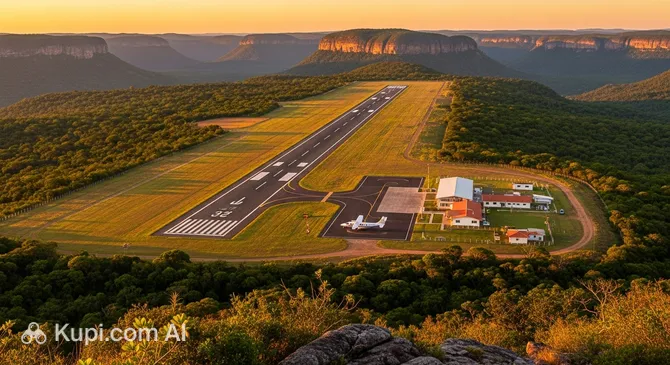
Mucuge. Source: Kupi.com Binoculars

Mucugê Airport (Aeroporto de Mucugê) is not merely a dot on the map, but a true aerial gateway to one of Brazil's most breathtaking regions, the Chapada Diamantina National Park. Situated amidst the picturesque Serra do Sincorá mountains, this small regional airfield offers travellers a unique arrival experience: instead of the hustle and bustle of giant terminals, you are greeted by silence, fresh mountain air, and stunning views of the plateau immediately upon landing. The airport primarily serves light aviation and charter flights, acting as a key link for tourists wishing to quickly reach the historic "diamond" towns and natural wonders of the region.

IATA Code CHD
ICAO Code SNQU
City Mucugê
Distance to Centre ~11 km
Status Domestic (Regional)
Passengers per Annum Data unavailable (primarily private aviation)
Schedule Online board

Features and Advantages of the Airport:

The main feature of Mucugê Airport is its strategic location. It sits at an altitude of over 1,000 metres above sea level, which ensures not only a comfortable temperature but also a breathtaking panorama during the landing approach. For eco-tourism enthusiasts, this is the ideal starting point: just a few minutes' drive away, trails begin leading to famous waterfalls, caves, and the historic centre of Mucugê, which has preserved its 19th-century colonial architecture.

Although the airport does not accommodate large airliners, it is distinguished by its convenience and speed of service. There are no queues or complex logistics typical of major hubs here. The compact infrastructure allows you to complete all formalities in a matter of minutes, so you can begin your journey along Bahia's famous "Diamond Trail" as soon as possible.

Contact Information

  • Official Airport Website: There is no dedicated web resource. Current information about the terminal's operations can be found on the official website of the Mucugê City Hall (Prefeitura Municipal de Mucugê) or on the state management company's website (SEINFRA - Bahia).
  • Information Desk Phone: There is no direct public phone number for the terminal. For administrative enquiries, the general City Hall number can be used: +55 (75) 3338-2143.
  • Airport Address: Rodovia BA-142 (on the exit towards Andaraí), Mucugê - BA, 46750-000, Brazil.
  • Email: There is no public email provided for passenger enquiries.
  • Airport Social Media: Official accounts are non-existent.
  • Lost & Found Information: Baggage tracing services (Lost & Found) operate through the representatives of the airline operating the flight (Azul Conecta often operates in this region). You must contact staff on the tarmac immediately upon arrival.
  • Passenger Support Contacts: Support is provided through the call centres of the air carriers with whom you flew.

How to Get to the Airport

Transport connections to Mucugê Airport have their own specificities due to its small size and status as a regional airfield. Since the airport is located approximately 11 kilometres from the city centre, the journey usually takes about 15–20 minutes by car. It is important to note that there is no regular public transport service to the terminal, so the trip should be planned in advance.

Taxi and Transfer

This is the most reliable and common way to get to the city or your hotel. Unlike major hubs, you are unlikely to find a queue of taxis waiting at the exit here. It is recommended to book a transfer through your hotel or travel agency before departure. Local drivers know the charter flight schedules, but a prior arrangement guarantees that you will be met. The cost of a trip to the centre of Mucugê may vary, but it usually amounts to a reasonable sum for this region (estimated between 50 and 80 Brazilian Reals; it is best to agree on the price in advance).

Car Rental

Travelling around the Chapada Diamantina National Park by car is the best way to see all the beauties of the region. International rental company counters are generally absent directly within the Mucugê airport building. However, many local agencies offer a car delivery service to the aircraft steps upon prior request. Having a rented SUV or crossover will significantly facilitate trips to waterfalls and mountain trails.

Public Transport

There are no metro systems or trains in this mountainous region. Municipal buses also do not enter the airport grounds. The nearest stop for scheduled buses is in the city of Mucugê itself (Rodoviária de Mucugê), where routes arrive from Salvador and other major cities in Bahia. You will need to take a taxi from the bus station to the airport.

Car Parking

An open parking area is provided in front of the small terminal building. Due to the low traffic at the airport, problems with finding available spaces rarely arise. Parking is generally free of charge but is not guarded around the clock, so it is not recommended to leave valuable items in the car for long periods.

Alternative Airports Nearby

Since direct flights to Mucugê may be irregular or available only for private aviation, many tourists choose to fly to neighbouring cities and then travel to Mucugê by land. The nearest and most popular option is Coronel Horácio de Mattos Airport in the city of Lençóis, located just 63.5 km away. This is the main tourist hub of the region.

For those planning a more extensive journey through the south of the state, Vitória da Conquista Airport (about 212 km) or the coastal Ilhéus/Bahia-Jorge Amado Airport (327 km) would be suitable. However, the main international gateway to the state remains Deputado Luís Eduardo Magalhães International Airport in Salvador (338 km), from where you can reach Mucugê by comfortable bus or rental car in 5-6 hours. Barreiras Airport also functions in the region, but it is located significantly further away (over 400 km).

Terminals and Map

Terminal Structure

Mucugê Airport (CHD) is a classic example of a small regional air hub where functionality prevails over scale. There is only one passenger terminal operating here. It is a compact single-storey building serving both departing and arriving flights. Due to the specific nature of the airport, which mainly accepts light aviation and small turboprop aircraft (such as the Cessna Grand Caravan), there is no separation into domestic and international sectors here.

Layout and Navigation

It is practically impossible to get lost in Mucugê Airport. The infrastructure is extremely simple and intuitive:

  • Public Area: A small waiting area is located immediately upon entering the building. The check-in counters are also located here.
  • Departure Area: After completing formalities, passengers enter the boarding waiting hall (sterile area). Boarding takes place through a single gate.
  • Arrival Area: There is no separate complex zone for arrivals. Passengers proceed into the terminal building or directly to the exit into the city, bypassing long corridors.

Service Features

The terminal is distinguished by a homely, calm atmosphere characteristic of the Brazilian countryside. There are no jet bridges ("sleeves"); passenger boarding and disembarkation are carried out on foot across the apron. This provides an excellent opportunity to take your first photos against the backdrop of the Chapada Diamantina mountains immediately after stepping off the plane. Please note that the terminal may lack amenities customary for major hubs, such as Duty-Free shops or business lounges. It is recommended to arrange for snacks and water in advance, although basic sanitary facilities are present in the building.

Check-in and Security

Procedures at Mucugê Airport are much faster than in metropolises.

  • Arrival Time: Despite the lack of queues, airlines recommend arriving at the airport 45–60 minutes before departure. This is because check-in counters may close strictly according to the schedule.
  • Security Check: Pre-flight inspection is standard but proceeds very quickly due to the low flow of people.
  • Luggage: Baggage claim upon arrival often happens "the old-fashioned way": ground service staff unload suitcases from the aircraft and deliver them to the claim area by hand or on trolleys, without the use of conveyor belts.

Recommendations for Passengers

Since the terminal building is small, luggage storage facilities are not provided. If you arrive earlier than your hotel check-in time, plan your logistics to head straight to the city. For passengers with reduced mobility, airport staff provide individual assistance during boarding and disembarkation, as special lift equipment may not be available.

Airport History

The history of Mucugê Airport (CHD) is closely intertwined with the fate of the entire Chapada Diamantina region. In the 19th century, these mountains attracted adventurers with "diamond fever," who travelled here for weeks along difficult trails. The advent of aviation in the 20th century opened a new chapter in the life of the town, transforming it from a remote mining settlement into a gem of ecological tourism. For a long time, the airfield was a simple dirt strip serving rare mail flights and private planes of local farmers.

Key Modernisation of 2022

A crucial turning point in the airport's recent history was a large-scale reconstruction programme initiated by the Bahia state government to develop tourism in the national park. The main works were completed, and the grand opening of the renovated airport complex took place in June 2022. During this modernisation, the airport received:

  • A fully paved runway capable of accommodating modern turboprop aircraft.
  • A new passenger terminal ensuring traveller comfort.
  • A night lighting system and signalling equipment, which allowed flights to be performed during hours of darkness — something previously impossible.

Revival of Regular Services

The reconstruction paved the way for the return of commercial aviation. The pioneer was the Brazilian airline Abaeté Linhas Aéreas, which resumed regular flights to Mucugê in late 2021, using light single-engine Cessna Grand Caravan aircraft. This event was significant as it ended the town's years of isolation from air routes.

Later, the company Azul Conecta (a subsidiary of the giant Azul) joined in serving the destination, strengthening the mountain resort's connection with Salvador and other hubs. Now tourists can reach the Chapada Diamantina National Park in less than an hour of flight, instead of a tiring seven-hour bus journey.

Strategic Importance and Interesting Facts

Mucugê Airport performs not only a tourism function. During dry periods, it transforms into a strategic base for aerial firefighting. Air Tractor aircraft based here play a decisive role in protecting the unique ecosystem of the Chapada Diamantina National Park from forest fires. Furthermore, the airport has become an important node for the developing "wine tourism" in the region, welcoming experts and wine enthusiasts heading to the high-altitude vineyards of Bahia.

Services and Amenities

Services and Facilities

Mucugê Airport (CHD) is a compact regional aviation hub, so passengers should not expect a wide range of services typical of major international hubs here. The terminal infrastructure is designed on the principle of "necessary minimum" to ensure the quick dispatch or reception of light aviation flights. A calm, homely atmosphere prevails here, and the lack of queues compensates for the modest set of amenities.

Restaurants, Cafés, and Shops

There are no full-service restaurants, food courts, or Duty-Free shops within the terminal grounds. A small kiosk or buffet offering a basic selection may operate in the waiting area: water, coffee, soft drinks, and light snacks. The range of souvenirs is also extremely limited or non-existent, so gifts and memorabilia from the Chapada Diamantina region are recommended to be purchased directly in the town of Mucugê.

Tip for tourists: If you have a wait before your flight, we strongly recommend arranging for food in advance and bringing sandwiches or fruit with you, as the opportunity to buy hot meals on-site may not exist.

Connectivity and Finance

  • Wi-Fi and Device Charging: A free Wi-Fi network is usually available in the waiting hall; however, connection speed and signal stability in this mountain region may vary. The number of power outlets for charging phones and laptops is limited; they are located in the general waiting area. It is recommended to carry a fully charged power bank.
  • ATMs and Currency Exchange: There are no bank branches, currency exchange points, or ATMs in the airport building. Payment for taxi services or private transfers upon arrival often requires cash. It is better to withdraw the necessary amount in Brazilian Reals in advance — in the town of Mucugê or at the major departure airport (for example, in Salvador).

Services for Special Categories of Passengers

Despite its small size, airport staff strive to ensure an accessible environment and assistance for all guests.

  • Passengers with Reduced Mobility: The terminal is single-storey, which significantly facilitates movement in wheelchairs — there is no need to use lifts or escalators, and the building entrance is equipped with a ramp. Since there are no jet bridges, boarding the aircraft takes place from the apron. Ground service staff provide individual assistance when ascending the steps. It is recommended to notify the airline of the need for assistance at least 48 hours before departure.
  • Passengers with Children: There is no separate mother and child room or play areas provided in the airport. However, thanks to the quick check-in and security procedures, passengers with children rarely have to spend much time in the terminal.
  • Medical Assistance: A specialised medical point operates according to the flight schedule or on a limited basis. Staff have first aid kits for initial assistance, but in emergencies, calling an ambulance from the nearest hospital in the town will be required.

Business Services and VIP Lounges

There are no dedicated business lounges, VIP rooms, or conference halls at Mucugê Airport. All passengers, regardless of travel class, are accommodated in a single common waiting hall. Due to the low traffic at the airport, it is usually quiet here, which allows you to make a call or work with documents in a calm environment if necessary.

Hotels Nearby

There are no hotels directly on the airport grounds or within walking distance. Since the air terminal is located just 11 km from the centre, travellers stay in the town of Mucugê itself. A wide choice of accommodation is presented there: from cosy historic guest houses (pousadas) in colonial style to comfortable mini-hotels. The transfer to the accommodation takes about 15–20 minutes by car.
Where to Eat

Dining at the Airport: What Passengers Need to Know

Travellers flying from Mucugê Airport (CHD) should adjust their expectations regarding gastronomic possibilities in advance. As this is a small regional airfield with one compact terminal and a limited number of flights, full-service restaurants, chain coffee shops, or bars are absent here. A food court zone in the traditional sense is not provided.

Cafés and Quick Snack Points

The only dining option on the airport grounds is usually a small kiosk or buffet (known as a "lanchonete" in Brazil), located in the general area (landside) before passing pre-flight security.

  • Assortment: The menu is limited to a basic set of snacks. Here you can buy bottled water, carbonated drinks, juices, coffee (often from a thermos or coffee machine), crisps, chocolate, and biscuits.
  • Local Cuisine: Hot options sometimes include traditional Brazilian pão de queijo (cheese bread) or simple sandwiches (misto quente — a hot ham and cheese sandwich). This is perhaps the only opportunity to taste local flavours directly in the terminal.
  • Price Range: Prices may be slightly higher than in city supermarkets but remain affordable. A cup of coffee and a bun will cost on average 15–25 Brazilian Reals.

Opening Hours

The food outlet does not have a fixed 24-hour schedule. It opens strictly according to the flight arrival and departure schedule. If there are no flights, the kiosk will be closed. Service usually begins an hour before the aircraft arrives and ends shortly after departure.

Dietary Requirements (Vegetarian, Halal, Gluten-Free)

Due to the extremely limited assortment, specialised options for vegans, allergy sufferers, or those observing Halal dietary laws are not available at the airport.

  • Vegetarians can count at most on cheese buns or chocolate.
  • Passengers with strict diets (gluten-free or lactose-free) are strongly advised to bring food with them.

Recommendations for a Full Meal

Given the infrastructure, Mucugê Airport is a place for a quick start to a journey, not for gastronomic leisure.

  • Main Advice: Have lunch in the city before leaving. In Mucugê itself (just a 15-minute drive away), there are excellent restaurants serving famous dishes of the Chapada Diamantina region, such as Godó de Banana (green banana stew) or Cortado de Palma (cactus dish).
  • Take on Board: If you have a long connection at another airport (for example, in Salvador), buy fruit or substantial snacks at Mucugê's city bakeries in advance. In the "sterile" waiting area after security, there may be no retail outlets at all.

Tips for Travellers

Travelling through Mucugê Airport is a unique experience that differs greatly from flying through major international hubs. To ensure your trip to the heart of Chapada Diamantina goes as smoothly as possible, we have prepared a number of practical recommendations considering the specifics of this small mountain airfield and the light aviation operating here.

Optimal Arrival Time

Unlike in metropolises, there is no need to arrive 3 hours before departure here. The airport is compact, and all procedures are quick. Nevertheless, the optimal arrival time is 1 hour before departure. This is because airline check-in counters (often Azul Conecta) close strictly according to regulations. Being late by even 10 minutes can be critical, as the staff servicing the flight must prepare documents and luggage for loading manually.

Check-in and Security

The check-in process here resembles a friendly meeting, but aviation security rules are strictly observed.

  • Online Check-in: We strongly recommend checking in via the airline's mobile app in advance. This saves time and guarantees your seat, as overbooking, although rare on small flights, is possible.
  • Documents: Keep your passport or ID card handy. Despite the relaxed atmosphere, document checks are mandatory before boarding.

Seat Selection and Window Views

Flying to Mucugê is a true aerial excursion. Since flights are often operated on small aircraft like the Cessna Grand Caravan (9 seats), the seating layout is usually 1+1 or 1+2.

  • Best View: Try to get a window seat. On the approach to Mucugê, fantastic views open up of the table mountains, valleys, and waterfalls of the Chapada Diamantina park.
  • Photography: The windows in such aircraft are quite large, allowing for excellent photos. Keep your camera ready — the most beautiful shots are obtained 10–15 minutes before landing.

Hand Luggage: Light Aviation Specifics

This is perhaps the most important point for passengers flying to Mucugê. In the cabins of light aircraft, there are no customary overhead luggage bins, or they are very small.

  • Size Matters: A standard "Cabin-size" suitcase will most likely not fit in the cabin and will be sent to the cargo hold at the steps.
  • Soft Bags: The best choice for hand luggage is a soft backpack or a small sports bag. They are easier to stow under the seat.
  • Weight: Strictly monitor the weight. Limits may be stricter than the standard 10 kg (sometimes a 5 kg limit for hand luggage applies).

Tips for Transit Passengers

Most often, flights to Mucugê are connecting flights via Salvador.

  • Time Buffer: If you have separate tickets (self-transfer), allow at least 3 hours for the connection in Salvador. Light aviation is more dependent on weather conditions, and a slight delay in departure from Mucugê may affect your next flight.
  • Luggage: Clarify at check-in whether your luggage is checked through to the final destination. Often, when changing aircraft types (from small to large airliners), re-claiming and checking in luggage is required.

Customs Control

The airport is exclusively domestic, so there is no customs or passport control (immigration service) here. However, standard phytosanitary regulations apply: it is not recommended to carry untreated plants or soil samples from the national park in hand luggage without appropriate permits.

Saving Time and Money

  • Cash is Essential: There are no ATMs at the airport. Taxi drivers and private drivers may not accept cards due to connection issues in the mountains. Always carry a supply of cash Reals to pay for the transfer to the city.
  • Own Food: Prices at the single kiosk may be higher, and the selection meagre. Buy sandwiches and water at a regular supermarket in the city before leaving for the airport — it is cheaper and tastier.
  • Transfer: Arrange a shared taxi with fellow travellers. Since everyone is going to the same town (Mucugê), ride-sharing will allow you to save significantly.

What to Do in Case of Flight Delay

The airport is located in a mountainous area where the weather is changeable. Fog or heavy downpours can cause flight delays or cancellations.

  • Stay Connected: There is Wi-Fi in the terminal; use it to track flight status via the app, as voice announcements may be inaudible or given only in Portuguese.
  • Backup Plan: If the flight is cancelled due to weather conditions, the nearest alternative is a bus to Salvador. Find out the bus schedule in advance as Plan "B".
  • Comfort: Since the waiting area is small, in the event of a long delay, it makes sense to return to the city (only a 15-minute drive) and wait in the comfort of a hotel or café, having previously agreed this with the airline representative.

Reached the end of the page?

That means the route is fully explored