Support

Alagoinhas Airport

About the Airport

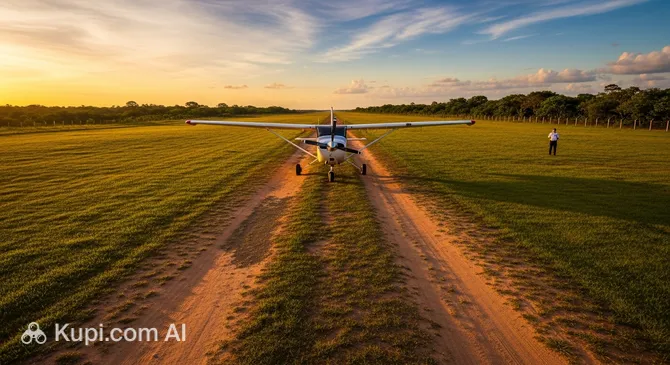
Alagoinhas Airport. Source: Kupi.com Binoculars

Alagoinhas Airport is a compact air hub focused primarily on general aviation and private flights. This airfield serves as a vital transport node for business travellers heading to one of the key industrial centres of the state of Bahia, known for its beverage production. The absence of regular commercial flights makes it a quiet and secluded location, where priority is given to efficiency and individual flight schedules.

AirportAlagoinhas Airport
IATAQGS
ICAOSDUO
CityAlagoinhas
TimezoneAmerica/Bahia
ScheduleOnline board

Airport Features and Advantages:

  • Business Focus: The airfield is strategically important for executives and specialists visiting the region's major industrial plants and beverage factories, allowing for significant time savings on travel from the state capital.
  • No Queues: Due to the specific nature of handling private aircraft, there are no tedious check-in procedures or baggage waits typical of busy international hubs.
  • Privacy: The airport ensures a high level of confidentiality and flexibility, making it the preferred choice for those who value comfort and a personalised approach to route planning.

Contact Information

  • Official Airport Website: There is no dedicated web resource. The airport is managed by the Bahia State Infrastructure Department (Seinfra), and information is available only in specialised aviation registries.
  • Information Desk Phone: There is no public contact centre for passengers, as the airport does not serve regular commercial flights. Communication is conducted directly through pilots or private aircraft operators.
  • Airport Address: Estr. Pará - Araçás, Alagoinhas - BA, 48005-220, Brazil (located in the industrial zone, landmark — the beverage production plant).
  • Email: There is no public email for enquiries.
  • Airport Social Media: No official accounts are maintained.
  • Lost & Found Information: There is no centralised "Lost & Found" service. In case of lost items, you must contact the company organising your private flight directly.
  • Passenger Support Contacts: Ground handling and support are provided individually by FBO providers upon prior request when planning the flight.

How to Get to the Airport

As Alagoinhas Airport (QGS) is located just 5 kilometres from the city centre and serves exclusively private aviation, the transport infrastructure here is specific. There are no specialised express trains or railway connections to the terminal. You can reach the airfield quickly and without traffic jams by using car transport, which remains the only reliable option for passengers and crews.

Taxi and Transfers are the most popular method of transport. Popular mobile ride-hailing apps (such as Uber or 99) operate actively in the city and region, as do local taxi services. A trip from the centre of Alagoinhas to the airfield gates will take about 10–15 minutes. The cost of such a trip usually varies between 20–40 Brazilian Reals (BRL), depending on the time of day and tariff. For executives and business travellers arriving at the factories, individual transfers are often organised by the hosting party.

Public Transport in the form of city buses does not enter the airfield territory directly. The nearest stops for regular municipal routes are on the highway leading to the industrial zone; however, from there one would have to walk, which is extremely inconvenient with luggage and not recommended for safety reasons. There are no metro or suburban trains in Alagoinhas.

For those who prefer freedom of movement, car rental is available. Offices of rental companies (Localiza, Movida, etc.) are located primarily in the centre of Alagoinhas, not at the airport itself. Getting to the airfield by car is very simple: you need to drive towards the industrial district along the Estr. Pará - Araçás road. Parking at the airfield is generally not charged and consists of an open area near the administrative buildings or hangars, but availability should be checked with your flight operator.

It is important to note that most tourists enter the region through major international hubs and then travel to Alagoinhas by ground transport. The nearest major hub is Deputado Luís Eduardo Magalhães International Airport in Salvador, located approximately 80–90 km away. The journey from there by car or intercity bus takes about 1.5 hours. Another alternative could be Aracaju Airport, although it is located significantly further away — almost 200 km from the city.

If you are planning a trip along the Bahia coast, Ilhéus/Bahia-Jorge Amado Airport or the small regional Coronel Horácio de Mattos Airport in Lençóis might be useful, although they are located at a considerable distance from Alagoinhas and are used for different tourist routes. For trips deeper into the continent, Petrolina International Airport is sometimes used, but due to the distance of nearly 400 km, it is rarely considered a transit point for this city.
Terminals and Map

The infrastructure of Alagoinhas Airport (QGS) differs radically from familiar large passenger hubs. Since the airport serves exclusively general aviation and private flights, there is no complex system of terminals, confusing corridors, or numerous boarding gates. The entire airport complex is designed with a focus on functionality, speed of service, and privacy.

Terminal Structure and Service Zones

The airport features one compact single-storey building acting as the terminal and administrative centre. It is located in immediate proximity to the runway and hangars. The internal space is organised as simply as possible:

  • Waiting Hall: A small area for passengers and crew where one can spend time waiting for the aircraft to be prepared. Basic amenities such as restrooms and seating are usually available here.
  • Administrative Rooms: Offices for processing flight documentation and coordinating flight plans with air traffic control.
  • Exit Zone: Direct access to the apron is provided through a single door or gate located just a few steps from the aircraft parking area.

Arrival and Departure Zones

In Alagoinhas, there is no rigid separation into sterile arrival and departure zones typical of commercial aviation. Arriving passengers step directly onto the apron, from where they can proceed to the exit or directly to a car waiting for them (if vehicle access to the aircraft has been arranged in advance). For departing passengers, the path from the building entrance to the aircraft steps takes mere minutes.

Processing Time

One of the main advantages of the airport is the absence of queues and lengthy checks.

  • Check-in: Classic flight check-in is absent. Passengers simply need to arrive 15–20 minutes before the scheduled departure time.
  • Security: Security procedures are conducted according to a simplified protocol agreed with the private flight operator, allowing passengers to avoid removing shoes, belts, and restrictions on liquids that apply in regular aviation.
  • Total Time: The entire process from arrival at the airport to take-off can take less than half an hour.

Navigation and Transfers

The airport layout is intuitively clear, and there is absolutely no need for a navigation map. The territory is compact, and getting lost here is impossible. Transfers between terminals are not required, as there is only one terminal. The passenger's entire journey is a straight line from the car park to the aircraft. Airfield staff or representatives of the hosting company usually meet guests and accompany them at all stages, ensuring maximum comfort.

Airport History

The history of Alagoinhas Airport (QGS) is inextricably linked to the economic rise of the region and its establishment as one of the largest industrial centres in northeastern Brazil. Unlike many old airfields that originated from military facilities or postal stations, this air harbour is a product of modern industrialisation.

Emergence and Industrial Connection

The actual appearance of the modern runway in Alagoinhas dates back to the period of active development of the local industrial cluster in the late 1990s and early 2000s. It was then that the city secured its status as the region's "beverage capital" thanks to the opening of large beverage production plants. The airfield was originally designed and developed as a corporate infrastructure facility intended to support the logistics of top management and technical specialists of major companies, such as Schincariol (later Brasil Kirin and Heineken).

Development Stages and Change of Status

For a long time, the facility functioned as a private airfield, closed to the general public. The main milestones of its history are connected not with the reconstruction of passenger terminals, but with changes in management:

  • Private Period: During the first decades of the 21st century, the airfield (often referred to by locals as the "Heineken airport" due to its proximity to the factory) served exclusively corporate flights, ensuring a direct link with headquarters in São Paulo and other megacities.
  • Transition to State Control: A crucial historical turning point was the recent initiatives by the Bahia state government (in the period 2023–2024) to officially transfer the infrastructure to state management (Seinfra). This marked the beginning of the transformation of a closed site into a full-fledged regional general aviation airport.

Modernisation and Prospects

In recent years, the airport's history is being written through the lens of bureaucratic and infrastructural transformations. A significant stage was the negotiations on including the airfield in the state civil aviation network. Modernisation plans include renewing the runway surface (about 1,600 metres long), installing modern navigation equipment, and building access roads integrated with the city's new ring road.

Interesting Facts

  • Born of Industry: This is one of the rare examples of an airport whose existence is entirely driven by the needs of a specific industry — beverage production. Its fate mirrors the success of local factories.
  • Strategic Location: The airfield is located in immediate proximity to aquifers, the water quality of which attracted industrial giants to this region.
  • No Grand Openings: The airport did not have a ceremonial opening ceremony with ribbon-cutting for mass flights, as it was put into operation pragmatically and gradually, in line with the growth of the factories' production capacities.

Services and Facilities

Given the status of Alagoinhas Airport (QGS) as a general aviation facility focused on private and corporate flights, passengers should be prepared for a minimalist set of services. You will not find the extensive infrastructure familiar to international hubs here. Service is organised on the principle of maximum efficiency: the terminal's task is to ensure a fast and comfortable transit from the car to the aircraft steps.

Dining and Shopping

There are no cafes, restaurants, or Duty Free shops on the airfield territory. Water dispensers and, in some cases, coffee machines may be available in the waiting area.

  • Tip for Tourists: It is recommended to have lunch in the city before leaving for the airport.
  • In-flight Catering: For private flights, food and drinks are usually ordered in advance through your flight operator (catering) and loaded onto the aircraft before departure.

Lounges and Business Services

The airport has no separation into general and business lounges, and network lounges (such as Priority Pass) are absent. However, due to the lack of scheduled flights and crowds of passengers, the entire small waiting hall effectively functions as a VIP zone. It is quiet, uncrowded, and comfortable.

  • Internet: Wireless internet (Wi-Fi) is generally available in the administrative building. The password can be obtained from the hosting staff or pilots.
  • Device Charging: Standard power outlets for charging phones and laptops are available in the waiting hall.
  • Meeting Rooms: No specific rooms for negotiations are provided, but for urgent matters, the office zone can be used upon agreement with the administration.

Financial and Medical Services

Infrastructure for handling daily tasks is not developed at the airfield:

  • Banks and Currency Exchange: There are no ATMs or currency exchange points on the premises. The nearest bank branches are located in the centre of Alagoinhas (about 10–15 minutes away by car).
  • Medical: There is no medical centre or pharmacy in the terminal. In case of emergencies, staff have a first aid kit. The nearest clinics and hospitals are located within the city limits.

Services for Special Categories of Passengers

The airport is distinguished by a high level of personalised service characteristic of business aviation.

  • Passengers with Reduced Mobility: The single-storey architecture of the building makes it convenient for wheelchair movement — there are no stairs, escalators, or long walkways. Boarding takes place directly from ground level. Airfield staff and the crew always provide individual assistance when boarding the aircraft.
  • Passengers with Children: Specialised nursing rooms or play areas are not provided. Given that the waiting time for departure is usually minimal, this rarely causes inconvenience. Nevertheless, parents should take necessary items and entertainment for children in their hand luggage.

Hotels and Accommodation

There are no hotels directly on the airport territory or within walking distance, as the facility is located in an industrial zone. Travellers requiring overnight accommodation should look for options in the city of Alagoinhas itself (5 km from the airfield). The city centre offers mid-range hotels and business hotels catering to employees on business trips to local factories.

Where to Eat

Dining Specifics at the Airport

Passengers departing from Alagoinhas Airport (QGS) need to consider the specifics of this transport hub. Since the airport serves exclusively private aviation and has no commercial passenger terminal, there are absolutely no standard restaurants, cafes, or food courts here. Inside the administrative building, there are no vending machines with food, and options are limited merely to water dispensers or, in rare cases, a coffee machine in the crew waiting area.

In-flight Catering Organisation

For travellers using business aviation services, the question of dining is resolved in advance. Food and drinks are not purchased on-site but are ordered through the flight operator (FBO) at the flight planning stage.

  • Individual Approach: You can order dishes of any complexity — from light snacks to a fine dining menu.
  • Special Dietary Requirements: Through pre-ordered catering, options are available for vegetarians, vegans, as well as Halal or gluten-free menus. This guarantees freshness and compliance with your dietary requirements.

Where to Eat Before Departure: City Recommendations

Since the airport is located just a 10–15 minute drive from the centre of Alagoinhas, passengers are strongly advised to visit local establishments before heading to the airfield. The city offers diverse options, from a quick snack to a full lunch.

Recommendations for Establishments in Alagoinhas:

  • Brazilian Steakhouses (Churrascarias): An ideal option for a substantial lunch. They serve various types of grilled meat under the "rodízio" system (unlimited service). This is an excellent opportunity to try high-quality local beef. The average bill is 40–80 BRL per person.
  • Self-service Restaurants (Comida a quilo): A popular format in Brazil where you pay by the weight of your plate. This allows you to quickly assemble a balanced lunch of salads, side dishes, and hot food. Suitable for those rushing for a flight.
  • Coffee Shops and Bakeries (Padarias): For a light breakfast or snack, it is worth visiting city bakeries. Here you can drink strong Brazilian coffee and try "pão de queijo" (cheese buns) or sandwiches.

Local Cuisine: What to Try

Alagoinhas is in the state of Bahia, known for its vibrant culinary traditions. If you have time before your flight, be sure to try local specialities in city restaurants:

  • Moqueca: A famous stew made of fish or seafood with coconut milk, tomatoes, and dendê palm oil.
  • Acarajé: Fried balls of bean dough filled with shrimp and spicy sauce (usually sold as street food, but also found on cafe menus).

Opening Hours

Most restaurants in the city are open for lunch from 11:30 to 15:00 and for dinner from 18:00 to 23:00. Bakeries and cafes often operate from early morning (06:00–07:00) until the evening without breaks. Plan your visit to the city taking this schedule into account, as it will be impossible to buy food at the airfield itself.

Travel Tips

Travelling through Alagoinhas Airport (QGS) is fundamentally different from the experience of flying through large international hubs. Since only private and business aviation is handled here, many standard passenger transport rules do not apply or work differently. To ensure your visit goes as smoothly as possible, we have prepared a number of useful tips considering the specifics of this small airfield.

Optimal Arrival Time

Forget the rule of "arriving three hours before departure". At Alagoinhas, there are no long queues for security or check-in counters.

  • Recommended Time: It is sufficient to arrive 15–20 minutes before the scheduled departure time. This is enough to meet the crew, load luggage, and get settled in the cabin.
  • Communication with Pilot: Always maintain contact with your aircraft commander or flight manager. If you are running late, the aircraft will likely wait for you, but this may affect your departure slot in the air traffic control system.

Check-in and Security

Procedures at a private aviation airport are kept to a necessary minimum, but document requirements remain strict.

  • Documents at Hand: Despite the privacy, you must have original identification documents (passport or ID) with you for all passengers, including children. Police may conduct random checks.
  • Simplified Screening: You will not have to remove shoes, belts, or take laptops out of bags. Security checks are usually conducted quickly and visually, without the use of body scanners.

Seat Selection and On-board Comfort

In private aircraft, there is no fixed seating with seat numbers on a boarding pass.

  • Free Seating: You can take any seat you like. However, on small turboprop aircraft or light jets, the pilot may ask you to sit in a specific seat to ensure the correct centre of gravity (balance) of the vessel.
  • Best Views: General aviation flights often fly at lower altitudes than scheduled flights. Take a window seat to enjoy views of the plantations and landscapes of the state of Bahia.

Luggage and Hand Luggage

Luggage rules here are dictated not by an airline, but by the physical dimensions of the luggage compartment of the specific aircraft.

  • Type of Bags: For flights on small aircraft, it is recommended to use soft travel bags instead of rigid plastic suitcases. They are easier to fit into limited luggage space.
  • Liquids: The restriction on carrying liquids in containers up to 100 ml generally does not apply here. You can take your favourite drink or full-sized cosmetics with you if agreed with the flight operator.

Transfers and Connections

Alagoinhas Airport is a local node not designed for transfers.

  • Connection with Scheduled Flights: If Alagoinhas is just part of your route and you are flying onwards by commercial flight, allow sufficient time for the ground transfer to Salvador Airport (about 1.5–2 hours drive). There is usually no direct air connection between these points.

Tips for Saving Time and Money

  • "Empty Legs" System: If you want to save on a private flight, ask brokers about the availability of return flights ("empty legs") from Alagoinhas to major cities. This can reduce the charter cost by 50–70%.
  • Transfer: Taxis via apps (Uber/99) in this region are significantly cheaper than ordering a car through the airport catering service. Call the car in advance, while still on the plane, as waiting times in the industrial zone can be extended.
  • Dining: Ordering food on board through specialised aviation catering is very expensive. It is wiser to buy snacks or ready meals at a good restaurant in the city of Alagoinhas before leaving for the airport.

What to Do in Case of Flight Delay

Unlike big airports, there are no information screens here. The only source of information is your pilot.

  • Weather Conditions: Alagoinhas does not have the highest category of all-weather navigation equipment. Heavy fog or downpours can delay departure. In this case, waiting takes place in the small terminal hall or directly in the car.
  • Plan "B": Since the state capital, Salvador, can be reached by land, in the event of critical non-flying weather or a breakdown of the private aircraft, it makes sense to rent a car or order a taxi. The trip will take not much longer than waiting for the weather to improve.

Reached the end of the page?

That means the route is fully explored