Support

Museum Cascudo / UFRN

About

Have you ever wondered what the ancient nature of South America looked like and what secrets the folklore of the northeast holds? The Câmara Cascudo Museum (Museu Câmara Cascudo) is one of the most significant cultural spaces gracing the city of Natal. As an important research center under the UFRN university, it offers guests a deep dive into the history and anthropology that Brazil is so famous for.
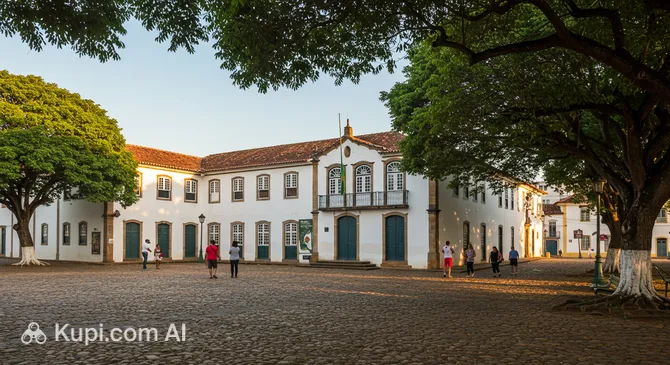
Cascudo Museum
Cascudo Museum. Иллюстрация. Источник: Kupi.com AI

The museum is named after Luís da Câmara Cascudo, a legendary anthropologist and historian who dedicated his life to studying Brazilian traditions. Here, under one roof, are unique collections spanning natural history, archaeology, and ethnography. It is a place where academic science meets the living culture of the region, making complex facts accessible and interesting for every visitor.

The specialty of this museum lies in its versatility: from examining ancient fossils to studying the daily life of indigenous peoples. The Câmara Cascudo Museum is a key point on the map for anyone who wants to understand the origins of Brazilian identity and see the heritage of the state of Rio Grande do Norte in all its diversity.

Contacts

For more information about special exhibitions or to book group tours, you can use the museum's official contact details.

How to contactContact
AddressAv. Hermes da Fonseca, 1398 - Tirol, Natal - RN, 59020-650, Brazil
Phone+55 84 3342-2289
Websitewww.mcc.ufrn.br

What to Do

A true journey through time awaits guests in the museum's halls. Be sure to stop by the paleontology department, which features impressive fossils of prehistoric animals that lived in these parts millions of years ago. Equally interesting is the archaeology section, showcasing rare artifacts from indigenous tribes that inhabited the territory of Brazil long before the arrival of Europeans.

For those interested in daily life and traditions, the ethnographic collection is open. Here you can see folk art objects, tools, and clothing elements that reveal the richness of Northeastern culture. Nature lovers should pay attention to the displays dedicated to marine biology and oceanography, telling the story of the inhabitants of the Atlantic Ocean.

A separate part of the museum is dedicated to the life and work of Luís da Câmara Cascudo himself. Here you can see his personal belongings and scientific works. The museum often organizes temporary exhibitions and cultural events, and for a deeper immersion into the context, we recommend using the services of a guide, who can tell amazing stories about each significant exhibit.

Getting There

The Câmara Cascudo Museum is conveniently located in the Tirol neighborhood, not far from Praia do Meio. The exact address is Avenida Hermes da Fonseca, 1398. Reaching it from the city's central districts is quite easy.

The simplest way is to use public transport. Numerous bus routes pass through Avenida Hermes da Fonseca, connecting various parts of the city. Stops are within walking distance of the museum entrance. Another popular option for tourists is taxi or ride-sharing apps like Uber and 99. A trip from the central part of the city will take about 10–15 minutes.

If you are staying in nearby neighborhoods like Petrópolis, a walk to the museum will be a pleasant addition to your exploration of the city's architecture and atmosphere. The route will take you through lively streets filled with cafes and shops.

Ближайший город: Natal

History & Facts

The history of this cultural center began in 1960, when it was founded as the Institute of Anthropology. The institution received its current name—Câmara Cascudo Museum—in 1973. It was named in honor of the prominent Brazilian scholar Luís da Câmara Cascudo (1898–1986), whose works on folklore and ethnography became the foundation for studying the region's national identity.

Over the years, the museum evolved from a modest research department into the largest scientific and educational complex under the Federal University of Rio Grande do Norte (UFRN). In 1979, the collections moved to a specially designed building, which allowed for expanded exhibitions and modern laboratories for studying finds.

Today, the museum is considered one of the most important keepers of memory for northeastern Brazil. Thanks to years of collaboration with international institutions, the museum's holdings have been enriched with rare exhibits spanning periods from prehistoric times to the colonial era and the present day.

Time Needed

To thoughtfully explore all the halls and temporary exhibitions, it usually takes from 2 to 3 hours. The collection is quite extensive and covers various scientific disciplines, so there is no need to rush.

If you plan to study the paleontological collection or ethnographic artifacts in detail, it’s better to set aside a bit more time for your visit. The museum is very logically organized, allowing visitors to explore the halls independently; however, taking a guided tour can make the visit even more enriching and informative.

Working Hours

Please note the institution's operating schedule, as it is primarily focused on weekdays. The museum welcomes visitors from Tuesday to Friday according to the following schedule:

  • Morning shift: 8:30 AM – 11:30 AM
  • Afternoon shift: 1:00 PM – 4:00 PM

On Mondays, Saturdays, and Sundays, the museum is closed to the public. Work is also suspended on national holidays. It is recommended to plan your visit for the first half of the day to ensure you have time to see all the exhibits before the lunch break.

DayWorking hours
ПонедельникЗакрыто
Вторник8:30 – 11:30, 1:00 – 16:00
Среда8:30 – 11:30, 1:00 – 16:00
Четверг8:30 – 11:30, 1:00 – 16:00
Пятница8:30 – 11:30, 1:00 – 16:00
СубботаЗакрыто
ВоскресеньеЗакрыто

Nearby

A visit to the museum can be combined with exploring other interesting locations in this part of the city. The Tirol neighborhood and its surrounding blocks offer both historical monuments and places for family recreation.

A walk through the neighborhood will allow you to better feel the rhythm of life in Natal and see the contrast between the old city and modern entertainment centers.

NameDistance
Rio Grande do Norte Minerals Museum1 km
Midway Mall1 km
Mexican Territory1.1 km
Lovers' Woods at Dunas Park1.1 km
Metropolitan Cathedral of Our Lady of the Presentation1.7 km
Mãe Luiza Staircase2.1 km
Sun Clock2.1 km

Reached the end of the page?

That means the route is fully explored