Support

Parintins

About

Deep within the lush rainforests of the state of Amazonas lies Parintins, a captivating city situated on Tupinambarana Island. Surrounded by the majestic waters of the Amazon River, this destination offers a truly immersive experience in Brazil, far removed from the hustle of coastal metropolises. With a population of approximately 111,000 residents, it serves as a vital cultural and economic hub in the region, accessible primarily by boat or plane.

Parintins. Source: Kupi.Binoculars

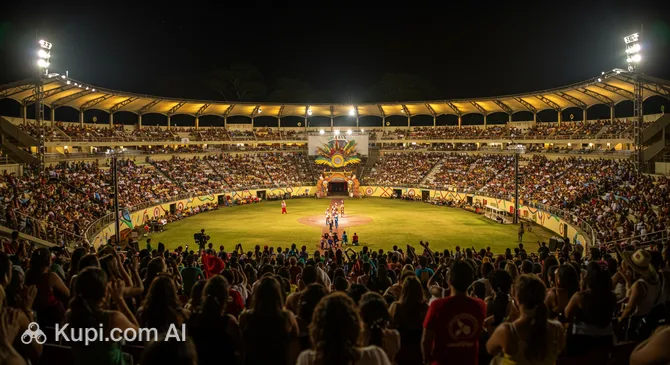
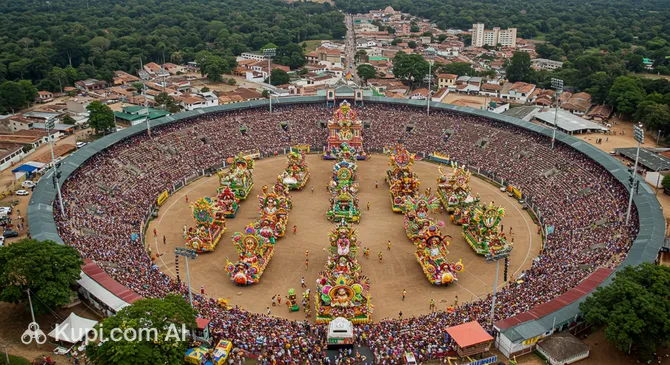
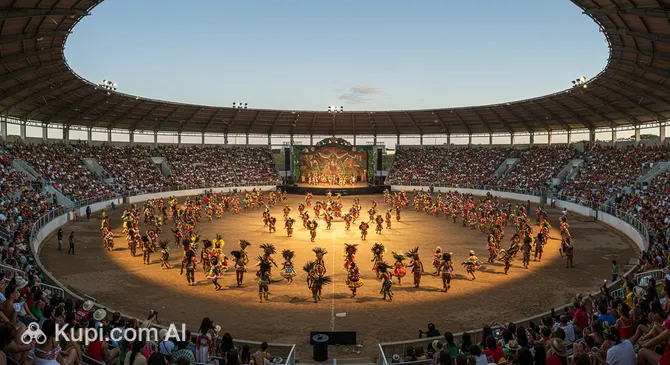
The city is globally renowned for hosting one of the largest folklore festivals in the world, the Festival Folclórico de Parintins. This spectacular event takes place annually in late June at the Bumbódromo, a stadium built specifically for the occasion. Here, the passionate rivalry between the two "oxen," Caprichoso (blue) and Garantido (red), comes to life through music, dance, and elaborate costumes, transforming the town into a vibrant explosion of color and rhythm.

To fully appreciate the local identity, visitors should delve into the history of Parintins, which reveals a fascinating blend of indigenous heritage and colonial influences. Beyond the festival season, the city offers a peaceful atmosphere where travelers can explore local markets filled with exotic fruits, visit the Cathedral of Our Lady of Mount Carmel, or enjoy scenic boat tours along the river. Parintins is a unique gem in the Amazon that invites you to witness its magic firsthand.

Weather Overview

Parintins experiences a tropical climate characterized by consistent warmth throughout the year, typical of its location in the Amazon region. Visitors can expect high temperatures regardless of when they visit, though the humidity and rainfall patterns vary significantly across the seasons. To help plan your trip around these conditions, it is helpful to review the detailed weather in Parintins before packing.

The first half of the year, particularly from January to May, is marked by frequent precipitation, with rain occurring on up to 29 days per month. During this period, average temperatures generally hover around 27°C. In contrast, the months of August, September, and October bring drier conditions and intense heat, with average temperatures rising to nearly 30°C and daily highs often peaking above 33°C. Travelers should be prepared for warm days year-round, with a distinct shift from a very wet start of the year to a drier, hotter season from August onwards.

Interesting Facts

Beyond the vibrant energy of its world-famous festival, Parintins holds a collection of fascinating cultural nuances that often escape the casual eye. The city's deep-rooted traditions have shaped its daily life and geography in ways that are truly unique to this corner of the Amazon.

Bumbódromo of Parintins. Source: Kupi.Binoculars
  • The rivalry between the two folklore groups is so intense that it physically and visually divides the city into red and blue zones. This cultural split is so respected that even major global brands adapt their logos; Parintins is one of the few places on Earth where you can find Coca-Cola advertisements printed in blue to appease the supporters of Boi Caprichoso.

  • During the annual festivities at the Bumbódromo of Parintins, the audience is not merely watching—they are competing. The "Galera" (crowd) is an official scoring category, meaning that the silence or enthusiasm of the fans can directly decide the winner, requiring spectators to perform choreographed cheers for hours.

  • The preparations for the festival are a year-round industry housed in massive complexes that function almost like independent communities. Visitors can explore Cidade Garantido or the Zeca Xibelão Arena (Boi Caprichoso) to see where the gigantic floats and costumes are crafted long before June arrives.

  • Although widely known as an island city, Parintins is actually situated on Tupinambarana, which is technically a massive fluvial archipelago rather than a single landmass. This intricate network of river islands is constantly reshaped by the powerful currents of the Amazon River, making the region's geography as dynamic as its culture.

How to Get There

Reaching Parintins is a unique experience, as this island city in the heart of the Amazon is not connected to the national road network. For a detailed overview of all travel options, including boat schedules and flight tips, you can read more about how to get to Parintins.

While Parintins has its own small airport handling regional flights, travelers exploring the wider Amazon region might also consider the Santarem-Maestro Wilson Fonseca Airport (STM). Located in the city of Santarem, this airport is approximately 217 km away from Parintins. It is important to note that there are no roads linking Santarem to Parintins; therefore, this airport serves primarily as a hub for those planning to continue their journey down the Amazon River by boat. The river trip from Santarem is a popular route, though it takes significantly longer than a land transfer would.

For clarity, here is a summary of the regional airport listed:

Airport Name City Passenger Traffic Km from City
Santarem-Maestro Wilson Fonseca Airport Santarem Medium 217.0

Regarding rail travel, the Amazon region does not have a passenger railway system. Consequently, there are no train stations in Parintins or the surrounding cities. Visitors should not plan for rail transport as part of their itinerary.

Since the city is situated on an island in the Amazon River, the most common and authentic way to arrive is by water. Regular boats and "jato" (speedboats) connect Parintins to major hubs like Manaus and Santarem. These river journeys are an essential part of the local lifestyle and offer travelers a chance to see the rainforest from a different perspective.

Main Attractions

The cultural heartbeat of Parintins is undoubtedly the Bumbódromo of Parintins (Centro Cultural Amazonino Mendes). This massive stadium, designed in the stylized shape of a bull's head, serves as the stage for the city's world-famous folklore festival. With a capacity to hold tens of thousands of spectators, it is divided strictly into blue and red sections, representing the two rival groups. Even when the festival is not in session, the arena remains a monumental landmark and a symbol of the city's artistic passion, interesting to tourists for its sheer scale and architectural uniqueness within the Amazon.

For those wishing to dive deeper into the "blue" side of the rivalry, the Zeca Xibelão Arena (Boi Caprichoso) is an essential stop. This venue, often referred to as the "Curral Zeca Xibelão," is the headquarters and rehearsal ground for the Boi Caprichoso group. Visitors here can often witness the intense preparations, rhythmic rehearsals, and community events that keep the folklore spirit alive year-round. It offers a raw, behind-the-scenes look at the dedication required to put on the annual spectacle.

Zeca Xibelão Arena (Boi Caprichoso). Source: Kupi.Binoculars

On the other side of the cultural divide lies Cidade Garantido, the sprawling complex dedicated to the Boi Garantido, the "red" ox. This area functions almost like a city within a city, housing the administrative centers, social clubs, and the massive workshops where the gigantic floats and costumes are constructed. A visit here allows tourists to appreciate the craftsmanship and artistry of the "Baixa do São José" community, providing insight into the history and tradition of the red team.

Cidade Garantido. Source: Kupi.Binoculars

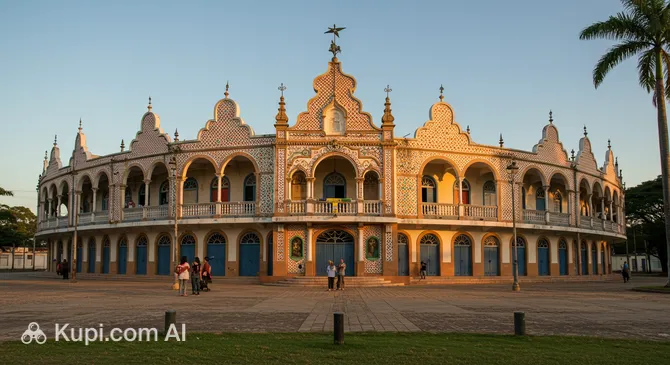
While the festival venues dominate the landscape, visitors should also take time to admire the Cathedral of Our Lady of Mount Carmel (Catedral de Nossa Senhora do Carmo). As the tallest building in the city, its tower offers a reference point for explorers and stands as a testament to the region's religious history. The cathedral is a peaceful sanctuary surrounded by gardens, offering a quiet contrast to the energetic rhythm of the folklore arenas.

Local Cuisine

The cuisine of Parintins is a flavorful reflection of its location deep within the Amazon rainforest, heavily influenced by indigenous traditions and the bounty of the river. Fish is the undisputed star of the local table, prepared in various ways that highlight fresh ingredients. A must-try dish is the Tambaqui, a large freshwater fish often served as "banda de tambaqui" (roasted ribs), known for its tender, fatty meat and smoky flavor. Another local favorite is the Bodó, an armored catfish that might look prehistoric but is considered a delicacy, typically stewed in tucupi (a yellow sauce extracted from wild manioc) or boiled in coconut milk.

For a truly authentic Amazonian experience, visitors should seek out Tacacá, a warm soup usually consumed in the late afternoon. Served in a gourd bowl (cuia), it combines tucupi, gum (a starch paste), dried shrimp, and jambu—a leafy green that causes a unique tingling sensation on the lips. Breakfast is also a serious affair in Parintins, often referred to as "Café Regional." This meal features a spread of tapiocas filled with tucumã fruit and cheese (known as X-Caboquinho), steamed corn couscous, and pupunha fruit, providing plenty of energy for the day.

The drink selection is just as exotic as the food. Fresh fruit juices are abundant, with flavors like cupuaçu, graviola, and taperebá offering a refreshing escape from the heat. Guaraná is also extremely popular here, often consumed in its natural powder form or as a soda. For those looking for something stronger, an ice-cold beer is the standard accompaniment to lunch and dinner, essential for cooling down in the tropical climate.

The food culture in Parintins is laid-back and communal. While there are established restaurants, much of the best food is found in open-air markets and street stalls. The Municipal Market is a hub for fresh breakfast and lunch, where you can eat alongside locals. During the festival season, the streets surrounding the Bumbódromo of Parintins transform into a massive gastronomic fair, where vendors sell everything from grilled skewers to regional sweets, allowing tourists to sample a wide variety of local treats in a festive atmosphere.

Travel Tips

Visiting Parintins offers a rare glimpse into life on an Amazonian island, but its remote location and unique culture require a bit of specific preparation. To ensure your journey to the home of the Boi Bumbá festival is as smooth and enjoyable as possible, here are some practical tips to help you navigate the city like a pro.

  1. Clothing and Gear: Given the intense tropical heat and humidity, pack lightweight, breathable fabrics like cotton or linen. Light colors are best to reflect the sun and discourage mosquitoes. Since sudden downpours are common in the Amazon, always carry a compact umbrella or a rain poncho. Comfortable walking shoes or sturdy sandals are essential, and don't forget a hat and high-SPF sunscreen. If you plan to visit churches, modest attire (covering shoulders and knees) is respectful.

  2. Transportation: The most iconic and convenient way to get around Parintins is by triciclo. These pedal-powered or motorized rickshaws are everywhere and act as the primary taxi service. They are perfect for short distances and offer a breezy way to see the streets. Regular car taxis and motorcycle taxis (mototaxis) are also available. Car rentals are generally unnecessary and hard to find, as the city is compact and isolated from the mainland road network.

  3. Finances: The official currency is the Brazilian Real (BRL). While larger establishments and hotels accept credit cards, cash is king for triciclos, street food, and small market vendors. There are ATMs in the city (Banco do Brasil, Bradesco, and Caixa), but they can run out of cash during the busy festival season in June. It is wise to withdraw sufficient money in Manaus or Santarem before arriving.

  4. Health and Safety: Insect repellent containing DEET is mandatory to protect against mosquitoes common in the Amazon region. Pharmacies are widely available in the city center for basic needs. Drink only bottled or filtered water; never drink tap water to avoid stomach issues. Parintins is generally safer than large Brazilian capitals, but you should still practice standard caution: avoid flashing expensive electronics and stay in well-lit areas at night.

  5. Communication: The main language is Portuguese. English is not widely spoken outside of high-end tourism services or by festival organizers. Learning a few basic phrases like "Bom dia" (Good morning), "Obrigado/a" (Thank you), and "Quanto custa?" (How much?) goes a long way. It is highly recommended to download an offline translation app and an offline map of the city before you arrive, as mobile data can be spotty.

  6. Local Etiquette: The people of Parintins are known for their warmth and hospitality. Greetings are important; a friendly handshake or a nod with a smile is standard. Life here moves at a slower, "river time" pace, so patience is a virtue in restaurants or queues. When taking photos of locals, especially in the markets, always ask for permission first—a smile and a gesture are usually enough.

  7. What to Avoid: Do not swim in the Amazon River at random spots along the shore. Currents can be deceptively strong, and there is local wildlife (such as stingrays or caimans) to consider. Stick to designated bathing beaches like Praia do Juruá or resorts where swimming is known to be safe. Also, avoid disrespecting the local folklore rivalry; the passion for the "Oxen" is serious business here.

  8. Festival Colors Tip: If you visit during the festival season (June), be mindful of the colors you wear. The city is divided into Red (Garantido) and Blue (Caprichoso). Wearing one color in the opposing team's stronghold can attract friendly banter, but sometimes it marks you as an outsider unaware of the "rules." To stay neutral and safe from intense rivalry debates, wear green, yellow, or white.

By keeping these practicalities in mind, you will be well-equipped to embrace the vibrant spirit of Parintins without the stress of logistical surprises. Whether you are there to cheer in the Bumbódromo or simply to watch the sunset over the Amazon River, a little preparation ensures your adventure remains unforgettable for all the right reasons.

Entertainment & Nightlife

Nightlife in Parintins is unique in that it does not revolve around traditional nightclubs or discos, but rather pulses with the rhythm of the "toada"—the traditional music of the region. The city's evening energy is inextricably linked to its folklore culture, creating an atmosphere that is communal, vibrant, and deeply passionate. Instead of dark rooms with strobe lights, the best parties here happen in open-air arenas and bustling public squares where the humid Amazonian breeze keeps the crowds cool as they dance late into the night.

The undisputed epicenters of entertainment, particularly in the months leading up to the festival, are the headquarters of the two rival Boi-Bumbá groups. These venues function as massive concert halls where rehearsals turn into spectacular parties. Visitors can head to the Zeca Xibelão Arena (Boi Caprichoso) to experience the "Blue" side of the festivities. Here, the drumming corps (Marujada) practices thunderous rhythms while locals sing along to every lyric. It is a high-energy environment where the line between performer and spectator blurs completely.

On the opposing side, the "Red" nation gathers at Cidade Garantido. This complex hosts the "Batucada" rehearsals, offering an equally intense and spirited nightlife experience. These events are the heart and soul of Parintins after dark, often running late and welcoming visitors with open arms—provided you respect the color codes of the venue. Outside of the festival season, these areas are quieter, but they remain symbolic landmarks where smaller community events and gatherings frequently occur.

For a more laid-back evening, the waterfront promenade, known as the Orla do Rio Amazonas, is the place to be. This area is lined with bars, kiosks, and restaurants that serve ice-cold beer and regional snacks. It is a popular spot for locals to gather, watch the sunset, and enjoy live music, which ranges from acoustic Brazilian popular music (MPB) to forró. The atmosphere here is casual and friendly, making it easy to strike up a conversation with residents. The Praça da Catedral is another social hub where families and young people congregate to eat street food and socialize in the open air.

During the day, entertainment in Parintins is more subdued and culturally focused. Visitors can explore the city's artistic heritage by visiting the Bumbódromo of Parintins to admire the architecture of the arena when it is empty, or take a motorized canoe trip to nearby river beaches like Praia do Juruá when the water levels are low. The city is also dotted with small workshops where artisans craft the elaborate feathered costumes for the festival, offering a colorful glimpse into the local artistic process.

When enjoying a night out, safety is generally not a major concern in the main tourist areas, as the city is small and community-focused. However, it is always wise to stay in well-lit, populated zones and avoid walking alone in remote outskirts late at night. The best way to get around is by triciclo; these pedicabs operate well into the night and are an affordable, safe way to return to your accommodation. Dress codes are extremely casual—shorts, t-shirts, and sandals are the standard uniform for almost any venue. Prices for drinks and cover charges are generally very reasonable compared to larger Brazilian cities.

Parks & Museums

While Parintins is famous for its energetic festival, the city also offers serene green spaces and cultural venues that allow visitors to connect with the Amazonian environment and the region's rich artistic history. From manicured squares to living museums of folklore, the city provides a fascinating backdrop for exploration beyond the main stage.

For those seeking a connection with nature, Balneário Cantagalo is a standout destination. Located just a short drive from the city center, this natural recreational area is formed by a calm arm of the river, creating a lake-like setting perfect for swimming. Surrounded by lush forest, it features a pier and restaurants serving local fish, making it an ideal spot to relax and watch the sunset over the water without the worry of strong river currents.

In the heart of the city, Praça da Liberdade (Liberty Square) serves as a central gathering point for locals and tourists alike. This historic square is beautifully landscaped with regional flowers and trees, offering a shaded refuge from the midday heat. It is also home to the "Time Tunnel" monument and several sculptures that pay homage to the city's indigenous roots and history, providing a picturesque setting for an evening stroll.

When it comes to culture and history, the city's "museums" are unconventional, often functioning as active workshops and community centers. The Bumbódromo of Parintins is more than just an arena; it is the official Cultural Center of Amazonino Mendes. Visitors can often explore its vast interior to see permanent artistic installations and sculptures that narrate the legends of the Amazon, offering insight into the mythology that drives the annual festival.

To truly understand the artistic heritage of the region, a visit to the headquarters of the folklore groups is essential, as they function as living galleries. Cidade Garantido acts as a sprawling open-air museum for the "Red" faction. Here, tourists can walk through the workshops (galpões) to see the massive allegorical floats and intricate costumes up close, witnessing the craftsmanship that is usually only seen from a distance during the parade.

Similarly, the Zeca Xibelão Arena (Boi Caprichoso) serves as the historical guardian for the "Blue" team. This venue houses a trophy room and displays of past themes, effectively chronicling the evolution of the Boi-Bumbá tradition. A guided walk through this space reveals the deep community pride and the decades of storytelling that have shaped the identity of Parintins.

For a lesser-known vantage point, head to the Praça do Cristo Redentor near the waterfront. It is a quieter spot than the main promenade, offering a peaceful atmosphere and a stunning panoramic view of the Amazon River, especially beautiful during the golden hour.

Getting Around

Getting around Parintins is a unique experience that reflects the city's island geography and relaxed Amazonian lifestyle. Unlike major metropolitan areas in Brazil, this town does not rely on extensive bus networks or heavy traffic. Instead, the streets are characterized by smaller, more agile forms of transport that allow visitors to navigate the area with ease and immerse themselves in the local atmosphere.

The most iconic and popular way to travel is by triciclo. These tricycles, which can be pedal-powered or motorized, function as the city's primary taxi service. They are often elaborately decorated with artwork depicting the local folklore, frequently sporting the colors of the rival oxen, Caprichoso (blue) and Garantido (red). Riding in a triciclo is not just a means of transport but a cultural experience, offering a breezy, open-air journey perfect for the tropical climate. They are ideal for short to medium distances and can be hailed easily on nearly every street corner.

For those looking to get across town more quickly, mototaxis (motorcycle taxis) are the standard solution. This is a very common mode of transport throughout the Amazon region due to its affordability and efficiency. Drivers are required to carry an extra helmet for passengers. It is a practical choice for solo travelers or those in a hurry, though it is always synonymous with a more adventurous ride compared to the slow pace of the tricycles.

Standard car taxis are available but are significantly fewer in number compared to other cities. They are primarily found at the airport and the port to facilitate transfers with luggage. Ride-sharing apps are not widely established here, so visitors should not rely on them. Walking is also a viable and pleasant option, particularly in the city center and along the waterfront promenade, where many shops, restaurants, and landmarks are clustered close together.

Travelers should be aware that payment for transport is almost exclusively in cash (Brazilian Reais). It is advisable to carry small bills, as drivers may not always have change for large notes. Prices for tricycles and mototaxis are generally affordable, but it is common practice to confirm the fare with the driver before starting your journey to avoid any misunderstandings.

Accommodation

Accommodation in Parintins reflects the city's character as a remote island hub in the Amazon: modest, welcoming, and deeply integrated with the local community. Visitors should not expect sprawling luxury resorts or international hotel chains. Instead, the lodging landscape is dominated by small, family-run hotels and pousadas (inns). These establishments offer a cozy, intimate atmosphere and are mostly concentrated in the city center, providing easy access to the port, the cathedral, and the main dining areas.

The accommodation situation changes dramatically during the annual folklore festival in late June. During this week, the city receives tens of thousands of tourists, and the demand for beds far outstrips the capacity of the regular hotels. It is standard practice for rooms to be booked months, or even a year, in advance for the festival period. Travelers planning to attend this event must secure their lodging as early as possible and should be prepared for peak-season pricing.

Due to the scarcity of traditional hotel rooms during the festival, alternative housing options are a major part of the Parintins experience. A popular solution is renting rooms or entire houses from local residents, who open their homes to visitors. This not only provides a comfortable place to stay but also offers a unique opportunity to connect with local families. Another classic Amazonian option is sleeping on the riverboats. Many tourists travel to the island by boat and simply stay on board, sleeping in hammocks on the deck while the vessel remains docked at the port, serving as a floating hotel.

regardless of where you choose to stay, amenities tend to be simple and functional. The most essential feature to check for is air conditioning, which is a necessity given the intense heat and humidity of the Amazonian climate. Breakfasts in local pousadas are often a highlight, featuring a spread of tropical fruits, fresh juices, and regional delicacies like tapioca and steamed corn couscous, ensuring you have plenty of energy for exploring the island.

Nearby Cities

Nearby Cities:

Parintins is situated in a vast and sparsely populated region of the Amazon rainforest, within the state of Amazonas. While the city feels remote due to its island location, there are several notable urban centers within a relatively short radius. These neighboring cities serve as important regional hubs for commerce and transport. It is important to note that due to the lack of road connections in this part of Brazil, the distances listed below are linear (straight-line); actual travel by river boat will cover a greater distance and take significantly longer.

City Name Population Distance (km)
Santarem 306,480 226
Itaituba 98,485 198
Itacoatiara 97,122 198
Oriximina 75,000 137
Maués 59,983 138

Among these neighbors, Santarem is the most prominent, acting as a major port and transit point between Manaus and Belém. It is often a stopover for travelers heading to Parintins by boat. Other nearby towns offer their own unique local flavors; for instance, Maués is widely famous as the land of guaraná, a fruit central to the region's economy and culture. Itacoatiara, located upstream, serves as another key port on the Amazon River, connecting the interior to the wider world.

Shopping & Souvenirs

Shopping in Parintins offers a distinct experience that focuses less on luxury brands and more on cultural authenticity and Amazonian heritage. Visitors will not find sprawling shopping complexes or international designer stores here. Instead, the city’s commerce revolves around local craftsmanship, regional delicacies, and, most notably, the vibrant merchandise associated with the annual folklore festival. It is the perfect place to find items that carry the spirit of the rainforest and the passion of the "Boi-Bumbá" tradition.

The main commercial activity is concentrated in the city center (Centro), particularly along Avenida Amazonas and the surrounding streets near the port. This area serves as the bustling heart of local trade, lined with small shops, clothing boutiques, and pharmacies. Strolling down these streets allows tourists to mingle with residents and discover a variety of goods, from everyday essentials to colorful beachwear suitable for the river islands.

Travelers looking for large shopping malls will not find them in Parintins. The retail landscape is characterized by small galleries and standalone stores rather than the massive air-conditioned centers found in larger Brazilian capitals. This smaller scale contributes to the city's charm, encouraging visitors to explore the streets on foot or by tricycle rather than staying indoors.

A highlight for any visitor is the Mercado Municipal Leopoldo Neves. Located near the waterfront, this historic market is a sensory adventure. While it is primarily a place for locals to buy fresh fish, meat, and produce, it is also an excellent spot to find traditional herbal remedies, regional spices, and artisanal products. In the mornings, the area is lively and offers a genuine glimpse into the daily life of the islanders.

When it comes to souvenirs, the most popular items are undoubtedly linked to the folklore rivalry. You cannot leave the city without choosing a side: Caprichoso (blue) or Garantido (red). Shops and street stalls everywhere sell t-shirts, caps, and accessories emblazoned with the logos of the two oxen. Beyond festival gear, look for indigenous handicrafts made from natural materials like seeds, straw, and wood. Bio-jewelry, woven baskets, and decorative pottery are beautiful keepsakes that support local artisans. Regional food items, such as bottles of tucupi, chili peppers, or sweets made from cupuaçu and buriti, also make for unique gifts.

Store hours in Parintins generally follow the standard Brazilian schedule, opening around 8:00 AM or 9:00 AM and closing by 6:00 PM on weekdays. On Saturdays, many shops close in the early afternoon, around 1:00 PM, and most remain closed on Sundays, except for essential services and some souvenir stalls during the festival season. While established shops accept credit and debit cards, cash is essential for street vendors, small market stalls, and tricycle drivers. Brazil does not typically offer a tax-free refund system for tourists in smaller towns like Parintins, so the price you see is the final price.
Reached the end of the page?

That means the route is fully explored