Support

Museu da Água de Piracicaba Francisco Salgot Castillon

About

On the picturesque riverbank in the city of Piracicaba, there is an amazing place where the industrial past meets an ecological future. The Francisco Salgot Castillon Water Museum is a unique cultural complex covering 12,000 square meters on the site of the city's first water intake station.
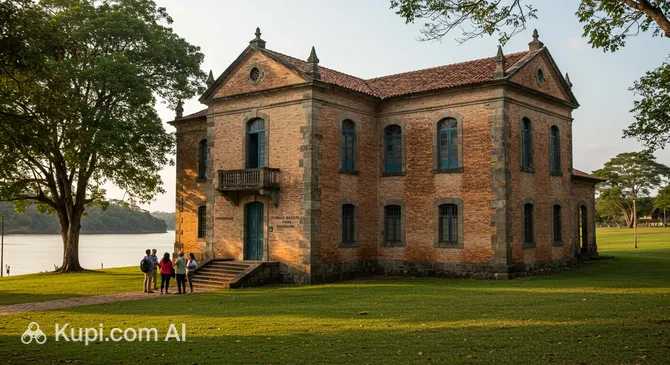
Piracicaba Water Museum Francisco Salgot Castillon
Piracicaba Water Museum Francisco Salgot Castillon. Иллюстрация. Источник: Kupi.com AI

Housed in historic buildings dating back to 1887, the museum impresses with its industrial aesthetic. Here you will see majestic stone arches, ancient aqueducts, and massive iron pipelines that once provided life to the entire city. This site is a major architectural monument that Brazil has carefully preserved for future generations.

The museum's location next to the powerful Salto do Rio Piracicaba waterfall gives it a special atmosphere. Today, it is not just a display of machinery, but a modern educational platform managed by SEMAE, designed to teach visitors about the importance of water resources through the lens of history and culture.

Contacts

For more information regarding special events or group tours, you can use the official communication channels. The museum is managed by the SEMAE municipal service, which ensures a high level of maintenance and service.

How to contactContact
AddressAv. Beira Rio, 448 - Centro, Piracicaba - SP, 13400-820, Brazil
Phone+55 19 3432-8063
Websitewww.semaepiracicaba.sp.gov.br

What to Do

Upon stepping inside, you will find yourself surrounded by impressive mechanisms from the past. Be sure to examine the two sets of antique turbines and pumps that tirelessly pumped water for the citizens at the beginning of the last century. This is a rare opportunity to see the industrial heart of the city in detail.

Nature lovers should look into one of the old aqueducts, which has been converted into aquariums. They feature fish species native to the Piracicaba River. Informational panels will help you not only identify the river inhabitants but also learn about endangered species, making the walk truly educational.

Don't forget to head up to the observation deck (miradouro). It offers a breathtaking panoramic view of the Salto do Rio Piracicaba waterfall and the historic Engenho Central park. To round off your visit, you can participate in an interactive experiment: special transparent gauges on the sinks demonstrate how many liters of water are used during simple hand-washing, prompting reflection on daily resource consumption.

Getting There

Finding this industrial monument is easy, as it is located in the heart of the city. The museum's exact address is 448 Beira Rio Avenue, in the central district. Its proximity to the famous waterfall makes it a visible landmark for any traveler.

If you are traveling by public transport, most central bus routes will get you within walking distance of the entrance. For those who prefer comfort, taxis or ride-sharing apps from anywhere in the city center are inexpensive due to the short distances. For car owners, parking is available nearby, though spaces in the city center can be limited on weekends.

Ближайший город: Piracicaba

History & Facts

The history of this site began on November 2, 1886, when Emperor Pedro II himself inaugurated the first water intake station. This was a vital development for the growing Piracicaba, which needed a reliable water supply system. The building itself, completed in 1887, became a magnificent example of industrial architecture from that era, preserving its authenticity to this day.

Interestingly, the architectural ensemble originally included two grand mansions known as "casarões." Unfortunately, one of them was demolished in the mid-20th century to make way for the modern Beira Rio highway. However, the remaining part of the complex provides a full picture of the engineering genius of the past: here you can see ancient stone arches, floors and walls laid with massive stone, and century-old aqueducts.

Today, the museum is not just a storage for old machinery but an important educational center. The preserved giant turbines and pumps from the early 20th century demonstrate the technological leap Brazil made during the industrialization period. Every detail—from the iron pipelines to the complex mechanisms—is carefully protected as part of the region's cultural heritage.

Time Needed

To see all the exhibits at a leisurely pace and enjoy the views, it is recommended to set aside 1 to 2 hours for your visit. This is plenty of time to explore the engine room, observe the local river inhabitants in the aquariums, and take beautiful photos at the observation deck.

If you plan to participate in interactive educational programs or study the information boards in detail, your visit might take a little longer. In any case, the compact layout of the exhibition makes it easy to fit this museum into a busy walking schedule around the city center.

Working Hours

The museum welcomes visitors on a convenient schedule, allowing you to plan a visit even on weekends. The doors are open from Tuesday to Sunday, 09:00 to 17:00. This is an excellent time to combine a museum trip with a stroll along the waterfront.

Please note that Monday is a closing day—the museum is not open to visitors at this time. Admission is free, making it accessible to everyone interested in history and ecology.

DayWorking hours
ПонедельникЗакрыто
Вторник9:00 – 17:00
Среда9:00 – 17:00
Четверг9:00 – 17:00
Пятница9:00 – 17:00
Суббота9:00 – 17:00
Воскресенье9:00 – 17:00

Nearby

After exploring the city's industrial history, it's worth taking some time to visit other interesting sites located just a few steps away. Exploring the surroundings of Beira Rio Avenue will allow you to dive deeper into the city's atmosphere and see how harmoniously the monuments of the past and modern park areas blend together.

Within walking distance, you will find memorial sites dedicated to prominent figures as well as entertainment venues for the whole family. Below is a list of interesting places to visit before or after your museum trip:

NameDistance
José Dias Nunes (Tião Carreiro) Suspension Footbridge0.2 km
Casa do Povoador0.4 km
Alto do Mirante Tourist Elevator0.4 km
Fishermen's Square0.6 km
Monte Sul Centro0.8 km
Barley's Tap House & Parrilla0.9 km
Peace Monument1.1 km

Reached the end of the page?

That means the route is fully explored