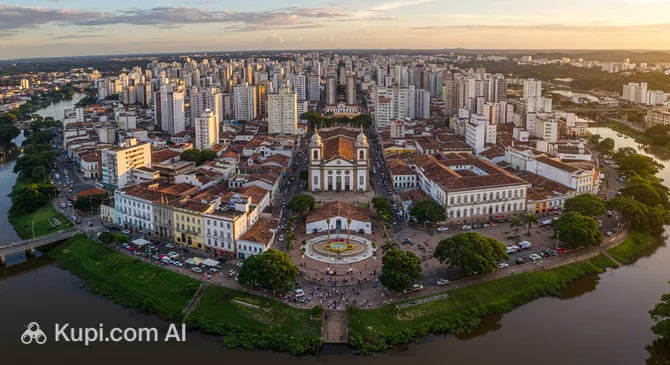
São Leopoldo is a cozy industrial and residential hub located in the southern Brazilian state of Rio Grande do Sul. The city is an important part of the Porto Alegre metropolitan area and is famous for its unique atmosphere, where Latin American flair intertwines with deep European roots. With a population of about 214,000, it harmoniously combines the dynamics of an economic center with the tranquility of a suburb.
Geographically, the city stretches along the banks of the navigable Rio dos Sinos, which historically played a key role in the region's development. São Leopoldo rightfully bears the proud title of the "cradle of German immigration" in the country. It was here in 1824 that the first German colonists settled, laying the foundation for the city's rich cultural heritage, which can still be traced today in the local architecture, traditions, and street names.
Sao Leopoldo. Illustration.
Source: Kupi.com AI
For travelers, São Leopoldo is primarily interesting as a starting point for exploring the history of colonization in the south of the country. Key attractions include the Museum of the Train and the Visconde de São Leopoldo Historic Museum, which preserve the memory of the first settlers. Despite its industrial status and developed leather and shoe production, the city retains the charm of old Europe in the middle of the tropics, inviting guests to touch the living history of the region.
Weather Overview
The climate in São Leopoldo is classified as subtropical, which means warm summers and fairly cool winters by Brazilian standards. The hottest month is usually January, when average daytime temperatures stay around 25°C, often rising to 30°C. During this time, humidity is high, and refreshing short-lived showers are frequent.
The winter months, especially July, bring coolness: average temperatures drop to 15°C, and at night it can be around 10°C. Precipitation is distributed fairly evenly throughout the year, but spring (September and October) is often the rainiest season. When planning your trip, keep in mind that the weather in the city can be changeable due to the influence of Atlantic winds.
Expect a warm summer with occasional thunderstorms and moderately cool winters requiring light outerwear. Proximity to the Rio dos Sinos adds humidity, making the summer heat more noticeable, but the high amount of greenery and open spaces help make temperature peaks easier to bear.
Average monthly temperature
Average monthly precipitation
Interesting Facts
São Leopoldo is officially considered the "Cradle of German Immigration" in Brazil; it was founded on July 25, 1824, by the first group of 39 German immigrants.
The city was named in honor of Empress Maria Leopoldina, the wife of Emperor Pedro I, who personally supported the settlement of Europeans in these lands.
Local residents are often called not only by the official term "leopoldense" but also by the colorful nickname "capilé".
The Rio dos Sinos, which flows through the city, was once the main transport artery used to deliver agricultural products and leather goods to the state capital.
São Leopoldo has a very high population density for its region — over 2,000 people per square kilometer, giving its center a dynamic urban look.
How to Get There
São Leopoldo is a major transport hub in the Porto Alegre metropolitan area, making it easily accessible for travelers. The city is located just 30–40 kilometers from the capital of Rio Grande do Sul, and the main connection between them is via the busy BR-116 and RS-118 highways. A trip by car or intercity bus usually takes about 40–60 minutes, though travel time can increase to an hour and a half during peak hours due to heavy traffic.
For those planning to get to São Leopoldo from further away, the nearest major air hub is Salgado Filho International Airport in Porto Alegre. From the airport, the city center can be reached by taxi, transfer, or the metro (Trensurb), which conveniently links the airport to São Leopoldo. A taxi ride takes about an hour depending on traffic conditions.
Rail communication in the region has a rich history, commemorated by the local Museum of the Train; however, today the main load is carried by the Trensurb line, which functions more like a surface metro. This is the fastest and most reliable way to move between the cities of the metropolitan area, allowing you to avoid road congestion. The city's main station provides easy access to the central districts.
Station
Passenger traffic
Distance
Luiz Pasteur station
1
8 km
2
24 km
2
24 km
Sítio Ferroviário de Caxias do Sul
1
65 km
1
229 km
Main Attractions
Although São Leopoldo is considered an industrial suburb, it is home to several iconic landmarks reflecting its rich past. The primary symbol of German heritage is the Visconde de São Leopoldo Historic Museum, which houses rare exhibits, documents, and personal belongings of the first settlers who arrived here in the early 19th century. This site offers a deeper understanding of how the identity of the southern states was formed.
Fans of engineering and industrial romance should definitely visit the Museum of the Train (Museu do Trem). Located on the site of an old railway station, it tells the story of the development of the transport links that once connected the region's farmlands with major ports. Here, you can see vintage locomotives and carriages that have become part of Brazilian transport history.
The city's religious architecture is represented by important sites such as Igreja Matriz and Igreja Betânia. These churches are not only spiritual centers but also architectural landmarks. Another significant place for pilgrimage and walks is the Padre Reus monument, dedicated to a local religious figure whose work left a deep mark on the hearts of the residents.
Local Cuisine
The gastronomic scene in São Leopoldo is a fascinating mix of hardy German traditions and passionate Brazilian cuisine. The heritage of the first colonists is felt everywhere: local restaurants will certainly offer you schnitzel, juicy German sausages, and classic sauerkraut. However, these dishes have long since adapted to local tastes, becoming part of the unique culinary map of Rio Grande do Sul.
It is impossible to imagine a visit to this region without visiting a churrascaria. The tradition of cooking meat over charcoal is elevated to a cult here. Meat delicacies prepared in the Gaucho style are often served with a European accent, making the meal particularly interesting. It is also worth visiting local bakeries (padarias), where German pastries sit alongside traditional Brazilian cheese bread — pão de queijo.
Among drinks, the leaders are local beer, brewed according to old recipes, and the herbal tea traditional to southern Brazil — chimarrão (mate). Locals are very proud of their brewing skills, so missing a glass of craft beer in one of the downtown bars would be a mistake. The atmosphere in local establishments is usually simple and welcoming, oriented towards family lunches and friendly gatherings.
Travel Tips
A trip to São Leopoldo will offer you a unique look at Brazilian history, and these practical tips will help make your journey as comfortable and safe as possible.
Clothing and Essentials: Depending on the season, the weather can change. In summer, bring light cotton clothing, and for winter (June–August), be sure to pack a windbreaker or a light coat, as it can get chilly in the south. Comfortable shoes are a must for visiting museums and walking.
Transport: The fastest way to get to Porto Alegre is the Trensurb surface metro. For traveling within the city, it is convenient to use ride-hailing apps (Uber and others); they work reliably and are inexpensive.
Finances: The local currency is the Brazilian Real (BRL). Cards are accepted in almost all shops and restaurants, but it is worth having some cash for small purchases at markets.
Health and Safety: During the day, the city center is quite safe. However, as in any large Brazilian suburb, try not to display valuables or expensive gadgets on the street. At night, it is better to use a taxi.
Communication: The main language is Portuguese. English is not understood everywhere, so it is useful to learn a few basic phrases or have an offline translator handy. A SIM card can be bought in shopping malls from major operators (Vivo, Claro, Tim).
Local Etiquette: Residents of the south (Gauchos) are very hospitable. Handshakes are common for greetings, and in informal settings, a light hug is typical.
What to Avoid: Try not to plan important trips to Porto Alegre during rush hours (7:30 to 9:00 AM and 5:30 to 7:00 PM), as traffic jams on the BR-116 can seriously disrupt your plans.
Additional Tip: Be sure to try the local chimarrão (mate) — it is an important social ritual. If you are offered it in someone's home, it is polite to try at least a sip.
São Leopoldo is a city with deep roots and an open heart. By following these simple rules, you can fully enjoy its hospitality and history.
Entertainment & Nightlife
Nightlife in São Leopoldo is generally quiet and local, reflecting the city's status as a cozy residential area. Most activity is concentrated in the city center, where several bars and cafes are located. Locals often spend their evenings in venues offering live music — ranging from traditional Brazilian pagode to acoustic rock.
For those seeking loud parties and large-scale nightclubs, the most popular option is a trip to neighboring Porto Alegre, which can be reached in just 40 minutes. However, even in São Leopoldo, it is worth visiting small beer bars (cervejarias) that serve excellent local beer brewed according to traditional recipes inherited from German ancestors.
During the day, the city's entertainment program includes visiting museums or walking by the Rio dos Sinos. From time to time, the city hosts festivals dedicated to German traditions, featuring dancing, music, and fairs that draw residents from across the metropolitan area. If you plan a late-night stroll, it is recommended to use official taxis or popular ride-hailing apps for maximum comfort and safety.
Parks & Museums
Despite the high building density, São Leopoldo offers several interesting locations for those who appreciate history and quiet walks. A key cultural site is the Visconde de São Leopoldo Historic Museum. This museum is a true treasure trove for those who want to learn about the era of German colonization. Its exhibitions detail the daily life, hardships, and successes of the first immigrants who transformed these lands into a prosperous region.
Another important point on the map is the Museum of the Train (Museu do Trem). It is located in the building of the state's first railway station and houses a unique collection of vintage rolling stock. This place will be interesting not only for children but also for adults, as it clearly demonstrates the technical progress of the region. The museum is surrounded by a small open space where it is pleasant to spend time studying the giant mechanisms of the past.
The city's green zones are mainly concentrated along the banks of the Rio dos Sinos. Although there are no large-scale national parks here, city squares and the waterfront serve as places for relaxation for local residents. Moderate greenery and proximity to the water create a pleasant microclimate for walking in the shade of trees, allowing you to briefly escape the urban noise and industrial landscapes.
Getting Around
The public transport system in São Leopoldo is oriented towards the daily travel of residents within the metropolitan area. The basis of urban communication is bus routes that connect various parts of the city and neighboring municipalities. Service intervals are usually between 15 to 30 minutes, though it is worth considering that buses can be overcrowded during morning and evening hours due to the large flow of people commuting to work in Porto Alegre.
The pride of the region's transport system is Trensurb — a modern surface railway operating on a metro principle. It connects São Leopoldo with the state capital, the airport, and other cities. This is the most convenient way for a tourist to get around: trains run frequently, avoid traffic jams on the BR-116, and are air-conditioned. Tickets can be purchased at ticket offices or vending machines at the stations.
As an alternative to public transport, taxi services and popular ride-hailing apps are very active in the city. This is a convenient option for traveling in the evening or if your destination is far from the metro lines. In the central part of the city, you can get around on foot, but due to the large area of the municipality, it is better to use transport to see distant attractions or industrial zones.
Accommodation
The accommodation market in São Leopoldo is primarily geared towards business travelers and those visiting the city for manufacturing-related business or to see relatives. In the city center and near major transport interchanges, you can find several mid-range hotels offering comfortable conditions, Wi-Fi, and breakfast at very affordable prices.
Since the city is a large residential suburb, there are also many offers for apartment rentals and guesthouses. This is an excellent option for those planning to stay in the region for a longer period or who prefer a home-like atmosphere over hotel standards. Such options are often more budget-friendly and allow you to better feel the rhythm of life of the local population.
When planning a trip, keep in mind that demand for housing increases during regional festivals or major industrial exhibitions. It is recommended to book hotels in advance through popular international services to ensure the best choice and price. Overall, price ranges here are significantly lower than in the tourist centers along the Brazilian coast.
Nearby Cities
São Leopoldo serves as an excellent starting point for exploring the surroundings, as it is located in the heart of a densely populated and economically developed region. Just a ten-minute drive away is the city of Novo Hamburgo, known as the national shoe capital. Tourists go there for outlet shopping and to visit historical neighborhoods with preserved imperial architecture.
Just a few kilometers away is the city of Esteio, famous nationwide for hosting Expointer, a major agricultural exhibition. If your trip coincides with the fair, it will be an unforgettable experience of immersion into Brazilian rural culture. Also worth noting is Canoas, a large center with many shopping complexes and parks.
Exploring neighboring municipalities will allow you to see the diversity of Rio Grande do Sul — from industrial giants to quiet colonial towns. Thanks to a developed road system and frequent suburban train service, such trips are easily planned and do not require much time.
Shopping & Souvenirs
Shopping in São Leopoldo will primarily delight those looking for high-quality leather goods and footwear. The city, like its neighbors in the metropolitan area, has a long-standing specialization in the footwear industry. In small shops in the city center and at factory outlets, you can find locally made products at very attractive prices — from elegant shoes to durable accessories.
Main shopping activities are concentrated on the central streets, where clothing stores, appliance shops, and souvenir stalls are tightly packed. For more extensive shopping, head to local shopping malls, which feature both Brazilian and international brands. The atmosphere here is businesslike and practical, without excessive tourist fanfare.
If you are looking for unique gifts, look for goods with German flavor — such as a souvenir beer mug or handicrafts reflecting the history of the colonists. Local markets also offer fresh local produce and traditional mate tea. Shops usually operate from 9:00 AM to 6:00 PM or 7:00 PM, while large shopping centers stay open until late evening. Bank cards are accepted almost everywhere.