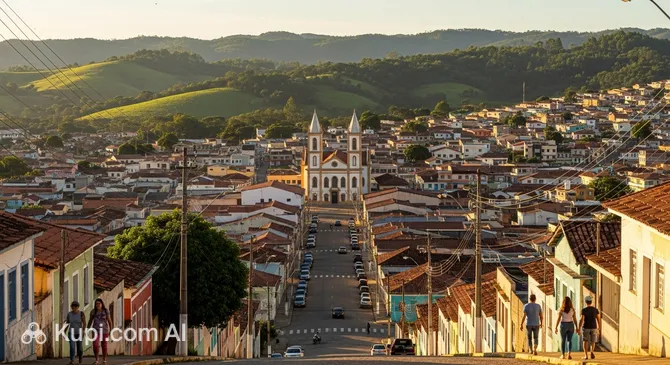
While Teófilo Otoni is primarily driven by commerce and the gemstone trade, the city and its surroundings offer refreshing pockets of greenery and distinct cultural landmarks. Visitors can explore a mix of urban sanctuaries and natural wonders that provide a break from the busy streets, alongside historical sites that tell the story of the Mucuri Valley's development.
The city's most famous green space is undoubtedly Praça Tiradentes. Far more than just a central square, this area functions as an urban park and ecological sanctuary in the heart of the city. Its dense canopy of trees provides welcome shade, but the real attraction here is the resident population of sloths ("bichos-preguiça"). These gentle creatures live freely in the branches, often descending slowly to the delight of tourists and locals. It is a unique spot where nature and urban life coexist harmoniously, perfect for a relaxing afternoon walk.
For those willing to venture slightly further afield, the Pedra da Boca offers a spectacular natural experience. Located a short drive from the city center, this massive rock formation is a geological landmark of the region. It is an ideal destination for nature lovers and hikers seeking panoramic views of the valley. The site is not a manicured park but a rugged natural area that allows visitors to appreciate the raw beauty of the Minas Gerais landscape.
In terms of cultural heritage, Teófilo Otoni does not rely on traditional enclosed museums but rather displays its history in the open air. A key cultural monument is the Maria Fumaça, a preserved steam locomotive located in Praça Tiradentes. Known affectionately as "Poxichá," this engine is a tribute to the historic Bahia-Minas Railway, which was once the economic lifeline of the region. It serves as an open-air memorial, allowing visitors to touch a piece of history and understand the city's past connection to the coast.
Another significant cultural and architectural landmark is the Catedral Imaculada Conceição. Dominating the cityscape near the main square, this cathedral is a testament to the city's religious and colonial roots. Its architecture features European influences, a nod to the German immigrants who helped settle the area. Inside, the peaceful atmosphere and beautiful religious art offer a quiet space for reflection and an insight into the local faith and artistry.
For an authentic local experience, observe the informal Gemstone Market that takes place daily on the sidewalks around the city center. While not a museum, it is a "living gallery" of the city's culture. Here, you can watch independent prospectors and traders showing off raw emeralds, aquamarines, and tourmalines wrapped in simple paper. It is a fascinating, unpolished glimpse into the industry that earned the city its sparkling nickname.