Support

Silistra

About

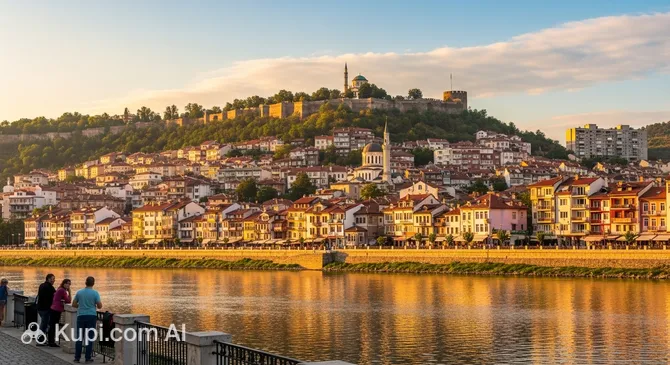
Silistra is a picturesque port city situated on the banks of the majestic Danube. It is a place where cultures and eras meet, creating a unique atmosphere of tranquility and historical depth. Located in the far northeast of the country, right on the border with Romania, the city serves as a unique gateway through which many travelers discover Bulgaria.

Silistra. Illustration.
Source: Kupi.com AI

Its geographical position in the fertile Dobrudja region and its proximity to the river define a mild climate and beautiful landscapes. With a population of just over 43,000, the city is cozy and free from the hustle and bustle of major metropolises. Special attention should be paid to the rich history of Silistra, which has its roots in ancient times when the important Roman fortress of Durostorum flourished on this site.

The city attracts tourists with its unique architectural and archaeological monuments. One of the main gems is the 4th-century Roman Tomb, famous for its well-preserved frescoes. It is also worth climbing up to the Medzhidi Tabia Fortress—one of the best-preserved Ottoman-period fortifications, offering a panoramic view of the city and its surroundings.

For lovers of peaceful strolls, the Danube Park is a real treat—one of the oldest public parks in the country, where you can enjoy the fresh river air and beautiful sunsets. Silistra is an excellent choice for those who want to experience ancient heritage and relax away from the busy tourist routes.

Weather Overview

The climate in this Danube city is moderate continental, with clearly defined seasonal changes. Summers are usually hot and sunny: in July and August, average daytime temperatures reach 30°C, creating excellent conditions for relaxing by the river. However, it's worth noting that June is often the wettest month of the year, with up to 11 days of precipitation.

Winters in the region are cool but generally without extreme frosts. In January and December, temperatures average between 0°C and +6°C, although light frosts are possible at night. Expect a warm summer with occasional rain and cool, relatively dry winters. The most comfortable months for long walks are considered May and September, when the air warms up to a pleasant +20...+22°C.

Precipitation is moderate throughout the year, with August and September being the driest months (only about 4 rainy days). To know exactly what clothes to bring, we recommend checking the current weather in Silistra before starting your journey.

Average monthly temperature

Average monthly precipitation

Interesting Facts

Beyond its famous architectural monuments, Silistra hides surprising facts and records that make visiting this city even more memorable. Here are a few details that will help you look at this Danube port from a new perspective:

  • The country's first public park. It was here, on the banks of the Danube, that the "Danube Garden" was laid out in 1870. It is the oldest city park in Bulgaria, where century-old trees still grow, some of which have protected natural status. A walk here is literally a journey through time.

  • Birthplace of the "Last of the Romans." The famous general Flavius Aetius was born in ancient Durostorum (the Roman name for the city). He entered world history as the victor over the Huns at the legendary Battle of the Catalaunian Plains, managing to stop the invasion of Attila himself and save the Western Roman Empire from an early collapse.

  • Apricot Capital. The region is famous for its fruit orchards, and Silistra is often called the country's "apricot garden." Local varieties are considered among the best in the Balkans, and traditional apricot rakia from this area is a signature brand and a popular souvenir.

  • A bird paradise next door. Just a few kilometers from the city lies the Srebarna Biosphere Reserve—a UNESCO World Heritage site. It is one of the few places in Europe where rare Dalmatian pelicans nest, making Silistra’s surroundings a true mecca for ornithologists and nature lovers.

How to Get There

When planning a trip to this cozy Danube city, it's worth thinking about your route in advance, as there are no direct flights here. Silistra is located at a junction of transport routes, and you can get here in various ways by combining flights with ground transportation. You can find all the ways to get to the city in more detail on a separate page, while below we will look at the main transport hubs nearby.

The nearest large airports are located in neighboring cities and even in neighboring Romania, providing travelers with several options. There is no airport in the city of Silistra itself, but you can fly into Mihail Kogălniceanu Airport (CND) in Constanta, which is approximately 101 km from Silistra. A taxi or transfer from there will take about 2 hours and 50 minutes.

Another popular option is Henri Coandă International Airport (OTP) in Bucharest. This is the largest aviation hub in the region with huge passenger traffic. The airport is located in Bucharest, about 106 km from Silistra. The journey by car will take approximately 3 hours.

Many tourists also choose Varna Airport (VAR)—an important air gateway to the Bulgarian coast. It is located in the city of Varna, at a distance of about 108 km. The road to Silistra will take about 3 hours.

For convenience, here is summary information on the main airports:

AirportPassenger trafficDistance
Kogalniceanu Airport113 544101 km
Bucharest Henri Coanda International Airport15.9 mln106 km
Varna Airport1.5 mln108 km
Burgas Airport1.8 mln173 km
Veliko Tarnovo South Bus Station750 000175 km

Railway communication in the region is also developed, although the nearest major international hubs are some distance away. In the list of stations, Silistra itself does not have a major international railway hub, but you can arrive at the North Railway Station (Gara de Nord) in Bucharest, which is about 102 km from Silistra. From there, you can reach the city by taxi or bus in about 2 hours and 50 minutes. This is one of the busiest stations in this part of Europe.

Below is a table with the nearest railway stations that may be useful when planning a complex route:

StationPassenger trafficDistance
Bucharest North Station10 mln102 km
Buzau Railway Station119 km
Focșani Railway Station176 km
Izmail Railway Station185 km
Mărășești Railway Station196 km

Main Attractions

Silistra possesses a rich cultural heritage, and exploring the city should begin with its historical monuments. The Medzhidi Tabia Fortress is rightfully considered the city's main symbol. It is the best-preserved Ottoman-era fortification in the country. Built in the mid-19th century based on the design of a German military engineer, the fortress impresses with its massive stone walls and underground tunnels. Today, it houses a museum exhibition featuring antique weapons, documents, and everyday items from that time, while the ramparts offer a magnificent panorama of the city and the Danube River.

Another unique site is the Roman Tomb, dating back to the 4th century AD. This monument of ancient architecture is famous for its stunning frescoes that cover all the internal walls and the vault. The "a secco" technique depictions show scenes from the life of Roman nobility, portraits of the tomb owners and servants, as well as hunting motifs. The tomb is considered one of the most valuable examples of Late Antique art in the Balkans and provides a glimpse into the era of ancient Durostorum.

For those wishing to delve deeper into the region's history, the Archaeological Museum is a must-visit. Its halls house an impressive collection of artifacts found during excavations in Silistra and its surroundings. Here you can see unique Roman helmet-masks, jewelry, statues, and one of the largest collections of ancient sundials. The museum vividly demonstrates how important and prosperous this city was throughout the millennia.

Just a few kilometers from the city lies a natural landmark of world significance—the Srebarna Biosphere Reserve. This lake and its surrounding areas are included in the UNESCO World Heritage List. The site is known as home to a colony of rare Dalmatian pelicans and many other waterfowl. For tourists, there are eco-trails and a museum with an observation center, where you can observe the lives of birds in their natural habitat.

Local Cuisine

The cuisine of Silistra is a harmonious blend of the Danube's river gifts and the hearty traditions of the Dobrudja region, which is often called the breadbasket of the entire country. The gastronomic scene here is characterized by simplicity, fresh ingredients, and the incredible taste of homemade dishes. As the city is located on the border, the local menu also shows a slight influence from neighboring Romania, which adds a special flavor to the food.

The main culinary treasure of the city is undoubtedly the river fish. Travelers should definitely order fish chorba (a thick fish soup)—here it is prepared according to special fisherman's recipes using several types of fresh fish and aromatic herbs. Also popular are catfish, carp, or pike, prepared on the grill ("skara") or baked in clay pots with vegetables. In local restaurants, the fish is always fresh, often caught just hours before serving.

The second essential element of local cuisine is pastries. The Dobrudja region is famous for its wheat, so bread and pies are held in high esteem here. Try the authentic Dobrudjan banitsa. Unlike other regions, it is often juicier here, with a rich filling of sirene (feta-style cheese), eggs, and sometimes milk, making the pastry incredibly tender. This dish is perfect for a hearty breakfast or a snack.

When it comes to drinks, it's impossible not to mention the region's top brand. Silistra is known for its extensive apricot orchards, so the city's signature drink is kaysieva rakia (apricot brandy). Locals take pride in the quality of this strong drink, which features a mild taste and a pronounced fruity aroma. Wine lovers should pay attention to white varieties from the vineyards of the Danubian Plain, which pair perfectly with fish dishes.

The dining culture in Silistra encourages slow relaxation. Locals prefer to dine in cozy mehanas (traditional taverns) or restaurants located along the Danube embankment. Here, you can enjoy not only delicious food but also magnificent sunsets over the river. In summer, life hums on outdoor terraces, and you should buy fresh local fruits at city markets—especially apricots during the season, which are considered among the sweetest in Bulgaria.

Travel Tips

Welcome to Silistra—a cozy port on the Danube where history intertwines with natural beauty! To ensure your journey to this corner of Bulgaria is as comfortable and hassle-free as possible, we have prepared a list of useful recommendations to help you feel confident from the first moments of your stay.

  1. Clothing and Seasonality. The climate here is moderate continental, so in summer, pack light clothes made of natural fabrics and a hat—the sun can be very active. However, evenings by the river can be cool even in July, so a light windbreaker will be useful. For walks around the Medzhidi Tabia fortress and parks, be sure to bring comfortable flat shoes, as you will be walking on cobblestones and trails.

  2. Getting Around. Silistra is a compact city, and its historical center is best explored on foot. Public transport consists of buses, but you may only need them for trips to outlying districts. If you need a taxi, use official yellow cars with meters. It's better to call a car via a dispatcher or an app to avoid "tourist" rates.

  3. Money and Payment. The national currency is the Bulgarian Lev (BGN). Although large supermarkets, hotels, and restaurants accept bank cards, cash is vital for visiting museums, buying souvenirs, paying for taxis, or shopping at the market. It is safest to exchange currency at bank branches in the city center, avoiding street exchange offices. Tips in cafes are welcomed at around 10% of the bill.

  4. Health and Comfort. Since the city is located directly by the water, there can be many mosquitoes during the warm season. Be sure to bring repellents, especially if you plan evening walks along the embankment or a visit to the Srebarna reserve. Pharmacies are marked with "Аптека" (Apteka) signs, but there are few 24-hour spots, so it's better to have a basic first-aid kit with you.

  5. Language and Communication. The official language is Bulgarian. The younger generation often speaks decent English, and older people may understand Russian. Learn a few phrases, like "Dobăr den" (Good day) and "Blagodarya" (Thank you)—this always wins over the locals. A SIM card for mobile internet can be purchased at operator offices (A1, Yettel, Vivacom) with a passport; Wi-Fi is available in almost all cafes.

  6. Local Etiquette. Keep in mind the famous Bulgarian quirk of non-verbal communication: here, a nod of the head often means "no," while shaking the head from side to side means "yes." This can be confusing, so for important questions, it's better to confirm the answer with words. Greetings are usually accompanied by a handshake, and communication with locals is characterized by openness and friendliness.

  7. What to Avoid. Do not swim in the Danube in non-designated areas—the river current here is powerful and unpredictable, which can be dangerous even for experienced swimmers. Also, try to avoid political discussions; it's better to focus on culture, cuisine, and natural beauty, which are always positively received.

  8. Bonus: Proximity to the Border. Silistra is literally on the border with Romania. There is a ferry crossing across the Danube to the Romanian city of Călărași. If you have time and your documents allow for border crossing (usually a Schengen visa or a biometric passport is enough), you can take a mini-trip to the neighboring country in just 20–30 minutes.

We hope these tips help you plan the perfect trip to Silistra. This city knows how to charm with its tranquility and hospitality, so relax and enjoy every moment of your Danube adventure!

Entertainment & Nightlife

Nightlife in Silistra is strikingly different from the noisy parties at major Black Sea resorts. Here, an atmosphere of coziness and soulfulness prevails, and evening entertainment is focused more on pleasant conversation with friends than on non-stop dancing until morning. The city falls asleep quite early, but that doesn't mean a tourist will be bored after sunset.

The epicenter of evening activity remains the Danube embankment and the adjacent Danube Park. During the warmer months, this is where the traditional evening promenade takes place: locals and visitors stroll leisurely along the river, enjoying the cool breeze and views of the Romanian shore. Life hums in the numerous cafes and bars with open terraces located right by the water.

The style of local establishments can be described as "democratically casual." There is no strict dress code or face control. Most night venues are a hybrid of a cafe and a bar: during the day, people drink coffee here, and in the evening, they order cocktails and listen to music. For fans of more colorful recreation, traditional mehanas (national-style restaurants) are available, often featuring live music and serving hearty local cuisine.

If you are looking for a place to dance, the choice is limited to a few clubs that come alive mainly on Fridays and Saturdays. The crowd is diverse but friendly. The primary musical background consists of popular Balkan and European hits. Prices in Silistra’s establishments will be a pleasant surprise: the average bill for an evening with drinks is significantly lower than in Varna or Sofia.

In terms of safety, Silistra is one of the quietest cities in Bulgaria. Walking through the lit center and along the embankment is safe even late at night. If you stay out late in a remote area, it's better to call a taxi. Official taxi cars are painted yellow, and a trip across the city is inexpensive. You can hail a car on the street, but it's more reliable to ask a bartender to call one for you.

During the day, the city's cultural life offers more classical entertainment. Art lovers should visit the Art Gallery, located in the beautiful building of a former Pedagogical School, which houses a rich collection of Bulgarian painting. Theater enthusiasts can visit the Sava Dobroplodni Drama Theater, which is the center of performing arts in the region and regularly stages interesting plays.

Parks & Museums

Silistra is a city where nature and history are intertwined in a wonderfully harmonious way, offering tourists not only picturesque walks by the river but also a deep dive into the region's cultural heritage. The green zones here are not just places to relax, but true monuments of landscape art, and the museums house treasures of significance for all of Europe.

The city's main natural gem is undoubtedly Danube Park. Founded back in 1870, it is the oldest city park in the country and holds the status of a monument of park and garden art. Walking here is a true aesthetic pleasure: shady alleys lead right to the edge of the Danube, revealing magnificent views of the river and the neighboring Romanian shore. In the park, you can see not only century-old trees planted over a hundred years ago but also ruins of ancient fortress walls integrated into the landscape, giving the place a special atmosphere.

Wildlife lovers should head slightly further from the center to the Srebarna Biosphere Reserve. Although located in the city's outskirts, it is the region's key natural attraction and a UNESCO World Heritage site. This place is ideal for ecotourism and bird watching, as it is here that the rare Dalmatian pelicans nest. Comfortable eco-trails and observation platforms are available for visitors, allowing them to enjoy the silence and untouched beauty of the wetlands.

A cultural itinerary through Silistra is unthinkable without a visit to the Archaeological Museum. Its collection is considered one of the richest in the country and covers periods from prehistoric times to the Middle Ages. Of particular interest are Roman-era exhibits found on the territory of ancient Durostorum: a unique chariot, statues, gold jewelry, and one of the largest collections of Roman stone sundials. This place is a must-visit for anyone who wants to understand the scale of the city's historical significance.

Art connoisseurs should stop by the Silistra Art Gallery. It is located in the building of the former Pedagogical School, built in the Late Secession style, which is an architectural masterpiece in itself. Inside is an extensive collection of Bulgarian painting, graphics, and sculpture from the 19th and 20th centuries. Here you can see works by famous masters whose art reflects the spirit and traditions of the Bulgarian people.

Another important site is the museum exhibition in the Medzhidi Tabia Fortress. This is not just a fortification but a full-fledged open-air museum. Walking through the stone casemates and underground tunnels, you will see collections of weapons, uniforms, and documents from the time of the Ottoman Empire and the Russo-Turkish wars. The atmosphere of the fortress literally transports you to the 19th century and makes you feel like a defender of the city.

Insider Tip: While walking through Danube Park, look for the massive old oak tree that locals call "The Old Oak." It is said that if you stand under its canopy and make a wish, it will surely come true. Also, don't miss the small archaeological excavations right in the park—these are the remains of a palace complex from the time of the First Bulgarian Kingdom, available for public viewing.

Getting Around

The public transport system in Silistra is characterized by its simplicity and compactness, which perfectly matches the size of this cozy Danube city. You won't find a metro, trams, or trolleybuses here. The main way of moving around for locals and tourists is buses and minibuses (marshrutkas) that run between the center, residential areas, and suburban zones. Thanks to the short distances, the transport network works efficiently, though it lacks the high frequency of service found in capitals.

To pay for travel on city buses, you don't need to buy special transport cards or download apps. Tickets are purchased directly on the bus from the conductor or the driver upon boarding. The fare is very affordable, usually around 1–1.50 Leva. It is important to have small cash (coins or small bills), as bank card payments are not yet common in local transport, and change for large bills might not be available.

Public transport operating hours are oriented toward the rhythm of a provincial city. Buses start running early in the morning, around 06:00, but finish their service quite early—after 20:00 or 21:00, service intervals increase significantly, and some routes stop altogether. Tourists should keep this in mind when planning evening walks. Schedules are usually posted at main stops, but they may be subject to minor delays.

Taxis are a popular and affordable alternative to buses. Official taxi services operate in Silistra with yellow cars equipped with meters. Trips around the city are inexpensive, making taxis an excellent option for moving with luggage or late at night. Cars can be found at special stands in the center, near the bus station, or called by phone. Taxi apps don't work as stably here as in large metropolises, so having a local dispatcher's number is an advantage.

Given the flat terrain of the city and its location along the river, cycling or walking is an excellent way to get around. The historic center and the Danube embankment are designed for leisurely strolls. While there is no extensive automated bike-share network, bicycles can often be rented from some hotels or private rental points near the park area to comfortably explore the scenic surroundings.

Accommodation

The choice of accommodation in Silistra is fairly compact but diverse enough to satisfy the needs of different categories of travelers. The city is not overloaded with massive tourist complexes; instead, it is dominated by cozy middle-class hotels, many of which have been recently renovated, as well as small family-run hotels and guest houses. For those who prefer home comfort and independence, a wide selection of short-term rental apartments is available.

The most popular and scenic area to stay is the zone along the Danube embankment and near the Danube Park. Choosing a hotel here gives you the chance to enjoy beautiful sunsets over the river and the silence of the park alleys right at your doorstep. If proximity to cultural sites and infrastructure is more important to you, consider options in the historic center. From here, you can walk to the Archaeological Museum, main shops, and restaurants.

The price range in Silistra can be described as budget and mid-range. The cost of a night's stay here is generally lower than in major sea resorts in Bulgaria. Despite the city's quiet pace of life, demand for quality riverside accommodation increases during the peak summer season (July-August). Therefore, we recommend booking rooms in advance using popular online aggregators. This guarantees you the best choice and comfortable accommodation upon arrival.

Nearby Cities

For those who want to explore the surrounding area, Silistra serves as an excellent starting point for day trips to several interesting nearby locations:

Just over an hour's drive away is Dobrich, often called the "breadbasket of Bulgaria." Here you should visit the "Old Dobrich" ethnographic complex, where you can learn about traditional crafts, see masters at work, and immerse yourself in the atmosphere of 19th-century urban life.

Lovers of exquisite architecture should definitely head to Ruse. This city on the Danube is known as "Little Vienna" due to its magnificent Neo-Baroque and Rococo buildings. It is one of the country's most elegant cultural centers, offering a rich program for history buffs.

For a change of scenery, you can go to the Black Sea coast to the city of Varna. Although the journey takes a bit longer, the "sea capital" will reward you with walks in the massive Sea Garden, a visit to the dolphinarium, and an exploration of unique exhibits in the archaeological museum.

CityPopulationDistance
Calarasi65 18111 km
Slobozia45 89150 km
Oltenita24 82250 km
Tutrakan9 07653 km
Fetesti30 21754 km

These nearby destinations provide a good overview of the region's diverse culture and landscapes.

Shopping & Souvenirs

General Overview

Shopping in Silistra cannot be described as large-scale or glamorous—you won't find huge outlets or global fashion house boutiques here. However, this cozy Danube city offers excellent opportunities to purchase high-quality local goods at very reasonable prices. Trade here is focused on residents' everyday needs and the sale of regional products. Silistra is famous for its agriculture, so special attention should be paid to gastronomic shopping: fresh fruit, local wine, and traditional delicacies.

Main Shopping Areas and Streets

The city's main commercial life is concentrated in its central part, especially around the pedestrian zone and Freedom Square. Strolling down Tsar Simeon the Great street and its adjacent side streets, you will find many small shops. They sell Bulgarian and Turkish-made clothing and shoes, cosmetics, jewelry, and household items. This is an ideal place for leisurely shopping combined with viewing the architecture of the city center.

Shopping Centers

Silistra doesn't have the giant shopping and entertainment complexes typical of the capital, but there are several places where shops are gathered under one roof. The most well-known is Central Mall Silistra. It is a compact shopping center housing clothing stores, electronics, a bookstore, and children's goods. Major supermarket chains (Lidl, Kaufland) are also present in the city, where tourists often buy food and drinks at favorable prices.

Markets

The true flavor of Silistra can be felt at the Central City Market. This place is a must-visit, especially during the summer and autumn seasons. Since the Dobrudja region is called the "breadbasket of Bulgaria," the stalls here overflow with the freshest vegetables and fruits. This is where you should look for the famous Silistra apricots, which are considered some of the best in the Balkans. You can also buy fresh Danube fish, homemade honey, nuts, and spices at the market.

Souvenirs

From a trip to Silistra, you should bring back something delicious and authentic. The region's main souvenir is kaysieva rakia (apricot brandy)—the pride of local producers. Apricot jams and preserves are also popular. Don't forget about traditional Bulgarian cosmetics based on rose oil, which can be found in specialized departments and pharmacies. Ceramic items in the Dobrudja style or tablecloths with national embroidery make for great commemorative gifts.

Opening Hours and Payment

Shops in Silistra usually operate from 09:00 or 10:00 to 18:00–19:00. Large supermarkets are open longer, often until 21:00 or 22:00. It's worth noting that on Saturdays, many small shops close earlier (around 14:00), and Sunday is often a day off for them. Bank cards are widely accepted in shopping centers and supermarkets, but cash in Leva is preferred at the market, souvenir kiosks, and small shops.

Tax Free

As in all of Bulgaria, tourists from non-EU countries are entitled to a VAT refund (Tax Free) on purchases over a certain amount (usually from 250 Leva) in a single store. However, in Silistra, the number of shops that support this system and issue the necessary documents is extremely limited. If you plan on making major purchases with a tax refund, it's better to look for "Tax Free Shopping" signs or clarify this possibility with the sellers in advance.
Nearby cities

Reached the end of the page?

That means the route is fully explored