Support

Ancient city of Durostorum - Drastar

About

In the northeast of a country like Bulgaria, right within the modern city of Silistra, lie impressive ruins known as the Ancient City of Durostorum–Drastar. This national archaeological reserve is a unique multi-layered monument where an ancient Roman military camp meets a medieval Bulgarian capital. Founded as early as the 2nd century AD as a key outpost of the Roman Empire on the Danube, the city remained an important center for defense, religion, and culture for centuries.
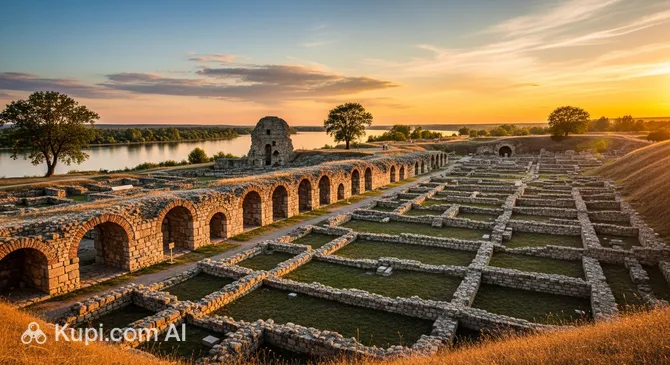
Ancient City of Durostorum–Drastar
Ancient City of Durostorum–Drastar. Иллюстрация. Источник: Kupi.com AI

Today, visitors can see evidence of the former greatness of Durostorum: fragments of powerful fortress walls, remains of Roman baths, and pagan temples. During the era of Emperors Diocletian and Constantine the Great, this fortress was considered one of the most impregnable on the border with the barbarian world. The site is particularly significant because the ancient foundations served as the basis for the medieval city of Drastar, which became the spiritual center of the First Bulgarian Empire.

The reserve covers a significant part of central modern Silistra, turning a walk through the city into a true journey through time. Here, one of the oldest churches in Bulgaria from the 9th century, monumental khan residences, and Byzantine fortifications stand side by side. Durostorum–Drastar is not just an open-air museum, but a place where legends of Roman legionnaires and great Bulgarian rulers come to life.

Contacts

To clarify details before visiting or to organize a group tour, you can use the archaeological reserve's contact information.

How to contactContact
AddressЦентър, ул. „Капитан Мамарчев“ 2, 7500 Силистра, Болгария
Phone+359 86 822 075

What to Do

The main activity in the reserve is a fascinating archaeological promenade. You can stroll freely among the ruins, exploring the northern and southern fortress walls that once protected the city from raids. Special attention should be paid to the remains of the Roman baths and the foundations of the Khan's residence, built during the reign of Khan Omurtag. These stones remember the times when the city was a crucial strategic hub on the Danube.

History and architecture enthusiasts will find it interesting to examine one of the oldest churches in the region, dating back to the 9th century, and the ruins of the basilica in the City Garden. Here, you can see firsthand the traces of the first Bulgarian patriarchate and imagine what the Christian center looked like in the 10th century. The atmosphere of the place invites thoughtful study of information plaques and contemplation of the powerful fortifications of the citadel, which was used by the military until the 19th century.

A visit to the reserve can be perfectly combined with a photoshoot against the backdrop of authentic masonry and a walk along the Danube embankment. Thanks to its high rating and central location, this site has become a popular spot for a quiet cultural holiday. Don't forget to check out the excavation area in the central park, where new artifacts illustrating the daily life of ancient Durostorum residents are often found.

Getting There

The archaeological reserve is located in the heart of Silistra, just a few minutes' walk from the Danube bank. The exact address of the site is ul. "Kapitan Mamarchev" 2. If you arrive in the city by bus or train, the walk from the central station will take no more than 15 minutes (a distance of about 1 km), making the stroll a pleasant start to your historical exploration.

For travelers from other regions of Bulgaria, regular bus services are available from Sofia (the journey takes about 4–5 hours), Varna (3 hours), or Ruse. If you are planning a trip from Romania, you can use the ferry crossing across the Danube from the town of Călărași, which will bring you almost directly to the reserve.

Getting around Silistra itself is convenient on foot or by affordable taxi. For drivers, parking spaces are provided near the historical zone. Using a navigator with precise coordinates will help you quickly find your way through modern neighborhoods to the ancient walls.

Ближайший город: Silistra

History & Facts

The history of this place began with an ancient Thracian settlement, but its true flourishing came in 106 AD, when Emperor Trajan ordered the stationing of the Legio XI Claudia here. Over time, Durostorum transformed into a powerful military and commercial center of the province of Moesia Inferior, receiving the status of a municipium under Marcus Aurelius. The city served as the primary shield of the Roman Empire against barbarian raids, and its fortifications were personally improved by Emperors Diocletian and Constantine the Great.

In the late 6th century, Slavs arrived here and gave the city a new name — Drastar (Дръстър). As part of the First Bulgarian Empire, the city began to play a key role. In the 9th century, Khan Omurtag erected a magnificent residence here and restored the fortress. Drastar acquired special significance after the adoption of Christianity in 865, becoming the cradle of Bulgarian ecclesiastical culture and the residence of the first Bulgarian patriarch, Damian.

Medieval Drastar was so impregnable that it withstood a Mongol siege in 1279. The fortress continued to be an important strategic site during the Ottoman period until it was destroyed in 1810. Today, archaeological finds — from Roman coins to the foundations of patriarchal churches — allow for the majestic appearance of this warrior-city to be reconstructed piece by piece.

Time Needed

To leisurely explore the main ruins and soak in the atmosphere of the ancient city, a typical visitor will need about 2–3 hours. This time is quite sufficient for a walk along the fortress walls, inspecting church foundations, and reading the information stands that reveal details of the archaeological finds.

If you plan to complement your walk with a visit to the Silistra History Museum or a break in the shady City Garden on the banks of the Danube, it is worth allocating half a day (about 4 hours) to get to know the site. This pace will allow you to take great photos and enjoy the river views without missing important historical details.

Working Hours

The "Ancient City of Durostorum–Drastar" Archaeological Reserve is an open space, so it is accessible for viewing 24 hours a day, seven days a week. Visitors are free to stroll through the grounds without time limits, which is particularly convenient for those who enjoy evening walks under decorative lighting.

Since the official opening hours of some enclosed sites within the reserve may vary, it is recommended to check the latest information on the official Silistra tourism website or clarify details at the local information center before your visit.

Круглосуточно

Nearby

Visiting ancient Durostorum is just the beginning of your journey through the history of the region. The surroundings of the reserve are rich in monuments from different eras, from ancient villas to memorials dedicated to the heroes of the Bulgarian National Revival.

NameDistance
Snack Bar Bohemi0.5 km
Archaeological Museum of Silistra0.5 km
Istar Restaurant0.8 km
Grand Harmony Hotel Restaurant & Garden1.2 km
Medzhidi Tabia Fortress2.1 km
Garden Club Restaurant3.7 km

Reached the end of the page?

That means the route is fully explored