Support

Cetatea Aegyssus

About

If you are looking for traces of great empires on the banks of the Danube, then Aegyssus Fortress is a must-see on your itinerary. This archaeological site, located in the city of Tulcea, consists of the majestic ruins of an ancient fortification that served as a defense for the eastern borders of the Roman Empire for centuries. Romania carefully preserves this heritage, allowing tourists to touch history that dates back to deep antiquity.
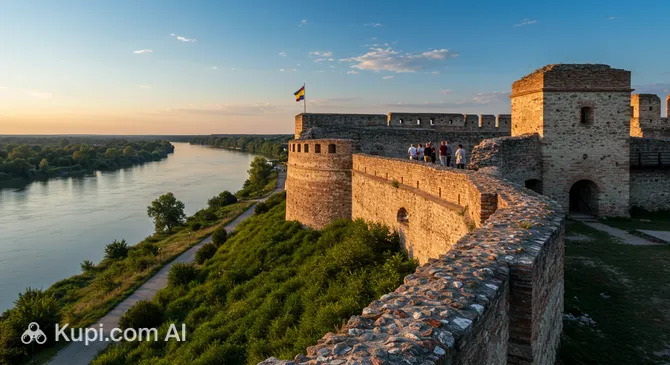
Aegyssus Fortress
Aegyssus Fortress. Иллюстрация. Источник: Kupi.com AI

Today, on the territory of the archaeological complex, you can see the remains of Late Roman defensive walls, the foundations of five powerful towers, and the outlines of two city gates. Of particular interest is the entrance to the large gate, which leads directly to the site where the Roman forum—the center of public and commercial life of the ancient city of Aegyssus—once stood.

In addition to its historical value, the fortress attracts visitors with its location. Situated on a hill, it offers breathtaking views of Tulcea, making it a popular spot for both archaeology lovers and those who appreciate atmospheric walks and panoramic photography. It is a unique place where the city's Greek origins meet Roman architectural genius.

Contacts

For those planning a visit to this historical site, it is useful to check the location in advance. Aegyssus Fortress is situated within the city limits, making it accessible for most tourists.

How to contactContact
AddressStrada Fraților 25, Tulcea, Румыния

What to Do

The main activity at Aegyssus Fortress is, undoubtedly, a thoughtful exploration of the ancient ruins. Visitors can walk along the perimeter of the Late Roman wall, imagining what the city looked like hundreds of years ago. Special attention should be paid to the tower bases and gates—these massive structures still impress with their monumentality and allow one to appreciate the scale of ancient construction.

Photography enthusiasts will find great creative opportunities here: the textured stone walls against the backdrop of the modern city create unique contrasts. Be sure to climb up to the former forum to appreciate the classic Roman layout with its intersecting axes "cardo" and "decumanus," characteristic of many settlements in the Danube region.

For a deeper immersion into the context, we suggest carefully studying the information signs installed on-site. They will help decipher the purpose of individual masonry fragments and tell stories about the daily life of the garrison and the townspeople. Such a walk is often combined with a tour of the sights in the old part of Tulcea, creating a complete historical route before heading to the famous Danube Delta.

Getting There

Reaching the ancient walls is easy, as the fortress is located almost in the center of Tulcea at Strada Fraților 25. If you are staying in the central part of the city, a walk to the archaeological park will take very little time. For navigation, it is convenient to use GPS coordinates or standard online maps.

For travelers arriving from other regions of Romania, such as Bucharest or Constanta, it is most convenient to use a bus or train. After arriving at the Tulcea station, you can take a taxi or use local public transport to reach the historical hill. A taxi ride from the Danube embankment takes about 5–10 minutes.

In summer, many tourists prefer to combine a visit to the fortress with a stroll along the embankment. A walking route allows you to better experience the atmosphere of the port city and gradually immerse yourself in its centuries-old history before seeing the massive stone foundations of ancient Aegyssus.

Ближайший город: Tulcea

History & Facts

The history of this place began long before our era. Tulcea grew on the site of the Greek colony of Aegyssus, founded as far back as the 7th century BC. Later, in the 1st century AD, the settlement was conquered by the Romans and transformed into an important defensive point for the province of Moesia Inferior. The fortress walls we see today date primarily back to the Late Roman period.

Interestingly, the fortress proved remarkably resilient in the face of time and enemies. Archaeological research conducted in the second half of the 20th century showed that the fortifications remained practically unscathed by the Pecheneg invasions in the 11th century. This testifies to the high quality of Roman engineering and the strategic importance of this site on the Danube.

During the Roman era, the fortress played a key role in the chain of fortifications in Dobruja. Archaeologists have found numerous Roman coins and everyday items here, confirming that life in Aegyssus bustled continuously for centuries. Even during the Migration Period, the fortress remained inhabited and functional.

The monument's modern appearance is the result of the meticulous work of scientists. At the end of the 19th century, the famous researcher Grigore Tocilescu began excavations here, during which later medieval layers were removed. Thanks to this, today's visitors can study specifically the ancient layers that reflect the greatness of the Roman Empire on the Lower Danube.

Time Needed

To explore the ruins of Aegyssus Fortress without rushing, most travelers need about 1–2 hours. This time is quite sufficient to take a leisurely stroll along the preserved wall fragments, carefully examine the tower foundations, and take beautiful photos against the backdrop of the ancient stones.

We recommend choosing a relaxed pace for your walk to have time to read the information boards and enjoy the panoramic views of the city and its surroundings from the hilltop. If you are an archaeology enthusiast, you might want to stay longer to examine the masonry and the layout of the ancient forum in detail.

Working Hours

Currently, access to the fortress ruins is free; however, we strongly advise visitors to check the city's official website or local tourist portals before their trip. Operating hours may change depending on the season or archaeological work being carried out on the site.

The best time to visit is during daylight hours, as this allows you to see all the architectural elements in detail and move safely around the archaeological park. Evening hours can also be interesting for those who want to see the ruins in the rays of the setting sun, which creates a special atmosphere.

Nearby

The fortress's location in the city's historical core allows tourists to create a packed itinerary for a full day. Exploring the surrounding area will help you gain additional impressions and see how different eras have intertwined in the appearance of modern Tulcea.

Studying nearby monuments and old buildings will enrich your understanding of the region, as you will find architectural objects from the imperial period alongside modern sculptures dedicated to prominent figures in Romanian history.

NameDistance
Museum of History and Archaeology Tulcea0 km
Danube Delta Eco-Tourism Museum1 km
Tacos King Tulcea1.1 km
Tulcea Promenade1.2 km
Avramide House Museum1.4 km
Saint Nicholas Cathedral1.4 km
Cheers Pub1.5 km

Reached the end of the page?

That means the route is fully explored