Support

Bucharest Henri Coanda International Airport

Airports in the city

About the Airport

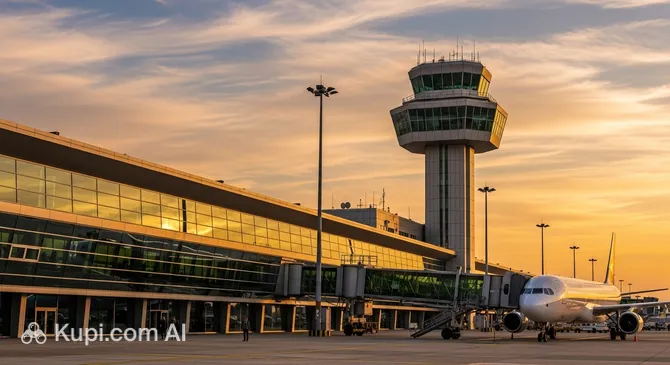
Bucharest Henri Coanda International Airport. Source: Kupi.com Binoculars

Henri Coandă International Airport, often referred to by locals simply as "Otopeni," serves as the main air gateway to Romania and the first step in discovering its rich culture. This bustling aviation hub, named after the famous Romanian pioneer of aerodynamics, welcomes millions of guests annually who are eager to see the architecture of "Little Paris" or embark on a journey to mysterious Transylvania. The modern terminal combines European functionality with comfort, offering travelers convenient navigation and a wide range of services before their flight or immediately after landing.

IATA Code OTP
ICAO Code LROP
City Bucharest
Distance to center 16.5 km
Status International
Passengers per year ~16 million (2024)

Henri Coandă Airport is distinguished by its developed infrastructure and passenger convenience. One of its main features is the excellent transport connection to the city: trains depart directly from the terminal to the North Railway Station (Gara de Nord), allowing you to reach the center of Bucharest in just 20–25 minutes without traffic jams. Express buses also run around the clock, connecting the airport with key points in the capital.

Inside the single yet spacious terminal, divided into departure and arrival halls, travelers will find intuitive navigation. For a comfortable wait, there is free Wi-Fi, various cafes offering a chance to taste Romanian pastries, Duty Free shops, and comfortable business lounges. Particular attention should be paid to the taxi ordering system: special touch terminals are installed in the arrivals area to call official carriers, ensuring safety and fair rates for tourists.

Contact Information

For your convenience, we have compiled the essential contact information for Henri Coandă International Airport.

  • Official Website: www.bucharestairports.ro. The site provides the most up-to-date information on flights, services, and airport regulations.
  • Information Desk Phone: +40 21 204 1000; +40 21 201 4000.
  • Address: Calea Bucureștilor nr. 224 E, Otopeni, 075150, Ilfov, Romania.
  • Email: For general inquiries, you can use the address contact@bucharestairports.ro.
  • Social Media: You can follow news and operational updates on the airport's official social media pages, such as Facebook.
  • Lost Luggage Information: If your luggage has been lost or damaged, you must first contact your airline's Lost & Found service. Airline representative counters are located in the arrivals area.
  • Passenger Support Contacts: For any questions, you can approach the information desks located in the terminals or call the information desk numbers listed above.

How to Get to the Airport

Getting to Henri Coandă International Airport (OTP), the main aviation hub of Romania, from the center of Bucharest can be done in several ways. The choice depends on your budget, time, and comfort preferences. In general, transport links with the capital are well organized.

Public Transport is the most budget-friendly option. The Route 783 express bus runs around the clock between the city center (Piața Unirii) and the airport. The frequency is about 15-20 minutes during the day and less frequent at night. The journey takes 40 to 60 minutes depending on traffic conditions. To pay the fare, you need to purchase an Activ or Multiplu card at STB kiosks. There is no direct metro to the airport yet, but you can travel to the Gara de Nord station and transfer to a train.

A faster and more predictable method is the "Henri Coandă Express" train. It departs from Bucharest's main railway station (Gara de Nord) and reaches the airport terminal in just 20-25 minutes, bypassing all city traffic. Trains run 24/7 with an interval of approximately 40 minutes. Tickets can be bought at station ticket counters, online, or at vending machines. This is an excellent choice for those who value their time.

Taxis and Transfers offer maximum comfort. Official taxis can be ordered via special terminals in the arrivals hall, which guarantees a trip at a fixed rate. Popular ride-hailing services like Uber and Bolt also operate in Bucharest. A trip to the city center will take 30-50 minutes and cost approximately 45-60 Romanian Lei, though the price may vary depending on demand and time of day.

If you prefer complete freedom of movement, you can use a rental car. Offices of many international and local rental companies are present at the airport. The road to the city follows the DN1 national highway. For those arriving at the airport in their own vehicle, parking facilities are provided—both for short-term and long-term stays, located in immediate proximity to the terminals.

Terminals and Map

Henri Coandă International Airport, Bucharest's main airport, has a simple and clear structure, making navigation quite easy for passengers. Essentially, the airport is one large terminal complex, which historically consists of two connected buildings but today functions as a single entity. You will not have to worry about moving between different terminals on shuttles or trains—everything is under one roof.

The terminal structure is divided into two main zones: the Departures Hall (Plecări) and the Arrivals Hall (Sosiri). The Departures Hall is located on the upper level, while the Arrivals Hall is on the lower level. Check-in counters, security checkpoints, and passport control are logically grouped. After passing security checks, passengers enter the general area with Duty Free shops, restaurants, and cafes, from where the boarding gates diverge. The gates are divided into Schengen and non-Schengen zones.

Navigation inside the terminal is intuitive thanks to numerous signs in Romanian and English. Electronic boards with flight information are located throughout the building, allowing you to easily track your flight status and gate number. Since everything is located in one building, the walk from the check-in counter to the furthest gate takes no more than 15-20 minutes at a leisurely pace.

Regarding timing, it is recommended to arrive at the airport at least 2 hours before departure for flights within the Schengen zone and 3 hours before international flights outside of it. During peak hours (early morning and evening), queues for check-in and security may be longer, so it is better to allow extra time. Completing all formalities usually takes between 45 to 90 minutes depending on how busy the airport is.

Airport History

The history of the main airport of Bucharest began long before its transformation into a major passenger hub. Initially, during World War II, a military airbase was located on this site. However, with the growth of civil aviation, the old Băneasa Airport could no longer cope with the passenger flow. In 1965, a strategic decision was made to modernize the military base in Otopeni and build a new, modern international airport for the capital of Romania on its foundation.

Active construction work began in 1968. The runway was extended to 3,500 meters, allowing it to accommodate all types of aircraft of that time, and a new passenger terminal was erected. An interesting fact: even before the official opening, in 1969, the airport received the aircraft of US President Richard Nixon, whose visit served as a catalyst for accelerating the work. Officially, Otopeni Airport was opened for commercial flights in April 1970.

Over the years, the airport has been expanded and modernized multiple times. The first major renovation took place in 1997, when the terminal building was expanded, and separate halls for departing and arriving passengers were created, significantly increasing comfort and capacity. The next important stage was the opening of a new departure terminal in 2012, known as "The Finger," which connected the existing buildings and increased the total area and number of boarding gates.

One of the landmark events in the airport's history occurred in 2004, when it was named after Henri Coandă—a Romanian scientist and pioneer in the field of jet aviation. Today, Henri Coandă International Airport is not only the largest and busiest in the country, serving millions of travelers annually, but also an important symbol of the development of Romanian civil aviation.

Services and Amenities

Henri Coandă International Airport offers passengers a wide range of services and amenities to make waiting for a flight as comfortable as possible. Regardless of the purpose of your trip, you will find everything you need right in the terminal.

For those feeling hungry, the airport has many cafes, bars, and restaurants offering both local Romanian cuisine and popular international formats, including fast food. After a snack, you can go shopping: in the departure area, there are Duty Free shops featuring perfumes, beverages, and confectionery, as well as boutiques with souvenirs, press, and travel essentials.

Free Wi-Fi is available throughout the terminal, allowing you to stay connected or work while waiting for your flight. Numerous power outlets and special stations are provided for charging electronic devices. If you prefer to wait for your flight in a quieter atmosphere, several business lounges are at your service, such as the TAROM Business Lounge and Mastercard Lounge, offering snacks, drinks, and comfortable seating.

For financial matters, the airport has bank branches, ATMs, and currency exchange offices. Passengers with children can use mother and child rooms equipped with changing tables. A medical point also operates around the clock at the airport, ready to provide first aid if necessary.

The airport is fully equipped to serve passengers with reduced mobility: ramps, special elevators, and restrooms are provided. An escort service is available upon prior request to the airline. For business travelers and those with long layovers, hotels such as the Hilton Garden Inn and Vienna House Easy are located right by the airport, and within the terminal itself, you can find work zones and conference rooms.

Where to Eat

At Henri Coandă International Airport, travelers will find various options for a snack or a full meal, suiting different tastes and budgets. Most establishments are located in the departure area after passing security control, but there are also a few cafes in the public area.

In the public area (Landside), before security, the choice is mainly limited to coffee shops and small snack points. This is a convenient option if you are seeing someone off or have arrived at the airport too early. Here you can have coffee with fresh pastries or grab a sandwich.

The main concentration of restaurants, beverage outlets, and cafes is found in the sterile area (Airside), in the main departure terminal. Here, both well-known international fast-food chains and à la carte restaurants are represented. For a quick snack, numerous coffee shops and food courts offering pizza, burgers, and sandwiches are ideal. If you have enough time before your flight, you can settle into one of the restaurants serving international and local cuisine. This is a great opportunity to try Romanian specialties, for example, ciorbă soup or appetizers with cheese.

Regarding special dietary requirements, vegetarian options such as salads, vegetable soups, or meat-free sandwiches can be found in most establishments, which may also be suitable for those seeking Halal-friendly choices. Finding gluten-free or vegan dishes might be more challenging, so it is recommended to clarify the ingredients with the staff. Prices at the airport are generally higher than in the city. The average bill for a full lunch in a restaurant will be higher than for a snack in the fast-food zone. Most establishments in the departure area operate around the clock or adjust their schedule to flight times, so you will not go hungry even during a night departure.

Travel Tips

To ensure your journey through the main airport of Bucharest is as comfortable as possible, we recommend arriving well in advance. For international flights, allow about 3 hours before departure, and for domestic flights or flights to Schengen countries — at least 1.5-2 hours. During peak seasons (summer, Christmas holidays), queues may be longer. Online check-in, offered by almost all airlines, can save significant time. This allows you to go straight to baggage drop or, if you are traveling light, to the security control zone.

Be prepared in advance when passing through security control. All liquids up to 100 ml must be packed in a single transparent bag. Laptops, tablets, and other large electronics must be removed from your bag and placed in a separate tray. Following these simple rules will help avoid delays and speed up the screening process for you and other passengers.

Choosing a seat on the plane depends on your preferences: a window seat offers beautiful views during takeoff and landing, while an aisle seat ensures freedom of movement. Regarding hand luggage, standard rules prohibit carrying sharp objects, flammable substances, and liquids exceeding 100 ml in a single container. Always check baggage and hand luggage allowances on your airline's website, as they may vary.

If you have a connecting flight at Otopeni Airport, carefully study the information on your ticket. Clarify whether you need to collect and re-check your luggage. Typically, when flying with the same airline or alliance, luggage is transferred automatically. Follow the "Transit" signs to quickly find your boarding gate.

Customs control when entering Romania from non-EU countries operates on a "Green" and "Red" channel system. If you have no goods to declare, proceed through the "Green Channel". If you are carrying items exceeding established limits (controlled goods, tobacco products, large amounts of cash), you must go through the "Red Channel" and declare the goods.

To save money, bring an empty water bottle and fill it at drinking fountains after passing security. Transfers to the city or parking are often cheaper if booked online in advance. Free Wi-Fi at the airport will help you stay connected, order a taxi via an app, or check flight information.

In case of a flight delay or cancellation, first contact your airline's counter for current information and instructions. Since Romania is an EU member, many flights are covered by EC Regulation 261/2004, which protects passenger rights. Depending on the length of the delay, you may be provided with vouchers for food and drinks, and for long delays, hotel accommodation. Having travel insurance will also help cover unforeseen expenses.

Reached the end of the page?

That means the route is fully explored