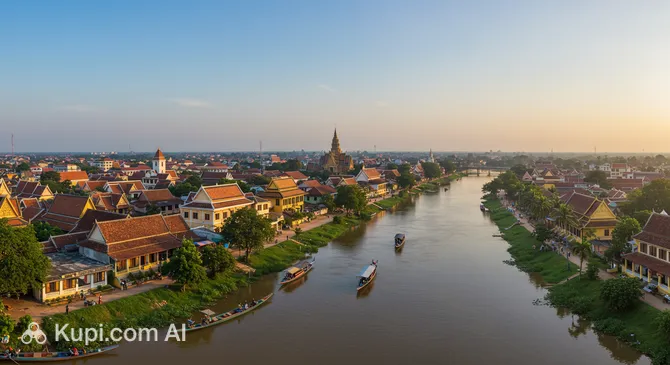
Battambang is an atmospheric gem of western Cambodia, picturesquely situated along the banks of the Sangker River. Located about 300 kilometers northwest of Phnom Penh, the city serves as an important cultural and transportation hub for the region. With a population of about 130,000 people, it is the second largest in the country, yet it maintains a surprising tranquility, far from the bustle and noise of typical Asian metropolises.
Battambang. Illustration.
Source: Kupi.com AI
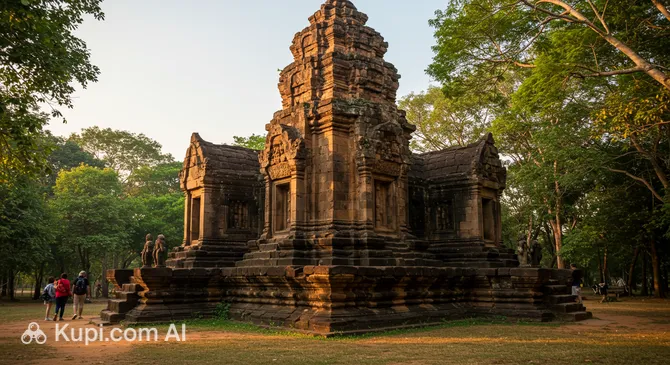
The city enchants with its provincial charm and unique architectural appearance. The rich history of Battambang is reflected in its elegant colonial-era buildings, shady alleys, and ancient shrines. Today, it is a recognized center of creativity and crafts: tourists enjoy visiting local art galleries, admiring vibrant street art, and exploring ancient temples scattered throughout the surroundings.
Travelers come here to enjoy the leisurely pace of life amidst endless rice fields and fertile valleys. Battambang is an ideal destination for those who want to see the authentic side of the country, get acquainted with local culinary traditions, and experience genuine Khmer hospitality.
Weather Overview
The climate in this region is tropical monsoon, so it is warm year-round. Expect hot days in any season with occasional intense downpours in summer and autumn, and dry, comfortable weather in winter. The average air temperature ranges from 26°C in cool December to 31°C in hot April, making the city accessible for visits at any time if you prepare correctly.
The most popular time for a trip is the period from November to February. During these months, the detailed weather in Battambang pleases with an absence of precipitation (in January, for example, there is practically none—0 mm) and relatively "cool" nights, when the temperature drops to 21–23°C. Days remain sunny and warm, warming up to 30–32°C, which is ideal for temple tours and bamboo train rides.
The hot season begins in March, peaking in April when daytime highs reach 36°C. The rainy season lasts from May to October. The wettest month is September: statistics show up to 28 rainy days. However, there's no need to be frightened: tropical downpours are usually heavy but short-lived, and the nature around the city becomes incredibly lush and green during this time.
Average monthly temperature
Average monthly precipitation
Interesting Facts
Beyond its famous architectural monuments and picturesque landscapes, Battambang holds many fascinating secrets and legends that make it one of the region's most mysterious cities. Here are a few surprising facts that will help you look at this place in a new way:
Lok Ta Dambong Kra Nhoung. Illustration.
Source: Kupi.com AI
Traveler photos:
Legend of the name. The city's name translates from Khmer as "The Lost Stick." This name dates back to an ancient legend about a giant cowherd named Dambong who found a magic staff that granted him incredible power and authority. According to the myth, he threw the stick at his rival but missed, and it landed exactly where the city stands today. Today, the statue of this hero, Lok Ta Dambong Kra Nhoung, is a symbol of Battambang and a place of worship for locals.
"Bamboo Train" Rules. The famous "norry" attraction is unique not only for its construction (a platform with a motor from a boat or lawnmower) but also for its unwritten traffic rules. Since it is a single-track road, strict etiquette applies when two trolleys meet: the platform with fewer passengers or cargo is manually disassembled and removed from the rails by the drivers and passengers to let the more loaded "train" pass, after which it is reassembled in a couple of minutes.
Natural Phenomenon. The caves at Phnom Sampeau are home to a colony of bats numbering in the millions. Every day at sunset, they fly out to hunt, forming a continuous living ribbon in the sky that twists like a giant dragon. This spectacle lasts 30 to 40 minutes and is considered one of Asia's most impressive natural shows.
Capital of Creativity. Battambang unofficially holds the title of Cambodia's cultural capital. It has the highest concentration of independent artists and galleries in the country. A clear confirmation of this status is the Romcheik 5 Art Space & Café, which not only exhibits the work of local talents but is also listed among the best art venues in Southeast Asia.
How to Get There
When planning a trip to this colorful city, it's important to keep in mind that you cannot fly there directly. Battambang does not have its own active civilian airport, so most tourists' routes go through neighboring major cities followed by overland travel. You can find out more about how to get to Battambang and choose the most convenient option for you, and below we will look at the region's main air gateways.
The closest and most convenient hub for travelers is Siem Reap–Angkor International Airport (SAI). It is located in the city of Siem Reap, about 115 km from Battambang. This is the most popular choice, as a transfer by taxi or bus from here takes only about 3 hours. The airport is modern and receives many flights from across Asia, making it an excellent starting point for exploring western Cambodia.
Another important transport hub is Phnom Penh International Airport (PNH), located in the country's capital, Phnom Penh. The distance to Battambang from here is about 248 km. Despite the greater distance, this option is in demand due to the wide range of flight destinations. The journey from the capital to Battambang by bus or taxi takes approximately 5–6 hours, allowing you to enjoy views of the Cambodian countryside along the way.
For clarity, here is a summary of the main airports:
In addition to road transport linking airports to the city, the rail connection is also worth mentioning. Battambang has a railway station through which trains on the Phnom Penh – Poipet (Thai border) line pass. Although trains run less frequently than buses and move slower, this mode of travel allows you to see the country from a unique perspective and is popular among fans of slow travel.
Main Attractions
Despite its calm pace of life, Battambang hides many vibrant places that allow for a deep immersion into the region's culture and history. Here, ancient legends coexist with contemporary art, and majestic temples with lively creative projects. Exploring the city should begin with its most iconic locations, each telling its own unique story.
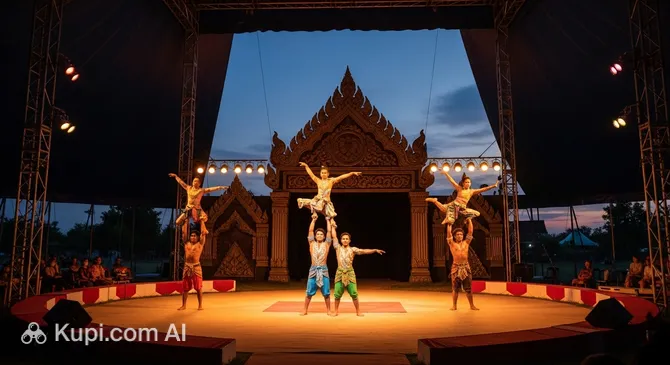
The ultimate symbol of the city's cultural revival is Phare Ponleu Selpak. This place is much more than just a circus; it is a world-renowned arts school and social center providing hope for local youth. Visitors come here not only for the breathtaking acrobatic shows combining theater, dance, and live music but also to see the educational campus where students master painting, graphic design, and animation. The energy of the performances here is incredibly powerful and sincere, making a visit one of the most memorable events of any trip.
Phare Ponleu Selpak. Illustration.
Source: Kupi.com AI
Traveler photos:
History buffs will find it interesting to visit the Battambang Provincial Museum. Housed in an elegant colonial-era building on the riverbank, it holds one of the country's best collections of Khmer art, second perhaps only to the National Museum in the capital. The exhibition features unique stone lintels, statues, and ceramics from the Angkorian and pre-Angkorian periods found in surrounding temples. It is an ideal place to touch the province's ancient heritage in silence and coolness.
At the entrance to the city, guests are greeted by the impressive Lok Ta Dambong Kra Nhoung statue, depicting a legendary giant with a black stick. This monument is not just a popular photo spot but also a sacred site for locals who come here with offerings to ask for luck in business and travel. The massive figure serves as a reminder of the mythical origin of the city's name and is an important point on the map for anyone wishing to pay respect to local traditions.
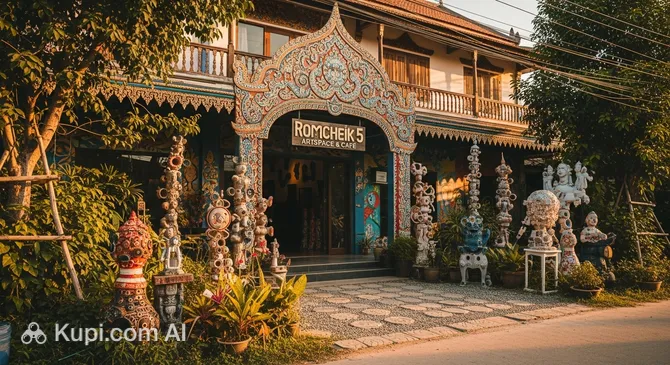
For those seeking inspiration in modern creativity, the doors of Romcheik 5 Art Space & Café are open. This independent gallery, located in an unusual building using metal structures, has become home to the works of talented Cambodian artists. Here, you can see bold installations and paintings reflecting a modern view of life in the country, and after viewing the exhibition, relax on a cozy terrace overlooking the green surroundings.
Local Cuisine
The cuisine of Battambang is rightfully considered one of the most authentic and delicious in Cambodia. Since this province holds the unofficial title of the country's "rice bowl," local dishes are always prepared with the freshest ingredients grown in nearby fertile fields. The city's gastronomic scene is a vibrant mix of traditional Khmer recipes, street food, and influences from neighboring Thailand and Vietnam.
Getting to know the local food should start with the classics. Be sure to try amok—tender fish fillet steamed in banana leaves with coconut milk and "kroeung" spice paste. Another gastronomic hit is lok lak: succulent pieces of marinated beef stir-fried with black pepper and served with a fried egg and fresh vegetables. For breakfast, locals prefer kuy teav—a fragrant noodle soup in pork broth that energizes you for the whole day.
For the most daring gourmets, Battambang has prepared exotic surprises. Fried grasshoppers, crickets, and even spiders can often be found at street stalls. If you're not ready for such experiments, pay attention to the wide selection of tropical fruits: they sell the sweetest mangoes, durians, mangosteens, and rambutans at very reasonable prices.
Nary Kitchen. Illustration.
Source: Kupi.com AI
Traveler photos:
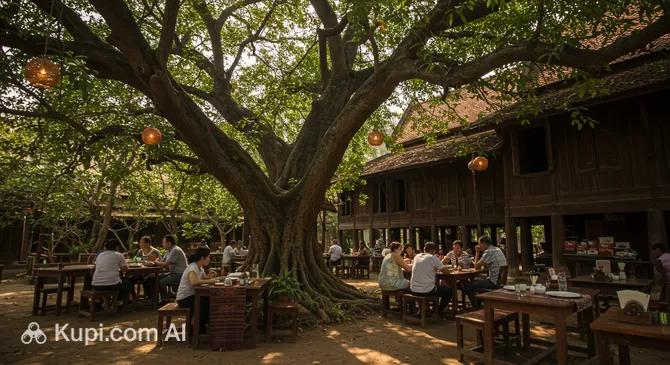
The food culture in the city is closely linked to street life. In the evenings, the Sangker River embankment turns into a huge open-air food court where you can cheaply snack on skewers, fried rice, or rice desserts. For a more thoughtful immersion into culinary traditions, we recommend visiting Nary Kitchen. This establishment is famous not only for its delicious food but also for its popular cooking classes, where tourists are taught how to cook authentic Khmer curry.
Another great place to experience home cooking is Coconut Lyly Restaurant and Cooking School. A cozy atmosphere prevails here, and the menu offers a variety of vegetarian and meat options. And if you just want a cup of coffee in a creative setting, stop by the Romcheik 5 Art Space & Café.
To refresh in the heat, fresh sugarcane juice with ice or coconut water drunk straight from the nut is best. Coffee lovers will enjoy the local version of the drink—strong and sweet with a generous portion of condensed milk. In the evening, it's customary to accompany a meal with a glass of local draft beer, which pairs perfectly with spicy and aromatic food.
Travel Tips
A trip to Battambang promises to be relaxed and full of discoveries, but a little preparation will make it even more comfortable. We have gathered the main practical recommendations to help you easily navigate the city and feel confident in any situation.
Clothing and Equipment. The city is hot and humid year-round, so choose loose clothing made of natural fabrics such as cotton or linen. Be sure to bring comfortable shoes, as roads are not perfect everywhere. If you plan to visit temples, remember the strict dress code: shoulders and knees must be covered. A light scarf or sarong in your backpack will always come in handy in such situations.
Transport. There is no public transport like buses here. The most convenient way to get around is by tuk-tuk. We strongly recommend installing the PassApp or Grab apps: this will allow you to book a ride at a fixed price, avoiding long negotiations and language barriers. For independent strolls, bicycle rental is a great option as the terrain is flat.
Finances. Two currencies are in use: US dollars and Cambodian riels. Dollars are convenient for paying for hotels and large bills, while riels are indispensable for small purchases at the market or paying for fares (change from a dollar less than $1 is often given in riels). Bank cards are rarely accepted, mostly only in expensive hotels, so always have cash with you, preferably in small denominations. ATMs are available in the center but charge a withdrawal fee.
Health and Safety. The main rule is not to drink tap water; only buy bottled water. Battambang is a safe city, but basic vigilance with bags and phones, especially in open tuk-tuks, is worth observing. Pharmacies are concentrated around the Psar Nath market; many basic medicines are available without a prescription, but it's better to bring specific medications with you.
Communication. Locals speak Khmer, but in the tourist area (restaurants, hotels), the staff speaks English fairly well. For a stable connection, buy a local SIM card (Smart or Cellcard operators)—internet here is inexpensive and fast. Wi-Fi is available in almost every cafe, but its speed can be unstable.
Local Etiquette. Greeting with folded palms ("sampeah") is a sign of respect, but for a tourist, simply smiling and nodding is sufficient. It is customary to remove your shoes when entering any home, pagoda, and even some shops. Khmers highly value composure: raising your voice or showing anger in public is considered rude and "losing face."
What to Avoid. Never touch the heads of locals (even children), as the head is considered the most sacred part of the body. Also, watch the position of your feet: when sitting (especially in a temple), do not point your feet toward images of Buddha or monks—this is perceived as an insult.
Additional Tip. If you plan a trip to the Phnom Sampeau caves to watch the bats fly out, arrive there early, about 40 minutes before sunset. Take a table at one of the street cafes at the foot of the mountain, order a coconut, and enjoy the spectacle in comfort instead of standing in the dust by the side of the road with the crowd.
Battambang enchants with its simplicity and sincerity. By following these simple tips, you can avoid minor troubles and fully devote yourself to enjoying the unique atmosphere of this creative and hospitable city.
Entertainment & Nightlife
The nightlife in Battambang differs significantly from the noisy parties of Siem Reap or Phnom Penh. You won't find neon signs for strip bars or massive dance clubs operating until dawn here. Evenings in this city are imbued with a relaxed, bohemian atmosphere where the main entertainment is socializing, creative meetups, and enjoying the cool air after a hot day.
The epicenter of evening activity is the area around the Psar Nath central market and what are known as "Street 1.5" and "Street 2.5." It is here, in a labyrinth of colonial buildings, that the most popular bars and small restaurants are concentrated. The crowd here is diverse: expats, the creative intelligentsia, and backpackers. There is absolutely no dress code—shorts and a t-shirt are appropriate in any establishment.
The main cultural event of the evening, which should not be missed, is a performance at the famous Phare Ponleu Selpak circus. Shows usually start at 7:00 PM, making it the perfect way to begin your evening. It is not just a circus, but a theater of emotions with acrobatics and live music that energizes you before heading to the bars.
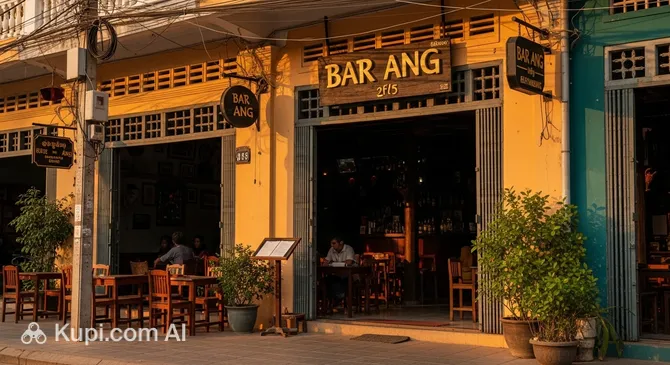
After the performance, it's worth moving to the center. One of the cult spots for sunset drinks and evening gatherings is Bar Ang. This establishment is famous for its friendly atmosphere and excellent selection of drinks. Travelers from all over the world often gather here to exchange stories to the sound of unobtrusive music.
Bar Ang. Illustration.
Source: Kupi.com AI
Traveler photos:
For those who prefer a quieter pastime, an evening stroll along the Sangker River embankment, where the night market unfolds, is an excellent choice. Here you can try street food, buy souvenirs, and simply watch the locals go about their lives. Most establishments close quite early, around 11:00 PM or midnight, so it's best to start the fun right after sunset.
Practical tips and safety:
Prices in Battambang's bars are very affordable: a glass of draft beer often costs less than a dollar, and cocktails range from $2 to $4. The city is considered safe for night walks, though lighting on the outskirts can be dim. It's best to use a tuk-tuk to return to your hotel. We recommend not hailing them on dark streets, but rather calling them via apps (PassApp or Grab) or asking a bartender to order transport for you.
Daytime activities in the city are more traditional and include visiting the museums and temples mentioned earlier. However, it is precisely the smooth transition from daytime excursions to a relaxed evening in a cozy bar that creates the unique rhythm of Battambang that travelers love so much.
Parks & Museums
The cultural landscape of Battambang is harmoniously complemented by its natural charm. Although the city is not abundant with large botanical gardens, its cozy green embankments and unique art spaces create a special atmosphere for leisurely strolls and getting to know the region's history.
The main green artery and a favorite vacation spot for citizens is the Sangker River Embankment. This long park area, lined with sprawling trees, stretches along the historic center. During the day, you can take shelter in the shade and enjoy views of the colonial architecture, and in the evening, the embankment turns into a social hub: locals go out for jogs or aerobics classes, while tourists stroll, watching the sunset over the river. It's the perfect place to feel the city's rhythm and breathe fresh air.
Another important, though small, green zone is the area around the Governor's Residence. This majestic mansion from the early 20th century is surrounded by a well-kept garden with ancient trees and tropical plants. A walk here allows you to transport yourself to the era of French Indochina and take atmospheric photos against the backdrop of one of the city's most beautiful buildings.
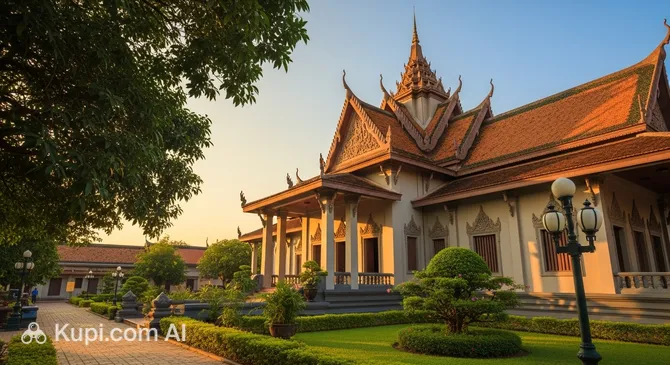
To immerse yourself in the region's history, a visit to the Battambang Provincial Museum is a must. Located on the riverbank, it houses an impressive collection of Khmer antiquities. Magnificent stone lintels and statues from the Angkorian and pre-Angkorian periods, found in the ruins of surrounding temples, are collected here. The exhibition is compact but very informative, allowing you to touch the thousand-year heritage of the Khmer Empire without the bustle and crowds of tourists.
Battambang National Museum. Illustration.
Source: Kupi.com AI
Traveler photos:
The city's modern cultural scene is vibrantly represented by the Romcheik 5 Art Space & Café. This is not just a gallery but a real creative hub founded by a group of local artists. The museum spans several floors and displays bold, sometimes provocative works reflecting social changes in Cambodia. Visiting this place gives a unique chance to see the country through the eyes of a young generation of creators.
Art lovers should also stop by the Phare Ponleu Selpak campus. While the place is primarily known for its circus, visual art exhibitions by the school's students are often held on its territory. This is a great opportunity to support emerging talent and see how art helps revive culture after difficult historical periods.
Insider tip: if you're looking for peace and communion with nature, rent a bike and head a bit further from the center to the lotus ponds near Wat Ek Phnom. The road there passes through picturesque villages, and the sight of blooming lotuses against the backdrop of ancient ruins will be one of the most vivid visual impressions of the trip.
Getting Around
The public transportation system in Battambang differs significantly from the urban infrastructure many are used to: you won't find a metro, trams, or an extensive network of scheduled buses here. The main and most popular means of getting around the city are tuk-tuk (covered carriages attached to a motorcycle) and moto-taxis ("motodops"). These modes of transport dominate the streets, providing mobility for both locals and tourists.
In recent years, using transport has become much more convenient thanks to the introduction of ride-hailing apps such as PassApp. Using the app allows you to call a rickshaw to your location and, most importantly, see the fixed cost of the trip immediately, eliminating the need to bargain. Payment is primarily made in cash to the driver at the end of the journey. Both local riels and US dollars (it's better to have small bills) are accepted, and the cost of a short trip around the center is usually about $1–$2.
If you decide to hail a tuk-tuk directly on the street, the main rule applies: always agree on the price in advance, before getting in. Drivers may quote inflated prices, so polite bargaining is part of the culture here. Transport is available from early morning, but after 10:00 PM, finding a free vehicle on the street becomes more difficult, and rates may increase slightly.
As an alternative, many travelers choose to drive themselves. Since the city is located on a plain and traffic here is calmer than in the capital, bicycle and scooter rentals are very popular. You can rent two-wheeled transport at many hotels and specialized shops in the center. This is an excellent and budget-friendly way to leisurely see the colonial architecture and surrounding villages.
Speaking of Battambang's transport, one cannot fail to mention a unique local phenomenon—the "Bamboo Train" or Norry. Although today it is more of a tourist attraction, historically these homemade trolleys made of bamboo decking and a small motor served as an important means of communication for residents of remote villages. Riding such a platform on old rails is an opportunity to touch the ingenuity of locals in matters of logistics.
Accommodation
Accommodation options in Battambang are pleasantly surprising in their variety and affordability, although you won't find high-rise five-star complexes from global chains here. The city offers a cozy atmosphere ranging from simple family guesthouses and hostels for budget travelers to stylish boutique hotels and eco-resorts nestled in tropical greenery. Most places to stay are characterized by hospitality and a special Khmer charm.
When choosing an area, you should focus on your preferences. If proximity to restaurants, bars, and the night market is important, it's best to stay in the city center, near the Psar Nath market and the Sangker River embankment. Life here is bustling until late evening, and the main city attractions are within walking distance. For those seeking peace and privacy, the Wat Kor area, located a few kilometers from the center, is an ideal choice. This historic village is famous for its traditional wooden houses and calm rural atmosphere.
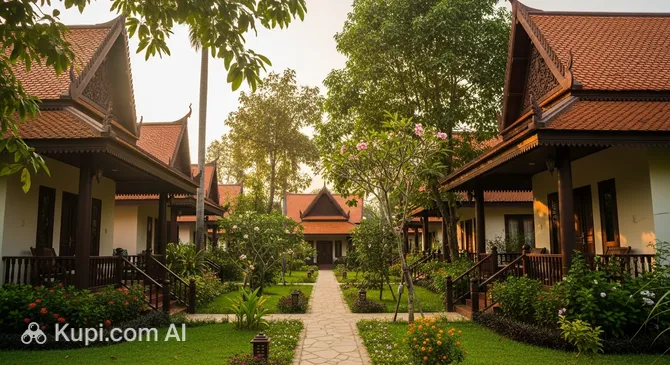
Among the hotels deserving special attention is Maison Wat Kor. This resort hotel, located in the heart of the cultural village, offers guests an immersion into traditional Khmer architecture without sacrificing modern comfort. It's a great place to feel the spirit of old Cambodia.
Au Cabaret Vert. Illustration.
Source: Kupi.com AI
Traveler photos:
Another excellent example of quality relaxation is Au Cabaret Vert. This eco-hotel is known for its bungalows situated around a natural pool and its commitment to sustainable tourism principles. Here you can enjoy the silence of a tropical garden while remaining close to the main city routes.
Booking tip: Although you can almost always find a free room, during the peak tourist season (from November to February), the best value-for-money options are snapped up quickly. Therefore, if you plan a trip during these months, it is recommended to take care of booking a couple of weeks before arrival.
Pricing in Battambang is very democratic. Budget accommodation (a bed or a simple room) costs only $5–$15 per night. Mid-range rooms with air conditioning and breakfast range from $20–$45, and staying in the city's best boutique hotels will cost from $60 and up. Booking is easily done through popular international online platforms, although many small guesthouses also accept walk-ins.
Nearby Cities
For those who want to explore the surroundings, Battambang serves as an excellent starting point for day trips or short visits to several interesting nearby places:
One of the most popular destinations is Siem Reap. Although the journey may take some time, this city is definitely worth a visit. It is world-famous as the gateway to the majestic Angkor Wat temple complex. In addition to the ancient ruins, Siem Reap offers tourists a lively nightlife, colorful markets, and a well-developed tourist infrastructure, creating a sharp contrast with the quiet Battambang.
If you are interested in a more secluded and authentic experience, consider the province of Oddar Meanchey. Located to the north, this area attracts lovers of ecotourism and history. Here you can see the picturesque Dangrek Mountains and visit remote historical monuments hidden in the jungle. This direction is suitable for those who want to see off-the-beaten-path Cambodia and enjoy wild nature.
These nearby destinations provide an insight into the region's diverse culture and landscapes, from world-famous monuments to quiet corners of nature.
Shopping & Souvenirs
Shopping
General Overview: Shopping in Battambang is not a chase after global brands in air-conditioned halls, but a fascinating immersion into the authentic atmosphere of provincial Cambodia. The city is not famous for large shopping centers, but it is known for its colorful bazaars, craft shops, and, most importantly, a thriving art scene. Here you will find unique handmade goods that carry the warmth of local craftsmen's hands and can purchase works of contemporary art for which this creative region is famous.
Markets — the Heart of Trade: The main shopping point in the city is the Central Market (Psar Nath). This impressive Art Deco building, built in the 1930s, is not only a place for shopping but also an architectural landmark. Inside, a lively bustle reigns: fresh fruits, spices, fabrics, clothes, dishes, and jewelry are sold here. At dusk, the Night Market opens on the Sangker River embankment. It is more oriented toward tourists and street food lovers, but you can also find small souvenirs, T-shirts, and crafts in a relaxed evening atmosphere.
Souvenirs and Art: Battambang is often called the country's cultural capital, so the best reminder of your trip will be a piece of art. Many galleries operate in the city where you can buy paintings and sculptures. A bright example is the Romcheik 5 Art Space & Café: here you can not only enjoy the exhibition but also buy works by talented authors, supporting the local creative community.
Romcheik 5 Artspace & Café. Illustration.
Source: Kupi.com AI
Traveler photos:
Besides art, traditional items to bring from Battambang include:
Krama — traditional checkered cotton scarves, a symbol of Khmer culture.
Wood carvings — handmade figurines and decor.
Gastronomic souvenirs — the famous local oranges (considered the best in the country), dried fish, and thin rice paper for spring rolls.
Shops and Supermarkets: If you are looking for familiar European goods or cosmetics, it is worth looking into small local supermarkets such as Battambang Supermarket. There are no western-style giant malls here; trade is concentrated in small private shops and stalls scattered along the streets around the Psar Nath market.
Payment and Opening Hours Tips: Markets wake up early, from 6–7 AM, and wind down trade by 5:00–6:00 PM (except for the Night Market). Shops are usually open until 8:00 PM. The main payment method is cash. Both US dollars (for purchases from $1–$5 and up) and riels (for small expenses) are in use. Cards are accepted extremely rarely, mostly only in expensive hotels and some art galleries. Bargaining is appropriate in markets and souvenir shops: do it with a smile, and sellers will willingly meet you halfway.