Support

Fort Chipewyan

About

Fort Chipewyan, often affectionately known as "Fort Chip," is a community steeped in tradition and surrounded by the raw beauty of the boreal forest. As the oldest continuously inhabited European settlement in the province of Alberta, it offers visitors a rare glimpse into the past combined with the tranquility of remote living. Situated on the western tip of the massive Lake Athabasca, this hamlet is a true northern jewel within Canada.

Exploring the history of Fort Chipewyan reveals its pivotal role as a major trading post during the fur trade era. Established in 1788, it served as a strategic headquarters and a jumping-off point for famous explorers venturing further north and west. Today, the community preserves this rich heritage while celebrating the vibrant culture of the local Indigenous peoples.

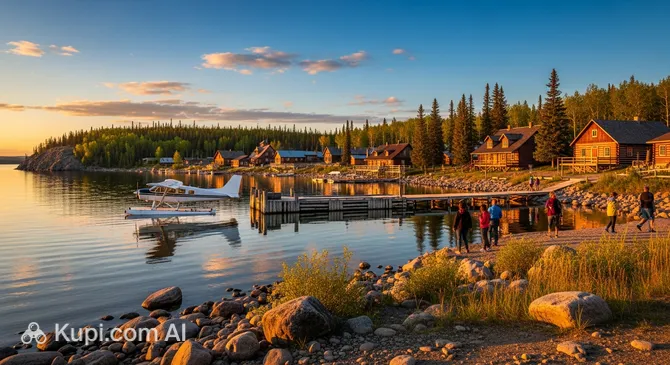
Fort Chipewyan. Source: Kupi.Binoculars

For nature lovers, the town serves as a primary gateway to the spectacular Wood Buffalo National Park, the largest national park in the country. Here, travelers can witness vast herds of free-roaming wood bison and the nesting grounds of the whooping crane. The pristine waters of Lake Athabasca provide excellent opportunities for fishing and boating, while the clear, unpolluted skies offer a front-row seat to the mesmerizing Northern Lights during the winter months.

Although reaching this remote destination is an adventure in itself—often requiring a flight or a journey along the seasonal winter road—the experience is well worth the effort. Fort Chipewyan invites you to disconnect from the bustle of modern city life and immerse yourself in a landscape where history and nature coexist in perfect harmony.

Weather Overview

The climate in this northern region is characterized by significant seasonal contrasts, offering distinct experiences depending on when you visit. To ensure you pack appropriately for your journey, it is helpful to review the detailed weather in Fort Chipewyan before departing. Generally, the area experiences long, cold winters and short, pleasantly warm summers that are perfect for outdoor exploration.

Winter months, particularly January and February, are frigid with average temperatures hovering around -18°C and minimums often dropping below -22°C. In contrast, the summer season from June to August brings much milder conditions; July is typically the warmest month with average temperatures around 19.9°C and highs reaching nearly 25°C. Expect warm summers with occasional rain, as these months see about 10 wet days on average, while winters remain cold and relatively dry.

Interesting Facts

Beyond its reputation as a historic trading post, Fort Chipewyan holds several fascinating distinctions that surprise many visitors. From intellectual legacies to modern innovations, this remote community has a story that extends far beyond the fur trade.

  • The Athens of the North: In the late 1700s, the fort was unexpectedly known as a center of culture and learning. Roderick Mackenzie established a library here that grew to house over 2,000 books, earning the remote outpost the nickname "Athens of the North" among traders and explorers seeking knowledge in the wilderness.

  • A Continental Launchpad: The community served as the specific starting point for two of the most significant journeys in North American history. Sir Alexander Mackenzie departed from here for his expedition to the Arctic Ocean in 1789 and his overland trek to the Pacific Ocean in 1793, cementing the site's role in mapping the continent.

  • Green Energy Pioneer: Despite its isolated location, the town is a leader in sustainable technology. It is home to the largest off-grid solar farm in Canada, a massive project developed by local Indigenous groups to significantly reduce the community's reliance on diesel fuel.

  • An Ecological Superpower: The hamlet sits on the edge of the Peace-Athabasca Delta, one of the largest inland freshwater deltas in the world. This UNESCO-recognized wetland is a critical ecological hub, serving as a nesting ground for millions of migratory birds and a habitat for free-roaming bison.

How to Get There

Reaching this remote northern community is an adventure in itself, often requiring a combination of air travel and seasonal ground transport. As there are no permanent all-weather roads connecting the hamlet to the rest of the province, most visitors choose to fly. For a comprehensive guide on planning your journey, including seasonal tips and route details, you can read more about how to get to Fort Chipewyan.

The most direct way to arrive is via the local Fort Chipewyan Airport (IATA: YPY). Situated just 6.4 km from the town center, this small regional hub handles the majority of passenger traffic entering the community. Upon arrival, the trip into town typically takes about 30 minutes by taxi or shuttle. While the airport is small, with an annual passenger traffic of approximately 25,000 people, it serves as a vital lifeline for residents and visitors alike.

Since the local airport primarily handles smaller aircraft, many travelers first fly into the larger Fort McMurray International Airport (IATA: YMM). It is important to note that this airport is located in the city of Fort McMurray, which is approximately 229.5 km south of Fort Chipewyan. From here, visitors usually catch a connecting flight to Fort Chipewyan. Seasonal ground transportation via the winter road is possible during specific months; the drive takes approximately 6 hours.

For clarity, here is a summary of the main airports:

Airport Name City Passenger Traffic Km from City
Fort McMurray International Airport Fort McMurray Medium 229.5
Fort Chipewyan Airport Fort Chipewyan Small 6.4

There are no railway stations servicing Fort Chipewyan or the immediate surrounding area. Apart from air travel, access is limited to the seasonal winter road (usually open from mid-December to March) or by boat across Lake Athabasca during the summer months.

Main Attractions

While Fort Chipewyan is a small and remote community, it offers a wealth of experiences for those interested in history, culture, and pristine wilderness. The attractions here are deeply connected to the land and the legacy of the fur trade, providing visitors with an authentic look at life in northern Alberta.

Fort Chipewyan Bicentennial Museum is the cultural heart of the hamlet and a must-visit for history enthusiasts. Constructed to resemble an 1870s Hudson's Bay Company store, the museum houses a fascinating collection of artifacts that tell the story of the region's Indigenous peoples and the early European fur traders. Visitors can explore exhibits featuring traditional beadwork, historic photographs, and tools used during the Voyageur era. It is an excellent place to gain a deeper understanding of the community's pivotal role in Canadian history.

Wood Buffalo National Park is accessible directly from the town, which serves as a key gateway to this UNESCO World Heritage Site. While the park is vast, the area near Fort Chipewyan offers immediate access to the stunning Peace-Athabasca Delta. This is one of the world's largest freshwater deltas and a nesting ground for millions of migratory birds. Tourists can take boat tours to navigate the winding channels, spot free-roaming bison on the shores, and witness the incredible biodiversity that makes this region ecologically unique.

Lake Athabasca itself is a major draw for outdoor adventurers. As the eighth-largest lake in Canada, it offers exceptional opportunities for fishing, boating, and photography. In the summer, the crystal-clear waters are perfect for catching trophy-sized lake trout and northern pike. In the winter, the frozen lake transforms into a vast playground for snowmobiling and ice fishing, set against the backdrop of the breathtaking northern horizon.

Local Cuisine

Local Cuisine:

The culinary landscape of Fort Chipewyan is deeply rooted in the traditions of the Cree, Dene, and Métis peoples, relying heavily on the bounty of the surrounding boreal forest and lakes. Known as "country food," the local diet is defined by wild game, freshwater fish, and foraged ingredients. For visitors, this offers a unique opportunity to taste dishes that are organic, sustainable, and prepared with time-honored methods passed down through generations.

Given the community's location on the shores of Lake Athabasca, fresh fish is a staple of the local table. Walleye (often called pickerel) and Lake Trout are the most common catches. You will frequently find these prepared simply—pan-fried with butter and herbs to highlight their freshness—or smoked to preserve them for the long winter. Smoked fish, with its rich and savory flavor, is a traditional snack that serves as excellent fuel for outdoor adventures.

Another cornerstone of the local diet is wild game, particularly bison from the nearby herds. Bison meat is leaner and richer than beef, often featured in hearty stews or served as burgers. These meals are almost invariably accompanied by bannock, a traditional fry-bread that is a cultural icon across northern Canada. Whether baked or fried golden brown, bannock is best enjoyed warm, ideally slathered with jams made from locally picked Saskatoon berries or blueberries.

When it comes to beverages, the traditional choice is muskeg tea (also known as Labrador tea). Brewed from the leaves of a native plant found in the wetlands, this herbal tea has a mild, earthy flavor and is valued for its warming properties during cold days. For something stronger, social gatherings might feature standard spirits, but the emphasis in this quiet community is often on warm, non-alcoholic drinks shared during visits.

The dining scene in Fort Chipewyan is modest and informal, reflecting its small population. There are no large chain restaurants or fine dining establishments. Instead, visitors typically eat at the dining rooms of local lodges or guest houses, where meals are home-cooked and hearty. The local supermarket may offer grab-and-go items, but the best culinary experiences are often found at community feasts or cultural gatherings, where the spirit of northern hospitality truly shines.

Travel Tips

Visiting Fort Chipewyan is a journey into the heart of the Canadian wilderness, and because of its remote location, a little extra preparation goes a long way. To help you make the most of your time in this historic community, here are some practical tips to ensure your trip is safe, comfortable, and respectful of the local way of life.

  1. Pack for Extremes and Insects: The weather here dictates your gear. If you visit in winter, you need industrial-strength cold weather clothing, including a heavy parka, insulated boots, and thermal layers, as temperatures drop drastically. In summer, while days are warm, the mosquitoes and black flies can be intense near the water and in the bush. Bring high-quality insect repellent, long sleeves, and even a bug net for your head if you plan on hiking.

  2. Transportation is Limited: Forget about ride-hailing apps, subways, or car rental agencies; they do not exist here. Fort Chipewyan is a small, walkable hamlet, and most points of interest are within a reasonable distance on foot. For airport transfers, it is essential to arrange transportation with your lodge or bed and breakfast in advance, as there are no designated taxis waiting at the airstrip.

  3. Cash is King: While the main grocery store and some lodges accept cards, relying entirely on digital payments is risky due to potential connectivity issues. There is very limited access to ATMs (often just one in the entire community), so it is highly advisable to withdraw sufficient cash before you arrive. Be aware that prices for goods are significantly higher than in southern Canada due to freight costs.

  4. Health and Wildlife Safety: There is a local health center (the Nunee Health Board Society) for basic medical needs, but serious emergencies require an air ambulance evacuation. Bring a sufficient supply of any prescription medications you need. Additionally, you are in bear and bison country; carry bear spray if you venture to the outskirts of town and always stay aware of your surroundings, even near the community boundaries.

  5. Connectivity and Communication: English is the primary language spoken by everyone, though you may hear Cree or Dene spoken by elders. Cell phone coverage is generally available within the hamlet (typically on major national networks), but signals fade quickly once you leave the town center. Wi-Fi is usually available at local accommodations and the public library, but speeds may be slower than what you are used to in the city.

  6. Respect Local Etiquette: Fort Chipewyan is a tight-knit community with deep Indigenous roots. It is polite to greet people you pass on the street with a friendly nod or "hello." If you wish to take photographs of local residents, their homes, or cultural activities, always ask for permission first. Respecting privacy is paramount in a small town where everyone knows everyone.

  7. What to Avoid: Do not wander onto private property or into the backyard of a residence assuming it is a public path; boundaries are often informal but respected. Also, avoid wasting resources like fresh water or food. In a remote fly-in community, supplies are precious, and wasteful behavior is frowned upon by locals.

  8. Shop Smart: The "Northern Store" is the primary source for groceries and general merchandise. If you have specific dietary requirements or crave certain snacks, pack them in your luggage. The store closes early by city standards, often around 6:00 PM or 7:00 PM, and may have reduced hours on Sundays, so plan your shopping runs accordingly.

By keeping these tips in mind, you will be well-equipped to handle the unique logistics of northern travel. Fort Chipewyan is a place that rewards those who come prepared with warm hospitality and unforgettable natural beauty, allowing you to focus on the experience rather than the logistics.

Entertainment & Nightlife

Entertainment and nightlife in Fort Chipewyan differ significantly from the bustling urban scenes found in larger cities. Visitors will not find neon-lit nightclubs, crowded bars, or late-night entertainment districts here. Instead, the evening atmosphere is defined by tranquility, community connection, and the breathtaking natural beauty of the northern sky. The "nightlife" is less about partying and more about unwinding in a serene wilderness setting, often accompanied by the spectacular display of the Aurora Borealis.

The social hub for visitors is typically centered around their accommodation. The dining room at the Fort Chipewyan Lodge often serves as a gathering place where travelers and locals exchange stories over a warm meal. Since there are no dedicated pubs or cocktail bars, evening entertainment is an informal affair. It is common for guests to relax in the common areas of their lodge or bed and breakfast, enjoying a quiet drink and conversation after a day of outdoor exploration. The dress code is strictly casual and practical; warm, comfortable clothing is the standard for any evening activity.

The most spectacular "light show" in town is provided by nature itself. During the fall and winter months, Fort Chipewyan offers front-row seats to the Northern Lights. With very little light pollution, you don't need to travel far to see them. A short walk to the edge of town, particularly near the shores of Lake Athabasca along Mackenzie Avenue, provides an unobstructed view of the dancing green and purple lights. This experience is the highlight of the night for most visitors, far surpassing any man-made entertainment.

For daytime entertainment, the options are rooted in culture and history. The Fort Chipewyan Bicentennial Museum is the primary attraction, offering immersive exhibits on the fur trade and Indigenous heritage. It is the best place to spend an afternoon learning about the region before the sun goes down. Additionally, the community often hosts cultural gatherings, feasts, or events at venues like Mamawi Hall. While these are not "tourist attractions" in the commercial sense, respectful visitors are often welcomed to witness the vibrant local traditions during special occasions.

Practical planning is essential for evenings here. Most businesses, including the local Northern Store, close relatively early, often by 6:00 PM or 7:00 PM. If you plan to have snacks or beverages for the night, you must purchase them during the day. Prices for goods are higher than in southern cities due to shipping costs, so budget accordingly. There is no public transit or Uber service. Getting around at night is done primarily on foot within the hamlet, or by pre-arranged shuttle with your accommodation provider.

Safety during the evening requires a different mindset than in a big city. The streets are generally very safe from crime, but the local wildlife is a real consideration. It is not uncommon for stray dogs or even wild animals like foxes to be seen at night. If you decide to walk to the lake to view the stars, bring a flashlight, dress in layers to prevent hypothermia, and stay aware of your surroundings. In winter, temperatures drop rapidly after sunset, making appropriate thermal gear a matter of safety, not just comfort.

Parks & Museums

Fort Chipewyan is a destination where the boundaries between the wilderness and the exhibition hall blur. The community's cultural heritage is deeply entwined with the land, meaning that its most significant "parks" are vast, untamed landscapes, and its history is preserved not just in glass cases, but in the historic structures that still stand against the northern sky.

Wood Buffalo National Park is the undisputed crown jewel of the region's natural areas. As the largest national park in Canada and a UNESCO World Heritage Site, it offers an ecological experience unlike any other. For visitors in Fort Chipewyan, the park is less about manicured lawns and more about raw wilderness; the town sits on the edge of the Peace-Athabasca Delta, a massive inland freshwater delta within the park. This area is a paradise for birdwatchers, serving as a critical nesting ground for whooping cranes and millions of migratory waterfowl. The park is also famous for its salt plains and the world's largest free-roaming herd of wood bison, making it a bucket-list destination for wildlife enthusiasts.

The Lake Athabasca Waterfront serves as the community's informal central park. While it lacks the playground equipment of a city park, its natural sandy beaches and rocky outcrops provide a stunning setting for picnics, evening walks, and community gatherings. In the summer, the shoreline is the perfect spot to watch floatplanes land or to launch a canoe into the crystal-clear water. The view of the expansive lake, stretching out to the horizon, offers a sense of solitude and peace that defines the northern experience.

Fort Chipewyan Bicentennial Museum stands as the primary guardian of the region's history. Built to replicate the Hudson’s Bay Company stores of 1870, the building itself is a visual landmark. Inside, the museum offers a comprehensive look at the fur trade era that put this remote hamlet on the map. Exhibits include authentic tools, intricate Indigenous beadwork, and archival photographs that document the lives of the Chipewyan, Cree, and Métis peoples. For tourists, this is the best place to contextualize the local culture and understand the hardships and triumphs of early life in the boreal forest.

While not a museum in the traditional sense, the Nativity of the Blessed Virgin Mary Roman Catholic Church acts as a significant cultural and architectural gallery. Constructed in the early 20th century, this imposing wooden structure is a testament to the role of missionaries in the region's history. Its striking blue and white facade and preserved interior offer a quiet space for reflection. Visitors interested in architecture will appreciate the craftsmanship required to build such a substantial structure in a remote location without modern machinery.

For a truly authentic experience, look for the historic cairns and monuments scattered near the waterfront. These markers commemorate the voyages of explorers like Sir Alexander Mackenzie. A lesser-known but deeply moving experience is to visit the local cemeteries, where the history of the community is written on the headstones, tracing lineages back to the earliest fur traders and Indigenous families.

Insider Tip: To truly appreciate the scale of the Peace-Athabasca Delta, try to arrange a boat tour with a local guide. The intricate maze of channels and wetlands is difficult to comprehend from the shore, but on the water, you can fully grasp the magnitude of this globally significant ecosystem.

Getting Around

Unlike larger urban centers, Fort Chipewyan does not possess a formal public transport system. There are no subways, trams, municipal buses, or trolleybuses operating within the hamlet. Due to its small population and compact geographical footprint, the community functions effectively without a complex transit network, and visitors will find that the logistics of getting around are simple and straightforward.

For the majority of tourists, the primary mode of transportation is walking. The hamlet is quite small, and most key locations—including the general store, the museum, the lodge, and the waterfront—are situated within a comfortable walking distance of one another. This walkability allows visitors to explore the community at their own pace, enjoying the fresh northern air and the scenic views of Lake Athabasca without the need for a vehicle.

While there are no international car rental agencies or ride-sharing apps like Uber or Lyft available, limited local taxi services may operate within the community. However, this is not a service you can typically hail from the street corner. Visitors requiring a ride, particularly for the journey between the airport and the town center, must usually call ahead. It is highly recommended to arrange airport transfers directly with your accommodation provider before you arrive, as many lodges offer shuttle services specifically for their guests.

Regarding payment for any transport services that do exist, such as a local taxi or a private shuttle, cash is the standard and often the only accepted method. There are no travel passes, transit cards, or mobile ticketing apps to worry about. Tourists should ensure they carry enough Canadian currency in smaller denominations to cover these incidental costs, as electronic payment terminals are rarely available in vehicles.

The concept of "transport" in Fort Chipewyan shifts dramatically with the seasons, offering a unique local feature. During the winter months, snowmobiles are a ubiquitous sight and are frequently used by residents to navigate the snowy streets and frozen lakes. In the summer, all-terrain vehicles (ATVs) and boats become the standard for moving around the outskirts and accessing the delta. While tourists typically do not rent these for point-to-point city transport, they represent the authentic way locals navigate the rugged terrain.

Travelers should be aware that there are no fixed operating hours for transport services. Availability is generally aligned with the daylight hours and the arrival of scheduled flights. Finding a ride late at night can be challenging, so if you plan to be out late or need to move heavy luggage across town, securing your transportation arrangements in advance is crucial to ensure a smooth experience.

Accommodation

Accommodation in Fort Chipewyan is reflective of its remote nature and small population. Visitors should not expect sprawling luxury resorts, international hotel chains, or budget hostels. Instead, the options are limited to a few locally owned lodges and bed-and-breakfast style establishments. These accommodations are generally functional, cozy, and designed to provide a comfortable base for outdoor adventures rather than high-end pampering. The atmosphere is typically rustic and informal, aligning perfectly with the wilderness setting.

Given the compact size of the hamlet, location is rarely an issue regardless of where you stay. Most accommodation options are situated within the main townsite, often just a short walk from the Lake Athabasca waterfront, the airport, and the general store. Staying in this central area places you in the heart of the community, allowing for easy access to the museum and the docks without the need for transportation.

The most prominent and well-known place to stay is the Fort Chipewyan Lodge. Situated directly on the lakeshore, it offers guests scenic views of the water and serves as a central meeting point for visitors and locals alike. It provides standard hotel-style rooms and is often the primary choice for contractors, government workers, and tourists visiting the region. Due to the limited number of rooms in town, it acts as the de facto hub for hospitality in the community.

Booking Tip: Because accommodation options are so scarce, it is absolutely critical to book your room well in advance of your trip. During the summer fishing season or when the winter road opens, the few available rooms can fill up quickly with workers and returning residents. Do not arrive without a confirmed reservation, as you may find yourself without a place to stay.

Regarding costs, visitors should anticipate prices in the mid-to-high range. Operating a business in a fly-in community comes with high overheads for heating and supplies, which is reflected in the room rates. Unlike in major cities, you might not find these properties listed on global booking platforms like Expedia or Booking.com. The most effective way to secure a room is to call the lodge or B&B directly to check availability and make arrangements.

Nearby Cities

For those looking to explore the surroundings, Fort Chipewyan serves as a starting point for journeys to several interesting nearby locations:

Fort McMurray is the closest major urban center and serves as the primary gateway to the region. Located to the south, it offers a distinct contrast to the quiet isolation of Fort Chipewyan. Visitors can explore the Oil Sands Discovery Centre to learn about the industry that drives the local economy or enjoy urban amenities that are unavailable in smaller hamlets. It is also a hub for outdoor enthusiasts, offering extensive trails for hiking and snowmobiling along the Athabasca River.

Yellowknife, although further afield, is a legendary northern destination that captures the spirit of the subarctic. Known as the "Diamond Capital of North America," it sits on the shores of Great Slave Lake and is world-renowned for its spectacular Northern Lights viewing opportunities. Its vibrant arts scene, historic Old Town, and floating houseboats make it a fascinating place to experience the unique culture of Canada's Northwest Territories.

City Population Distance (km)
Fort McMurray 71589 222
Yellowknife 19569 452
Cold Lake 14961 477
The Nation 12808 408
Slave Lake 7000 442

These nearby destinations offer a glimpse into the diverse culture and landscapes of the region.

Shopping & Souvenirs

Shopping in Fort Chipewyan is a strictly utilitarian experience rather than a leisure activity. As a remote fly-in community with a small population, the town does not possess the retail infrastructure found in larger cities. There are no luxury boutiques, department stores, or fashion chains here. Instead, the local retail scene focuses on providing essential goods to residents and visitors, such as groceries, outdoor gear, and basic household supplies. However, for those seeking authentic cultural items, the community offers a unique opportunity to purchase handmade Indigenous crafts directly from local artisans.

There are no designated shopping districts or bustling commercial streets in the traditional sense. The retail activity is concentrated in the center of the hamlet, primarily revolving around the Northern Store (NorthMart). This general store acts as the lifeline for the community, selling everything from fresh produce and dry goods to clothing, hardware, and snowmobiles. It is the "one-stop-shop" for almost every need, and for a visitor, it provides a fascinating look at the logistics of supplying a remote northern settlement.

Travelers looking for large shopping malls will not find them here. Fort Chipewyan is devoid of shopping centers, arcades, or multi-story retail complexes. The commercial landscape is defined by standalone, functional buildings. The absence of consumerist distractions fits perfectly with the town’s quiet, nature-focused atmosphere, encouraging visitors to spend their time exploring the outdoors rather than browsing shelves.

While there are no permanent daily markets, the community spirit often shines through in informal settings. Occasional craft sales or community gatherings at local halls may feature tables set up by residents selling homemade baked goods, jams made from local berries, or traditional handicrafts. These events are sporadic and usually advertised on community bulletin boards, offering a lucky find for visitors who happen to be in town at the right time.

The best souvenirs to bring back from Fort Chipewyan are those that reflect the rich Indigenous heritage of the region. The area is renowned for its exquisite beadwork, moose hide moccasins, and tufting (art made from moose or caribou hair). You can often find these items for sale at the Fort Chipewyan Bicentennial Museum gift shop or by asking at your lodge if there are local artists selling their work. These pieces are not mass-produced trinkets but authentic works of art that support the local economy and culture.

Store opening hours are generally limited compared to major urban centers. The main general store typically operates from approximately 9:00 AM to 6:00 PM on weekdays and Saturdays, with reduced hours on Sundays (often opening around noon and closing by 5:00 PM). Smaller businesses or the museum gift shop may have even shorter or seasonal hours, so it is wise to check in advance. Regarding payment, the Northern Store accepts major credit and debit cards. However, if you are purchasing crafts directly from an artist or buying small items at a community event, cash is invariably the preferred and often the only method of payment.

One financial advantage for visitors to this region is the tax structure. Fort Chipewyan is located in Alberta, the only province in Canada that does not levy a Provincial Sales Tax (PST). Shoppers here only pay the 5% federal Goods and Services Tax (GST) on applicable items. While Canada does not offer a VAT refund program for general tourists, the lack of provincial tax makes purchasing goods here slightly more affordable than in other parts of the country.
Reached the end of the page?

That means the route is fully explored