Support

Terrace Bay

About

Terrace Bay is a picturesque town nestled on the northern shore of the majestic Lake Superior in Ontario. This location is often called the "gem" of the region thanks to its incredible natural beauty and the hospitality of its residents. If your route takes you through a country like Canada, be sure to make a stop here to enjoy views of the endless water surface and dense forests.
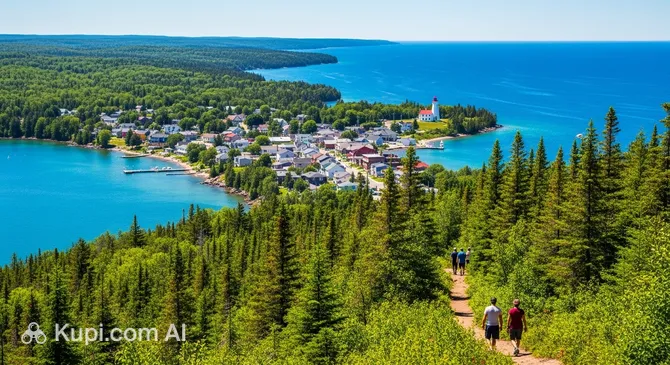
Terrace Bay. Illustration.
Source: Kupi.com AI

The town's geographical location makes it an ideal starting point for exploring the northern wilderness. The climate here is typical for the region: snowy winters and moderately warm summers that are perfect for hiking and boating. The population of Terrace Bay is about 1,500 people, which creates an atmosphere of peace and tranquility, far from the noise of major metropolises.

Among the main attractions, the impressive Aguasabon Falls stands out, where the water thunders down into a deep gorge before flowing into the lake. Tourists also frequently visit the local lighthouse—a replica of the famous lighthouse on the Slate Islands—which offers panoramic views of the surroundings. The Slate Islands themselves, located nearby, are known for their population of woodland caribou and unique geology.

Curious travelers will find the history of Terrace Bay interesting, as it is inextricably linked to the development of the pulp and paper industry and the exploration of the region's natural resources. The town emerged as a carefully planned settlement, and its past can be traced through local architecture and commemorative markers.

Terrace Bay is a wonderful place for those seeking inspiration in nature. Whether you have come for the breathtaking scenery or simply want to rest along the way, this town will gift you warm memories and a desire to return again.

Weather Overview

The climate of Terrace Bay is largely determined by its location on the northern shore of Lake Superior, which provides the town with a moderate and fresh atmosphere. Summers here are mild and comfortable, without exhausting heat: in the warmest months, July and August, the average temperature is about +14...+16°C, and maximum values rarely exceed +19°C.

Winters in the region are long and frosty. In January and February, average figures stay at -10...-11°C, while nighttime temperatures can drop to -14°C and lower. To ensure your trip is comfortable in any season, it is worth checking the weather in Terrace Bay in advance and selecting appropriate clothing.

Expect a cool summer and cold winters with fairly frequent precipitation throughout the year. The number of rainy or snowy days is consistently high (from 10 to 14 days per month), so a waterproof jacket or umbrella will be useful even in the driest months.

Average monthly temperature

Average monthly precipitation

Interesting Facts

Beyond its main attractions, Terrace Bay holds many fascinating secrets, from traces of cosmic catastrophes to iconic moments in art history. Here are a few facts to help you see this town in a new light:

  • Cosmic Origin of the Archipelago: The Slate Islands, located across from the town, are not just a picturesque view but the center of an ancient meteorite crater. Scientists have established that the archipelago was formed as a result of a meteorite impact hundreds of millions of years ago, and "shatter cones"—rare geological structures caused by the massive impact—can still be found here.

  • A Name Given by a Glacier: The town's name is a literal description of its unique landscape. The settlement is built on a series of natural giant steps that were carved by the receding glacier and the waters of ancient Lake Minong. These terraces are clearly visible in the town's topography today.

  • Inspiration for Painting Legends: The rugged beauty of the northern coast near Terrace Bay served as a source of inspiration for the famous "Group of Seven." These artists, whose works are national treasures, frequently visited the region to capture the power of the local cliffs and the lake on their canvases.

  • A City Born "Instantly": Unlike many historic settlements, Terrace Bay was built in the late 1940s practically from scratch as a model "company town" for pulp mill workers. It is a rare example of a carefully planned urban project that turned wild forest into a comfortable settlement in record time.

How to Get There

When planning a trip to the picturesque northern shore of Lake Superior, it is wise to think through the logistics in advance. Since Terrace Bay is a small, cozy town, there are no direct flights here, and the route is usually built through neighboring major transport hubs. You can find out more details on how to get to Terrace Bay to choose the most convenient option for your trip.

The most popular and convenient option for tourists is flying through Thunder Bay International Airport (YQT). It is located in the city of Thunder Bay, about 170 km west of the destination. This is a fairly large regional hub that accepts many regular flights. The drive from the airport to Terrace Bay by rental car or bus passes along a beautiful highway and takes about 2–2.5 hours.

As an alternative, you can consider airports located further south, although logistics in this case may be more complicated due to border crossings or traveling around the lake. For example, Sawyer International Airport (MQT) is in Marquette, about 271 km away. Another option is Houghton County Memorial Airport (CMX) in Hancock, located about 207 km from Terrace Bay.

For clarity, here is a summary of the main airports:

AirportPassenger trafficDistance
Thunder Bay International Airport869 404171 km
Houghton County Airport55 000208 km
Sawyer International Airport85 000271 km

Since rail service in this region has its own specific characteristics and data on the nearest stations may change, many travelers prefer to reach Terrace Bay by car along the Trans-Canada Highway (Highway 17), enjoying the views of Canadian nature.

Main Attractions

Terrace Bay offers tourists a unique combination of geological wonders and picturesque panoramas. Despite the town's modest size, there are several locations that leave a lasting impression and are worth staying for.

Aguasabon Falls & Gorge is undoubtedly the area's main landmark. The water stream, plunging from a height of over 30 meters into an ancient rocky canyon, is a mesmerizing sight, especially in spring during the snowmelt. For tourists, there is a convenient boardwalk and an observation deck offering the best views of the churning water and Lake Superior in the distance. This site demonstrates the full power of Canadian nature.

The Terrace Bay Lighthouse often takes center stage for travelers. Located in the heart of the town, this structure is a replica of the historic lighthouse from the Slate Islands. Visitors can climb to the top platform to enjoy a breathtaking panorama of the surroundings and the vast water surface. During the summer season, tours are often conducted here, and the sunset view from the top of the lighthouse is considered one of the best in the region.

Lovers of wildlife and adventure should look towards Slate Islands Provincial Park. Although the archipelago is located in the lake's waters, it can be reached by shuttle boat or kayak from Terrace Bay. The area is famous for having the highest density of woodland caribou in Ontario, which tend to be quite calm around humans. Additionally, the islands are interesting for their geological past, forming the central part of an ancient meteorite crater.

For those who prefer a relaxing time by the water, Terrace Bay Beach is an excellent choice. It is a long sandy stretch on the shores of Lake Superior, ideal for picnics, walks, and watching the waves. This is also the starting point for the scenic Casque Isles Trail, which attracts hikers with its rocky landscapes and pure forest air.

Local Cuisine

The culinary scene in Terrace Bay fully reflects the spirit of Northern Ontario: hearty, simple, and warming food is valued here, perfectly suited for travelers exploring the wilderness. In local establishments, you won't find elaborate haute cuisine dishes, but you can enjoy real Canadian comfort food and a homey atmosphere.

The main culinary treasures of the region are the gifts of Lake Superior. Be sure to try dishes made from freshly caught fish, especially Lake Trout and Whitefish. They are often served fried with french fries or baked with lemon and herbs. This is a taste worth stopping for: the fish here is always fresh, and the portions are generous.

You can't visit the Canadian heartland without ordering traditional poutine. In Terrace Bay, this dish of fries, cheese curds, and thick gravy is prepared with special love, often with meat or mushrooms added to it. For dessert, look for pastries made with wild blueberries. The northern coast is famous for its berry patches, so blueberry pies and tarts are considered a seasonal hit in late summer and autumn.

As for drinks, locals prefer warming coffee or tea, especially after long walks in the fresh air. Among alcoholic beverages, it's worth paying attention to products from Ontario's regional breweries or ordering a classic Canadian Caesar cocktail—a spicy mix of vodka, Clamato juice, spices, and celery.

The dining culture in town is centered around cozy roadside diners and family restaurants located along the Trans-Canada Highway. It's customary here to eat slowly, enjoying the view of the lake or forest. During the warmer months, many tourists prefer to have picnics right on Terrace Bay Beach, buying takeout to dine to the sound of the great lake's waves.

Travel Tips

A trip to Terrace Bay is an immersion into the rugged but beautiful nature of Northern Ontario, requiring some preparation. To ensure your trip is as comfortable as possible and leaves only pleasant impressions, we have prepared a list of practical recommendations relevant to this region.

  1. Clothing and gear. The weather on the shores of Lake Superior is changeable even in summer. The main principle here is layering. Be sure to bring a windbreaker and a fleece jacket, as evenings by the water can be cool. For walks to Aguasabon Falls and along the trails, you will need comfortable trekking shoes with non-slip soles.
  2. Transport. In a town with a population of about 1,500, public transport is non-existent. To fully explore the surroundings, including the beaches and lighthouse, you categorically need a car. Taxi or ride-sharing services (Uber) practically do not work here, so renting a car is the best choice. The town center itself is compact and can be explored on foot.
  3. Financial matters. The official currency is the Canadian dollar (CAD). Most shops, restaurants, and gas stations readily accept international bank cards (Visa, Mastercard). However, having some cash (5–20 dollar bills) is useful for small purchases. The tipping culture here is standard for the whole country: it is customary to leave 15–20% of the bill in cafes and restaurants.
  4. Health and safety. Terrace Bay is a very safe place with a low crime rate. Main attention should be paid to natural factors: you may encounter wild animals (bears, moose) in the forests. Maintain your distance and do not leave food at campsites. There is a pharmacy in town, but it does not operate 24/7, so it's better to bring a supply of necessary personal medications. The emergency number is 911.
  5. Communication. The primary language of communication is English. Although Canada is a bilingual country, French is rarely used in this region. Wi-Fi is available in hotels, the library, and chain cafes, but be prepared for mobile service to disappear on remote hiking trails or the Slate Islands. It is recommended to download offline maps in advance.
  6. Local etiquette. Residents of Northern Ontario are famous for their friendliness and simplicity. It is customary here to greet people you meet on walking trails, even if you are strangers. An important rule is to respect nature: littering in the forest or on the beach is considered bad form and is strictly frowned upon.
  7. What to avoid. Do not underestimate the water temperature of Lake Superior. Even on a hot day, the water remains icy, and swimming without preparation can be dangerous due to the risk of hypothermia. Also, avoid feeding wild animals—it harms them and can pose a threat to your safety.
  8. Important tip: insect protection. If you are planning a trip in early summer (June–July), be prepared for blackfly and mosquito season. This is a characteristic of northern forests. Be sure to buy high-quality repellent and perhaps a bug hat for long forest hikes—this will make your vacation much more enjoyable.

Terrace Bay is a place where civilization harmoniously coexists with wild nature. By following these simple tips, you can focus on the main thing—enjoying the majestic views of canyons and the vast expanse of the great lake.

Entertainment & Nightlife

Entertainment and nightlife in Terrace Bay have their own unique, laid-back pace, fully matching the spirit of a small northern town. Here you won't find noisy nightclubs with neon signs, red-light districts, or 24-hour discos. Evening leisure here primarily consists of cozy gatherings in lounges, chatting with locals, and enjoying the silence after an active day in nature.

The center of gravity in the evening is the main transport artery—Highway 17—along which the primary infrastructure is concentrated. "Nightlife" here usually ends quite early, around 10:00 PM–11:00 PM, so it is worth planning dinner and drinks in advance. The atmosphere in establishments is very casual and relaxed: there is no dress code, and you will feel comfortable in jeans or hiking clothes in most places.

If you are looking for a place to spend the evening over a beer or a cocktail, it's worth checking out the restaurants at local motels and the golf club. Here are a few specific establishments popular with both locals and tourists:

  • Drifters Restaurant & Lounge. This is one of the most famous spots in town, located at the motel of the same name. In the evening, a lounge area opens where you can order drinks and a hearty dinner. The interior is decorated in a classic North American style, and the crowd consists of travelers, truck drivers, and locals, creating a friendly and simple atmosphere.

  • The Clubhouse (at Aguasabon Golf Club). During the summer season, this is perhaps the best location for evening relaxation. The restaurant at the club features a patio with stunning views of Lake Superior. It’s an ideal spot to watch the sunset with a glass of wine in a peaceful setting. The establishment operates seasonally, so it's best to check opening hours on-site.

  • Wah's Restaurant. While this is a classic Chinese and Canadian cuisine restaurant, it often stays open a bit longer than other places, making it a convenient option for a late dinner in the town center.

Practical Tips and Safety: Terrace Bay is an exceptionally safe town. The crime rate here is minimal, so night walks do not pose a threat from people. However, it's worth remembering the insufficient street lighting outside the center and the possibility of encountering wild animals on the outskirts. There are virtually no taxi services or ride-hailing apps like Uber in town. Since distances are small, most places are within walking distance, but having your own car remains the most reliable option for getting around, especially after dark.

Regarding prices, evening leisure here is inexpensive by Canadian standards. An average bill for dinner with drinks will be about 25–40 CAD per person. Keep in mind that the kitchen in most places closes earlier than the bar, often around 8:00 PM or 9:00 PM.

During the day, Terrace Bay offers activities focused on outdoor recreation and sports. The town's main pride is the Aguasabon Golf Club, featuring a picturesque 9-hole course that is considered one of the most beautiful in Northern Ontario due to its challenging terrain and views of the lake. For family leisure, the Terrace Bay Bowling Centre, located in the Simcoe Plaza complex, is a great fit. The town is also known for its annual Drag Fest in August, which attracts thousands of motorsport fans from across Canada.

Parks & Museums

Terrace Bay is a place where the boundaries between urban culture and wild nature are practically blurred. Although this small town cannot boast massive museum complexes, it compensates with magnificent natural parks and unique historical sites that tell the story of Northern Ontario's development right under the open sky.

Aguasabon Falls & Gorge is the area's main natural jewel, equipped for a comfortable visit. It's not just a waterfall, but a full park area with a convenient boardwalk accessible even to tourists with limited mobility. There are picnic spots and an observation deck hanging over the gorge, offering a view of the churning waters, with the surrounding rocks dating back billions of years. It's an ideal place to learn about the geology of the Canadian Shield.

Terrace Bay Beach is a picturesque recreation area on the shores of Lake Superior. It is not only a place to swim in the bracing water but also a starting point for hikes. The park by the beach features a pavilion and seating areas where you can enjoy views of the Slate Islands. This is where tourists can feel the power of the world's largest freshwater lake while walking along the sandy shore or watching the changing colors of the water at sunset.

The cultural center and most recognizable symbol of the town is the Terrace Bay Lighthouse. Although this structure is a replica, it serves an important cultural function, attracting visitors with its architecture and the opportunity to climb to the top. Inside and around the lighthouse, you can often find information about the maritime history of the region and navigation on the Great Lakes. It is a kind of monument to the resilience of the people living on the rugged northern coast.

Instead of traditional art galleries, Terrace Bay offers a unique experience of discovering art through the lens of nature. The region is closely linked to the work of the famous Group of Seven—Canadian landscape painters. Special interpretive panels are installed in the vicinity, allowing you to see the landscapes exactly as the masters of the brush captured them. This turns a walk through the surroundings into a visit to an open-air gallery.

From a history and architecture perspective, the town itself is an interesting exhibit. Terrace Bay was built in the late 1940s as a carefully planned settlement for pulp mill workers. Strolling through the center, you can notice the thoughtful layout and Simcoe Plaza—the shopping and community hub that has preserved the spirit of that era and remains the heart of the town's social life.

For those seeking solitude, we recommend checking out the Casque Isles Trail, especially the section leading to Lyda Bay. This is a hidden sandy beach with crystal-clear water that locals call their secret corner of paradise. Here you can feel like an explorer, while being just a few kilometers from civilization.

Getting Around

The public transport system in Terrace Bay has its own unique features, dictated by the town's size and location. Since the population here is only about 1,500 people, the network of buses, trams, or subways familiar to major metropolises does not exist in the town. Terrace Bay is a compact settlement where the main means of transportation is a personal car or walking.

The only type of regular public transport connecting the town to the outside world is the intercity buses of the Ontario Northland company. They run along the Trans-Canada Highway and make a stop in Terrace Bay, connecting it with major hubs like Thunder Bay and Sault Ste. Marie. This is a reliable way to get to or leave the town if you are traveling without a car.

Regarding fare payment on intercity routes, city transit cards or tokens are not used here. Tickets must be purchased in advance via the carrier's official website or at sales points at the departure stations. The price depends on the distance of the trip, and drivers generally do not sell tickets at the entrance, so an e-ticket on a smartphone is the most convenient option for a tourist.

For getting around within Terrace Bay itself, tourists are strongly encouraged to rent a car. Although the central district (Simcoe Plaza) can be covered on foot in a few minutes, the main natural attractions—the beach, lighthouse, and Aguasabon Falls—are somewhat distant from each other. The walking infrastructure is well-developed, but distances can be tiring without a car.

Alternative modes of transport, such as taxis, are poorly developed here. There may be one or two private taxi services operating in the town, but their services must be ordered by phone in advance; you won't be able to hail a car on the street. Popular ride-hailing apps (Uber or Lyft) generally do not operate in this region due to the low population density.

Bicycles are an excellent alternative for the summer season. Although there are no automated bike-sharing stations in town, two-wheeled transport is ideal for exploring the surroundings. If you are traveling with your own bike, you will appreciate the lack of traffic jams and the scenic views along the roads, but be prepared for the hilly terrain.

Accommodation

The choice of accommodation in Terrace Bay perfectly matches the character of this small northern town: there are no massive hotel complexes or luxury spa resorts. The region's hospitality is primarily represented by cozy roadside motels and small family-run inns, which are ideal for transit travelers and road trippers. The atmosphere in such places is simple, homey, and conducive to relaxation after an eventful day in nature.

Most accommodation options are strategically grouped along the main transport artery—Highway 17. This is the most convenient area to stay: you are within walking distance of gas stations, the town's only shopping center (Simcoe Plaza), and local eateries. This location allows for easy logistics, with a quick exit onto the highway to continue your journey or travel to natural attractions.

A typical room in Terrace Bay is a classic "drive-up" standard, where you can park your car right at the door of your room. This is especially convenient for tourists with heavy luggage or camping gear. Rooms usually have all the basic amenities: Wi-Fi, a TV, a refrigerator, and a coffee maker. Some motels offer rooms with kitchenettes, allowing you to save on meals by cooking for yourself.

Booking Tips and Prices:

The pricing policy in the town is affordable, with the budget and mid-range price segments prevailing. The cost of living is generally lower than in the province's larger cities, making a stop here beneficial for your travel budget. However, seasonality should be taken into account.

Summer (especially July and August) is the peak of tourist activity on the shores of Lake Superior. Since the number of rooms in town is limited, they fill up very quickly. It is highly recommended to book accommodation in advance—several weeks or even a month before the planned arrival date. While many motels are available on popular online aggregators, it is sometimes worth calling the hotel directly; this might help you find a vacant room if there are no spots left online.

Nearby Cities

For those who want to explore the surroundings, Terrace Bay serves as an excellent starting point for day trips to several interesting nearby locations:

First and foremost, take note of Thunder Bay. It is the largest city in the region, located about a two-hour drive to the west. It offers a wide range of activities: from visiting Fort William Historical Park, which recreates the atmosphere of the fur trade era, to hiking in Sleeping Giant Provincial Park with breathtaking views of Lake Superior. Thunder Bay is also great for restocking supplies and gastronomic tourism.

If you're looking for something closer, head to Geraldton (part of the Municipality of Greenstone), a journey that takes just over an hour. This place is steeped in the history of gold mining and northern exploration. Here you can visit an interpretive center and enjoy the silence of endless forests and lakes, making it ideal for fishing enthusiasts and those seeking a quiet retreat in nature.

Although Sault Ste. Marie is at a significant distance and a trip there will require more time, this city is an important point for travelers moving along the Great Lakes. It is known for its engineering marvels—the Soo Locks—as well as a rich aviation history represented in the Canadian Bushplane Heritage Centre.

CityPopulationDistance
Slate Island16 km
Marathon3 27353 km
Manitouwadge2 700100 km
Geraldton20 000105 km
White River607136 km

These nearby destinations provide a glimpse into the diverse culture and landscapes of the region, complementing the experience of visiting the northern coast.

Shopping & Souvenirs

Shopping in the town of Terrace Bay is purely utilitarian and local in character. Do not expect large shopping malls, brand-name boutiques, or bustling fashion districts here. The town's retail sector is primarily focused on providing for the daily needs of local residents and travelers passing along the Trans-Canada Highway. Nevertheless, you can find everything necessary to continue your journey, restock supplies for a lakeside picnic, or purchase unique commemorative gifts.

The main shopping artery and heart of the town's commercial life is the Simcoe Plaza area. This is the historic center of Terrace Bay, designed in the 1940s on the "everything in one place" principle. Here, within walking distance of each other, are the main shops, a post office, a pharmacy, and the town's only library. For tourists, this is the most convenient spot: by parking the car once, you can visit the supermarket, buy alcohol at the specialized LCBO store, and browse the souvenir shops.

Since there are no classic indoor shopping centers in town, their function is fulfilled by the aforementioned Simcoe Plaza, which is an open-air shopping complex. Additionally, several useful shops, including gas stations with convenience stores, are located along Highway 17. They are ideal for quick purchases on the road: you can find snacks, drinks, maps, and basic camping supplies here.

While there are no permanent markets in Terrace Bay, the town comes alive in the summer season with artisan fairs and farmers' sales, often timed to local holidays like Canada Day or the Drag Fest. At such events, you can buy homemade baked goods, local northern berry jams, and handcrafted items.

If you are looking for something to bring home, look for souvenirs reflecting the nature of Northern Ontario. In local shops, such as the tourist center or at the lighthouse, you can find:

  • Amethyst items. This region is famous for amethyst mining, and although the main mines are closer to Thunder Bay, jewelry and raw crystals are sold here as well.
  • Maple syrup and sweets. A classic gift that reminds you that you visited the country of Canada.
  • Lighthouse-themed souvenirs. Magnets, postcards, and clothing featuring the famous Terrace Bay Lighthouse.
  • Indigenous crafts. Occasionally, you can find moccasins or dreamcatchers made by local Indigenous peoples.

Most shops in Terrace Bay follow a standard schedule: from 9:00 AM to 6:00 PM on weekdays and Saturdays. On Sunday, many small shops may be closed or operate on a reduced schedule. The large grocery supermarket is usually open longer, until 8:00 PM or 9:00 PM. Credit and debit cards from international systems (Visa, Mastercard) are accepted almost everywhere, but having a small amount of cash will be useful for small purchases at fairs.

Tourists should be aware that a Harmonized Sales Tax (HST) of 13% applies in the province of Ontario, which is usually not included in the price tag and is added at the checkout. The Tax-Free program for foreign tourists purchasing goods in Canada was abolished several years ago, so you should not count on a VAT refund when leaving the country.

Reached the end of the page?

That means the route is fully explored