Support

S.S. Klondike National Historic Site

About

On the banks of the great northern river, in the cozy city of Whitehorse, a remarkable monument of engineering is frozen in time — the S.S. Klondike National Historic Site. This is more than just a ship; it is the beautifully preserved "Klondike II" sternwheel paddle steamer, now an open-air museum. It serves as a living reminder of an era when riverboats were the only thread connecting remote northern lands with civilization.
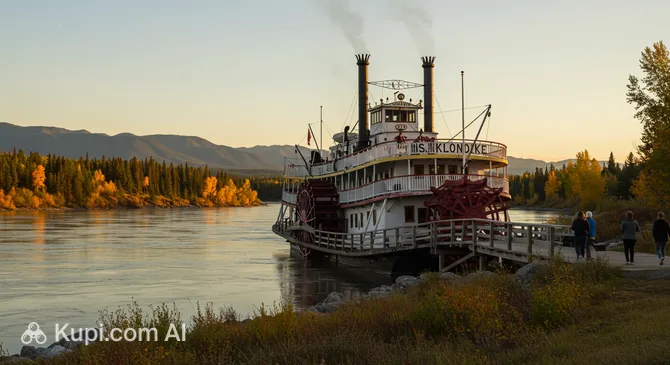
S.S. Klondike National Historic Site
S.S. Klondike National Historic Site. Иллюстрация. Источник: Kupi.com AI

Built in 1937 in Canada, this giant was a perfect replica of its predecessor and spent thirteen years plying the waters between Whitehorse and Dawson City. Back then, the Klondike II was a true titan of river navigation: with an impressive cargo capacity of 270 tons, it still managed to maneuver through shallow waters thanks to its unique shallow-draft design.

Today, this site is one of the crown jewels of the Yukon territory. Visitors can see the massive paddle wheels and learn the incredible story of its move to land. In 1966, to transform the steamer into a museum, it was literally "rolled" to its current location using tons of soap and heavy machinery, in one of the city's most unusual logistical operations.

Contacts

For current visiting information or to organize group tours, you can use the official communication channels.

How to contactContact
Address10 Robert Service Way, Whitehorse, YT Y1A 1V8, Канада
Phone+1 867-667-4511
Websitewww.pc.gc.ca

What to Do

A visit to the S.S. Klondike is a chance to literally step back in time. Stepping on board, you can explore a labyrinth of interior spaces: from the luxurious (by the standards of the day) first-class cabins to the rugged engine room, where the power of the original machinery can still be felt. The cargo holds and the galley are of particular interest, with their settings recreated with striking accuracy to reflect the lives of the crew and passengers in the mid-20th century.

Be sure to join a guided tour. Professional storytellers will not only explain how the massive paddle wheel worked but also share thrilling tales of the challenges of river navigation in subarctic conditions. From the steamer's top deck, magnificent panoramic views of the Yukon River open up, making this an ideal spot for photography.

After touring the vessel, enjoy a walk along the well-kept waterfront. In summer, the atmosphere here is calm and welcoming: plenty of open space, convenient paths, and a chance to chat with locals. It's a great spot for a family outing where history blends harmoniously with the beauty of northern nature.

Getting There

This historic monument is located at 10 Robert Service Way, making it easily accessible for visitors. If you are staying downtown, the walk to the ship takes very little time: the roughly 2-kilometer route runs along the scenic waterfront, offering beautiful views of the Yukon River.

For those who prefer the comfort of a car or taxi, the drive from the central streets of Whitehorse takes just a few minutes. Convenient and, importantly, free parking is available next to the site. Travelers arriving from Whitehorse Airport (YXY) will need about a 15–20 minute drive via the Yukon Highway.

Public transport is also a viable option, with local bus routes stopping within walking distance of the attraction. During the summer, many tourists and locals prefer to cycle here, taking advantage of the dedicated paths that stretch along the riverbank.

Ближайший город: Whitehorse

History & Facts

The history of this majestic vessel is inextricably linked to its predecessor — the Klondike I, built in 1929. Unfortunately, the first steamer ran aground in 1936 on a treacherous section of the Yukon River. However, its loss gave life to a new project: the boiler, engines, and many other components were carefully salvaged and used to create the Klondike II in 1937.

The new steamer was a true engineering feat of its time. Built by the Yukon Navigation Company, it boasted 50% more cargo capacity than other ships in its class while maintaining the shallow draft critical for navigating low-water sections of the river. From 1937 to 1950, it served as a vital transport artery, carrying cargo and passengers during the gradual decline of the gold mining era.

The spirit of the Klondike Gold Rush literally permeates the hull of this ship. Although the vessel was built after the peak of the rush (1896–1899), it embodies the technological power that allowed people to tame the harsh northern territories and transport hundreds of tons of gold from the Klondike River basin toward Dawson City.

The modern chapter of the site began in 1966 when the steamer made its final and most unusual "journey." Moving the multi-ton behemoth to its current spot required three bulldozers and an incredible eight tons of Palmolive soap used as lubricant. A year later, in 1967, the vessel was officially designated a National Historic Site.

Time Needed

For a standard tour of the ship's exterior and its main decks, 1 to 1.5 hours is sufficient for most visitors. This is enough time to listen to a brief guide presentation and peek into the steamer's key areas.

If you plan to study the engine room in detail, read all the information plaques, and have a full photo session amidst the authentic interiors, we recommend setting aside about 2 hours. This will also allow you to take a leisurely stroll through the adjacent park and enjoy the river panorama.

Working Hours

It is important to note that access to the steamer is seasonal. The museum typically opens its doors to visitors during the summer months — from June to September — when Yukon weather is most favorable for walking and tours.

At other times, the interior of the site may be closed to the public. As the attraction's current status can change, we strongly recommend checking the latest opening hours on the official Parks Canada website before planning your trip.

Nearby

After exploring the legendary steamer, don't be in a hurry to leave — the area around the Yukon River hides many more interesting locations. A walk through the surrounding areas will help you get a better sense of the North's atmosphere and the region's culture.

NameDistance
Yukon Visitor Information Centre0.5 km
La Cara0.7 km
Klondike Rib & Salmon0.8 km
MacBride Museum of Yukon History0.9 km
Kwanlin Dün Cultural Centre1.3 km
Raven Inn1.4 km
Earls Kitchen + Bar2.3 km

Reached the end of the page?

That means the route is fully explored