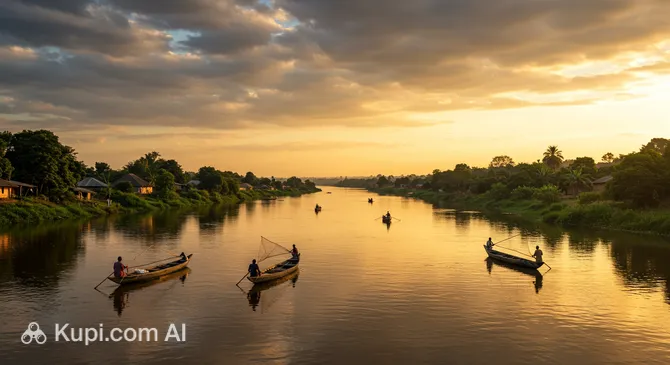
Bimbo is the second largest city in the CAR and essentially serves as a southern suburb of the capital, Bangui. Located just 15 kilometers from the country's main metropolis, it stretches cozily along the banks of the Ubangi River, which serves as a natural border with the Democratic Republic of the Congo. It is a bustling administrative center of the Ombella-M'Poko Prefecture, where modern growth dynamics intertwine with a traditional African way of life.
The city's geographical position makes it an important transportation hub. With a population of over 260,000 people, Bimbo plays a key role as a residential and commercial zone. While it lacks the hustle and bustle of the central capital, the rhythm of a developing region is clearly felt here. The landscape around the city is adorned with agricultural lands where cassava, bananas, and corn are grown, forming the backbone of local life.
Bimbo. Illustration.
Source: Kupi.com AI
Although Bimbo rarely appears in classic travel guides as a standalone destination, its rich historical heritage and status as a former French military post give it a special character. Visitors are drawn by the opportunity to see the everyday life of Central Africa without embellishment: from noisy riverside markets to quiet neighborhoods tucked away in greenery. A visit here is a chance to feel the true atmosphere of a suburb that serves as a bridge between urban civilization and the vast expanses of the region.
Weather Overview
The city of Bimbo is under the sway of an equatorial climate, characterized by high temperatures throughout the year and a clear division into dry and wet seasons. The average annual temperature here fluctuates around +26°C — +29°C. The hottest months are considered to be January and February, when daytime figures can reach +36°C, creating a rather sultry atmosphere in the suburb.
Precipitation is unevenly distributed: the rainy season usually lasts from May to October. During this time, humidity rises significantly, and downpours become frequent and heavy, peaking in September and October (up to 170-200 mm of rain per month). You can find out more about the current climate of the city to better prepare for your trip.
The dry season arrives in December and lasts until February. During this period, rain is a rarity, and the sky remains clear. However, the proximity of the Ubangi River softens the dryness of the air, creating a specific microclimate. Travelers should take into account that during the rainy season, some unpaved roads on the outskirts of Bimbo can become difficult to pass, so the most favorable time for a visit is considered to be the period from December to March.
Average monthly temperature
Average monthly precipitation
Interesting Facts
"facts": "
Second after the capital: Despite its status as a suburb, Bimbo is officially the second most populous city in the Central African Republic.
Military past: The city began to develop actively as a French military post back in the early 20th century, and in 1914, it became the center of the M'Poko military district.
River gateway: Thanks to its location on the banks of the Ubangi, Bimbo serves as an important transshipment point for cargo traveling from the Democratic Republic of the Congo.
A name with history: The word \"Bimbo\" comes from local dialects and is deeply rooted in the cultural identity of the ethnic groups of the Ombella-M'Poko region.
",
How to Get There
The city of Bimbo has specific transport accessibility due to its status as the capital's closest satellite. The main flow of travelers arrives here by land from Bangui. A trip by car or the popular local moto-taxi takes between 20 to 40 minutes; however, during peak hours, heavy traffic in the suburban zone can increase travel time to an hour. The road runs along the scenic banks of the Ubangi River.
The city does not have its own airport. The nearest air gateway is Bangui M'Poko International Airport (BGF). It is located approximately 30–40 kilometers from the center of Bimbo. The easiest way to get from the airport to the city is by private transfer or taxi. You can study more detailed information about transport to plan your route in advance.
There is no railway service in this region, so land transport consists exclusively of cars and motorcycles. River transport on the Ubangi is primarily used for carrying cargo from the neighboring Democratic Republic of the Congo; regular passenger services for tourists are poorly developed due to the lack of necessary pier infrastructure.
Main Attractions
The city of Bimbo is not a typical tourist center with an abundance of museums or monuments; however, it offers a unique opportunity to get acquainted with the authentic life of the CAR. The main point of attraction here is the banks of the Ubangi River. This is not just a natural feature, but the heart of local logistics and trade. Watching goods-laden boats depart for the shores of the Congo allows one to feel the scale of the region's river trade.
Another important feature of the city is its administrative quarter. This area houses the government buildings of the Ombella-M'Poko Prefecture, whose architecture reflects the functional style of the region. A walk through the central squares allows you to see how life is organized in the country's second most important city. For those interested in the agricultural sector, the extensive farmlands surrounding the residential areas, where traditional farming methods can be observed, will be of great interest.
Tourists most often visit Bimbo as part of day trips from the capital to immerse themselves in the atmosphere of the local markets. These marketplaces, though lacking specialized souvenir shops, are impressive for their color, variety of fabrics, and traditional products. Bimbo is a place for those looking not for grand facades, but for an honest portrait of a modern Central African province.
Local Cuisine
The gastronomic scene of Bimbo is a celebration of traditional Central African flavors. The staple diet of local residents consists of root vegetables and grains. The main dish you will encounter everywhere is fufu, a thick porridge made from cassava or corn, served with various sauces and stews. It is also worth trying fried plantains, which are prepared here both as a snack and as a side dish.
Thanks to the proximity to the Ubangi River, fresh fish is always on the local menu. It is grilled with hot spices or stewed in peanut sauce, which gives the dishes a unique local character. For drinks, look out for palm wine—a traditional low-alcohol beverage—as well as various herbal teas and infusions made from local fruits.
The food culture in Bimbo is centered around street stalls and local markets. Real food here is tasted right on the street, watching the cooking process over an open fire. There are practically no high-end restaurants in the city, but cozy cafes with simple home cooking operate in the center of the prefecture. The lack of exquisite interiors is more than compensated for by the hospitality and authenticity of the dishes offered.
Travel Tips
Bimbo is a place where a traveler can see the real life of Central Africa, but preparing for such a trip requires attention to detail. Our tips will help make your visit as comfortable and safe as possible.
Clothing and Essentials: Choose lightweight clothing made from natural fabrics, as the region is always hot and humid. Be sure to bring comfortable closed shoes for walking on unpaved roads, as well as sunglasses and a wide-brimmed hat.
Transport: To get around the city, use moto-taxis—they are the most efficient transport in Bimbo. Always agree on the price before starting your journey. For trips to Bangui, it is better to choose a private taxi if you value comfort.
Finances: The official currency is the CFA Franc (XAF). There are almost no ATMs in Bimbo, and bank cards are practically not accepted. Carry a sufficient supply of cash in small denominations.
Health and Safety: Drink only bottled water. Use insect repellents, especially in the evening, and take care of necessary vaccinations in advance. Avoid walking alone in the outskirts at night.
Communication: The main languages of communication are French and Sango. English is very poorly understood, so learn a few basic phrases or use an offline translator. It is better to buy a local SIM card in the capital.
Local Etiquette: When entering a shop or starting a conversation with locals, be sure to greet them politely. You should only photograph people and administrative buildings with prior permission.
What to Avoid: Do not discuss political topics and do not show impatience if things go slower than you expected. The concept of time here may differ from the European one.
Extra Tip: Visit the markets by the Ubangi River early in the morning—it is the best time to see the city in its most active and vibrant state.
Following these simple rules will allow you to focus on the unique atmosphere of Bimbo and ensure you get only positive impressions from your trip.
Entertainment & Nightlife
In Bimbo, there is practically no organized nightlife in the classic sense: you won't find major nightclubs or specialized concert halls here. As a typical administrative and residential suburb, the city quiets down after dark. Local residents prefer to spend their evenings in small informal open-air establishments or with their families.
For those looking for vibrant entertainment, bars with live music, and dance floors, the only option is to travel to neighboring Bangui. The capital is just 15 kilometers away, and that is where the region's entire entertainment infrastructure is concentrated. Daytime leisure in Bimbo itself is limited to visiting markets and walking along the Ubangi River, which can be quite picturesque during the sunset hours.
Safety at night requires increased attention, so tourists are not recommended to walk in remote outskirts after sunset. If you decide to stay late at a local cafe, it is better to arrange transport in advance. Overall, the atmosphere in the city is calm but oriented exclusively towards the daily needs of the local population rather than the leisure industry.
Parks & Museums
In Bimbo itself, there are no classic parks with alleys and benches or state museums. The city lives at a different pace, where nature is organically woven into the urban environment. The main green zones of the city are the banks of the Ubangi River and the adjacent untouched areas of vegetation. Here, you can find secluded spots for river watching, which locals use for relaxation and everyday meetings.
The city's cultural heritage is presented not in museum display cases, but in its living history as a former administrative center. Walking through the old quarters of the prefecture, you can notice elements of colonial planning. To get acquainted with the art and history of the region, tourists are usually recommended to visit the National Museum in neighboring Bangui, which is a half-hour drive away.
The city's surroundings are rich in agricultural landscapes, which can become a kind of "open-air museum" for a foreign guest. Observing traditional methods of land cultivation and the growing of tropical crops provides a deeper understanding of local life than any static exhibition. Bimbo offers not decorative parks, but the natural beauty of an African suburb.
Getting Around
The transport system in Bimbo is simple and adapted to the needs of local residents. The main means of travel within the city and beyond are moto-taxis (known locally as "motos"). This is the fastest and most flexible way to get around, especially considering that many roads on the outskirts of the city remain unpaved. The cost of a trip should always be negotiated with the driver in advance, as there are no fixed fares.
Shared minibuses and occasional large buses run between Bimbo and Bangui. They depart as they fill up and are the most budget-friendly way to reach the capital. However, be prepared for cramped conditions and a lack of air conditioning. During peak hours, public transport can be very overcrowded, so it is better to choose morning or daytime hours for a comfortable trip.
There is no electronic travel card system or mobile apps for fare payment in Bimbo—payment is made only in cash with small bills. For moving around the central part of the city, walking is quite sufficient, as the main administrative buildings and markets are located compactly. Car rentals are only possible in the neighboring capital, and this is recommended only for experienced drivers ready for the region's specific road conditions.
Accommodation
Accommodation options in Bimbo are primarily geared toward those arriving in the city on business: government officials, employees of international organizations, and expats. Small private hotels and guesthouses offering a basic level of comfort predominate here. There are no luxury five-star hotels in the city itself—travelers usually head to neighboring Bangui for world-class service.
Most residential properties are concentrated in the central part of the prefecture, near administrative buildings and main markets. When choosing accommodation in Bimbo, keep in mind that air conditioning and stable internet are considered advantages rather than standard features, so it is best to clarify placement details in advance. For long-term stays, renting apartments in quiet residential areas is common practice.
It is recommended to book rooms several weeks before your trip, especially if your visit coincides with major administrative events in the region. Cash remains the main method of payment in local hotels, as card terminals are extremely rare. Overall, staying in Bimbo allows for significant savings compared to prices in the capital while remaining close to the main points of interest.
Nearby Cities
The city of Bimbo can serve as a convenient base for short trips around the southwest of the CAR and even beyond its borders. Thanks to its location, it provides access to several interesting locations, each with its own unique character.
Just 8 kilometers away is Bangui, the republic's capital. This is a must-see for any tourist: here you can visit the central market, the cathedral, and enjoy the view of the river from the hill of the Basilica. Another unique destination is the city of Zongo, located directly opposite on the other bank of the Ubangi River. This is already the territory of the Democratic Republic of the Congo, and a boat trip there will be a real adventure (don't forget to check the visa rules).
For those ready to drive a bit further, the city of Boali is of interest, famous for its majestic waterfalls, which are especially impressive during the rainy season. It is also worth mentioning Bobangi—a place with deep historical context related to the legacy of the founders of the modern republic.
Exploring the surroundings of Bimbo allows you to see the diversity of the region—from the capital's noise to the tranquility of coastal Congolese settlements. Each such trip expands one's understanding of life in the very heart of the African continent.
Shopping & Souvenirs
Shopping in Bimbo is, first and foremost, an introduction to the colorful local markets. There are no shopping malls with global brands here, but handcrafted goods and fresh produce are available in abundance. The main commercial activity is concentrated in the center of the prefecture and in the areas adjacent to the Ubangi River. This is where farmers from all over the area gather, bringing cassava, exotic fruits, and spices.
Special attention should be paid to traditional fabrics. At local markets, you can find bright cuts of cloth with unique African prints, which local artisans are ready to sew into clothing right on the spot. As souvenirs from Bimbo, people often bring back woven items: baskets, mats, and hats made from natural fibers using ancient techniques.
Shops and stalls usually operate from early morning until sunset, closing during the hottest part of the day. Payment is made exclusively in cash in the local currency (CFA francs). If you require a wider selection of souvenirs or specialized goods, it is worth heading to the markets in the capital, but in Bimbo, prices for many items can be significantly lower due to the lack of a tourist markup.