Support

Museo Regional

About

You can immerse yourself in the past of the northern coast at an amazing place — the Iquique Regional Museum. Located in a magnificent restored 19th-century building, it is an essential stop for those who want to understand the soul of Iquique and get acquainted with the rich heritage preserved by Chile.
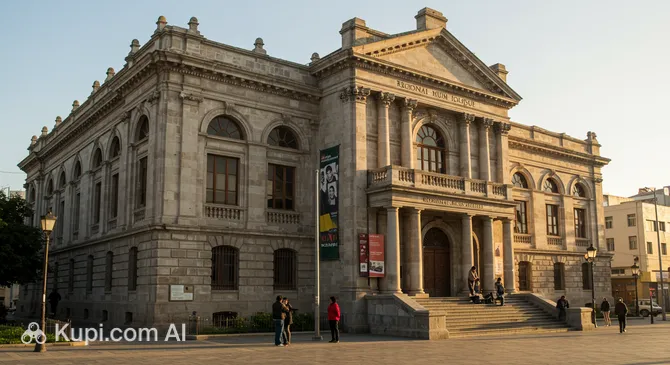
Regional Museum of Iquique
Regional Museum of Iquique. Иллюстрация. Источник: Kupi.com AI

The museum is famous for its eclectic and incredibly valuable collection. Here, under one roof, mysterious ancient mummies coexist with exquisite pre-Inca textiles and artifacts from the "saltpeter rush" era. The building itself, which once served as a hotel during the region's industrial heyday, adds a special touch of historical authenticity to the visit.

The exhibition is very well organized, allowing visitors to trace the development of the Tarapacá region from ancient times to the present day. A pleasant bonus for tourists is the free admission, making this cultural treasure accessible to every explorer.

Contacts

To confirm current information on temporary exhibitions or to plan a group visit, you can use the following contact details:

How to contactContact
AddressBaquedano 951, Ex Huancavelica 47, 1100000 Iquique, Tarapacá, Chile
Phone+56 57 254 4719
Websitewww.registromuseoschile.cl

What to Do

A true journey through time awaits you in the museum's halls. Start with the archaeological department, featuring Chinchorro culture mummies and intricate Inca woven products — their preservation and craftsmanship are truly mind-boggling. This is a great opportunity to see objects thousands of years old up close.

Particular attention should be paid to the section dedicated to the nitrate mining era. Here you can see workers' tools, everyday items, and vintage gramophones that will transport you back to when Iquique was a flourishing industrial port. If you are planning a trip to the abandoned Humberstone or Santa Laura offices, visiting the museum will serve as the perfect introduction.

Don't forget to stop by the hall with archival newspapers published here since the mid-19th century and view the collection of taxidermied local animals. Even if you don't speak Spanish, many exhibits are intuitive and evoke genuine interest in both adults and young visitors.

Getting There

The museum is located in the heart of the historic center at Baquedano 951. This is a pedestrian street, so a walk from the main square, Plaza Prat, or the city wharf will take no more than 10–20 minutes, allowing you to enjoy the city's unique wooden architecture along the way.

If you are coming from outlying districts or Cavancha Beach, it is most convenient to take a taxi or local microbuses (colectivos) that run on parallel streets. A taxi ride from the central part of the city will take about 10–15 minutes.

For tourists arriving by public transport, the bus stops at the intersection with Huancavelica street serve as a landmark. It is worth noting that the building is equipped with a special ramp, making the entrance accessible for visitors with limited mobility and travelers with strollers.

Ближайший город: Iquique

History & Facts

The exhibition at this site serves as a chronicle of the Tarapacá region, spanning a vast period from pre-Inca civilizations to the present day. The collection carefully preserves evidence of the lives of ancient peoples, including complex textile samples and unique burial methods practiced long before the arrival of Europeans.

Special attention is given to the "golden age" of saltpeter in the 19th and early 20th centuries. The building that houses the museum today is a historical monument in its own right: it once served as the luxurious Hotel Residence, hosting wealthy industrialists and nitrate traders. The architecture from the port city's era of prosperity has been preserved here in its original form.

For natural science enthusiasts, the museum features a rare mineralogical collection. Among the exhibits, you can see unusual minerals such as joanneumite, which was discovered in the city's vicinity. These finds highlight the geological uniqueness of the Atacama Desert and its significance to global science.

Today, this cultural space is considered one of the most important centers for preserving the heritage of Chile in the north of the country. The museum does more than just display antiques; it actively participates in community life by digitizing city archives and regional newspapers published since 1850 to pass this history on to future generations.

Time Needed

To leisurely explore all the halls and dive into the details of the historical exhibits, most travelers need between 45 minutes and 1.5 hours. This is plenty of time to get to know the archaeological finds and the nitrate boom era.

If you plan to study the archival newspapers or the mineralogical collection in detail, it is worth setting aside a bit more time. Thanks to the building's compactness, a visit to the museum can easily fit into a busy schedule exploring the old town, leaving time for a break at nearby cafes.

Working Hours

When planning your visit, please note that the museum follows a specific schedule. The establishment is open to visitors from Tuesday to Saturday. Monday and Sunday are days off when the exhibitions are closed to the public.

  • Tuesday — Thursday: 09:00 to 17:00
  • Friday: 09:00 to 16:00
  • Saturday: 09:00 to 17:00
  • Monday and Sunday: Closed
DayWorking hours
ПонедельникЗакрыто
Вторник9:00 – 17:00
Среда9:00 – 17:00
Четверг9:00 – 17:00
Пятница9:00 – 16:00
Суббота9:00 – 17:00
ВоскресеньеЗакрыто

Nearby

Its location in the historic part of the city makes it easy to combine a cultural visit with a tour of other interesting sites. A walk around the neighborhood will reveal Iquique's architectural heritage and modern entertainment venues.

NameDistance
Jolly Roger Pub0.2 km
Iquique Clock Tower0.3 km
Hell Street Bar0.4 km
Immaculate Conception Cathedral0.6 km
Altos Verdes0.7 km
La Fábrica0.8 km
Corbeta Esmeralda Museum0.8 km

Reached the end of the page?

That means the route is fully explored