Support

Artisanal village Arica

About

A stroll through picturesque streets lined with bright, colorful shops and cozy workshops — this is how the Arica Artisanal Village (Poblado Artesanal) greets its guests. This vibrant cultural center in the city of Arica is the true heart of folk crafts in the northern region of Chile. Here, modern travelers can see how textile, wood, and ceramic products are born, created according to ancient traditions.
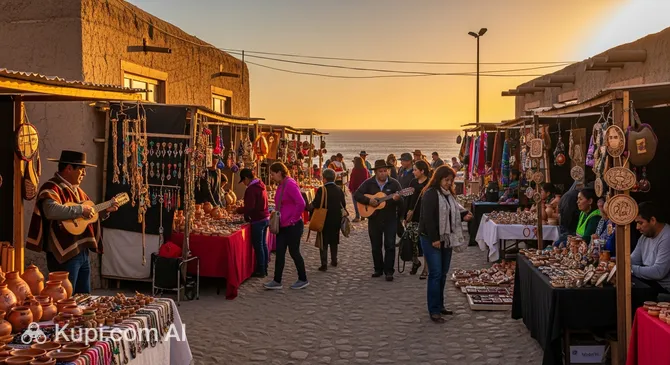
Arica Artisan Village
Arica Artisan Village. Иллюстрация. Источник: Kupi.com AI

The unique feature of this place is that it is an architectural replica of the highland village of Parinacota. This allows visitors to feel the atmosphere and lifestyle of the Altiplano while remaining on the coast and avoiding a difficult mountain ascent. The village features specialized shops where women from indigenous communities sell unique alpaca wool products, preserving the secrets of natural dyeing and hand-weaving.

The settlement is considered the perfect spot for finding authentic souvenirs. Here, you can find everything from miniature terracotta copies of missionary churches to exquisite jewelry. The atmosphere of the place, filled with the aromas of local treats and views of the distant Andes, makes it a must-visit for everyone who appreciates cultural heritage and handmade work.

Contacts

To confirm current information about events and potential schedule changes, we recommend visiting the official website.

How to contactContact
AddressHualles 2825, 1000000 Arica, Arica y Parinacota, Чили
Websitewww.pobladoartesanal.cl

What to Do

The main reason to visit this place is, undoubtedly, soulful shopping. In the village workshops, you can purchase unique handmade items: the softest alpaca wool textiles, carved wooden sculptures, elegant silver, and ceramics. Artisans often work right in front of the public, and chatting with them allows you to learn many interesting things about ancient techniques for making household items.

Be sure to stop by the local food stalls. Here you can taste traditional Chilean dishes and authentic snacks, the aromas of which fill the air. Occasionally, the village space comes alive with the sounds of folk music, creating a festive mood and allowing you to fully immerse yourself in the local color.

For photography enthusiasts, the village offers plenty of opportunities: the bright walls of the shops, textured crafts, and a cheerful atmosphere make for excellent backdrops. A tip from experienced travelers: it is best to come here during the day when most workshops are open, and be sure to carry cash, as card terminals are not available in all shops.

Getting There

The village is located at Hualles 2825. It is a fairly convenient location within the city limits, easily accessible from the central part of Arica. If you prefer walking, the route from the center can be a pleasant addition to your excursion, offering views of the Andes and the ocean coast.

For faster travel, it is best to use a taxi or local buses (microbuses) that regularly run on city routes. The trip from the city center takes very little time.

For those traveling by their own or a rented car, the approximate coordinates of the site are: -18.4911542, -70.287148. Parking is available near the village, though it is worth noting that the number of free spaces may be limited on weekends.

Ближайший город: Arica

History & Facts

The Arica Artisanal Village was designed and built as an architectural replica of Parinacota — a traditional settlement in the highland Altiplano. The main idea was to bring the atmosphere and unique style of northern Chile to a more accessible location, allowing guests to experience the culture of the highlands without the need to climb to an altitude of over 4,000 meters.

This region is inextricably linked to the oldest layers of history. Here, you can feel the influence of the Chinchorro culture, famous for its mummies, and the living traditions of the Aymara people. The village has become an important center for preserving this indigenous heritage, where ancient weaving and pottery techniques are passed down from generation to generation.

A special role in the life of the village is played by women's associations, such as the Asociacion Indigena Red de Artesanal Productoras PUSKA. These organizations help craftswomen from remote Altiplano villages sell their products, preserving authentic methods of wool dyeing and textile weaving that might otherwise disappear under the pressure of modern mass production.

Time Needed

To stroll through the workshops at a leisurely pace, chat with local artisans, and pick out memorable gifts, it is recommended to set aside about 2–3 hours for your visit. This is enough time to immerse yourself in the atmosphere of the place without feeling rushed.

If you plan to attend a master class or decide to linger at the local food stalls to try traditional snacks, it is better to plan for a half-day visit. The relaxed rhythm of the village encourages long contemplation and a thoughtful introduction to folk crafts.

Working Hours

According to publicly available data, the village operates on the following schedule: from Tuesday to Sunday, the doors are open to visitors from 10:00 to 13:30 and, after the siesta, from 15:00 to 20:00. The site is usually closed on Mondays.

As the schedule may change depending on holidays or special festivals, it is recommended to check the official website or verify the information with local guides before your trip.

DayWorking hours
понедельникЗакрыто
вторник10:00–13:30, 15:00–20:00
среда10:00–13:30, 15:00–20:00
четверг10:00–13:30, 15:00–20:00
пятница10:00–13:30, 15:00–20:00
суббота10:00–13:30, 15:00–20:00
воскресенье10:00–13:30, 15:00–20:00

Nearby

Visiting the artisanal village is just one part of the cultural experience available in this region. The surrounding area is rich in both historical monuments and natural locations that provide a deeper understanding of the spirit of northern Chile.

Exploring nearby attractions will help you form a complete picture of the history — from ancient archaeological finds to colonial architecture and modern cultural spaces.

NameDistance
ASOCAPEC Terminal Market0.6 km
Arica Restobar2.7 km
Arica Mall Plaza3.3 km
Carlos Ibáñez del Campo Park3.3 km
La Posta3.4 km
Arica City Center3.5 km
Arica Sea Museum3.6 km

Reached the end of the page?

That means the route is fully explored