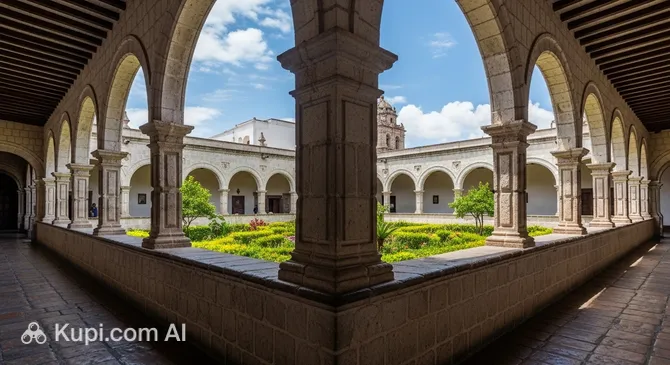
Hidden from the city bustle on the western bank of the Chili River, the La Recoleta Monastery and Museum is a unique architectural ensemble built by the Franciscans in the mid-17th century. This active monastery in the city of Arequipa is not just a religious site, but a true cultural treasure that holds centuries of Peru's history.
Monastery and Museum of La Recoleta. Illustration.
Source: Kupi.com AI
Traveler photos:
One of the main gems of the complex is its library, containing more than 20,000 ancient volumes, including rare 15th-century incunabula. The monastery buildings are constructed from white sillar — a local volcanic stone — and its four surviving cloisters with elegant columns and lush gardens create an atmosphere of absolute peace.
Today, it houses a museum with an incredibly diverse exposition. Guests can see not only halls of religious art from the Cusco school but also amazing Amazonian collections brought by missionaries from the jungle, as well as artifacts from pre-Columbian civilizations, including textiles and ancient mummies. It is a place where spirituality, science, and the history of Inca emperors intertwine.
Contacts
To confirm current information before your visit or to organize a group tour, you can use the following contact details:
At this site, it is worth starting with a leisurely stroll through the cloisters (inner courtyards). Examining the carved columns made of volcanic stone and resting in the shade of the gardens, you can feel the rhythm of monastic life. Be sure to head to the upper levels, which offer an impressive view of the famous library — the tidy rows of ancient leather-bound folios look truly magical.
Ethnography enthusiasts will find it interesting to visit the Amazon Hall. It houses exotic exhibits from the Peruvian jungle: from taxidermy piranhas and crocodiles to traditional clothing and weapons of indigenous peoples. Equally fascinating is the collection of pre-Columbian art, featuring ancient masks, totems, and even mummies, as well as portraits of twelve Inca rulers.
To round out your experience, stop by the old toy hall and get acquainted with the numismatic collection. If you want to learn more hidden details about the history of the order and the significance of specific artifacts, we recommend joining a guided tour. Guides often conduct tours in several languages and share stories that aren't always found in guidebooks.
Getting There
The architectural ensemble is located at La Recoleta 117, on the west bank of the Chili River. If you are in the historic center, the walk to the site takes only about 10 minutes from the main square, Plaza de Armas. The path takes you across the picturesque Bolognesi Bridge (Puente Bolognesi), which offers excellent views of the city and its surroundings.
Navigation is quite simple: the monastery's tall brick-and-white bell tower is visible from afar, serving as an excellent landmark for tourists. If you prefer comfort, you can use a licensed taxi — the ride from the city center is short and inexpensive. Public transport also runs in this direction, though a walk will allow you to better experience the atmosphere of the old neighborhoods.
Nearest city: Arequipa
History & Facts
The history of this place began in 1648, when Father Pedro de Peñalosa (also known as de Mendoza) founded the Franciscan monastery. The initial construction of the church and the first two inner courtyards took three years. The craftsmen used the famous sillar — a white volcanic stone that gave the city its unique appearance — as their primary material.
Over the centuries of its existence, the complex has repeatedly faced the forces of nature. Devastating earthquakes forced the monks to restore walls and vaults, introducing architectural features from different eras. The last major restoration of the library took place in 1926, and in 1978, the monastery officially opened its doors to the public as a museum.
One of the most fascinating facts is the history of the local library. Books were delivered to it from Seville via a complex route: across the Isthmus of Panama to Lima, and then into the mountains. This highlights the vital role the Franciscans played in the cultural and educational development of the region. The museum's collections, including artifacts from the Amazon, were gathered by missionaries during their work in the country's most remote corners.
Time Needed
To leisurely explore all the museum halls, stroll through the shaded courtyards, and look into the unique library, we recommend setting aside 1.5 to 2 hours for your visit. This is quite enough time to soak in the tranquility of the monastery and carefully study the ethnographic collections.
If you decide to use the services of a guide, a standard tour usually lasts about one hour. The remaining time can be spent on a self-guided exploration of the grounds, a visit to the old cemetery, or finding the best angles for photos in the white stone courtyards.
Working Hours
The museum and monastery can be visited from Monday to Saturday. The complex doors are usually open to guests in two shifts: the morning shift lasts from 09:00 to 13:30, followed by a short break, and work resumes from 14:30 to 17:00. The monastery is closed on Sundays, and no tours are conducted.
Please note that the schedule may change slightly on holidays. Before your visit, it is recommended to check the current schedule on the official social media page or clarify information at the city's tourist center.
Day
Working hours
Monday
09:00–13:30, 14:30–17:00
Tuesday
09:00–13:30, 14:30–17:00
Wednesday
09:00–13:30, 14:30–17:00
Thursday
09:00–13:30, 14:30–17:00
Friday
09:00–13:30, 14:30–17:00
Saturday
09:00–13:30, 14:30–17:00
Sunday
Закрыто
Nearby
Exploring the area around the monastery will allow you to see the city from different perspectives — from quiet historical streets to modern entertainment zones. After immersing yourself in the atmosphere of antiquity and spirituality, it’s interesting to switch to a stroll through nearby parks or visit shopping centers where modern life is in full swing.