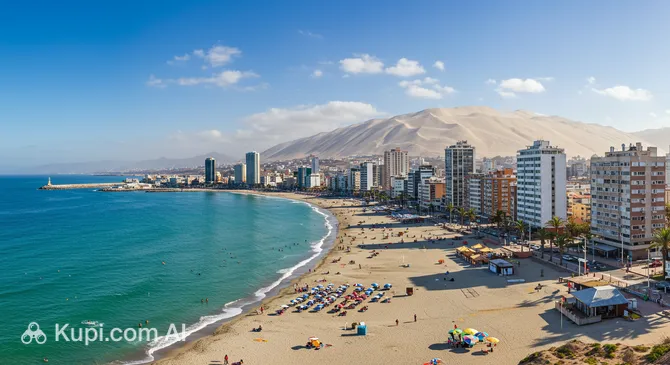
Iquique is a captivating coastal metropolis located in the northern part of Chile, renowned for its unique blend of sun-soaked beaches, desert landscapes, and vibrant urban life. As the capital of the Tarapacá Region, this city serves as a premier holiday destination, offering visitors a lively atmosphere where the arid beauty of the Atacama Desert meets the refreshing waves of the Pacific Ocean. With a population of approximately 188,000 residents, it feels both bustling and welcoming, providing a perfect escape for those seeking relaxation and adventure alike.
Geographically, the city is situated on a narrow coastal plain, dramatically framed by the sea to the west and the towering Coastal Range to the east. This location gifts the city with a mild desert climate, often described as an "eternal spring," making it a pleasant place to visit year-round. Exploring the fascinating history of Iquique reveals its transformation from a small fishing village to a wealthy 19th-century saltpeter port, a legacy still visible in the elegant Georgian-style architecture of its historic district.
Iquique. Illustration.
Source: Kupi.com AI
Travelers are drawn to Iquique for its diverse range of attractions. The city is famous for Playa Cavancha, a stunning urban beach with warm waters and palm trees, perfect for swimming and sunsets. Just behind the city rises the majestic Cerro Dragón, the largest urban sand dune in the world, which offers incredible opportunities for sandboarding and paragliding. Additionally, shoppers flock to the Zofri (Zona Franca), a massive tax-free shopping mall that is one of the most important commercial hubs in South America.
Whether you are interested in wandering through historic streets, enjoying fresh seafood by the ocean, or experiencing the thrill of desert sports, Iquique has something special to offer. It is a destination that effortlessly combines leisure with culture, inviting every traveler to discover the magic of the Chilean north.
Weather Overview
Iquique benefits from a mild desert climate, making it a fantastic destination for outdoor activities regardless of the season. The city experiences consistent warmth without extreme heat, and very little rainfall, creating an environment often described as an eternal spring.
During the warmest months from January to March, average temperatures hover around 20°C to 21°C, with daily highs reaching up to 23.9°C in February. The cooler season, spanning June through August, remains mild with average temperatures dipping to about 15°C, and nighttime lows rarely falling below 11°C.
Precipitation is incredibly scarce, often registering 0mm for months at a time, which is typical for this part of the Atacama Desert. While actual rain is rare, the winter months may bring some cloudiness or light coastal mist. Travelers planning a trip can generally expect dry conditions year-round, but checking the specific weather in Iquique before packing is always a good idea.
Average monthly temperature
Average monthly precipitation
Interesting Facts
Beyond its famous beaches and dunes, Iquique holds fascinating stories rooted in its boom-town past and desert geography. Here are a few intriguing details that make this northern city truly unique.
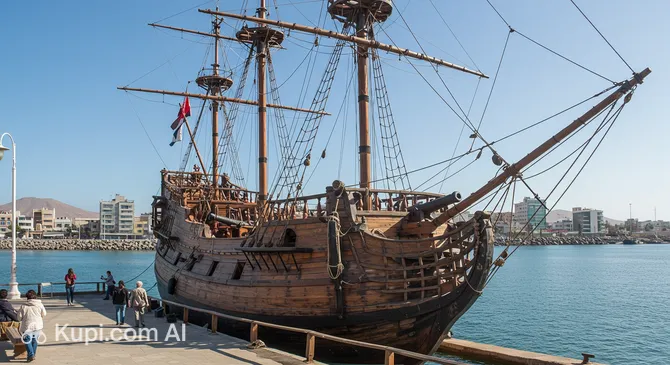
The city's most famous ship is actually a ghost from the past brought back to life. The Corbeta Esmeralda Museum is a meticulous 1:1 scale replica of the Chilean corvette that was heroically sunk in the bay during the War of the Pacific. The reproduction is so precise that it allows visitors to walk the decks of a vessel that, in reality, rests on the ocean floor just a few kilometers away.
Much of Iquique’s historic architecture was built with wood that traveled thousands of miles to get there. During the 19th-century saltpeter boom, ships sailing from North America to collect nitrates used Oregon pine as ballast for the journey south. This high-quality timber was then offloaded and used to construct the elegant mansions and sidewalks that still characterize the historic district today.
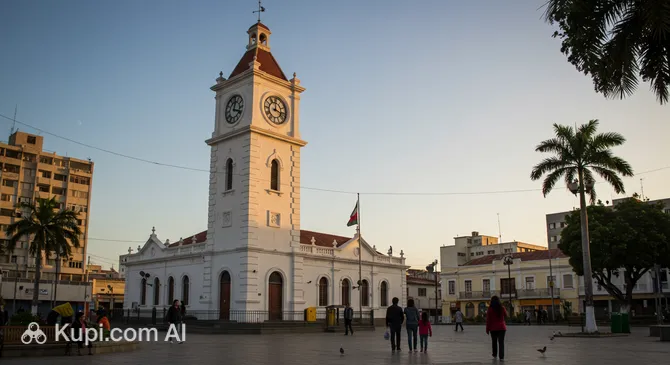
The iconic Iquique Clock Tower, located in Plaza Prat, serves as a silent witness to the region's shifting borders. It was commissioned from England while the city was still under Peruvian administration in the 1870s, but by the time it was erected, Iquique had become part of Chilean territory, making it a monument that bridges two eras of local history.
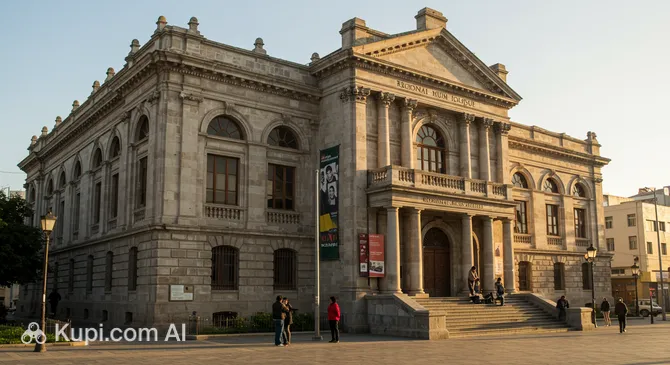
The Regional Museum of Iquique houses evidence of one of the world's oldest mummification cultures. Long before the Egyptians, the Chinchorro people of this coastal desert region developed complex techniques to preserve their dead, and the museum offers a rare glimpse into this ancient anthropologic wonder.
Corbeta Esmeralda Museum. Illustration.
Source: Kupi.com AI
Traveler photos:
How to Get There
Reaching this coastal gem in northern Chile is relatively straightforward, thanks to its well-connected transport infrastructure. Most travelers arrive by air, but overland journeys through the Atacama Desert are also popular for those already exploring the region. For a detailed breakdown of all transport options, routes, and tips, you can read more about how to get to Iquique on our dedicated page.
The primary gateway to the city is Diego Aracena International Airport (IATA: IQQ). It serves as the main hub for the region, handling a significant volume of domestic and occasional international flights. Located approximately 34 km south of the city center, the airport is well-connected to the urban area by a coastal highway. A taxi or transfer service typically takes about 45 to 50 minutes to reach downtown Iquique, offering scenic views of the Pacific Ocean along the way.
If you are exploring the wider northern region, another option is Chacalluta Airport (IATA: ARI), located in the city of Arica. However, it is important to note that this airport is about 209 km away from Iquique. Travelers landing here would need to rent a car or take a bus, with the journey south taking approximately 3 to 4 hours through the desert landscape. Similarly, El Loa Airport (IATA: CJC) in Calama is a major hub for those visiting San Pedro de Atacama but is situated roughly 281 km inland from Iquique.
For clarity, here is a summary of the main airports serving the region:
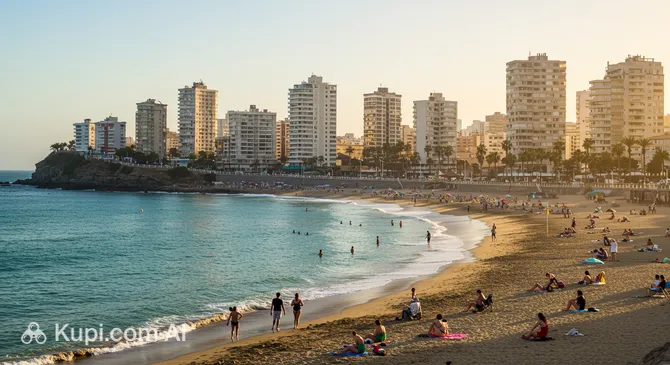
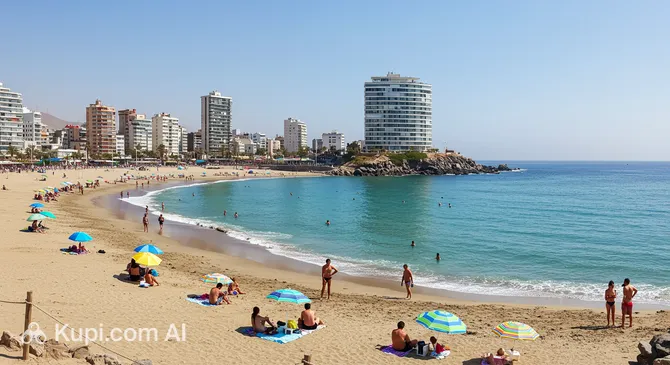
One of the most beloved spots in the city is the Cavancha Peninsula. This area serves as the heart of local tourism, boasting a beautiful waterfront promenade lined with palm trees and modern amenities. It is home to the famous Playa Cavancha, where warm waters and gentle waves attract swimmers and surfers year-round. Tourists love this area for its lively atmosphere, offering a perfect mix of relaxation by the sea and proximity to excellent restaurants and parks.
Cavancha Peninsula. Illustration.
Source: Kupi.com AI
Traveler photos:
For those interested in shopping, the Zofri Mall is an essential stop. As part of the Iquique Free Trade Zone, this massive commercial center offers a vast array of products, from electronics and perfumes to textiles, all at tax-free prices. It is one of the most important shopping hubs in South America, drawing visitors from neighboring countries who come to take advantage of the competitive deals and extensive variety of international brands.
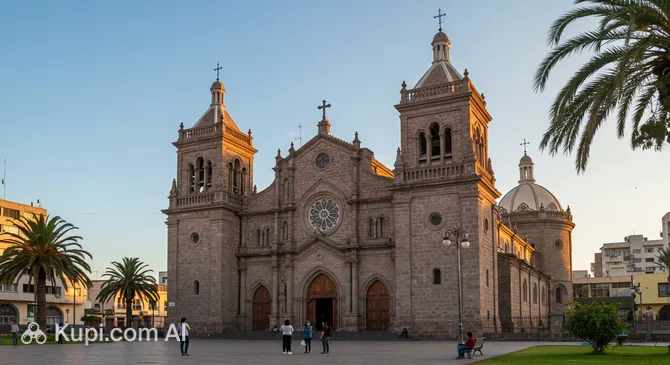
History and architecture enthusiasts should visit the Immaculate Conception Cathedral. Located near the historic Plaza Prat, this stunning church dates back to the late 19th century and is a prime example of the city's architectural heritage. It was designated a National Monument and serves as a spiritual anchor in the bustling center, impressing visitors with its elegant neoclassical style and serene interior.
Immaculate Conception Cathedral. Illustration.
Source: Kupi.com AI
Traveler photos:
To experience the city's vibrant nightlife, the Iquique Casino offers a sophisticated environment for entertainment. Situated close to the beach, it features a wide range of gaming tables and slot machines, as well as live shows and fine dining options. It is a popular destination for travelers looking to enjoy a fun evening out after a day of exploring the desert or lounging by the ocean.
Local Cuisine
The culinary scene in Iquique is a delightful reflection of its geography, where the bounty of the Pacific Ocean meets the unique flavors of the Atacama Desert. As a coastal city, the gastronomy is heavily centered around fresh seafood, offering some of the best marine dishes in Chile. The cold Humboldt Current provides an abundance of high-quality fish and shellfish, making seafood a daily staple for locals and a highlight for visitors.
When it comes to main dishes, you simply cannot leave without trying the local Albacora (swordfish). It is often served grilled with a side of quinoa or fresh salads, highlighting its meaty texture and rich flavor. Another favorite is the "Sanguche de Pescado Frito," a fried fish sandwich typically enjoyed near the port or at market stalls. For those with a sweet tooth, Iquique is famous for the Chumbeque, a traditional sweet made from layers of crispy pastry held together with fruit syrups like lemon, orange, or mango. It is the city's signature dessert and has been a local tradition for generations.
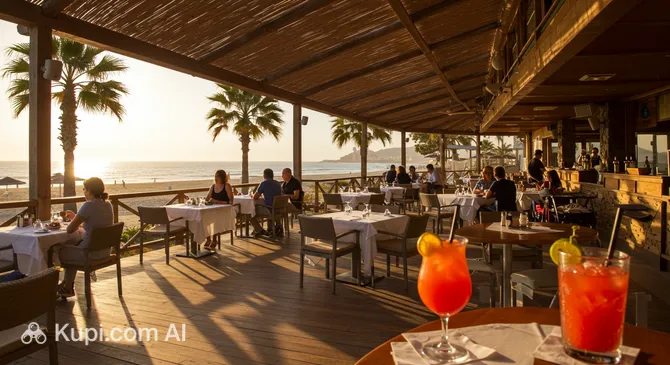
Terrado Cavancha Restaurant. Illustration.
Source: Kupi.com AI
Traveler photos:
The drink menu in Iquique is equally distinctive, largely thanks to the nearby oasis of Pica. The region produces a small, intensely flavorful mango known as the "Mango de Pica." This fruit is the star ingredient in the Mango Sour, a local twist on the classic Pisco Sour that is refreshing, sweet, and incredibly popular. You will find this cocktail on almost every menu, often served as an aperitif to stimulate the appetite before a seafood feast.
The food culture here ranges from casual to sophisticated. For a truly authentic experience, many head to the "Caleta" (fishing cove) areas to eat fresh ceviche straight from the source. However, the city also boasts modern dining establishments that blend local ingredients with international techniques. For instance, the Terrado Cavancha Restaurant offers a refined atmosphere where you can enjoy exquisite dishes while overlooking the ocean. It is a perfect spot for a romantic dinner or a special celebration.
As the evening progresses, the city's energy shifts to its lively bars and pubs. Locals often gather to enjoy craft beers or cocktails in thematic venues. Places like Hell Street Bar and the Jolly Roger Pub provide a vibrant setting to unwind, socialize, and sample a variety of drinks in a fun, pirate-themed or rock-inspired environment. Whether you are grabbing a quick bite at a market or dining in style by the beach, Iquique’s flavors are sure to leave a lasting impression.
Travel Tips
Welcome to Iquique, a city where the golden sands of the Atacama meet the Pacific waves. To ensure your adventure in this unique "eternal spring" destination is as smooth as it is memorable, here are some essential practical tips to keep in mind before you pack your bags.
Clothing and Gear: While the climate is mild year-round, layers are your best friend. Days can be warm and sunny, perfect for beachwear and light clothing, but evenings often bring a cool desert breeze, so pack a light jacket or sweater. Crucially, bring high-factor sunscreen, sunglasses, and a hat; the UV radiation in northern Chile is extremely high, even on cloudy days. If you plan to visit the high-altitude Altiplano nearby, bring warm thermal gear.
Transportation: The most popular and efficient way to get around Iquique is by using colectivos. These are shared taxis that look like regular sedans but operate on fixed routes like buses, with the route number displayed on a roof sign. They are faster than buses and very affordable. Rideshare apps like Uber are also available, but for short distances along the Cavancha waterfront, walking is safe and pleasant.
Finances: The official currency is the Chilean Peso (CLP). Credit and debit cards are widely accepted in hotels, restaurants, and the Zofri mall. However, you will need cash (small bills and coins) for colectivos, street food vendors, and smaller shops. ATMs are plentiful in the city center and shopping areas. A tip (propina) of 10% is standard in restaurants and is usually added to the bill voluntarily.
Health and Safety: Iquique is generally safe for tourists, but standard precautions against pickpocketing apply, especially in crowded markets or the downtown center. As a coastal city in a seismic zone, pay attention to the green Tsunami Evacuation Route signs found throughout the streets; knowing the direction to higher ground is a simple but important safety measure. Pharmacies like Cruz Verde or Salcobrand are common, and some operate 24/7 for emergencies.
Communication: Spanish is the primary language. While staff in high-end hotels may speak English, it is not widely spoken by taxi drivers or shopkeepers. Learning a few basic phrases like "¿Cuánto cuesta?" (How much?) or "Gracias" (Thank you) will go a long way. For connectivity, purchase a prepaid SIM card from providers like Entel or Movistar at the airport or local kiosks to use map and translation apps.
Local Etiquette: Chileans are warm and polite. The standard greeting, even among new acquaintances in casual settings, is a single kiss on the right cheek. When entering a shop or boarding a bus, it is polite to say "Buenos días" or "Buenas tardes." Patience is appreciated; service can sometimes be more relaxed than in North America or Europe.
What to Avoid: Do not underestimate the sun; falling asleep on the beach without protection can result in severe burns due to the thin ozone layer in this region. Also, avoid changing money on the street; always use established Casas de Cambio (exchange houses) or banks to ensure you get a fair rate and authentic currency.
Shopping Tip: If you plan to visit the famous Zofri (Free Trade Zone) mall, be aware that most of the retail shops are closed on Sundays, although the food court may remain open. Plan your shopping spree for Monday through Saturday to take full advantage of the tax-free deals.
With these practicalities sorted, you are all set to fully immerse yourself in the vibrant culture and stunning landscapes of Iquique. Safe travels, and enjoy every sunset over the Pacific!
Entertainment & Nightlife
Iquique offers a vibrant and diverse nightlife scene that perfectly complements its relaxed coastal atmosphere. As the sun sets over the Pacific, the city transitions from a beach lover's paradise into a lively hub of entertainment, particularly along the waterfront. The energy here is contagious yet unpretentious, catering to those who enjoy everything from sophisticated cocktails with an ocean view to energetic dance floors that stay open until dawn.
The heart of the action is undoubtedly the Cavancha Peninsula. This area is bustling with activity, featuring a high concentration of pubs, restobars, and terraces where locals and tourists gather to socialize. For a unique experience, you can visit Valhalla - Viking Paradise. This themed venue stands out for its distinctive decor and lively ambiance, making it a popular spot for those looking to enjoy good music and a fun crowd. It is an excellent example of the city's creative approach to nightlife.
Valhalla - Viking Paradise. Illustration.
Source: Kupi.com AI
Traveler photos:
Another great option for starting the evening is Porky, a venue known for its hearty food and welcoming environment. It serves as a fantastic meeting point to grab a bite and a few drinks before heading out to later-night destinations. If you prefer a mix of gaming, live shows, and elegance, the Iquique Casino remains a classic choice. Located conveniently near the beach, it offers a sophisticated night out with options for dining and entertainment all under one roof.
The nightlife in Iquique typically kicks off late. Restaurants and bars start filling up around 9:00 PM or 10:00 PM, while nightclubs (discotecas) usually don't get going until after midnight, staying open until 4:00 AM or 5:00 AM on weekends. The dress code is generally smart-casual; while some upscale clubs might require shoes and collared shirts for men, most beachside bars are relaxed about attire.
Regarding safety and transport, it is best to use registered radio taxis or rideshare apps like Uber when moving between venues at night. While the main tourist areas like Cavancha are well-lit and generally safe for walking in the early evening, avoid walking alone on the darker stretches of Playa Brava or the city center late at night. Prices are moderate compared to the capital, Santiago, making a night out here reasonably affordable.
For daytime entertainment, the city offers a different kind of charm. Culture enthusiasts can admire the neoclassical architecture of the Municipal Theater in Plaza Prat or revisit the maritime history at the Corbeta Esmeralda Museum. For families or those seeking leisure, the Zofri Mall provides extensive shopping entertainment, while the city's beaches offer impromptu fun with street performers and active promenades.
Parks & Museums
Iquique offers a fascinating cultural landscape where the arid beauty of the desert meets the lush greenery of coastal promenades and the rich heritage of the nitrate era. Beyond its famous surf breaks, the city invites visitors to explore well-maintained parks, historical plazas, and museums that preserve the unique stories of northern Chile.
The city's most prominent green space is located on the Cavancha Peninsula. While famous for its beaches, this area also hosts the Parque Cavancha, a delightful waterfront park perfect for family strolls. It features manicured gardens, playgrounds, and even a small pond with local fauna, offering a refreshing contrast to the surrounding desert environment. Just a short distance away, the Beaches in Iquique provide a natural escape, serving as the city's largest open-air recreational area where the coastline stretches out for miles of golden sand.
For a glimpse into local life, Teniente Ibañez Square is another notable spot. It is a lively gathering place often hosting community events, artisan markets, and musicians, making it an excellent location to observe the daily rhythm of the city away from the main tourist trail.
When it comes to museums, the Corbeta Esmeralda Museum is the undisputed highlight. This immersive museum is a full-scale replica of the Chilean warship sunk in 1879. Visitors can tour the decks, cabins, and engine rooms, guided by staff in period costumes who bring the naval history of the War of the Pacific to life in vivid detail.
To delve deeper into the region's ancient past, the Regional Museum of Iquique is an essential stop. Located on Baquedano Street, this institution houses an impressive collection of archaeological artifacts, including examples of the Chinchorro culture, famous for practicing the world's oldest artificial mummification. The exhibits provide profound insight into the indigenous peoples who thrived in this harsh desert climate long before modern settlement.
Regional Museum of Iquique. Illustration.
Source: Kupi.com AI
Traveler photos:
Iquique’s architecture also serves as an open-air museum of the 19th-century saltpeter boom. The iconic Iquique Clock Tower stands proudly in the center of Plaza Prat. Constructed from Oregon pine, this white tower is a symbol of the city's golden age and features intricate carpentry that has survived for over a century. Walking through this historic district, particularly along the pedestrianized Baquedano Boulevard, allows tourists to admire the Georgian-style mansions that define the city's character.
Iquique Clock Tower. Illustration.
Source: Kupi.com AI
Traveler photos:
For a truly authentic experience, take a walk down Baquedano Street around sunset. The warm light illuminates the wooden facades of the historic buildings, and you can often find local craftsmen selling handmade jewelry and souvenirs, providing a perfect ending to a day of cultural exploration.
Getting Around
Navigating Iquique is relatively simple and affordable, thanks to a public transport system that primarily relies on buses and shared taxis. Unlike larger capitals with complex subway networks, this coastal city utilizes a straightforward surface network that covers the downtown area, the Zofri shopping district, the beaches, and the neighboring municipality of Alto Hospicio. For most tourists, the system is easy to use once you understand the difference between the standard buses and the unique local "colectivos."
The most common form of mass transit is the micro (local bus). These buses are easily recognizable, often painted in combinations of green and white or red and white, depending on the line. They run frequently along the main avenues such as Heroes de la Concepción and Arturo Prat. Destinations are usually displayed on a placard in the front window (e.g., "Zofri," "Cavancha," "Centro"). They are the most economical option for getting around and offer a reliable way to reach the Free Trade Zone or the historic district from the hotel zones.
A faster and very popular alternative is the colectivo. These are shared taxis that look like standard black sedans but operate on fixed routes, similar to buses. You can identify them by the illuminated sign on their roof displaying the route number and key destinations. They carry up to four passengers and are slightly more expensive than buses but offer a quicker and more comfortable journey. To catch one, simply stand on the curb and signal with your hand; if there is a seat available, the driver will stop. You can ask to be dropped off at any point along their fixed route.
Regarding payment, the system in Iquique is traditional and cash-based. Unlike Santiago, there is no electronic travel card (like the Bip! card) used here. You pay the driver directly upon boarding the bus or when exiting the colectivo. It is essential to carry cash in small denominations (coins or 1,000 and 2,000 Chilean peso bills), as drivers may not have change for large banknotes. Prices are generally fixed and very affordable, with slightly higher rates for night services or trips up to Alto Hospicio.
For those who prefer private transport, standard radio taxis are widely available and can be hailed on the street or booked by phone. They use taximeters, so ensure the meter is running when you start your trip. Additionally, ridesharing apps like Uber operate in the city and are a convenient option for tourists who prefer cashless payment and the security of tracked rides, especially when returning from nightlife venues or traveling to the airport.
The city is also quite walkable, particularly along the scenic waterfront. The extensive promenade connecting Playa Brava and Playa Cavancha features dedicated bike paths, making bicycle rentals a pleasant way to explore the coast. While there is no metro or tram, the compact nature of the tourist areas means you can often combine walking with short taxi or bus rides to see everything the city has to offer efficiently.
Accommodation
Where to Stay:
Iquique offers a diverse range of accommodation options that cater to all types of travelers, from budget-conscious backpackers to those seeking luxury and comfort. The city's lodging landscape includes well-equipped hostels, mid-range hotels, modern apartments for rent, and upscale resorts with ocean views. Whether you prioritize direct access to the beach, proximity to historical sites, or convenience for shopping trips, you will find a suitable place to rest after a day of exploration.
The most popular area for tourists is undoubtedly the district surrounding the Cavancha Peninsula. Staying here places you right in the heart of the action, just steps away from the city's best dining, nightlife, and the famous Beaches in Iquique. This zone features a high concentration of hotels and rental apartments that offer stunning views of the Pacific Ocean. It is the ideal location for those who want to combine a relaxing beach holiday with easy access to urban amenities.
Beaches in Iquique. Illustration.
Source: Kupi.com AI
Traveler photos:
For travelers interested in history and architecture, the Downtown (Centro) area near Plaza Prat offers a different charm. Accommodation here is often housed in or near restored heritage buildings, providing an atmospheric stay close to museums and the pedestrianized Baquedano Boulevard. This area tends to be slightly more affordable than the beachfront and is perfect for those who want to be immersed in the city's cultural heritage.
Business travelers or those specifically visiting for shopping purposes often prefer lodging near the Zofri Mall in the northern part of the city. While this area is further from the main tourist beaches, it offers convenient access to the Free Trade Zone and the port. Hotels in this sector are designed to cater to commercial visitors, often providing practical amenities and quick transport links to the commercial district.
Regarding prices and booking, Iquique has a wide spectrum. Budget hostels can be very affordable, while oceanfront resorts command higher rates, especially during the peak summer months of January and February. During this high season, the city fills up with domestic and international tourists, so it is highly recommended to book your accommodation several weeks in advance to secure the best rates and availability. For the rest of the year, it is generally easier to find last-minute deals through major online booking platforms.
Nearby Cities
For those looking to explore the surroundings, Iquique serves as an excellent base for day trips to several interesting nearby locations:
While some of the major cities listed above require a longer journey, the immediate region around Iquique offers fascinating destinations perfect for a single day's adventure. One of the most compelling stops is the Humberstone and Santa Laura Saltpeter Works. Located about 45 kilometers east of the city, these UNESCO World Heritage sites are ghost towns that freeze the 19th-century nitrate boom in time. Visitors can walk through the abandoned theater, market, and living quarters, gaining a hauntingly beautiful insight into the lives of the "pampinos" who once toiled in the desert.
For a refreshing change of scenery, the oasis town of Pica is a popular choice, situated roughly 115 kilometers away. Famous for its sweet lemons and mangoes, Pica offers a stark contrast to the surrounding arid landscape. Travelers often come here to bathe in the Cocha Resbaladero, a natural hot spring pool carved into the rock, providing a relaxing experience amidst the desert heat.
If you are willing to venture a bit further for a short visit, Arica offers a wonderful extension to your trip. Known as the "City of Eternal Spring," it lies approximately 195 kilometers north. Although it is a longer drive, it rewards visitors with the historic Morro de Arica, ancient archaeological sites, and distinct beaches that differ from those in Iquique.
These nearby destinations offer a glimpse into the diverse culture and landscapes of the region.
Shopping & Souvenirs
Iquique is widely recognized as one of the premier shopping destinations in Chile, largely due to its unique status as a Free Trade Zone. This designation attracts visitors from all over South America who come to take advantage of competitive prices on imported goods. Beyond the duty-free deals, the city offers a diverse retail landscape that ranges from modern, upscale shopping centers to historic boulevards lined with artisan stalls, ensuring that every type of traveler can find something to take home.
For those who enjoy strolling while they shop, the historic district offers a charming atmosphere. Baquedano Boulevard is the cultural spine of the city, a pedestrianized street flanked by Georgian-style wooden mansions. Here, you will find numerous boutiques selling local handicrafts, jewelry, and souvenirs. For a more bustling, local experience, the streets of Vivar and Tarapacá in the downtown area are packed with smaller shops, shoe stores, and clothing outlets where residents do their daily shopping.
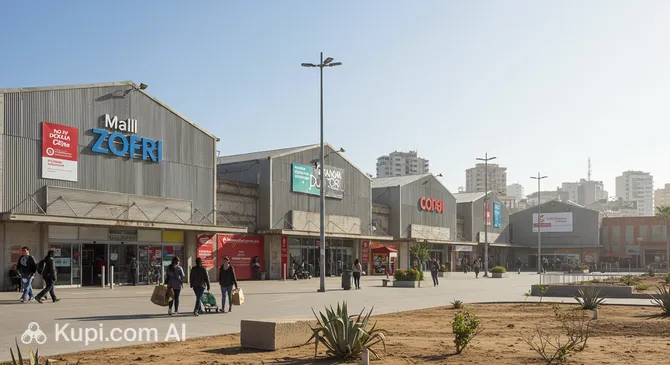
The crown jewel of the city's commercial scene is undoubtedly the Zofri Mall. Short for "Zona Franca" (Free Zone), this massive complex is one of the most important business hubs on the continent. It houses hundreds of stores offering electronics, perfumes, liquors, and textiles at tax-free prices. It is the go-to place for finding bargains on international brands that might be significantly more expensive elsewhere in the country.
Zofri Mall. Illustration.
Source: Kupi.com AI
Traveler photos:
If you prefer a more traditional retail experience with familiar department stores and entertainment options, Mallplaza Iquique is the place to visit. Located conveniently near the coast, this modern shopping center features major Chilean retailers like Falabella and Ripley, along with a cinema and a variety of dining options. It provides a comfortable, air-conditioned environment perfect for a relaxed afternoon of window shopping.
Mallplaza Iquique. Illustration.
Source: Kupi.com AI
Traveler photos:
To get a taste of local life and flavors, a visit to the Mercado Centenario is highly recommended. Housed in a beautiful building with British architectural influence, this market is a sensory delight. While it is primarily a place for fresh produce, flowers, and meats, you can also find stalls selling regional specialty products. It is an excellent spot to discover the authentic ingredients that define northern Chilean cuisine.
When it comes to souvenirs, Iquique has several distinct offerings. The most famous edible gift is Chumbeque, a traditional sweet made of layered pastry and fruit syrup that keeps well for travel. Additionally, look for Aymara textiles made from alpaca wool, which are renowned for their warmth and quality. Copper crafts and jewelry featuring the semi-precious stone lapis lazuli are also popular keepsakes that represent the country's rich natural resources.
Store opening hours in Iquique generally follow a standard schedule, with major malls like Zofri and Mallplaza operating from roughly 10:00 AM to 9:00 PM throughout the week. However, it is important to note that many shops in the Zofri Mall are closed on Sundays, so plan your visit for Monday through Saturday. Smaller independent shops in the city center may close for a "siesta" break between 2:00 PM and 4:00 PM. Regarding payment, major credit and debit cards are widely accepted in malls and established restaurants, but carrying cash (Chilean Pesos) is essential for markets, street vendors, and public transport.
The primary tax-free benefit in Iquique applies specifically to the purchase of imported goods within the Zofri system. Tourists can buy items here without the standard value-added tax (VAT) and luxury taxes that apply in the rest of Chile. However, be aware that there are limits on the value of merchandise you can take out of the region without paying taxes at customs checkpoints upon departure. It is advisable to keep your receipts handy when leaving the Tarapacá Region.