Support

Calama

About

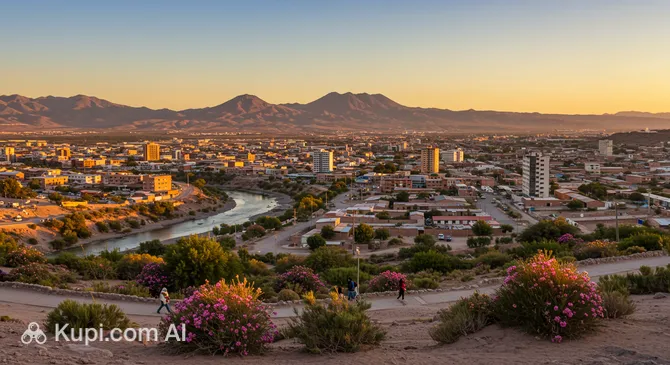
Calama is a bustling city located in the heart of the Atacama Desert in northern Chile. As the capital of the El Loa Province, it serves as a vital hub for industry and tourism in the Antofagasta Region. With a population of approximately 157,000 residents, the city offers a unique blend of urban energy and rugged desert landscapes, making it an intriguing stop for travelers exploring this arid part of the world.

Calama. Source: Kupi.Binoculars

The city is situated at a high altitude, providing it with a distinct desert climate characterized by clear, sunny days and cool nights. Despite the dry surroundings, the Loa River—the longest in the country—flows through the area, creating a refreshing oasis that contrasts sharply with the surrounding sands. The history of Calama is deeply intertwined with the mining industry, particularly copper, which has driven its growth and economic significance over the decades.

One of the main draws for visitors is the massive Chuquicamata mine, the largest open-pit copper mine in the world, where guided tours reveal the sheer scale of the operation. Closer to the city center, travelers can enjoy the peaceful Parque El Loa and visit the distinctive Cathedral of San Juan Bautista. For many, Calama serves as the essential gateway to the wonders of San Pedro de Atacama and the surrounding geological marvels. Whether you are passing through on a larger adventure or stopping to appreciate its industrial heritage, Calama welcomes you with its warm desert hospitality.

Weather Overview

Located in the arid Atacama Desert, the weather in Calama is characterized by extreme dryness and abundant sunshine throughout the year. The city experiences a high-desert climate, which means travelers should be prepared for significant temperature shifts between day and night, regardless of the season.

Expect warm, sunny days and crisp, cool nights throughout the year. During the summer months of December through February, average daytime temperatures reach highs of roughly 23°C, while nights cool down to about 9°C. In contrast, the winter season brings colder nights with lows dropping to around 2°C in June and July, although daytime highs remain pleasant at approximately 19°C. Rainfall is exceptionally rare, with most months recording 0mm of precipitation, though a very slight chance of rain exists in January and February.

Interesting Facts

Beyond the main attractions, Calama holds many fascinating secrets that reveal its unique character as a desert oasis and industrial powerhouse. From architectural oddities to geological wonders, there are several intriguing details that make this city more than just a transit hub.

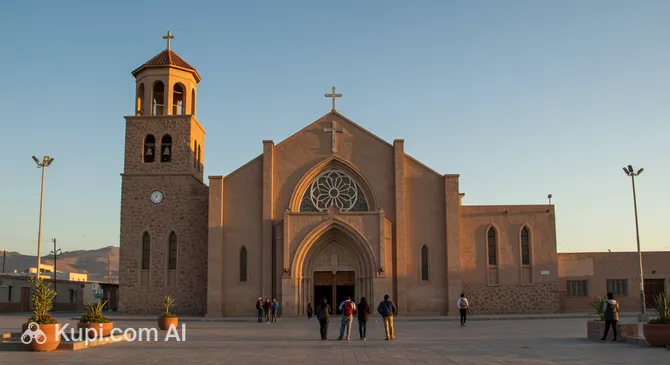
Saint John the Baptist Cathedral. Source: Kupi.Binoculars
  • The city is home to the Saint John the Baptist Cathedral, which features a distinctive architectural detail honoring the region's primary industry. Its roof and dome are constructed from copper plates, shining brilliantly under the desert sun and serving as a proud symbol of the "Copper Capital of the World."

  • Just north of the city lies the historic mining camp of Chuquicamata. Once a thriving town with its own schools, hospital, and cinema, the entire population was relocated to Calama to allow for the expansion of the massive open-pit mine. Today, visitors can tour this modern-day ghost town and learn about its heritage at the Codelco Visitor Center.

  • Despite being located in one of the driest deserts on Earth, the city is crossed by the Loa River, which is the longest river in Chile. This waterway creates a miraculous green strip through the arid landscape, forming the lush El Loa Park, a stark and beautiful contrast to the surrounding brown sands.

  • Calama is widely known by the motto "Tierra de Sol y Cobre" (Land of Sun and Copper). This nickname is well-earned, as the city experiences extremely high solar radiation and clear skies for the vast majority of the year, making it as famous for its intense sunshine as it is for its mineral wealth.

How to Get There

Reaching this desert city is straightforward, thanks to its role as a major industrial and tourism hub in northern Chile. While there are various ways to arrive, air travel is the most popular choice for efficiency. For a complete breakdown of transport options, including ground transfers, you can view our guide on how to get to Calama.

The primary entry point is El Loa Airport (IATA: CJC), conveniently located just 5.1 km from the city center. This close proximity ensures a short transfer, often taking less than 20 minutes by car. It is one of the busiest terminals in the country, offering frequent connections to the capital and other regions.

Travelers planning a broader itinerary might consider airports in neighboring cities. Cerro Moreno International Airport (IATA: ANF) in Antofagasta is a common alternative; situated approximately 190 km away, the drive to Calama typically takes around 3 hours. Another option is Diego Aracena International Airport (IATA: IQQ) in Iquique. Although the direct distance is roughly 249 km, please note that the road route is significantly longer and involves more travel time through the desert terrain.

Airport Name City Traffic Volume Distance (Direct)
El Loa Airport Calama High 5.1 km
Cerro Moreno International Airport Antofagasta High 190.2 km
Diego Aracena International Airport Iquique Medium 249.0 km

Main Attractions

While often viewed as a gateway to the Atacama Desert, the city itself boasts several compelling sites that reflect its unique history and culture. Visitors taking the time to explore will find a fascinating mix of industrial heritage, green oases, and local commerce.

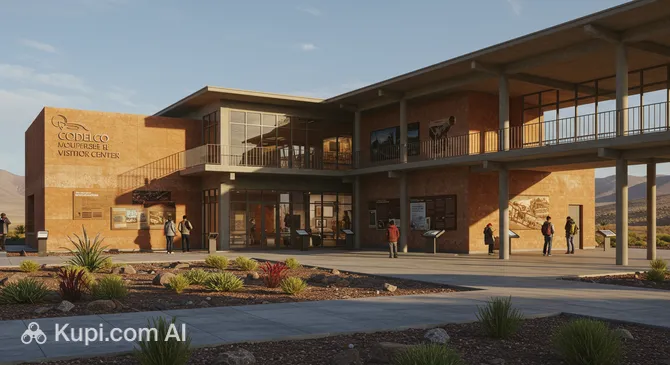
For those interested in the region's economic heartbeat, the Codelco Visitor Center is an essential stop. This facility serves as the starting point for tours to the nearby Chuquicamata mine, offering deep insights into the history and scale of copper mining in Chile. It is a place where tourists can learn about the extraction processes and the life of the miners who have shaped this desert community.

Codelco Visitor Center. Source: Kupi.Binoculars

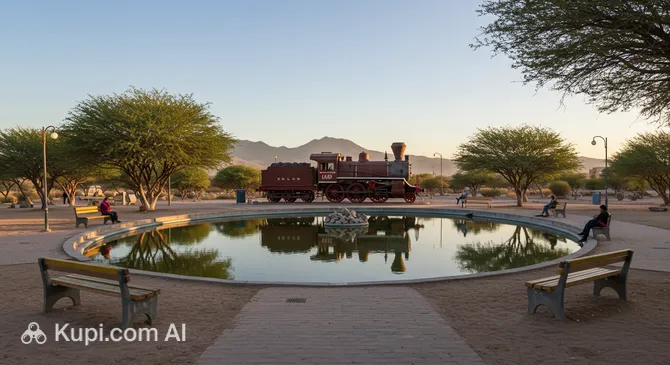
A refreshing contrast to the arid surroundings can be found at El Loa Park. This urban oasis is situated along the banks of the Loa River and provides a welcome escape with its lush vegetation and shaded areas. It is a favorite spot for families and travelers looking to relax, featuring playgrounds, walking paths, and the Museum of History and Natural History, which showcases local archaeological finds.

El Loa Park. Source: Kupi.Binoculars

In the heart of the city stands the Saint John the Baptist Cathedral, a landmark that beautifully integrates local identity into its architecture. Located on the main square, Plaza 23 de Marzo, the cathedral is famous for its copper-clad tower and dome, which glisten under the desert sun. It stands as a spiritual symbol and a tribute to the mineral wealth that defines the province.

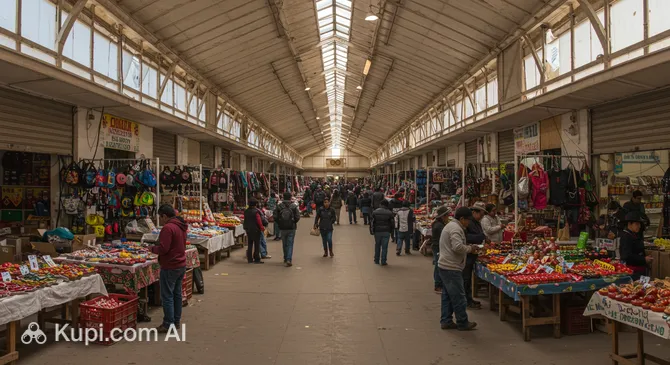
To experience the daily life of the locals, a visit to Feria Modelo is highly recommended. This bustling market is a sensory experience where vendors sell everything from fresh produce grown in the nearby valleys to traditional crafts and textiles. It is an excellent place to sample local flavors, buy souvenirs, and observe the vibrant trade culture of northern Chile.

Local Cuisine

The culinary landscape of Calama reflects its location in the high desert and its history as a meeting point for diverse cultures. The food here is hearty and energetic, designed to satisfy the appetites of miners and travelers alike. Visitors should look for dishes that incorporate traditional Andean ingredients, such as locally grown corn from the nearby villages, quinoa, and sometimes llama meat, which is known for being lean and flavorful.

A signature dish to try in this region is Patasca, a rich and warming stew made with corn, potatoes, pork, beef, and chili peppers. It is a traditional preparation that traces its roots back to the indigenous communities of the Atacama and is perfect for the cool desert nights. Another favorite is the classic Lomo a lo Pobre, a massive plate featuring a large steak topped with fried eggs and sautéed onions, served alongside a mountain of french fries—a satisfying meal often enjoyed after a long day of exploring.

When it comes to beverages, the local Rica-Rica herb takes center stage. This aromatic plant, native to the Altiplano, is often infused into tea or used to create a unique twist on the national cocktail, the Rica-Rica Sour. For a non-alcoholic refresher, especially during the warm sunny afternoons, try Mote con Huesillo, a sweet traditional drink made from dried peaches and husked wheat.

To truly experience the local food culture, a visit to the Feria Modelo is essential. This bustling market is the gastronomic heart of the city, housing numerous "cocinerías" (small open kitchens) that serve authentic, home-style meals at very affordable prices. It is the best place to mingle with locals, see the fresh produce grown in the desert valleys, and enjoy a genuine lunch.

Feria Modelo. Source: Kupi.Binoculars

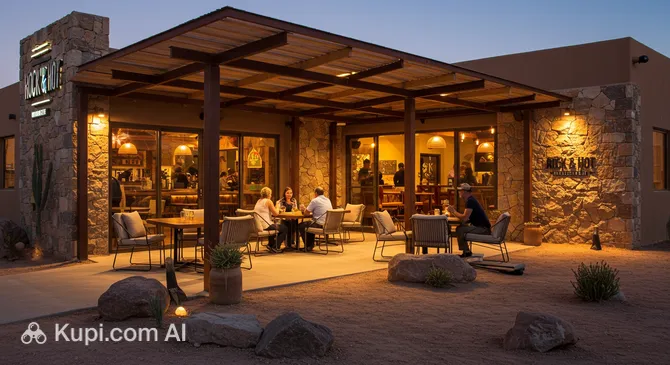
For those seeking a more modern dining atmosphere or a place to unwind in the evening, the city offers various restaurants and pubs. Places like Rock & Hot provide a lively setting to enjoy hearty sandwiches, burgers, and drinks, reflecting the city's modern urban vibe alongside its traditional roots.

Travel Tips

Preparing for a trip to Calama requires a bit of planning due to its unique high-desert environment. Here is a collection of practical advice to ensure your visit to this industrial oasis is comfortable and hassle-free.

  1. Clothing and Gear: Due to the desert climate, temperatures fluctuate drastically, so dressing in layers is the best strategy. Bring a heavy jacket for the cold nights and light, breathable fabrics for the hot days. Essential accessories include high-SPF sunscreen, UV-blocking sunglasses, and a wide-brimmed hat to protect against the intense solar radiation.

  2. Transportation: Within the city, the most common and economical way to travel is by using colectivos (shared taxis that follow fixed routes). If you plan to visit the nearby mines or venture into the desert towards San Pedro, renting a car is highly recommended for flexibility, though you should ensure the vehicle is suitable for highway and desert driving.

  3. Finances: The official currency is the Chilean Peso (CLP). While major hotels and supermarkets accept credit cards, it is crucial to carry cash for smaller purchases, local markets like the Feria Modelo, and public transport. ATMs are widely available in the city center and shopping malls.

  4. Health and Safety: Calama sits at an altitude of approximately 2,260 meters, so take it easy upon arrival to avoid altitude sickness and drink plenty of water to combat the extremely dry air. In terms of safety, stick to well-lit, populated areas at night and keep your valuables secure, as you would in any busy urban center.

  5. Communication: The primary language is Spanish, and English is not widely spoken outside of the airport and major hotels. It is very useful to download an offline translation app or learn basic phrases. Prepaid SIM cards from providers like Entel or Movistar are easy to find in local shops for reliable mobile data.

  6. Local Etiquette: Chileans are polite and warm; a common greeting is a handshake or a kiss on the right cheek for women and mixed company. Always say "Buenos días" (Good morning) or "Buenas tardes" (Good afternoon) when entering a shop or boarding a taxi to show respect.

  7. What to Avoid: It is strongly advisable to avoid drinking tap water. Although treated, the water in this region has a very high mineral content and a distinct taste that can upset sensitive stomachs; locals and tourists alike generally prefer bottled water.

  8. Additional Tip: Be mindful of the siesta time. Some smaller shops and local businesses may close for a few hours in the early afternoon (around 1:00 PM to 4:00 PM) to avoid the peak heat of the day, so plan your shopping errands accordingly.

With these insights, you are ready to explore the "Land of Sun and Copper" with confidence. Enjoy the stark beauty and warm hospitality that define this fascinating corner of Chile.

Entertainment & Nightlife

Nightlife in Calama is distinct, shaped by its identity as a busy industrial hub in the Atacama Desert. While it may not feature the high-energy club scene found in coastal resorts, the city offers a variety of spirited options for those looking to unwind after a day of exploration. The evening atmosphere is generally casual and unpretentious, centered around "restobars," pubs, and karaoke venues where locals gather to socialize, watch sports matches, and enjoy live music.

For a lively night out, the city center and the area around Avenida Granaderos are the main hotspots. A popular venue among both residents and visitors is Rock & Hot. This establishment is well-regarded for its energetic vibe, combining rock music with a menu of hearty food and cold drinks, making it a perfect place to kick off the evening. If you prefer a substantial meal before heading out for drinks, Nanking Restaurant offers a dining experience that is a staple in the local culinary scene.

Rock & Hot. Source: Kupi.Binoculars

Travelers seeking a more low-key or family-friendly evening often head to the Plaza Calama Mall. This modern complex serves as a safe and convenient hub for entertainment, featuring a cinema, various cafes, and a food court that stays open late. It is an excellent option for those who want to enjoy the latest movies or a quiet dinner in a secure environment away from the bustle of the street bars.

Plaza Calama Mall. Source: Kupi.Binoculars

Practicality is key when enjoying a night out in Calama. The dress code is almost exclusively casual; jeans and a warm jacket are essential as desert temperatures drop significantly once the sun sets. Prices are generally moderate, though they can be slightly higher than in central Chile due to the local mining economy. In terms of safety, it is highly recommended to use "radio taxis" (official dispatched taxis) or reputable ride-sharing apps rather than hailing cabs off the street, especially late at night. It is best to stick to well-lit main avenues and avoid walking alone in the outskirts after dark.

During the daylight hours, entertainment shifts towards cultural and recreational activities. Before the nightlife begins, visitors can explore local history at the city's museums or enjoy a relaxing stroll through the green paths of the urban parks. For those interested in the arts, the municipal theatre occasionally hosts performances that showcase the region's folklore and creative talent, offering a pleasant daytime alternative to the evening's social scene.

Parks & Museums

While Calama is globally recognized as an industrial powerhouse, the city also offers surprising pockets of greenery and cultural institutions that preserve the heritage of the Atacama Desert. Visitors willing to look beyond the mining centers will find inviting urban parks and museums that tell the story of the region's pre-Hispanic ancestors and its geological evolution.

Parks and Natural Areas

The city's premier green space is El Loa Park, a true oasis situated along the banks of the river that gives the province its name. In a landscape dominated by arid earth, this park provides a refreshing escape with its native algarrobo and pepper trees, which offer ample shade for picnics and leisurely walks. It is the heart of social life in Calama, featuring playgrounds, walking trails, and views of the Loa River, the only watercourse that successfully crosses the Atacama Desert to reach the Pacific Ocean.

For a more central urban experience, Parque Manuel Rodríguez offers a pleasant respite near the downtown area. While smaller than El Loa, it serves as a vital recreational spot for locals, featuring well-maintained gardens and spaces for relaxation. It is an excellent place to observe daily life in the city and enjoy a moment of quiet amidst the bustling commercial activity of the center.

Museums and Galleries

Located within the grounds of El Loa Park, the Museum of Natural and Cultural History of the Atacama Desert is a must-visit for history enthusiasts. The museum houses fascinating collections that span from the paleontological era to the height of the nitrate and copper mining booms. Its exhibits on the indigenous Lican Antay (Atacameño) culture are particularly noteworthy, displaying ceramics, textiles, and tools that illustrate how early civilizations thrived in one of the world's driest environments.

To understand the modern history of the region, the Codelco Visitor Center serves as an educational gateway. While primarily the starting point for tours to the massive Chuquicamata mine, the center itself functions as a gallery of industrial heritage. Visitors can explore exhibits detailing the extraction of copper, the development of mining technology, and the history of the "company towns" that once housed thousands of workers in the desert.

Historical and Architectural Landmarks

The architectural highlight of the city is undoubtedly the Saint John the Baptist Cathedral, located on the main square, Plaza 23 de Marzo. This structure is unique in Chile for its copper-clad tower and dome, a deliberate design choice that pays homage to the mineral that drives the local economy. The cathedral's interior is equally impressive, with wooden details that create a warm, spiritual atmosphere.

Another significant site is the Topater Monolith, located on the outskirts of the city. This monument marks the site of the Battle of Topater, a pivotal event in the War of the Pacific. It is a place of historical reflection, offering visitors a chance to connect with the events that shaped the current borders and identity of northern Chile.

Insider Tips

For a truly authentic cultural experience, consider taking a short trip just 30 kilometers east of Calama to the village of Chiu Chiu. Here you will find the Church of San Francisco, declared a National Monument and widely considered the oldest surviving church in Chile. Built from adobe and cactus wood in the 17th century, it is a stunning example of Andean colonial architecture that feels worlds away from the industrial modernity of the city.

Getting Around

Navigating Calama is relatively straightforward, as the city operates a compact and functional public transport network designed primarily for its residents and workforce. Unlike larger metropolitan areas, there is no metro, tram, or train system for urban transit. Instead, the city relies on a combination of standard buses, known locally as micros, and a very popular system of shared taxis called colectivos.

The colectivos are the most distinctive and efficient way to get around. These are black sedans that function like buses, following fixed routes with specific numbers displayed on roof signs. They are faster than buses and slightly more expensive, but they offer the comfort of a car. You can hail them from the curb anywhere along their route and request a stop at any safe point. They are ubiquitous and often the preferred choice for locals moving between the city center and residential neighborhoods.

Micros (local buses) cover most areas of the city and are the most economical option. They are generally painted in distinct colors depending on their line and route. While they are slower than colectivos due to more frequent stops, they are reliable for reaching major points of interest. Stops are not always clearly marked with signage, so it is common practice to wave at the driver to board and signal when you wish to alight.

Regarding payment, Calama does not use a rechargeable smart card system like the one found in the capital. Cash is the only method of payment for both micros and colectivos. You pay the driver directly upon boarding. It is highly advisable to carry small bills and coins (Chilean Pesos), as drivers may not have change for large denominations. Fares are fixed and generally very affordable, usually displayed on the windshield or inside the vehicle.

For those seeking more privacy or direct service, standard Radio Taxis are widely available and can be booked by phone or found at designated ranks, particularly near the bus terminal and shopping centers. Ride-sharing apps are also operational in the city, providing a familiar alternative for international travelers, though availability can vary depending on the time of day. Given Calama's role as a gateway to the desert, car rentals are extremely popular and often recommended for tourists who plan to explore the surrounding region or visit San Pedro de Atacama independently.

Public transport typically operates from early morning, around 7:00 AM, until approximately 9:00 PM or 10:00 PM. Service frequency drops significantly after dark and on Sundays. If you are traveling late at night, booking a Radio Taxi is the safest and most reliable option. Be aware that traffic can get heavy during shift changes, as the city's rhythm is closely tied to the mining schedules.

Accommodation

Accommodation in Calama is heavily influenced by its status as a major industrial and mining hub. Unlike typical tourist destinations where resorts dominate, the lodging landscape here is functional and geared towards business travelers and those in transit to the Atacama Desert. Visitors will primarily find reliable mid-range hotels, practical aparthotels, and smaller, family-run hostels ("hostales") that offer a comfortable place to rest before continuing their journey.

The majority of accommodation options are concentrated in the city center, particularly around the main square and the commercial streets near Avenida Granaderos and Avenida Balmaceda. Staying in this area is highly convenient for tourists, as it places you within walking distance of restaurants, banks, and transport terminals. For those with an early flight or a quick layover, there are also modern hotel chains located closer to the airport and on the outskirts of the city, offering quick access to the highway.

While you won't find sprawling luxury resorts, the standard of service in Calama is generally quite high. Because the city frequently hosts engineers and mining executives, many hotels offer excellent amenities such as strong Wi-Fi, business centers, and hearty buffet breakfasts designed to start the work day. For budget-conscious travelers, local guesthouses provide a more intimate and affordable experience, often with a friendly, home-like atmosphere.

Booking Tips and Prices: It is important to remember that hotel occupancy in Calama follows the rhythm of the mining industry rather than the tourist season. Weekdays can be surprisingly busy due to corporate travel, so it is advisable to book your room in advance, even outside of holidays. Prices can be slightly higher than the national average due to the strong local economy. Most established hotels accept credit cards and can be booked via major online platforms, though smaller hostels may prefer cash payments in Chilean Pesos.

Overall, whether you are looking for the efficiency of an international chain or the simplicity of a local inn, Calama offers sufficient variety to ensure a restful stopover in the heart of the desert.

Nearby Cities

For those looking to explore the surroundings, Calama serves as an excellent base for day trips to several interesting nearby locations:

City Population Distance (km)
Antofagasta 348,517 200
Arica 202,131 463
La Serena 195,382 857
Iquique 188,003 276
Copiapo 150,804 562

While the larger cities listed above provide connectivity and urban amenities, the region immediately surrounding Calama offers unique destinations that are perfect for shorter excursions. These spots allow travelers to experience the diversity of the Atacama Desert, from coastal escapes to ancient villages.

San Pedro de Atacama is undoubtedly the most popular destination for a day trip or a weekend getaway. Located approximately 100 kilometers southeast of Calama, this charming adobe town is the tourism capital of the desert. It serves as the gateway to world-famous natural wonders such as the Moon Valley, the Tatio Geysers, and the Atacama Salt Flat. The town itself offers a relaxed atmosphere with rustic restaurants, artisan markets, and a stunning view of the Licancabur Volcano.

For those seeking a breath of sea air, a trip to Antofagasta offers a complete change of scenery. As the regional capital situated on the coast, it is known for the "La Portada" natural monument, a massive stone arch in the ocean. Visitors can enjoy fresh seafood at the historic fish market, stroll along the lengthy waterfront promenade, or explore the ruins of the Huanchaca Ruins Museum, which highlights the area's silver mining past.

Closer to Calama lies the picturesque village of Chiu Chiu. Just 30 kilometers away, it is home to the Church of San Francisco, one of the oldest in Chile. Beyond its architectural heritage, the village is near the mysterious Inca Coya Lagoon. Legends say this oval-shaped lagoon is bottomless and connected to the ocean, making it a fascinating spot for photography and local myths.

These nearby destinations offer a glimpse into the diverse culture and landscapes of the region, ranging from the driest desert valleys to the refreshing Pacific coast.

Shopping & Souvenirs

Shopping in Calama offers a practical blend of modern retail convenience and traditional Andean commerce. As a working city and a service hub for the mining industry, the commercial scene is robust, catering primarily to the needs of residents and workers. However, tourists will find plenty of opportunities to purchase outdoor gear for desert excursions, replenish supplies, or hunt for unique local handicrafts that reflect the region's rich cultural heritage.

The heart of the city's commercial activity is centered around the pedestrian promenade of Paseo Ramírez. Located downtown near the main square, this bustling street is lined with a variety of small boutiques, pharmacies, shoe stores, and banks. It is a lively place to walk during the day, offering a glimpse into the daily rhythm of the city while providing access to essential goods and local fashion.

For a modern shopping experience, the city is home to Plaza Calama Mall (often referred to as Mallplaza Calama). This large complex is the primary destination for branded clothing, electronics, and department stores. It serves as a comfortable, climate-controlled refuge from the desert heat, featuring a wide range of international and national chains, a supermarket, and a food court, making it a one-stop-shop for travelers needing reliable amenities.

To experience the authentic flavor of northern Chile, a visit to the Feria Modelo is essential. This sprawling market is much more than just a place to buy food; it is a cultural landmark. Here, visitors can browse through stalls overflowing with fresh produce from the nearby valleys, but the real draw for tourists is the artisan section. It is the best place to find traditional goods, including alpaca wool textiles and hand-woven items that make for meaningful keepsakes.

When looking for souvenirs, the most iconic items to bring back from Calama are those made of copper. As the "Copper Capital of the World," the city takes pride in its local craftsmanship, and you can find beautifully detailed copper plates, jewelry, and decorative figures. Additionally, textiles made from llama or alpaca wool—such as ponchos, scarves, and hats—are popular choices, offering both warmth and a connection to the indigenous cultures of the Andes.

Store hours in Calama typically follow two distinct patterns. The large shopping mall and major supermarkets stay open continuously from approximately 10:00 AM to 9:00 PM, seven days a week. In contrast, smaller independent shops in the city center often close for a "siesta" break in the afternoon, usually between 1:30 PM and 4:30 PM, before reopening for the evening. Major credit cards are widely accepted in malls, hotels, and established restaurants, but carrying cash (Chilean Pesos) is necessary for small purchases, taxis, and transactions at markets like the Feria Modelo.

While Calama is not a duty-free zone like the nearby port city of Iquique, international tourists may still be eligible for tax-free shopping at specific participating stores within the major mall chains. Look for the "Tax Free" signage in shop windows, which allows visitors to request a form for a VAT refund upon departure from the country, although this system is less commonly used here compared to Santiago.
Nearby cities

Reached the end of the page?

That means the route is fully explored