Support

Guiyang Longdongbao International Airport

About the Airport

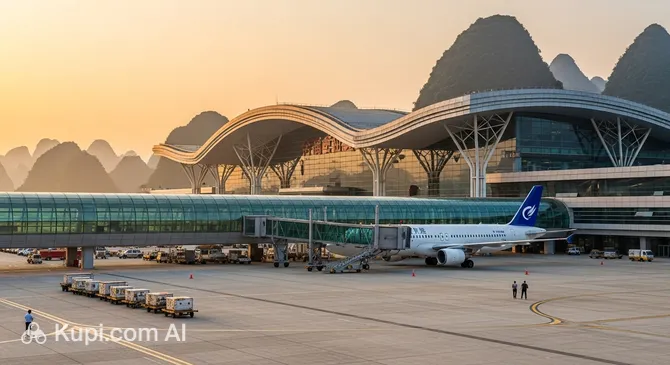
Guiyang Longdongbao International Airport. Source: Kupi.com Binoculars

Guiyang Longdongbao International Airport (KWE) is not merely a transport hub, but a true aerial gateway to the picturesque Guizhou province, often referred to as the "Switzerland of the East". Situated amidst famous karst hills, this airport immerses travellers in the atmosphere of Guiyang's "Forest City" from the very first minute. Thanks to the opening of the ultra-modern Terminal 3 and unique integration with the railway, this air harbour combines advanced technology with incredible comfort for tourists eager to witness the region's majestic waterfalls and colourful ethnic villages.

IATA Code KWE
ICAO Code ZUGY
City Guiyang
Distance to Centre ~11 km
Status International
Annual Passengers ~19.5 million (2023 data)
Schedule

Airport Features and Highlights

Guiyang Longdongbao International Airport is constantly being modernised to meet its status as a major hub in southwest China and to accommodate the growing flow of tourists.

  • Multimodal Hub: The airport implements a "zero transfer" concept. A railway station is located directly beneath the complex, offering high-speed train connections to other cities, while Metro Line 2 connects the terminals to Guiyang city centre and main railway stations, ensuring a fast and affordable transfer.
  • Smart Terminal 3: Opened at the end of 2021, the new T3 terminal has significantly expanded the airport's capabilities. This modern space is equipped with intelligent service systems and designed to handle large passenger flows as efficiently as possible.
  • Proximity to the City: Unlike many giant airports, Longdongbao is located surprisingly close to the city centre — just 11 kilometres away. A taxi or metro ride takes minimal time, allowing you to start sightseeing almost immediately after landing.
  • Scenic Surroundings: The airport is renowned for its beautiful views during take-off and landing. The surrounding green hills and mountains create an impressive backdrop, reminding guests that they have arrived in one of China's most ecologically pristine regions.

Contact Information

Important Information: Contact details may change over time. We strongly recommend verifying the currency of all information on official airport resources before your trip or call.

  • Official Airport Website: www.gyairport.com. Please note that the main version of the site may be in Chinese.
  • Inquiry Service Phone: +86 851 96967. When calling from another country, do not forget to use the international code for China (+86).
  • Airport Address: 1 Jichang Rd, Nanming District, Guiyang, Guizhou, China, 550005 (贵州省贵阳市南明区机场路1号).
  • Email: Airports rarely provide a public email for general enquiries. It is recommended to use the contact form on the official website if available.
  • Social Media: Official airport accounts should be sought on popular Chinese social networks such as WeChat or Weibo for the latest news and updates.
  • Lost & Found: For issues related to lost or damaged luggage, please contact your airline's baggage tracing service or the dedicated airport number. We recommend confirming the current number on the website; one contact number is: +86 851 8549 8453.
  • Passenger Support Contacts: For most questions related to airport services, please contact the main inquiry service phone number.

Getting to the Airport

Getting to Guiyang Longdongbao International Airport (KWE) from the city centre of Guiyang and back can be done in several convenient ways. Thanks to modern transport infrastructure, the journey to the main air gateway of Guizhou province in China will not take much time, and the range of options allows you to choose the best variant for any budget.

Public Transport: Metro, Train, and Buses

The most convenient and fastest way to reach the airport is by metro. Line 2 of the Guiyang Metro has a station directly at Terminal 2 (T2). The journey from the city centre takes about 30-40 minutes, and the ticket price is very reasonable. This is an excellent choice to avoid traffic jams. Another modern option is the high-speed train. The Longdongbao Railway Station is integrated with the airport and is part of the Guiyang-Guangzhou high-speed line, which is convenient for travellers transiting from other cities. Additionally, Airport Buses operate across the city, connecting the airport with key points, including the main railway station. This is a more budget-friendly, though slightly slower option than the metro.

Taxi and Transfers

A taxi ride from central Guiyang to the airport takes approximately 25-40 minutes depending on traffic conditions. The cost is usually between 50-70 RMB. It is recommended to use official metered taxis or popular car-hailing apps in China, such as DiDi. You can also pre-book a private transfer, which is particularly convenient if you are travelling with a lot of luggage or as a group. This guarantees a fixed price and a driver meeting you at the designated location.

Car Rental and Parking

For those who prefer maximum freedom of movement, car rental counters operate at the airport. However, it is worth remembering that foreign tourists generally require a local driving licence to drive in China. If you are driving to the airport in your own or a rented vehicle, spacious parking is at your disposal. It is divided into short-term and long-term zones, and the rates are quite reasonable.

Other Regional Airports

If your itinerary involves other airports in Guizhou province, pay attention to their locations. The nearest major alternatives are Anshun Huangguoshu Airport (about 98 km) and Zunyi Xinzhou Airport (about 118 km). Also located in the region are Kaili Huangping Airport, Zunyi Maotai Airport, and Libo Airport. When planning travel between them and Guiyang, allow extra time for the journey.

Terminals and Map

Guiyang Longdongbao International Airport (KWE) is a modern and major aviation hub consisting of three terminals: T1, T2, and T3. Understanding their structure and purpose will help you orient yourself easily upon arrival or before departure.

Terminals and Their Purpose:

  • Terminal T1 — the oldest terminal. Following the opening of the new terminals, it is rarely used, mainly for certain special flights, VIP services, or cargo operations. Most passengers will not encounter it.
  • Terminal T2 primarily serves domestic flights within China. Many local airlines are based here.
  • Terminal T3 — the newest, largest, and most modern. It is the airport's main international hub and also serves domestic flights for major carriers such as China Southern Airlines. All international flights arrive at and depart from here.

Layout and Navigation: The airport is designed logically. Terminals T2 and T3 are located next to each other and connected by a convenient covered walkway, allowing easy movement between them on foot. Arrival zones are traditionally located on the lower floors, while departure zones, check-in counters, and security checkpoints are on the upper floors. Navigation signs are duplicated in English, which significantly facilitates orientation for international tourists.

Procedures and Timing: It is recommended to arrive at the airport in advance to complete all formalities (check-in, baggage drop, passport control, and security screening). For domestic flights, allow at least 2 hours, and for international flights — at least 3-4 hours before departure. Queues are possible during peak hours, so an extra time buffer is advisable.

Navigation Recommendations:

  • Check your terminal in advance. The most important thing is to verify on the airline's website or your ticket which terminal (T2 or T3) your flight operates from.
  • Follow the signs. Navigation in the airport is intuitive.
  • If you get lost, approach the Information Desk. Staff usually speak basic English.
  • When transferring from an international flight to a domestic one (or vice versa), allow sufficient time to transfer between terminals T3 and T2 and to pass through security control again.

Airport History

The history of Guiyang Longdongbao International Airport (KWE) is a vivid example of the rapid development of aviation infrastructure in China. The airport was opened on 28 May 1997, replacing the old Guiyang Laibao Airport. Its construction was a key step in improving transport accessibility for Guizhou province and its capital, the city of Guiyang, opening the region to tourists and business.

From the very beginning, the airport demonstrated high growth rates in passenger traffic. By the 2000s, it became obvious that the initial infrastructure was insufficient. This led to the first major expansion phase: in 2013, the second terminal (T2) was opened, significantly increasing capacity and improving passenger service quality. The airport gained international status, beginning to operate flights to neighbouring countries.

The most massive transformation occurred during the third expansion phase. In December 2021, the grand opening of the new, modern Terminal T3 and a second runway took place. This project turned Longdongbao into one of the most important aviation hubs in southwest China. The new terminal not only impresses with its design but is also integrated with other modes of transport, including high-speed rail, creating a powerful transport node.

Interesting fact: Longdongbao Airport is the base for Colorful Guizhou Airlines, underscoring its role as the main aerial gateway to the amazing and distinctive Guizhou province. Its history is not just a chronicle of construction, but a reflection of the economic and tourism rise of the entire region, which has transformed from a remote province into a popular destination.

Services and Amenities

Guiyang Longdongbao International Airport (KWE) offers passengers a wide range of services and amenities to make waiting for flights as comfortable as possible. Within the terminals, you will find numerous restaurants and cafes where you can taste both local dishes of Guizhou province and familiar international cuisine. For those wishing to shop, duty-free stores operate, as well as boutiques selling clothing, souvenirs, cosmetics, and electronics.

For a comfortable wait, passengers can utilise premium lounges and VIP lounges. These offer a quieter environment, complimentary snacks and beverages, fresh newspapers, and separate work areas. Free Wi-Fi is available throughout the airport, and numerous gadget charging stations allow you to stay connected at all times. For business travellers, business centres and conference rooms equipped with everything necessary for work are provided.

Guiyang Airport has also taken care of the practical needs of travellers. Here you will find bank branches, ATMs, and currency exchange points where necessary financial transactions can be carried out. In case of illness or emergency, medical points are available in the terminals, ready to provide first aid.

For passengers travelling with children, special mother and baby rooms are equipped where you can feed and change your baby in a calm environment. The airport is also fully adapted for passengers with reduced mobility: there are ramps, lifts, and specially equipped restrooms. Airport staff are always ready to provide a wheelchair and offer necessary assistance during control procedures and boarding. If you have a long layover or an early flight, you can stay at one of the hotels located directly on the airport grounds or a few minutes' drive away.

Dining

At Guiyang Longdongbao International Airport (KWE), travellers will find a worthy selection of establishments for every taste and budget. Here you can grab a quick bite before departure or leisurely enjoy local cuisine. The main dining spots are concentrated in Terminals 2 and 3, with a good selection available both landside (before security) and airside (after security).

For those who prefer familiar tastes, popular international chains such as Starbucks, KFC, and McDonald's operate at the airport. However, the main gastronomic highlight is the restaurants offering authentic cuisine of Guizhou province, known for its vibrant and spicy flavours. This is an excellent opportunity to experience the culinary traditions of China. Most establishments open early in the morning and operate until the last flights depart.

Once at Guiyang Airport, be sure to try local specialities. Look out for signs offering beef noodles (牛肉粉) or the famous spicy chicken (辣子鸡). If time permits, you can find more complex dishes, such as sour fish soup (酸汤鱼) — the region's calling card. This is a wonderful way to extend your gastronomic journey until the very end of your trip.

Regarding prices, they correspond to the standard airport level — slightly higher than in the city. A quick snack will cost less, while a full meal in a restaurant will be more expensive. For passengers with specific dietary needs, such as vegetarians, it is easiest to find suitable dishes in noodle shops (by asking for preparation without meat) or at international chain establishments. It is best to clarify information regarding the availability of Halal, vegan, or gluten-free options directly with the café or restaurant staff.

For a quick snack, coffee shops, sandwich kiosks, or fast-food outlets located both before and after the security zone are ideal. If you have time and wish to have a full lunch, head to one of the Chinese cuisine restaurants in the departure zone. This will allow you not only to eat well but also to enjoy your final moments in the colourful Guizhou province.

Travel Tips

To ensure your journey through Guiyang Longdongbao International Airport goes as smoothly and comfortably as possible, take advantage of our useful tips. By planning your actions in advance, you can avoid unnecessary stress and save time.

Airport Arrival Time: For domestic flights within China, it is recommended to arrive at the airport 2-3 hours before departure. If you have an international flight, it is better to arrive 3-4 hours in advance. This will give you enough time to complete all formalities without rushing, especially during peak hours or holidays.

Check-in and Security Control: Many airlines offer online check-in, which saves time. If you are checking in at the airport, use the self-service kiosks or approach the counter. Security checks at Chinese airports can be quite strict. Prepare your passport and boarding pass in advance, remove laptops and other large gadgets from your carry-on luggage, and pack all liquids up to 100 ml in a transparent bag.

Seat Selection and Carry-on Luggage: When choosing a seat on the plane, consider your preferences: a window seat offers beautiful views during take-off and landing, while an aisle seat allows you to stand up and stretch your legs freely. Pay special attention to carry-on luggage rules. China enforces strict restrictions on carrying power banks (portable chargers) — their capacity must be clearly marked on the casing and must not exceed the established limit (usually 20,000 mAh). Lighters, matches, and other flammable items are prohibited in carry-on luggage.

For Transit Passengers: If you have a connecting flight in Guiyang, clarify with your airline in advance whether you need to collect your luggage and re-check it. Follow the "Transfer" signs in the airport. Leave enough time between flights to calmly go through all necessary procedures.

Customs Control and Saving Money: Upon arrival on an international flight, you will need to fill out an arrival card. If you have goods to declare, go through the "Red Channel". To save money, bring an empty reusable water bottle — after passing security, you can fill it at drinking fountains. Prices for food and drinks at the airport are generally higher, so you might want to have a snack before your trip.

In Case of Flight Delay: If your flight is delayed, first contact your airline representative for the latest information. During long delays, airlines often provide vouchers for meals or hotel accommodation. Use this time to rest in the waiting lounges, or visit shops or cafes in the airport.

Reached the end of the page?

That means the route is fully explored