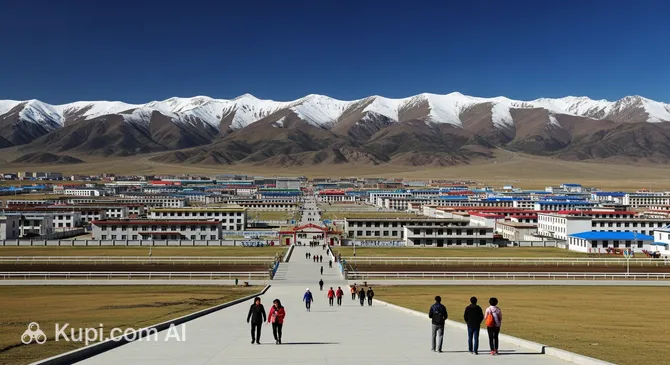
Nagchu is a unique high-altitude city located in the heart of the Tibet Autonomous Region of China. Situated at an altitude of about 4,500 meters above sea level, it serves as a vital administrative and transport hub for the region. It is a place where the harsh nature of the highlands meets the deep traditions of Tibetan culture, creating an atmosphere of solitude and resilience. The history of Nagchu has always been dominated by a nomadic way of life, which still defines the character of this land today.
Nagqu. Illustration.
Source: Kupi.com AI
The city's geographic location on the vast Northern Tibetan Plateau makes it one of the highest settlements in the country. With a population of about 504,838 people, the urban area remains compact, while the majority of residents are scattered across the endless pastures. Nagchu is not a typical tourist center with a developed entertainment infrastructure, but it attracts travelers with its authenticity and its status as the "highest city of the prefecture" in China.
The main features of Nagchu are its traditional culture and its role as a transit point on the way to the sacred lakes and mountain peaks of Tibet. Here, you can witness the lives of real nomadic herders and enjoy the pristine landscapes of alpine meadows. A visit to Nagchu will be a true test of endurance and will provide unforgettable impressions for those seeking adventure far from the beaten tourist paths.
Weather Overview
Nagchu is characterized by a harsh alpine climate that dictates its own rules for life at an altitude of 4,500 meters. The average annual temperature here stays below zero, making the region one of the coldest in Tibet. Winters in the city are long, frosty, and very dry: in January, the average temperature is about -12°C, and at night it can drop to -20°C and below. Summer brings relative warmth with daytime highs of up to +14°C...+16°C, but even in July, night frosts are a common occurrence.
Precipitation is extremely unevenly distributed. Most of the rain falls between May and September, which is considered the most favorable time to visit. During this period, the pastures turn green and the air becomes more humid. For the rest of the year, the climate remains extremely dry, which, combined with strong winds, can lead to dust storms. When planning your trip, it is important to study the city's climate to choose the right gear.
One of the main climatic features is the thinness of the air — the oxygen content here is only 50% of that at sea level. This makes staying in the city a physically difficult test for an unprepared body. The sky over the city usually remains piercingly clear, providing a high level of solar radiation — sunscreen and sunglasses will be necessary at any time of the year.
Average monthly temperature
Average monthly precipitation
Interesting Facts
The name Nagchu translates from Tibetan as "Black River". The city received this name in honor of the river of the same name flowing through the prefecture.
Back in 1269, by order of the great Mongol Khan Kublai, seven horse mail stations were organized in this area, highlighting the region's historical importance as a transport hub.
Nagchu is considered one of the highest cities in the PRC. It is located at an altitude of 4,500 meters, and the oxygen content in the air here is only half the sea-level concentration.
The region is a bastion of Tibetan culture: about 98% of the prefecture's population are ethnic Tibetans who maintain their traditional nomadic lifestyle.
Every summer, one of Tibet's largest horse racing festivals takes place here, turning the desert steppes into a bustling hub of competition and trade.
How to Get There
Transport accessibility to Nagchu has significantly improved in recent decades, although a trip here still requires careful planning. The main gateways to the region are the railway station and the airport, both located in extreme high-altitude conditions. Travelers should remember that visiting Tibet requires not only a visa to China but also a special permit, which must be arranged in advance.
An important air hub is Nagchu-Pangta. This airport, located at an altitude of 4,431 meters, receives regular flights from Lhasa. Flight time is just over an hour, but due to the rapid gain in altitude, tourists are advised to be prepared for symptoms of acclimatization immediately after landing. You can get from the airport to the city center by taxi or bus in about one hour.
Railway communication is the most popular and reliable way to reach the city. The legendary high-speed Qinghai-Tibet Railway passes through Nagchu. Trains connect the city with centers such as Xining and Lhasa. The trip from the capital of Tibet takes about 5–6 hours, and modern train sets are equipped with oxygen supply systems for passenger comfort. More detailed information on routes can be found in the how to get there section.
Station
Passenger traffic
Distance
Lhasa railway station
19
226 km
A car journey to Nagchu is via the G109 highway. The distance from Lhasa is about 400 km, but due to mountain serpentines and speed limits, the journey can take 7 to 10 hours. Roads in the region are often affected by the weather, so it is worth checking the latest forecasts and road conditions before departure.
Main Attractions
Although Nagchu is better known as a transport hub, it possesses its own unique charm that reveals itself in the details of everyday life. One of the city's most interesting areas is the so-called "Nagqu Ancient Town." Here, examples of traditional Tibetan architecture have been preserved, and the narrow streets allow you to feel the rhythm of life of the local population, 98% of whom are Tibetans.
The main cultural event of the region is the annual Horse Racing Festival, held in the summer on the vast meadows surrounding the city. This grand spectacle attracts thousands of nomads from all over Tibet. The festival program includes not only horse races but also folk dances, archery, and fairs where you can find unique handmade items.
For many travelers, Nagchu serves as an important starting point for visiting the natural shrines of Tibet. From here, it is convenient to plan trips to the majestic high-altitude Lake Namtso or toward the Namcha Barwa mountain range. The Nag-Chu River itself, which gave the city its name ("Black River"), offers picturesque views of the rugged steppes, ideal for ecotourism in its purest and most pristine form.
Local Cuisine
The cuisine of Nagchu is a classic example of Tibetan gastronomy, shaped by the harsh climate and nomadic lifestyle. The main product here is the yak. Yak meat is valued for its nutritional and caloric value: it is used to prepare juicy steaks, hearty soups, and dried meat, which is convenient for long trips. Another pillar of the local diet is tsampa — roasted barley flour mixed with tea and butter, which serves as the primary breakfast for most Tibetans.
Among hot dishes, you should definitely try thukpa (tsulpu) — a filling soup with homemade noodles and vegetables, as well as sha phaley. The latter are fried pies with meat filling, resembling chebureks but with characteristic Tibetan spices. In the summer, more fresh dairy products appear on the tables, such as homemade yogurt and hard yak cheeses produced on the surrounding pastures.
Drinks in Nagchu play an important role in combating the cold and dry air. The most popular is yak butter tea (po cha), which has a specific salty taste and high energy value. Sweet milk tea and local barley beer (chang) are also popular. The city's gastronomic scene is represented by simple eateries and small restaurants near the station and the market, serving freshly prepared traditional dishes in a casual setting.
Travel Tips
Visiting Nagchu is a unique experience that requires serious preparation due to Tibet's extreme natural conditions. These tips will help you make your journey as safe and comfortable as possible.
Acclimatization: Due to the immense altitude of 4,500 m, the risk of altitude sickness is very high. Be sure to spend 1–2 days in Lhasa to adapt, drink plenty of water, and completely avoid alcohol during the first few days.
Clothing: The climate is harsh even in summer. Be sure to bring thermal underwear, a windproof jacket, and a warm hat — night temperatures often drop below freezing.
Documents: Ensure you have not only a Chinese visa but also a special permit for visiting Tibet. Without it, you will not be allowed onto a flight or train.
Health: Carry a first-aid kit with medications for mountain sickness. Oxygen cylinders can be bought at pharmacies near the station — they are a necessity for comfortable sleep.
Finance: The main currency is the yuan. In the city, it is better to rely on cash or WeChat/Alipay apps, as foreign bank cards are rarely accepted.
Connection: Buy a local SIM card in major cities before arriving in Nagchu. Wi-Fi in local hotels can be unstable.
Etiquette: Show respect for Tibetan traditions. Do not photograph people or the interiors of monasteries without permission. Walk around religious sites clockwise.
Safety: The crime situation in the city is calm, but avoid remote nomadic camps without a guide — there is no infrastructure or medical assistance there.
Be open to new discoveries, respect the nature of this rugged land, and Nagchu will reveal its most sacred secrets to you.
Entertainment & Nightlife
Entertainment in Nagchu is traditional in nature and closely tied to the local way of life. You won't find the usual night clubs or noisy discos here; nightlife in the highlands quiets down early due to the harsh climate and thin air. Nevertheless, in the evenings, locals enjoy gathering in cozy Tibetan tea houses, where you can listen to national music and observe the leisurely interactions of the townspeople.
During holidays and festivals, the city is transformed. The main center for daytime entertainment becomes the summer Horse Racing Festival, featuring Tibetan opera performances, traditional wrestling competitions, and archery. This is the best time to see the living culture of the region in all its diversity. On ordinary days, tourist leisure is limited to walking through the central squares and visiting local markets, which serve as the main points of social interaction.
For those looking for more modern formats of recreation, such as cinemas or large shopping centers, a trip to Lhasa is recommended, which can be quickly reached by train. Nagchu remains a place for quiet contemplation and immersion in the atmosphere of the Tibetan highlands, where safety is high and most activity is concentrated around administrative buildings and the railway station.
Parks & Museums
Due to its high-altitude location and harsh climate, Nagchu does not have classic urban parks with thick greenery and fountains. Nevertheless, the role of natural recreation areas here is played by the endless natural meadows and pastures surrounding the city. In summer, when the steppe is covered with a carpet of grasses and flowers, these areas become the perfect place for walks and traditional Tibetan picnics.
Within the city itself, the functions of public spaces are performed by the squares in front of administrative centers and in the area of the railway station. These are meeting and walking places for the townspeople, where you can feel the social rhythm of the city. There are currently no specialized museums in Nagchu; however, the city itself and its surroundings can be viewed as a living, open-air ethnographic museum reflecting the culture of Tibetan nomads.
For those interested in history and art, the best option would be to visit the local monasteries in the surrounding counties, which often house unique relics and works of religious art. The absence of large museum complexes is compensated for by the opportunity to see authentic traditions that have been preserved in the everyday lives of Nagchu's residents for centuries.
Getting Around
The transport system of Nagchu is characterized by simplicity and functionality, adapted to the needs of a small but strategically important high-altitude city. The main types of urban transport are buses and minibuses. The route network covers key points: the city center, the railway station, and administrative districts. Fares are low, and payment is usually made in cash to the driver or via mobile apps.
Taxis are the most convenient way for tourists to get around. Cars are easy to find on the streets, and trips within the city limits are inexpensive. Thanks to low population density and a small number of private cars, there are virtually no traffic jams in Nagchu. For trips to remote counties of the prefecture, intercity buses are used, departing from the bus station, though their schedules may change depending on weather and road conditions.
Alternative modes of transport, such as bicycle rentals or car sharing, are not developed in the city due to the extreme climate and steep inclines. Travelers should keep in mind that at an altitude of 4,500 meters, any physical activity, including normal walking, requires more effort. Therefore, a taxi often becomes a necessity rather than a luxury to save strength and prevent altitude sickness. Walking is recommended only in the central part of the city after acclimatization.
Accommodation
The hotel infrastructure of Nagchu is primarily oriented toward transit travelers, pilgrims, and specialists working in the region. The choice of accommodation here is not as vast as in major tourist centers, so it is recommended to book rooms in advance, especially during the summer Horse Racing Festival when demand for rooms increases sharply.
Most accommodation options are concentrated near the railway station and in the central part of the city. These are mainly simple mid-range hotels and guesthouses. The cost of a standard room ranges from 100 to 300 yuan per night. An important feature of local hotels is the presence of oxygen supply systems or portable oxygen cylinders in the rooms, which is crucial for comfortable sleep at an altitude of 4,500 meters.
There are currently no luxury five-star hotels in Nagchu, but clean and cozy apartments or traditional Tibetan guesthouses allow you to fully immerse yourself in the atmosphere of the region. When choosing a place to stay, we advise checking for the availability of heating, as temperatures can drop below freezing even on summer nights. Booking is most often done through popular Chinese services or upon arrival for small private guesthouses.
Nearby Cities
Nagchu serves as an excellent starting point for exploring the remote but fascinating expanses of Northern Tibet. Despite the significant distances between settlements, each direction reveals unique facets of life in this high-altitude region to the traveler.
The primary destination for a trip is the legendary Lhasa. The capital of Tibet is located about 220 km away (straight line), and it is most convenient to reach it by train or via the highway. Here, the greatest shrines, such as the Potala Palace and the Jokhang Temple, are concentrated. Another interesting point is the city of Tsetang, considered the cradle of Tibetan civilization, where you can visit ancient monasteries and the first royal palaces.
You can also consider a trip to Baqen, which is located northeast of Nagchu. The path to it lies through picturesque pastures where you can encounter herds of yaks and see the nomadic way of life in its most pristine form. Exploring the surroundings of Nagchu requires endurance and good preparation but rewards travelers with views that few have seen with their own eyes.
Shopping & Souvenirs
Shopping in Nagchu is primarily an opportunity to purchase authentic Tibetan goods and folk crafts. There are no huge shopping and entertainment centers in the city, but trade is active in small shops and specialized markets. The main place for shopping is the Central Market, located near the station. Here you can find everything from everyday goods to unique items of nomadic life.
The main products for which the region is famous are items made of yak wool and Tibetan jewelry. There is a special demand for jewelry made of turquoise, coral, and silver, crafted in a characteristic ethnic style. Nagchu is also known as a collection center for valuable medicinal herbs and fungi (such as cordyceps), which are widely used in traditional Tibetan medicine. As souvenirs, tourists often bring back local barley flour (tsampa) and traditional Tibetan clothing.
Shops in the city usually operate from early morning until late evening, but trading at the markets is most active in the first half of the day. Payment is most often made in cash (yuan) or through popular Chinese mobile apps like WeChat Pay and Alipay. There are ATMs in the city center, but international cards are not accepted everywhere, so it is worth carrying a supply of cash. The Tax-Free system is virtually non-existent in this remote region, as most retail outlets are small private businesses.