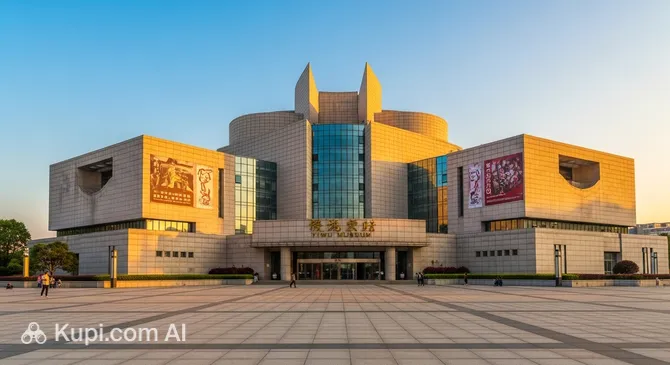
Imagine a place where the centuries-old history of one of the world's most dynamic trade hubs comes to life. Yiwu Museum is a modern cultural space in the city of Yiwu that serves as a window into the rich heritage of Zhejiang Province. Here, in eastern China, traditions of the past intertwine harmoniously with the rhythm of the global market.
Yiwu Museum. Illustration.
Source: Kupi.com AI
Traveler photos:
The museum building itself is a work of art, combining modern architecture with elements of classical Chinese design. Inside, extensive collections await guests: from archaeological finds and items of ancient daily life to exhibits telling the story of the city's emergence as an international industrial center. It is an ideal spot for those who want to understand how a small county transformed into a legendary trading hub.
The museum offers more than just the contemplation of artifacts; it provides an immersion into the region's atmosphere through interactive zones. Thanks to its high rating among visitors, Yiwu Museum is rightfully considered a must-visit destination for tourists interested in the authentic culture, crafts, and economic history of the Middle Kingdom.
Contacts
For those planning a visit on their own, we have prepared the essential contact information. Yiwu Museum is conveniently located in the central part of the city, making it easily accessible for travelers.
In the museum halls, a large-scale panorama of local traditions will unfold before you. You will be able to examine antique collections in detail, including rare porcelain pieces, ancient documents, and household items. Special attention should be paid to the multimedia installations, which allow you to take a virtual journey along the historical trade routes that connected the region with the rest of the world.
For those who prefer active participation, the museum offers a chance to learn about the production techniques of traditional goods—from exquisite textiles to jewelry. Workshops are often held here where you can try your hand at calligraphy or carving, making the visit interesting for visitors of all ages. Additionally, the building features relaxation areas where you can enjoy a tea ceremony in a peaceful setting with views of the city skyline.
Don't miss the chance to visit temporary exhibitions dedicated to local festivals and customs. Easy navigation and the availability of informative audio guides will help you build your own route and learn the most curious details about each exhibit, turning an ordinary walk into a full-fledged educational adventure.
Getting There
Getting to the cultural center is quite simple thanks to the city's well-developed infrastructure. If you are arriving at Yiwu Airport (YXU), a taxi ride to the museum will take about 20–30 minutes. Travelers from the nearby major city of Jinhua can take a high-speed train (travel time is 30–40 minutes) and then transfer to local transport.
The most comfortable way to get around the city remains taxis or ride-sharing services like Didi. A trip from the central districts will cost approximately 10–20 yuan. You can also use public buses that run along Cheng Zhong Bei Lu; the stop is within walking distance of the building.
For accurate navigation, it is recommended to use the Baidu Maps or Google Maps apps. If you prefer active recreation, bicycle or electric scooter rental points can often be found near the museum, and parking is provided on-site for car owners.
Nearest city: Yiwu
History & Facts
The history of this cultural institution is inextricably linked to the transformation of Yiwu into one of the largest trading centers on the planet. The museum was created to preserve and showcase artifacts reflecting the region's remarkable journey of transformation—from a small agricultural county to a global market. The exhibitions emphasize the city's role in the country's economic chronicles, demonstrating how local markets have facilitated cultural and material exchange for centuries.
The museum's collections include valuable items from the Ming and Qing dynasties. Here you can see artifacts related to the silk trade and famous Chinese porcelain, which were once shipped from here to the farthest corners of the world. These exhibits illustrate in detail the lives of ancient merchants, craftsmen, and ordinary residents of Zhejiang province.
The architecture of the building itself also carries a historical subtext. The designers drew inspiration from the region's classical styles, striving to create a space where modernity meets ancestral heritage. Today, the museum plays a key role in studying the roots of Yiwu, regularly conducting research and organizing exhibitions dedicated to preserving the region's unique cultural diversity in the era of globalization.
Time Needed
To get acquainted with the main exhibition without rushing, most visitors need about 2–3 hours. This time is enough to see the main halls, study historical artifacts, and enjoy the architecture of the building.
If you decide to take part in interactive programs, workshops, or plan to visit temporary themed exhibitions, we recommend allocating half a day (about 4 hours) for the visit. This will allow you to immerse yourself more deeply in the atmosphere and perhaps stop by the relaxation area for a traditional tea ceremony.
Working Hours
At the moment, the official opening hours of the museum have not been provided. We recommend that tourists check for up-to-date information on the institution's official website or confirm the schedule at the city information center before planning a visit.
As a rule, similar cultural sites in China are open to the public during the daytime; however, it should be noted that the schedule may change significantly during national holidays or when exhibitions are being rotated.
Nearby
Exploring the museum's surroundings will help you get a more complete impression of the rhythm of life in a modern Chinese city. The area around the Yiwu Museum offers many opportunities for relaxation—from quiet walks to vibrant entertainment.
Here you will find both modern nightclubs for evening leisure and large-scale theme parks that are perfect for family vacations. Below is a list of nearby attractions that you can visit after exploring the museum exhibits: