Support

Hangzhou Botanical Garden

About

Spanning over 250 hectares, the Hangzhou Botanical Garden is a true living open-air museum. Established in 1956 in the city of Hangzhou, this majestic natural complex is one of the largest and most significant centers for the study of flora that China takes pride in.
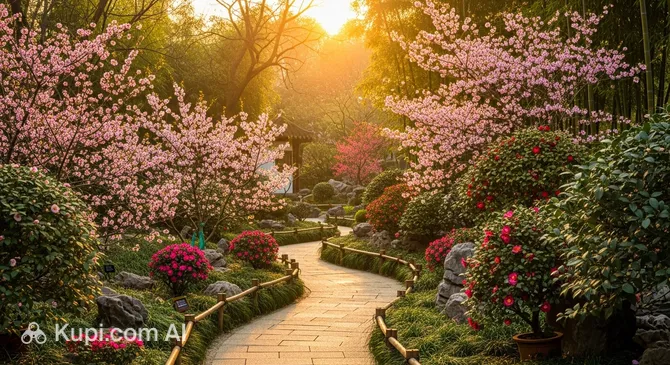
Hangzhou Botanical Garden
Hangzhou Botanical Garden. Иллюстрация. Источник: Kupi.com AI

Here, among the picturesque hills of the West Lake district, over 10,000 plant species have been gathered. Visitors will find dense bamboo groves, exquisite collections of camellias and magnolias, as well as rare specimens of rhododendrons. The heart of the garden is undoubtedly Jinhu Lake, whose shores are lush with aquatic greenery, creating an atmosphere of absolute peace.

Thanks to thoughtful zoning and an abundance of themed routes, the garden is interesting at any time of year. It is not just a scientific base but an oasis of tranquility, where landscape architecture perfectly highlights the pristine beauty of nature, attracting thousands of travelers with its harmony and biodiversity.

Contacts

To check up-to-date information before your visit, you can use the following contact details:

How to contactContact
AddressКитай, Zhe Jiang Sheng, Hang Zhou Shi, Xi Hu Qu, 桃源岭1号 邮政编码: 310058
Phone+86 571 8796 1908

What to Do

In this green kingdom, everyone will find something to their liking. Fans of peaceful relaxation can spend hours wandering through bamboo groves and shaded alleys, enjoying the fresh air and silence that is so rare in a metropolis. The picturesque shores of Jinhu Lake are an ideal spot for birdwatching or a leisurely picnic surrounded by exotic plants.

Special attention should be paid to the seasonal blooms, which transform the garden into a kaleidoscope of colors. In spring, the largest plum garden near West Lake blossoms here, featuring over 5,000 trees. Summer is the time for lotus ponds and vibrant tropical species, autumn fills the air with the sweet scent of osmanthus and the crimson of Japanese maples, and in winter, hardy camellias take center stage.

For those interested in photography, the Hangzhou Botanical Garden offers an endless variety of subjects: from traditional Chinese gazebos to rare dwarf trees in the bonsai garden. An abundance of benches and cozy spots for relaxation allows you to take a break at any moment and simply soak in the beauty of the surrounding landscape.

Getting There

The Botanical Garden is conveniently located in the Xihu District (Xi Hu Qu), on the west side of the famous West Lake. Thanks to its proximity to popular tourist routes, a visit here can easily be combined with a stroll along the waterfront. The exact address is: 桃源岭1号 (1 Taoyuanling Road).

You can reach the garden by public transport: take buses heading to stops in the West Lake area (such as Yu Huang Shan or those nearby). You can also take the metro and then transfer to a taxi or walk—the journey from the nearest stations takes about 5–10 minutes by car.

A taxi ride from central Hangzhou to the garden's main gates will take approximately 15–20 minutes, depending on traffic. For those who prefer to travel by rental car, parking areas are available near the entrance.

Ближайший город: Hangzhou

History & Facts

The history of the Hangzhou Botanical Garden began in 1956. It was established on the scenic slopes west of West Lake as an ambitious project to conserve and study the incredibly rich flora for which China is famous. Since its founding, it has become not only a place for recreation but also an important scientific research center.

A significant milestone in the area's development was the creation of the artificial Jinhu Lake in 1959. This body of water, covering over 30 hectares, allowed the garden's specialists to significantly expand the collection of aquatic plants and create a unique ecosystem that harmoniously complements the terrestrial landscapes.

Despite the turbulent historical events of the mid-20th century, the garden has preserved its integrity and scientific value. Today, more than 10,000 plant species grow here, including extremely rare specimens, making it one of the richest "living libraries" of nature in the region.

Time Needed

To leisurely explore the main themed zones and enjoy the tranquility by the lake, most visitors need between 3 to 5 hours. The garden is quite large, and exploring it involves long walks along winding paths.

If you plan to have a picnic under the shade of bamboo groves or are a passionate lover of macro photography, you should set aside half a day for your visit. This will allow you to visit the most remote corners of the exhibition without rushing and wait for the perfect soft lighting for your photos.

Working Hours

The gates of the Botanical Garden are open to visitors daily from 7:00 AM to 5:30 PM. It is recommended to plan your visit for the morning hours when there are fewer people in the park and the soft light provides the best conditions for observing the plants.

Please keep in mind that last entry is no later than 30 minutes before closing. Since the official schedule may change depending on the season or holidays, it is worth checking the current timetable on the official website or at your hotel's reception before your trip.

Nearby

Exploring the garden's surroundings can significantly enrich your travel experience. Its location in one of the city's most picturesque areas makes it easy to find interesting spots to continue your walk, especially if you are traveling with family.

NameDistance
Lingyin Temple2.6 km
Remnant Snow on the Broken Bridge2.8 km
Lakeside Park3.3 km
Leifeng Pagoda3.5 km
West Lake Musical Fountain3.6 km
Orioles Singing in the Willows3.7 km
Qinghefang Historic Street4.5 km

Reached the end of the page?

That means the route is fully explored