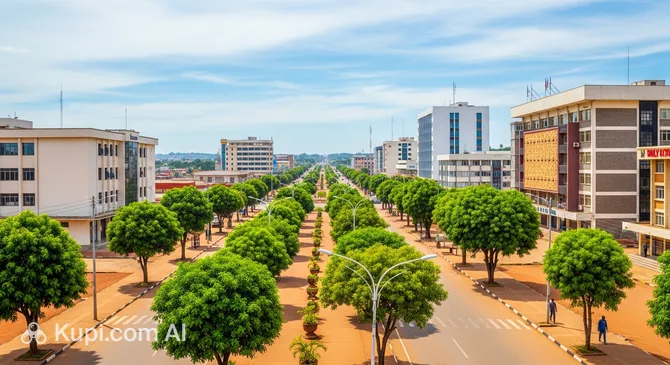
Kolwezi is a dynamic industrial hub located in the southern part of Congo (DRC). The city serves as the administrative capital of Lualaba Province and plays a vital role in the regional economy thanks to its rich mineral deposits. Although Kolwezi is primarily known as an industrial giant, it possesses a unique atmosphere of industrious rhythm and rapid development that sets it apart from other cities in Central Africa.
Kolwezi. Illustration.
Source: Kupi.com AI
The city was founded in 1937 as the headquarters for a major mining association, and its historical heritage is inextricably linked to the exploration of the earth's riches. Today, the city's population exceeds 570,000, and it has become a key global center for copper and cobalt mining. Situated on the Katanga Plateau, the city sits at a significant elevation above sea level, making the climate here less exhausting than in the lowland equatorial forests.
For the traveler, Kolwezi can be fascinating as an example of large-scale industrial architecture and as a logistics hub. Here, you can see unique mineral specimens, such as copper nuggets with pink calcite inclusions, which are the pride of the region. Visiting Kolwezi is an opportunity to look into the industrial heart of Africa and feel the scale of the mining industry that is shaping the future of modern technology.
Weather Overview
The weather in Kolwezi is determined by its location in an upland tropical climate zone, which makes the conditions here more moderate compared to the humid jungles of the north. The city is characterized by a clear division into wet and dry seasons. If you are planning a trip, it is worth studying the city's climate in advance to choose the right wardrobe.
The rainy season lasts from November to April, bringing heavy precipitation and high humidity. During this time, the average air temperature is around +21°C...+22°C. The wettest months are December and January, when rainfall reaches its peak. During this period, the nature around the city comes to life, but frequent rains can make it difficult to travel on unpaved roads in the surrounding areas.
The dry season, lasting from May to September, is considered the most favorable for visiting. In June and July, there is virtually no rain, and daytime temperatures remain comfortable at around +20°C. However, keep in mind that nights during this period can be quite chilly — temperatures sometimes drop to +14°C. September and October are the hottest months, when the air warms up to +30°C before the start of the next rainy season.
Average monthly temperature
Average monthly precipitation
Interesting Facts
World Treasury: Kolwezi is one of the world's largest centers for copper and cobalt mining, and its surroundings also contain significant deposits of uranium and radium.
Mineralogical Exclusivity: Only in this region can you find unique collectible specimens — copper and cobalt nuggets with beautiful pink calcite inclusions.
Founding: The city was officially founded in 1937 and was originally created as the headquarters for the Union Minière du Haut-Katanga (UMHK) corporation.
Logistics Hub: Thanks to its location, Kolwezi serves as a vital railway and aviation link between Lualaba Province and other regions of Africa.
Provincial Status: Kolwezi is not just a city, but the fast-growing capital of Lualaba Province, which is considered one of the mineral-richest regions on the continent.
How to Get There
The transport accessibility of Kolwezi is driven by its strategic importance to the mining industry. The city is a major hub connecting the southern provinces of Congo (DRC) with neighboring countries and the capital. To plan your visit, it is recommended to research the options for getting to the city in advance.
The primary air gateway to the region is Kolwezi Airport (KWZ). It handles regular domestic flights from Kinshasa and Lubumbashi, as well as charters for mining companies. The airport is located in close proximity to the city, and the journey to the center by taxi or hotel shuttle takes about 15–20 minutes.
Railway communication in Kolwezi is represented by an important transport hub that connects the city with Likasi and other industrial centers. Although the railway is used primarily for transporting minerals, passenger services do exist. A train journey allows you to see the industrial landscapes of the province, but keep in mind that schedules can change and travel times can be significant.
Main Attractions
Kolwezi is primarily a hardworking city, so there are few traditional tourist sites in the conventional sense. The main interest for visitors lies in the industrial power of the region itself: panoramas of open-pit mines and massive production complexes that look especially impressive against the backdrop of the vast African landscape.
Among the local spots for relaxation, Kolwezi Adventure Park is worth mentioning. Although this site is still under development, it is one of the few recreational areas where residents and visitors can spend time outdoors. The park is gradually becoming a center of attraction for those seeking active leisure between business meetings.
The city's transport and logistics hubs, such as the local airport and railway junction, are also important components of the urban environment. For fans of geology and mineralogy, the city reveals a special side: here you can find unique samples of cobalt and copper mined in the surrounding deposits. Exploring Kolwezi's industrial infrastructure allows for a better understanding of the economic significance of Lualaba Province to the entire world.
Local Cuisine
The culinary scene in Kolwezi is an interesting blend of local Congolese traditions and international cuisine, catering to the numerous foreign specialists. The basis of the local diet consists of dishes made from cassava, cornmeal (fufu), fish, and meat with spicy sauces, which can be sampled in small local cafes.
For those who prefer familiar flavors, there are establishments in the city with European and Asian influences. For example, the restaurant King Flash Food offers guests Indian and Italian dishes, while Rocomamas Kolwezi La Joie specializes in classic American burgers. If you are looking for a place with an Italian menu, consider The Ndatshi, located a few kilometers from the center.
Dining culture in the city is centered around restaurants at major hotels and modern food outlets. Here, you can find both high-quality street food and sit-down establishments with à la carte service. For drinks, you should try the local beer, which is popular throughout the country, as well as fresh tropical fruit juices available at local markets.
Travel Tips
Traveling to Kolwezi requires careful preparation, as the city is oriented toward the business sector. These tips will help make your trip more comfortable and safe.
Clothing and Essentials: Choose lightweight clothing made from natural fabrics, but be sure to bring a windbreaker or sweater, as it can be cool in the evenings on the plateau. Closed, sturdy footwear is necessary for visiting industrial sites. Don't forget a universal power adapter.
Transport: The best way to get around is to rent a car with a driver or order a taxi through your hotel. Public transport can be difficult for a newcomer to navigate.
Finances: The main currency is the Congolese franc, but US dollars (new series) are accepted almost everywhere. Cards only work in major hotels and some restaurants, so always carry a cash reserve.
Health and Safety: Be sure to have a yellow fever vaccination certificate with you. Drink only bottled water and avoid walking in unfamiliar areas after dark.
Communication: The official language is French. English is understood in business environments and large hotels. Learning a few phrases in Swahili will greatly endear you to the locals. A SIM card can be purchased at the airport or at mobile shops in the center.
Local Etiquette: Politeness and friendliness are key to communication. Always ask for permission before taking photos of people or administrative buildings.
What to Avoid: Do not discuss political topics and avoid filming strategic sites (bridges, government buildings, mines without a pass) to prevent issues with security.
Extra Tip: Download offline maps of the city in advance, as mobile internet can be unstable in some areas.
Despite its industrial character, Kolwezi will reveal a unique side of modern Africa to you if you follow these simple rules and maintain a positive attitude!
Entertainment & Nightlife
Entertainment in Kolwezi is predominantly quiet and practical, reflecting the city's status as a major industrial center. Most venues cater to the employees of large companies and expats who prefer to spend their evenings in the cozy atmosphere of hotel restaurants or small cafes in the city center.
For daytime relaxation, the most notable site is Kolwezi Adventure Park. Here, you can escape the city noise and spend time in a more relaxed environment. The city's nightlife is moderately developed; the main bars and lounge areas are concentrated in guarded residential compounds or within major hotel complexes, where a proper level of security and service is provided.
Travelers are recommended to choose establishments with a proven reputation, where an international crowd often gathers. In such places, you can not only have dinner but also make useful acquaintances. When moving around the city in the evening, it is best to use a pre-booked taxi provided by any major hotel or restaurant.
Parks & Museums
Due to its industrial profile, Kolwezi does not boast an abundance of classic museums or extensive park areas. The city was designed as a functional center, where public spaces are mostly represented by small squares within residential neighborhoods or the grounds of large administrative buildings.
Nevertheless, for those looking for a place to walk, the main option remains Kolwezi Adventure Park. This space is gradually being improved and offers residents a chance to take a break from the industrial surroundings. Also of interest may be the improvised mineral exhibitions organized by local communities or companies — these are perhaps the city's most interesting open-air "museums."
If you are interested in the culture and history of the region more deeply, it is worth paying attention to the architecture of the city's administrative buildings, many of which have preserved features of mid-20th-century construction. While specialized art galleries are rare here, the spirit of the region is best conveyed through its dynamic markets and industrial sites, which are themselves exhibits of the living history of Katanga's development.
Getting Around
The public transport system in Kolwezi consists mainly of shared taxis and small buses. They connect the main residential areas, markets, and industrial zones. These minibuses are the cheapest and most popular way to get around for local residents, but they may seem unusually crowded for tourists.
For more comfortable trips around the city, it is better to use taxi services. Kolwezi does not have the usual global ride-hailing apps, so taxis are typically ordered through the hotel reception or picked up at designated stands in the center. You should always agree on the fare in advance, as meters are rarely found in the vehicles.
The railway plays a key role in the life of the city, but it is used mainly for freight transport of ore. Nevertheless, Kolwezi remains an important hub through which tracks pass connecting the region to the Atlantic and Indian Oceans. Within the city itself, travel during peak hours can be difficult due to the abundance of heavy freight transport, so plan your trips with extra time in mind.
Accommodation
The accommodation market in Kolwezi is primarily geared toward business travelers and specialists coming to work at the mines. Therefore, most available options are mid-range and business-class hotels that provide comfortable living conditions, reliable internet, and a high level of security.
The most convenient lodging options are concentrated in the central districts or in specially equipped neighborhoods for expats. Here, you can find both standard hotel rooms and apartments available for short-term rent. Many hotels also provide airport transfer services and breakfast, which significantly simplifies logistics for guests of the city.
Since Kolwezi is an important business center, the demand for quality housing is consistently high. It is recommended to book rooms in advance, especially if your visit coincides with major industry conferences or visits from official delegations. Payment in most large hotels is possible with international credit cards, though having some cash in local currency or US dollars is always advisable.
Nearby Cities
Kolwezi serves as an excellent starting point for exploring the industrial and natural potential of Lualaba Province. Several interesting settlements are located around the city, each reflecting the specifics of this wealthy region.
One of the most significant neighbors is the city of Likasi, located to the east. It is a major mining and transport center known for its processing plants and mineral museums. The journey by road takes about two hours and allows you to see the typical landscapes of the province.
Also noteworthy is Fungurume, a town closely tied to the operations of one of the world's largest copper-cobalt mines. A trip to these places provides a clear idea of the scale of Africa's industrialization. For those interested in the history of mineral exploration, it is worth visiting Kambove, which is located a short distance away.
Although the country's main tourist routes pass through national parks like Virunga, they are far from here. Nevertheless, exploring the nearby cities of Lualaba Province will give you a unique experience of getting to know the "copper capital" of the world and its surroundings.
Shopping & Souvenirs
Shopping in Kolwezi is primarily about experiencing local life and practical goods. The city does not have the massive shopping and entertainment malls that residents of megacities are used to, but there are several shopping areas in the center and near the railway hub where the main stores and markets are concentrated.
At local markets, you can purchase vibrant African textiles, as well as wood and ceramic crafts. However, the most authentic souvenir from Kolwezi would be mineral specimens — pieces of raw malachite, azurite, or unique copper-cobalt stones. Remember that special permits may be required to export valuable specimens, so it is best to buy them in specialized shops.
Grocery stores and small supermarkets are oriented toward the daily needs of residents and expats. Here, you can find both local products and imported goods from neighboring countries. Shops usually operate from morning until early evening, and payment is most often made in cash, although larger outlets are beginning to accept cards.