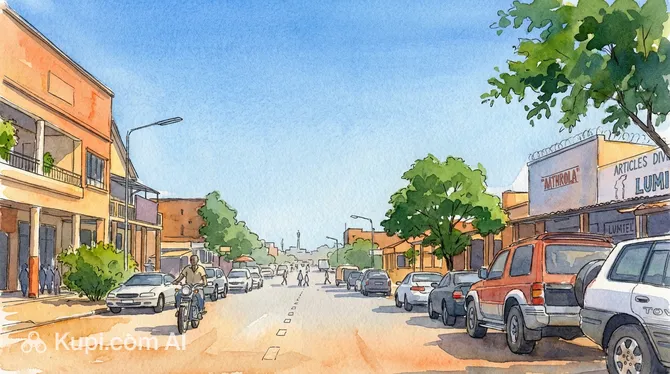
Likasi is a vital industrial hub located in the heart of the "Copper Belt" of Congo (DR). The city possesses the unique atmosphere of an industrial center, where life is inextricably linked to the depths of the earth. Situated in the Haut-Katanga province, it attracts researchers of industrial history and those wishing to witness the life of a modern working city in Central Africa.
Likasi. Illustration.
Source: Kupi.com AI
The city was founded in 1917 and was known as Jadotville for a long time. Details about the colonial past and the history of Likasi's development tell of a time when Belgian engineers transformed this site into one of the world's richest mining regions. Today, the city's population is approximately 495,000, making it a dynamic and bustling place despite its predominantly industrial character.
While Likasi is not a classic tourist destination, it offers guests the chance to explore an impressive mineralogical museum and the picturesque Tshangalele Reservoir. A journey here is an opportunity to look behind the scenes of global metallurgy and feel the rhythm of a city that literally fuels the region's economy.
Weather Overview
The climate in Likasi can be described as quite mild for the Central African region, due to its location on a high-altitude plateau. There is no exhausting heat typical of the Congo lowlands. Nevertheless, when planning a trip, it is worth considering the pronounced seasonality: the year here is clearly divided into wet and dry periods. The current weather in the city often depends on the altitude above sea level.
The most pleasant time to visit is from May to August. During these months, there is practically no precipitation, and the average daytime temperature fluctuates around +25°C...+27°C. Nights at this time can be quite cool, with temperatures sometimes dropping to +12°C, so a light jacket in your luggage will not be redundant. Gradual temperature increases begin in September, and September-October are considered the hottest months when the thermometer can rise above +31°C.
The rainy season in Likasi lasts from November to April. During this time, expect frequent but usually short-lived downpours that bring significant humidity. Traditionally, December and January are the wettest months. It is important to remember that the proximity of large mining enterprises affects the environmental situation, so industrial dust may be present in the air during the dry months.
Average monthly temperature
Average monthly precipitation
Interesting Facts
A city with a rich industrial past hides many curious details that make it special. Here are some notable facts about Likasi:
Named after an engineer: Until 1966, the city was called Jadotville. It was named after the Belgian engineer Jean Jadot, who played a key role in the development of the region's mining industry.
Mineral Heart: Likasi is located in the center of the famous "Copper Belt"—a region with some of the world's largest reserves of copper and cobalt.
Transport Hub: The city is an important station on the Trans-African railway line, which connects Congo's industrial areas with ocean ports.
Scientific Interest: Likasi is home to a unique mineralogical museum, whose exhibition is considered one of the best in the country due to the rarity of the specimens displayed.
City Status:Likasi received its modern status and name in 1966 as part of the country's policy of Africanizing names.
How to Get There
The transport accessibility of Likasi is largely determined by its status as a major industrial center. Most travelers arrive via air or rail links connecting the city with other key regions of Congo (DR). For those planning their route, it is useful to review detailed information on how to get to the city.
The city's main air hub is Likasi Airport (IATA: LSK). Although it handles a limited number of flights, it is the fastest way to get here from the country's capital, Kinshasa, or from neighboring Lubumbashi. The airport is located relatively close to the center, and the easiest way to reach your hotel is by taxi.
Rail travel plays an equally important role. Likasi is a significant point on the Trans-African railway. Trains connect the city with Lubumbashi and other economic centers of the Haut-Katanga province. The Likasi railway station is not just a transport facility, but a place where you can feel the rhythm of the region's industrial life.
Main Attractions
Likasi is a city whose appearance and attractions are inextricably linked to its industrial power. Instead of classic palaces and parks, tourists will find sites that tell the story of the exploration of Africa's richest natural resources. One of the most notable places is the local mineralogical museum, which houses an impressive collection of copper, cobalt, and other mineral specimens mined in the Haut-Katanga province.
Nature lovers and those seeking a quiet escape should head to the Tshangalele Reservoir. This man-made lake not only serves an important economic function but is also a popular recreation spot, offering a contrast to the city's noisy industrial areas. Here, you can enjoy the views and observe the local flora and fauna.
For those who appreciate architecture, the remnants of the Belgian colonial heritage are of interest. Strolling through the old quarters, you can notice the characteristic early 20th-century buildings created for the needs of engineers and mining company administrators. These buildings preserve the memory of an era when the city was just beginning its development under the name Jadotville.
Local Cuisine
The gastronomic scene in Likasi is a vivid reflection of traditional Congolese food culture, based on hearty and simple ingredients. The main staple here is cassava, used to make the famous fufu—a thick paste that serves as a side dish for most meat and vegetable meals. Rice and corn also hold a place of honor in the local diet.
Be sure to try the stewed cassava leaves known as sombe. They are slow-cooked with the addition of fish or meat and spices, giving the dish a uniquely rich flavor. Meat dishes are typically prepared from goat or chicken, often cooked over an open fire using aromatic local marinades. Fried plantains can often be found as snacks at the city's markets.
Food culture in Likasi is centered around small local restaurants called "malebo" and bustling markets. This is where you can feel the true spirit of the city. Popular drinks include local beer brewed in the region's major cities and refreshing tropical fruit juices. Although there are few high-end tourist restaurants, the hospitality of local cooks and the authenticity of the flavors will leave a pleasant impression on every traveler.
Travel Tips
A trip to Likasi is a unique experience of immersion into the industrial heart of Africa. To make your journey as comfortable and safe as possible, we have prepared some practical tips.
Clothing and Essentials: Choose light clothing made from natural fabrics, as the climate is tropical, but don't forget a light jacket for cool evenings. Comfortable closed-toe shoes are essential, especially if you plan to visit industrial areas or markets. For power outlets, a universal adapter may be required (Types C and E are commonly used).
Transport: The best way to get around the city is by official taxi or renting a car with a driver. Public minibuses are often overcrowded and can be inconvenient for tourists with luggage.
Finances: The main currency is the Congolese franc, but US dollars (new series, without stamps or damage) are accepted everywhere. ATMs are available in the center, but cards do not work everywhere, so always carry a cash reserve. Tipping of 5-10% is welcomed in restaurants.
Health and Safety: Be sure to obtain international insurance. Drink only bottled water and avoid ice in drinks. In the evening, it is better to refrain from walking alone, especially near the industrial outskirts.
Communication: The official language is French, and Swahili is also widely spoken. English is not understood everywhere, so learn some basic French phrases. Local SIM cards (e.g., Airtel or Vodacom) can be purchased at specialized kiosks with a passport.
Local Etiquette: Congolese people are very polite. Always greet people before asking for something. Photographing government and military sites, as well as bridges and airports, is strictly prohibited.
What to Avoid: Do not engage in discussions on political issues and try not to attract unnecessary attention with expensive accessories in crowded places. Avoid going into active mine areas on your own without special permission.
Registration: Before your trip, it is recommended to check the current entry rules and, if possible, register with your country's embassy.
Likasi is a city of hardworking people and incredible natural wealth. By following these simple rules, you can fully enjoy its uniqueness and discover the real Katanga.
Entertainment & Nightlife
The entertainment infrastructure in Likasi is primarily local in nature, catering to residents and industrial workers. The nightlife does not match the scale of world capitals; however, it allows you to experience authentic Congolese flavor. The city features small, cozy bars and cafes where workers and locals gather after a day's work.
The main social spots are establishments along the main streets, where modern African music plays and refreshing drinks are served. If you are looking for a more vibrant nightlife with clubs and larger concert venues, experienced travelers recommend taking a trip to nearby Lubumbashi. This major economic center offers a much wider choice of entertainment, from discos to stylish restaurants.
Daytime leisure in Likasi can be diversified by visiting the local market or walking near the reservoir. Generally, the city's atmosphere invites quiet observation of local life, and evening safety is ensured by choosing reputable establishments in central areas. For moving between bars at night, it is best to use official taxi services.
Parks & Museums
The cultural identity of Likasi has been shaped by decades of intensive industrial activity, so the city's main attractions have an educational and industrial character. The central site for any tourist is the city's mineralogical museum. This place is rightfully considered the pride of the region: its halls house a unique collection of rare minerals extracted from local mines, which clearly demonstrate the wealth of Katanga's subsoil.
For those seeking outdoor recreation, Likasi offers walks around the Tshangalele Reservoir. While there aren't many full-fledged parks with developed infrastructure within the industrial center, the shores of the reservoir remain a major draw for residents and guests wishing to spend time by the water and enjoy a natural landscape free from factory buildings.
It is important to remember that the city's industrial status affects its environment, so nature enthusiasts are also encouraged to consider trips outside the city limits. There, among the high plateaus, you can find more pristine sections of the African savanna. Visiting Likasi is primarily a chance to see the symbiosis of man, technology, and natural wealth in one of the world's most significant geological regions.
Getting Around
The transportation system in Likasi reflects its status as a working-class city. The main means of public transport here are minibuses and shared taxis. They connect residential quarters with industrial zones and the central market. This is the most affordable, but often overcrowded, form of transport, requiring a certain amount of skill and knowledge of the main routes from a tourist.
For more comfortable and safer trips around the city, travelers are recommended to use private taxi services. You should always agree on the fare in advance, as meters in cars are very rare. You can also negotiate with a driver to rent a car for the entire day, which is convenient if you plan to visit several remote sites, such as the Tshangalele Reservoir.
The railway plays a special role in the city's life. The Trans-African railway passing through Likasi provides links to other major cities in the region. Although trains do not run as frequently as one might hope, this mode of transport remains important for long-distance travel. The road infrastructure within Likasi itself is constantly under pressure from freight transport, so you should account for potential delays during peak hours when planning your movements.
Accommodation
The hotel sector in Likasi is primarily oriented toward business travelers, mining industry specialists, and engineers. For this reason, finding a luxury five-star resort here can be difficult, but the city offers a decent selection of mid-range hotels and guesthouses providing basic comfort and safety.
Most high-quality accommodation options are concentrated in the city center or in areas adjacent to the administrative buildings of major industrial companies. This is convenient for logistics and proximity to main transport arteries. For those planning a long-term stay, renting apartments is a popular option often practiced by foreign specialists.
Since Likasi is a city with active business life, it is recommended to book accommodation in advance. Demand for quality rooms can be high due to regular visits by business delegations. When choosing a hotel, pay attention to the presence of its own security service and autonomous power supply systems, which are important factors for a comfortable stay in this region.
Nearby Cities
Likasi serves as a convenient base for exploring the Haut-Katanga province, allowing travelers to discover other important cities of the "Copper Belt." The city's surroundings offer a blend of industrial landscapes and authentic African life that is hard to find in other regions.
The most significant destination for a trip is Lubumbashi—the country's second-largest city. It is located about 114 kilometers away and offers a much more developed tourist infrastructure, museums, and colonial architecture. It is also worth noting the small town of Kambove, which is located very nearby and is closely linked to the history of the region's mining industry.
Exploring nearby cities will allow you to gain a deeper understanding of the economic and cultural life of the southeastern part of Congo (DR). Each of these places has its own character, and trips between them will reveal views of the vast African plateau.
Shopping & Souvenirs
Shopping in Likasi is first and foremost an immersion into the atmosphere of colorful local markets. Unlike the capital, there are no giant shopping malls here, but there is an abundance of traditional trading areas where you can find everything from fresh tropical fruits to vibrant African textiles. The city thrives on the trade of everyday goods, making a shopping trip a great way to observe local life.
The main souvenir from this region is undoubtedly mineral products. In markets and small shops, you can purchase jewelry or decorative items made from malachite and other semi-precious stones that the "Copper Belt" is so rich in. Such items will serve as a unique reminder of your trip to the industrial heart of Africa.
Shops in the city usually operate from early morning until sunset, and payment is most often made in cash using local currency. Larger retail outlets sometimes accept US dollars, but for market purchases, it is always better to have Congolese francs with you. If you require a more modern shopping experience with a wide selection of international brands, it is best to plan a trip to nearby Lubumbashi.