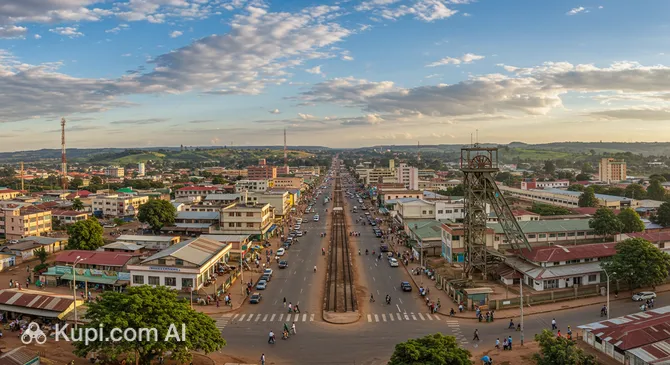
Kitwe is a dynamic and energetic city located in the heart of the Copperbelt Province in Zambia. As the country’s third-largest city, it serves as a vital industrial and commercial hub. The city emerged at the dawn of the 20th century as a modest mining settlement and has since evolved into a powerful center where the region's economic life pulses. Today, it is home to over half a million people, and the atmosphere is imbued with a spirit of industrial progress and African hospitality.
Kitwe. Illustration.
Source: Kupi.com AI
Geographically, the city stretches across a picturesque plateau at an altitude of over 1,200 meters above sea level. While Kitwe is primarily known for its copper mines and giant smelters, its rich heritage is reflected in the architecture of its residential mining quarters and bustling central squares. It lacks the typical tourist polish, but that is exactly what makes the city authentic—here, you can see the genuine life of modern Zambia without embellishment.
For the traveler, Kitwe is interesting as a starting point for exploring the mining industry and immersing oneself in the daily life of locals. Enormous markets, modern shopping centers, and its proximity to other Copperbelt cities make it a convenient base for discovering the region. We invite you to feel the rhythm of this "copper heart" of the country, where traditions meet industrial power.
Weather Overview
Kitwe's climate is typical for Zambia's high plateau and is characterized by a clear division into seasons. Tropical weather prevails throughout the year, but thanks to the altitude of over 1,200 meters, sweltering heat is rare. The main periods are the rainy season, which lasts from November to March, and the dry season from April to October. October is traditionally considered the hottest month, when temperatures can rise to +31°C, while June and July are the coolest, with refreshing night temperatures around +11°C.
For those planning a visit, it is important to consider that the rainy season brings significant precipitation (especially in January and February—up to 250 mm per month), which can make travel on unpaved roads difficult. The dry season, by contrast, delights with cloudless skies and comfortable daytime temperatures around +24...+27°C. More detailed information about the city's climate can be found on the special forecast page.
It is also worth keeping the environmental aspect in mind: during the dry season, dust can accumulate in the air due to the operation of copper smelters and the lack of rain. However, the proximity of green zones and the open relief of the plateau contribute to the city's natural ventilation. The best time to visit is from May to September, when the weather is most stable and favorable for walks and trips around the region.
Average monthly temperature
Average monthly precipitation
Interesting Facts
Merger of two towns: Modern Kitwe officially appeared on the map in 1961 as a result of the merger of two independent settlements—Kitwe and Nkana.
Copper Heart: The city is home to one of the largest copper smelters in the world, capable of processing up to 200,000 tons of copper annually.
High-Altitude Status: The city is situated at an altitude of 1,212 meters above sea level, providing it with a milder climate compared to lowland tropical regions.
Education Center: Kitwe is considered the educational hub of the Copperbelt region, regularly hosting large international seminars and exhibitions for students.
Railway Hub: Although passenger services are currently less active, Kitwe is historically a vital point on the railway connecting Zambia's mines with ports on the ocean coast.
How to Get There
There are several ways to reach Kitwe, although the city is primarily considered a regional transport hub. For most travelers, the journey begins with a flight. Kitwe Airport (IATA: KIW) is located right within the city limits and handles domestic flights and small private planes. However, international tourists more frequently use neighboring airports and then travel to the city by land. You can find more information about routes in the how to get to the city section.
The most popular arrival method remains traveling from neighboring Ndola, which hosts a major international airport. The distance is about 50 km, and the trip by taxi or bus takes between one and one and a half hours. If you are coming from the capital, Lusaka, prepare for a 300 km journey. A trip on a comfortable bus via the T2 highway takes about 4–6 hours, though you should account for heavy traffic from trucks transporting ore.
The region's rail connection is represented by stations linking Kitwe with other Copperbelt cities and the capital. Trains here are infrequent and move quite slowly, so this option is better suited for fans of slow travel who want to view Zambia's industrial landscapes from a carriage window.
Station
Passenger traffic
Distance
Lusaka Central Train Station
1
287 km
Main Attractions
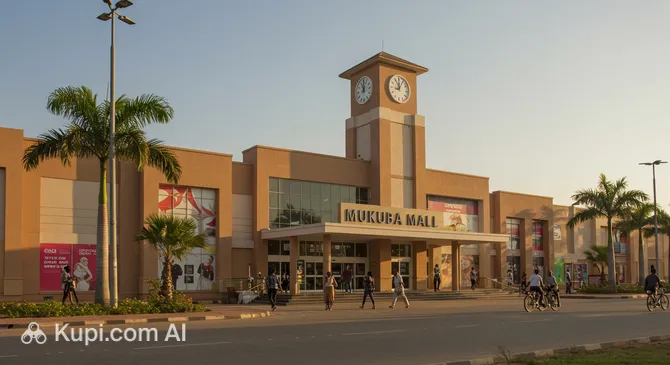
Kitwe is primarily an industrial giant, so there are few classical architectural monuments. The main interest for visitors lies in sites that reflect its modern life and economic significance. Central to the city's activity are modern spaces like Mukuba Mall, which has become a true symbol of Kitwe's development. It is not just a place for shopping, but a hub for walks and social gatherings.
Mukuba Mall. Illustration.
Source: Kupi.com AI
Traveler photos:
Another significant site is ECL Mall. Commercial life is concentrated here, featuring modern cinemas and cafes. For those who want to feel the city's industrial scale, the panoramas of the copper smelters are worth noting—these industrial giants form Kitwe's unique skyline and serve as a reminder of its status as one of the world's largest copper mining centers.
If you are looking for a place to relax after a busy day, it is worth checking out the popular dining spots. The restaurant Indish Fusion Foods & Cocktails offers an interesting blend of flavors in a modern setting, while Atithi Multicuisine Garden Restaurant and Bar provides a lovely opportunity to spend time outdoors. These venues allow tourists to comfortably join the city's social life alongside locals and expats.
Local Cuisine
Kitwe's gastronomic landscape is a blend of authentic Zambian traditions and international culinary influences brought by expats. The staple of any local table is nshima—a thick cornmeal porridge meant to be eaten with your hands, complemented by various "relish" (sauces). In Kitwe, nshima is often served with tilapia from local rivers or stewed beef. Be sure to try ifinkubala—fried mopane caterpillars, which are considered a local delicacy and a rich source of protein.
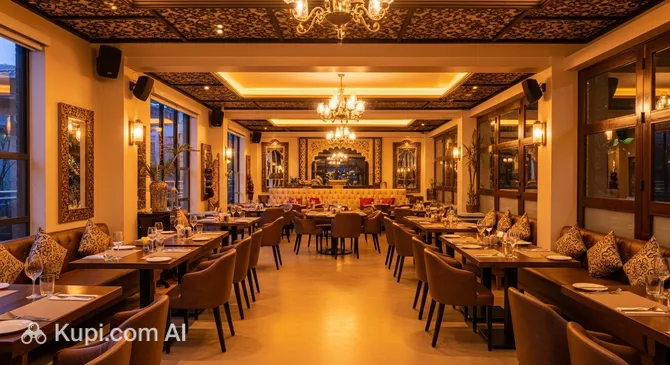
The city's food culture is diverse, ranging from bustling markets where you can taste street food to fine restaurants. For those who prefer time-tested flavors with a modern twist, Indish Fusion Foods & Cocktails is an excellent choice. They serve dishes that combine Indian and international traditions, which are very popular among Copperbelt residents.
Indish Fusion Foods & Cocktails. Illustration.
Source: Kupi.com AI
Traveler photos:
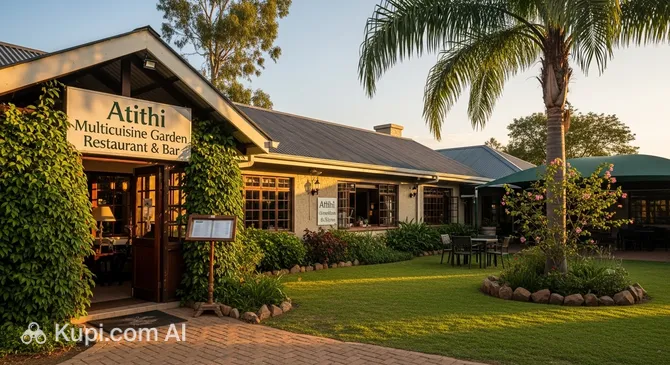
If you want to dine outdoors, stop by Atithi Multicuisine Garden Restaurant and Bar. This place is famous for its hospitality and wide selection of dishes. Among beverages, the local pale ale Mosi, named after Victoria Falls, is popular in Kitwe, as is the traditional thick drink Chibuku. You can finish your meal with a cup of strong tea or fresh juice made from tropical fruits bought at a nearby market.
Travel Tips
Traveling to the industrial heart of Zambia requires some preparation, but by following simple rules, your trip to Kitwe will be comfortable and safe. Here are some practical tips to help you better navigate the city:
Clothing and Essentials: Choose light clothing made from natural fabrics for daytime walks, but be sure to bring a windbreaker or sweater for the evenings—at an altitude of 1,200 meters, it can get chilly after sunset. Comfortable closed-toe shoes are necessary due to dust and uneven sidewalks. Stick to a conservative style when visiting official institutions or churches.
Transport: The best way to get around is by licensed taxi. Agree on the price before you get into the car. Avoid using minibuses during rush hour unless you're prepared for crowds and bustle.
Finances: The official currency is the Zambian Kwacha (ZMW). Cards are accepted in large shopping centers and hotels, but always carry cash for markets and small shops. ATMs in the city center work reliably.
Health and Safety: Drink only bottled water. Consult a doctor in advance regarding malaria prophylaxis and necessary vaccinations (Hepatitis, Yellow Fever). In crowded places, especially markets, watch your bags and do not display expensive gadgets.
Communication: English is the official language and is widely spoken, so there will be no communication issues. Knowing a couple of words in the local Bemba language (for example, "Mwapoleni"—a greeting) will win you the favor of the locals.
Local Etiquette: Zambians are very polite. Always start a conversation with a greeting. When exchanging money or items, it is customary to use the right hand (or both hands as a sign of special respect).
What to Avoid: Do not photograph government buildings, bridges, or industrial sites (mines, factories) without special permission—this can raise suspicion from security and police.
Additional Tip: If you plan to buy copper products or souvenirs at the market, do so in the company of a local acquaintance or guide—this will help you get a fair price.
Kitwe is a city with real character that reveals itself to those ready to look deeper than the industrial facades. Enjoy your journey!
Entertainment & Nightlife
Kitwe's entertainment scene is closely intertwined with its industrial rhythm: by day, life buzzes in business centers, and by evening, it moves to cozy bars and restaurants. Since the city is oriented toward work and business, there isn't a vast number of nightclubs; however, the existing venues offer a soulful atmosphere and a chance to experience the local leisure culture. Most activity is centered around large shopping complexes and central districts.
For an enjoyable evening, Indish Fusion Foods & Cocktails is ideal, often attracting an international crowd. Here, you can enjoy signature cocktails and a lively atmosphere. If you prefer a more tranquil break in a "green" setting, stop by Atithi Multicuisine Garden Restaurant and Bar—a popular spot that combines a restaurant and an open-air bar, which is especially pleasant during warm Zambian evenings.
Atithi Multicuisine Garden Restaurant & Bar. Illustration.
Source: Kupi.com AI
Traveler photos:
Sports fans should keep an eye out for local football matches, which generate huge excitement and are the primary spectacle for residents. On weekends, you might encounter local musicians performing modern African music at the markets. While younger crowds often head to neighboring Ndola for larger concerts and discos, Kitwe can certainly offer a quality dinner and pleasant conversation at a bar to round off the day.
Parks & Museums
Kitwe is a purely functional city, so you won't find extensive park zones or grand museums in the classical sense here. However, this doesn't mean there is nowhere to walk. In the city center, there are cozy squares and plazas that serve as resting spots for residents. The most popular open spaces are now concentrated around modern facilities like Mukuba Mall, whose grounds are landscaped for walking.
Regarding cultural leisure, there are practically no museums as standalone buildings in the city. The role of history keepers is played by the enterprises themselves: sometimes, small exhibitions dedicated to copper mining and the history of technology can be found at large mines or factories. Nevertheless, Kitwe's modern culture is vividly displayed in its shopping and leisure centers. For instance, ECL Mall often serves as a venue for temporary exhibitions and cultural events.
For those seeking seclusion in nature, locals often choose trips to the outskirts of the city or to the banks of the Kafue River flowing nearby. There, you can find picturesque picnic spots and enjoy the landscapes of the Zambian plateau. Within the city itself, it's also worth visiting Atithi Multicuisine Garden Restaurant and Bar—its green area is a pleasant alternative to the urban asphalt and dust of the industrial districts.
Getting Around
Kitwe's transport system is typical for major Zambian cities and is primarily geared toward the needs of local residents. The backbone of public transport consists of minibuses, which are often called "dala-dala" here. They run on fixed routes, connecting the city center with mining townships, markets, and residential areas. There is no strict schedule—the vehicle departs once it is full, adding a distinct local flavor to the trip.
For tourists, taxis are a more comfortable and reliable way to get around. Cars can be found at designated stands near shopping centers and hotels. It's important to remember that taximeters are not typically used in Kitwe, so you must agree on the fare with the driver beforehand. If you plan to move around the city a lot or travel beyond its limits, the best solution is to rent a car with a local driver—this saves you from navigating the chaotic traffic and helps avoid the congestion often caused by the abundance of heavy trucks.
Roads in central Kitwe are mostly paved, but the quality of the surface can be poor on the outskirts and in industrial areas. During rush hours—morning and evening—the city suffers from traffic jams, so plan your trips with extra time. Walking is possible in the center and near shopping zones, but for covering large distances between districts, it's better to use transport. Bicycles are also popular among locals, but for an unprepared tourist, this mode of transport can be unsafe due to heavy traffic.
Accommodation
The choice of accommodation in Kitwe largely reflects its status as a business and industrial center. Most of the hotel stock is geared toward business travelers, employees of international companies, and specialists in the mining industry. Here, you will find modern hotels with a full range of services as well as cozy guesthouses that offer a more domestic atmosphere at a moderate price.
The most convenient areas to stay are the central quarters and zones near major shopping centers like Mukuba. Staying in the center provides quick access to restaurants, banks, and corporate offices. Hotels located along the road to the airport are also popular, which is convenient for those just passing through. For long-term stays, expats often choose to rent apartments in gated residential complexes.
Accommodation prices in Kitwe remain quite affordable by international standards. During peak periods, such as when industrial exhibitions or educational forums are held in the city, the best options may be fully booked, so it is recommended to reserve a room in advance through popular online services. When choosing a guesthouse, it is worth confirming the presence of a generator and a reliable water supply, as these are important factors for a comfortable stay in this region.
Nearby Cities
Kitwe occupies a strategic position in the center of the Copperbelt Province, making it an ideal starting point for exploring neighboring cities and the region's industrial giants. In just one day, you can visit several interesting places, each with its own unique mining character and history of Zambia's copper industry development.
One of the most popular destinations is the city of Ndola, located just 50 km away. It is the region's commercial capital, where life flows at a slightly more measured pace than in Kitwe. It is also worth visiting Chingola—a city known for its massive open-pit mines that leave a lasting impression with their scale. For a shorter trip, Mufulira is a good option, as it also hosts significant mining operations.
Trips to neighboring cities allow for a better understanding of the scale of the country's industrial heritage and a chance to see how people live in different parts of the Copperbelt. We recommend not limiting yourself to Kitwe alone and boldly heading out to explore the surroundings to get a complete picture of this fascinating region.
Shopping & Souvenirs
Shopping in Kitwe is an exciting adventure where modern malls sit alongside colorful African markets. If you're looking for comfort, air conditioning, and international brands, your main destination will be Mukuba Mall. It is one of the largest malls in the region, bringing together supermarkets, clothing stores, and electronics shops under one roof.
Mukuba Mall. Illustration.
Source: Kupi.com AI
Traveler photos:
Another modern shopping space is ECL Mall. It offers a wide range of everyday goods and features cozy cafes. Shops in these centers usually operate from 9:00 AM to 8:00 PM, and both Zambian Kwacha and international bank cards are accepted, making the shopping process as convenient as possible for tourists.
For a true local feel and souvenirs, head to the city markets. Kitwe is famous for its copper products: you can find delicate jewelry, embossed artworks, and home decor items created by local artisans from metal mined right here. You should also look for vibrant "chitenge" fabrics and wood carvings at the markets. Bargaining is appropriate and even welcomed, and the best time to visit is in the morning.