Support

Matadi

About

Matadi is not just a city, but the main "sea gateway" to Congo (DR). Located on the left bank of the majestic Congo River, it greets travelers with the rugged beauty of its rocky landscapes and the industrial power of its port. The city was founded by the legendary explorer Henry Morton Stanley in 1879, and since then, Matadi has played the role of a key logistical hub for all of Central Africa. The history of its founding is a story closely intertwined with the era of great geographical discoveries and rapid industrial development.

The city's geographical location is unique: it is spread across steep hills at altitudes of up to 355 meters above sea level, just 148 kilometers from the river's mouth. The terrain here dictates its own rules, creating a chaotic yet fascinating urban landscape. With a population of about 337,000 people, Matadi pulses to the rhythm of port operations, where the export of coffee, precious timber, and fish forms the basis of daily life.
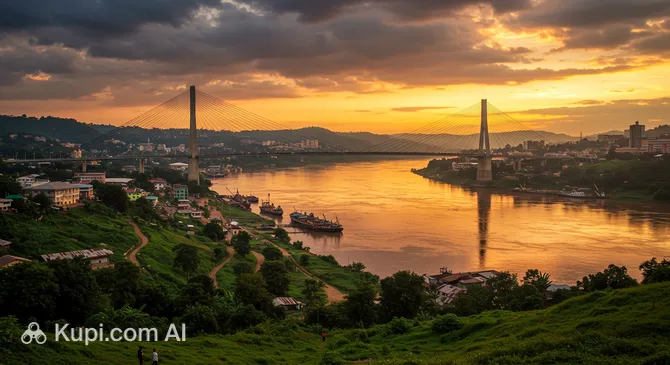
Matadi. Illustration.
Source: Kupi.com AI

One of the main architectural landmarks is the famous suspension bridge, which has become a symbol of engineering progress in the region. Although Matadi is not considered a classic tourist center, it possesses a special "utilitarian" aesthetic. Here, you can feel the true drive of a port city and see how the country's economic heart lives and breathes.

Visiting this place is a great chance to see Congo as it is, appreciate the power of the continent's largest river, and touch the history of transport development in Africa. We invite you to discover this "stony city," where nature and industry meet in a unique dance on the banks of the great river.

Weather Overview

The city of Matadi is located in a tropical climate zone, characterized by high humidity and a clear division into wet and dry seasons. Proximity to the Congo River and the complex terrain create a special microclimate here. If you want to know more about how the climate of Matadi changes throughout the year, it is worth checking detailed meteorological reports.

Typical weather in Matadi consists of hot days with temperatures around +26°C...+30°C. The rainiest period is in November and December, when the maximum amount of precipitation occurs (over 200 mm per month). During this time, the air humidity becomes particularly noticeable. Conversely, the summer months (June, July, and August) are the dry season. During this period, rains practically stop, and the temperature drops slightly to a comfortable +22°C...+24°C, making this the most favorable time to visit the city.

Travelers should expect warm tropical nights, with temperatures rarely falling below +19°C. When heading to Matadi, keep in mind that the rocky terrain can trap moist air masses, so even in relatively dry months, light rain can start unexpectedly. Lightweight clothing and readiness for occasional precipitation during the rainy season are the best choices.

Average monthly temperature

Average monthly precipitation

Interesting Facts

  • The name of the city Matadi means "Stones" in the Kikongo language, which perfectly describes its rocky terrain and its location on steep hills.

  • It was from here in the late 19th century that the construction of the ambitious Matadi-Kinshasa railway began, which was vital for connecting the sea coast with the country's interior.

  • The suspension bridge over the Congo River in Matadi long held the title of one of the longest and most complex engineering structures in all of Central Africa.

  • The city's port is a unique facility: despite being a significant distance from the ocean, the deep estuary of the Congo River allows large ocean-going vessels to dock here.

  • Matadi was founded by the famous journalist and explorer Henry Morton Stanley, whose name is inextricably linked to the history of the exploration of the African continent.

How to Get There

The transport accessibility of Matadi is due to its status as a major port. Travelers most often arrive here by air or by rail from the capital. You can find more information about available transport routes on specialized resources, which will help you plan your budget and travel time in advance.

The main air hub of the region is Matadi Airport (IATA: MAT). This is a small airport that primarily handles domestic flights. It is located in close proximity to the city, allowing for a quick taxi ride to the central district. Despite its modest size, the airport ensures a stable connection between the city and other provinces of the country.

AirportPassenger trafficDistance
Soyo Airport50 000125 km
Cabinda Airport307 200144 km
Pointe Noire Airport550 000209 km
Maya Maya Airport1.1 mln266 km
N'djili Airport1.5 mln273 km

Rail travel plays a key role in the life of the city. The historic line connecting Matadi with Kinshasa is approximately 365 kilometers long. A trip on this railway is an adventure in itself, offering views of Congo's picturesque hilly landscapes. However, keep in mind that due to the challenging terrain and infrastructure features, travel time can be significant.

StationPassenger trafficDistance
Kinshasa Central Railway Station1.1 mln268 km

Matadi can also be reached by car or bus from the capital. The road passes through scenic but sometimes difficult-to-navigate sections. The Port of Matadi remains the main entry point for sea vessels, making the city accessible to those arriving in the country by water via the Atlantic.

Main Attractions

The city of Matadi is primarily a triumph of engineering and a major industrial hub. While there are no traditional palaces or cathedrals, tourists' attention is invariably drawn to the Matadi Bridge. This grand suspension structure, over 700 meters long, was built by Japanese specialists in 1983. Walking or driving across the bridge offers breathtaking panoramas of the Congo River and allows you to appreciate the scale of the local rocky landscapes.

Another major point of interest is the seaport. Watching the docking of massive ocean-going vessels arriving from the Atlantic provides insight into the life of modern Congo. The area is filled with bustle and the sounds of the port, serving as a live backdrop for those interested in global logistics and maritime history.

The city's central districts and local markets serve as the main public spaces. Here, you can feel the authentic rhythm of life in Matadi, observe the daily routines of the citizens, and find crafts made by local artisans. Although the tourist infrastructure is still developing, the sincerity and energy of these places make a visit to the city truly memorable.

Local Cuisine

The gastronomic scene in Matadi is a vibrant reflection of the traditions of the Congo River basin. The main product here is, of course, fresh fish, caught directly in the river or delivered through the port. Local chefs masterfully grill fish or stew it in aromatic sauces with tropical spices, creating simple yet incredibly satisfying dishes.

Be sure to try fufu—a thick porridge made from corn flour or cassava, which is the staple of almost every meal. It is traditionally eaten with the hands, dipping pieces into rich meat or vegetable gravies. Local eateries also feature dishes made from local game and various vegetable stews characteristic of the tribes inhabiting this region.

The food culture in Matadi centers around street markets and small local cafes where port workers and sailors dine. There is a lively atmosphere here, and the food is always fresh and authentic. For drinks, opt for refreshing tropical fruit juices or local beer, which perfectly complements spicy African dishes. Despite the lack of frills, the city's cuisine wins you over with its honesty and rich flavors.

Travel Tips

A trip to Matadi promises to be a real adventure, and to ensure your journey goes smoothly, we have prepared some practical tips for visiting this dynamic port city.

  1. Clothing and Gear: Choose lightweight clothing made from natural fabrics, as the city experiences high humidity. Be sure to bring comfortable shoes with non-slip soles—the hilly terrain and rocky paths require stability.
  2. Transport: To move around the city, it is best to use taxis. Agree on the price before starting the trip. Consider potential traffic jams in the port area, especially on weekdays.
  3. Finances: The main currency is the Congolese franc, but US dollars are also widely circulated. Always carry cash, as ATMs may be unavailable and cards are accepted in only a few places.
  4. Health and Safety: Avoid walking in the port area and remote markets after dark. Drink only bottled water and arrange necessary vaccinations for the region in advance.
  5. Communication: The official language is French, and Kikongo is also common. English is not understood everywhere, so learn a few basic phrases in French or have an offline translator handy.
  6. Local Etiquette: Residents of Matadi are friendly but value politeness. Always ask for permission before photographing people or their private property.
  7. What to Avoid: Do not attempt to photograph strategic sites such as the Matadi Bridge, the port, or military posts—this can lead to serious questioning by security services.
  8. Extra Tip: Plan your time with a buffer. In Matadi, transport schedules and institution hours can change due to the logistical specifics of the port.

Matadi will reveal its unique energy to you if you are ready for its rhythm. Have a pleasant and safe journey to this extraordinary place!

Entertainment & Nightlife

Matadi is primarily a city of labor and logistics, so classic nightlife in the European sense is limited here. Most activity winds down at dusk, as the port's bustle gives way to tranquility. If you are looking for loud nightclubs or discos, locals usually recommend heading to the capital, which can be reached by train or car.

Evening leisure in Matadi itself is usually limited to visiting local cafes and restaurants located near the waterfront or in the central part of the city. Here, you can meet port workers, sailors, and business travelers. The atmosphere in such establishments is simple and relaxed, and there is almost no dress code. For safe travel around the city in the evening, it is strongly recommended to use official taxi services.

Daytime entertainment in Matadi is more focused on contemplation. The city's main "attractions" remain the views of the Congo River and walks in areas that offer the best vantage points of the suspension bridge. For those who appreciate industrial romance, it is interesting to watch the maneuvers of ships in the port or visit the central market squares, which bustle with energy and trade during the day.

Parks & Museums

Due to its industrial status, Matadi cannot boast an abundance of classic museums or extensive park areas. The urban development on the steep hills is very dense, and every piece of land here is used as functionally as possible. Nevertheless, for the curious tourist, Matadi itself is an "open-air museum," showcasing the history of transport development and the colonial exploration of the region.

The lack of formal art galleries is compensated for by stunning natural views. The main "green zone" for residents is the banks of the Congo River. Here, you can find small patches of vegetation offering panoramic views of the river's flow and rocky cliffs. These places do not have official park status, but this is where locals come to enjoy the cool breeze and the majestic tranquility of the water.

If you are interested in history, it is worth paying attention to the architecture of the port facilities and the old railway station. These sites preserve the memory of the days when the road to Kinshasa was being built. Despite the minimal number of parks, the city's unique terrain creates natural observation decks on the upper levels of the hills, which replace traditional gardens and squares for the residents.

Getting Around

The public transport system in Matadi is adapted to its unique hilly terrain and its status as a major logistical hub. The basis of internal transport consists of buses and route taxis (minibuses) that run along the city's main streets. Central routes pass near the port, connecting it with residential areas on the hills.

Taxis and motor rickshaws are particularly popular with locals and tourists. They are the most convenient way to navigate the city's steep slopes, where large buses find it difficult to go. It is customary to agree on the fare for a taxi in advance, as meters are rarely used. Be prepared for the port area to be paralyzed by trucks during peak hours, creating significant traffic jams.

An important element of the transport system is the famous suspension bridge over the Congo River, which provides a link to other parts of the country. As for payment, cash is primarily used. Tourists are recommended to carry small denominations of local francs. Walking is possible in the central part, but due to significant elevation changes, it may require good physical fitness.

Accommodation

Accommodation options in Matadi are specific and primarily oriented toward those visiting the city for business or transit. You won't find luxury hotel chains here, but you can certainly count on decent mid-range hotels and budget guesthouses offering a basic level of comfort.

The most convenient areas to stay are the city center and the territories near the port and MAT airport. Proximity to transport hubs saves time on commuting, which is especially important given the hilly terrain and heavy cargo traffic. Hotels in these zones typically provide a standard set of services: air conditioning, Wi-Fi, and breakfast.

Accommodation prices range from very affordable in hostels to moderate in hotels for business travelers. We recommend booking your accommodation in advance, as the number of quality options is limited, and demand from employees of transport companies is always steady. Most bookings are made through international services or directly via hotel contacts.

Nearby Cities

The city of Matadi is an excellent starting point for exploring the coastal and historical regions of Congo (DR) and neighboring Angola. Thanks to its proximity to important transport routes, you can easily reach several interesting settlements from here, each with its own unique character.

Just a few dozen kilometers away is the city of Boma, which once served as the capital of colonial Congo. A trip there will allow you to immerse yourself in the atmosphere of the past and see ancient architecture. Another interesting destination is Kenge, located only 24 kilometers away, making it an ideal option for a very short excursion.

For those ready to cross the border, the path opens to Angola. The cities of Mbanza-Kongo and Soyo offer a unique cultural experience and an introduction to the heritage of the ancient Kingdom of Congo. Traveling to these parts requires document preparation, but it rewards pilgrims of historical sites with amazing discoveries.

CityPopulationDistance
Kenge41 61224 km
Boma178 63843 km
Mbanza Kongo148 00097 km
Moanda153 915122 km
Soyo200 920127 km

We recommend not limiting yourself to Matadi alone, but using it as a base for short trips. Exploring the surrounding areas will help you better understand the multifaceted culture of this region of Africa and see a variety of landscapes—from port bays to historical hills.

Shopping & Souvenirs

Shopping in Matadi primarily involves visiting the bustling markets concentrated around the port zone. There are no glittering shopping malls here, but there is an abundance of authentic African trade. The city's main markets offer everyday goods, but among them, an observant traveler will find something special.

The city is famous for its trade in coffee and precious wood. As souvenirs from Matadi, it is worth bringing back stone crafts—the very name of the city, "Stones," suggests that local artisans are experts in this material. Also popular are bright traditional fabrics with characteristic patterns and wooden carvings that reflect the culture of local tribes.

The main trading spots are located on the streets leading to the port, where life bustles from early morning. Shop hours are usually standard, but markets begin to close at dusk. Payments are predominantly accepted in cash (local francs), so it is wise to have small change ready. Shopping here requires bargaining skills and a readiness for the hustle and bustle, making the purchase process a true adventure.

Reached the end of the page?

That means the route is fully explored